
Morocco Follows Egypt and Others in Fueling North African Tourism With Rising Airline Capacity in 2026

Published
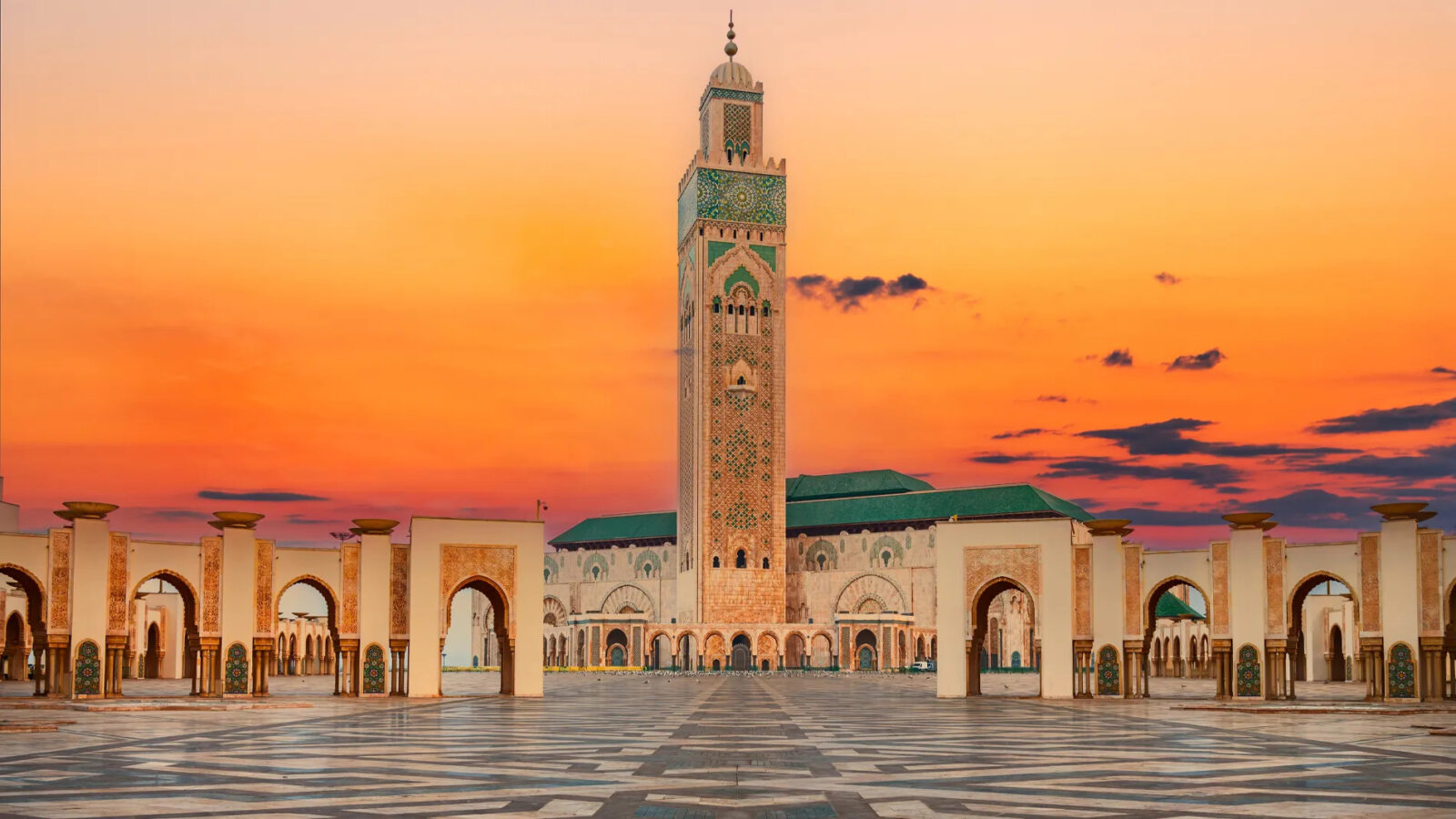
Morocco follows Egypt and others in fueling North African tourism with rising airline capacity in 2026, as expanding flight networks, stronger airport connectivity and more direct access to major leisure destinations give travellers greater choice across the region. The aviation surge is strengthening tourism competition, with Egypt leading in total seats while Morocco records the fastest percentage growth among the four major North African markets.
North Africa is entering a stronger aviation growth phase in 2026 as Morocco follows Egypt, Algeria and Tunisia in adding airline capacity and widening access to some of the region’s most important tourism destinations.
Across the four major North African aviation markets included in the data, scheduled capacity rises from approximately 6.54 million seats in October 2025 to 7.18 million in October 2026. That represents an additional 636,100 seats and growth of approximately 9.7%.
Egypt remains the region’s heavyweight with more than 3.2 million scheduled seats, but Morocco is emerging as an especially important growth market. Moroccan capacity increases by 11%, ahead of the percentage growth recorded by Egypt, Algeria and Tunisia.
Advertisement
Advertisement
The expansion is unfolding differently in each country. Egypt is combining its established tourism scale with airport investment and stronger access to Red Sea resorts. Morocco is widening its international route map and distributing visitors across several tourism centres. Algeria is gradually opening an underdeveloped leisure market, while Tunisia continues to strengthen the air links connecting European travellers with its Mediterranean resorts.
Together, these developments show how aviation is becoming one of the most important foundations of North Africa’s tourism competition in 2026.
Advertisement
Advertisement
North African Airline Capacity at a Glance
| Country | October 2025 seats | October 2026 seats | Additional seats | YoY growth |
|---|---|---|---|---|
| Egypt | 2,933,200 | 3,216,000 | +282,800 | +9.6% |
| Morocco | 1,963,900 | 2,180,900 | +216,900 | +11.0% |
| Algeria | 972,100 | 1,061,000 | +88,900 | +9.1% |
| Tunisia | 674,200 | 720,600 | +46,400 | +6.9% |
| Total | 6,543,400 | 7,179,500 | +636,100 | +9.7% |
The figures reveal two important trends. Egypt remains comfortably ahead in absolute capacity, while Morocco is expanding faster in percentage terms. Algeria is also approaching a significant threshold, moving above 1 million scheduled seats for the month, while Tunisia continues to expand from a smaller but highly tourism-dependent aviation base.
Morocco Turns More Flights Into a Wider Tourism Gateway
Morocco is becoming one of the clearest examples of how additional aviation capacity can reshape a national tourism market. Scheduled seats increase from approximately 1.96 million in October 2025 to 2.18 million in October 2026, representing an additional 216,900 seats and year-on-year growth of 11%.
That percentage increase is the strongest among the four North African markets in this comparison.
Morocco’s advantage is that its aviation expansion is not centred on a single tourism gateway. Marrakech remains a powerful international leisure destination, Casablanca provides extensive commercial and connecting traffic, Agadir serves the Atlantic resort market, while Rabat, Fez, Tangier, Essaouira, Tetouan, Ouarzazate, Nador and Dakhla give airlines multiple points through which travellers can enter the country.
This geographical spread can help Morocco convert airline expansion into tourism growth more effectively. A traveller interested in Marrakech no longer necessarily needs to enter through Casablanca, while holidaymakers heading towards Agadir can increasingly access the Atlantic coast directly. Greater point-to-point connectivity reduces additional domestic journeys and makes shorter holidays more practical.
Morocco’s tourism strategy has placed aviation connectivity at the centre of its growth ambitions. Its 2023–2026 tourism roadmap identified stronger air capacity and domestic and international connections as important competitiveness measures.
Advertisement
Advertisement
The airline network has consequently become part of a wider tourism distribution system rather than merely a means of getting visitors into the country.
Moroccan airports handled approximately 22.28 million passengers during the first 7 months of 2026, representing growth of about 8.77% compared with the same period a year earlier. International passenger traffic increased by around 8.82%.
The country is therefore benefiting from two reinforcing trends: airlines are putting more seats into the market, while airports are processing greater passenger volumes.
For Morocco’s tourism industry, this creates opportunities extending beyond established destinations. Improved air access can help smaller and emerging tourism centres compete for international visitors, spreading tourism spending more widely across the country.
Egypt Remains North Africa’s Aviation and Tourism Heavyweight
Egypt operates at a different scale. Scheduled airline capacity increases from approximately 2.93 million seats in October 2025 to more than 3.21 million in October 2026.
That means Egypt adds approximately 282,800 seats in a single month year on year, an increase of 9.6%.
Advertisement
Advertisement
Although Morocco records faster percentage growth, Egypt adds more seats in absolute terms than any other North African country in this comparison.
Its strength comes from having several tourism markets capable of supporting substantial international aviation demand simultaneously.
Cairo serves as the country’s primary international gateway and a major centre for cultural, business and connecting travel. Hurghada and Sharm El Sheikh give international airlines direct access to the Red Sea tourism economy, while other Egyptian airports provide additional gateways for leisure and regional travel.
Egypt’s regional airports handled approximately 5.11 million passengers during August and September 2026, an increase of around 4.8% compared with the equivalent period in 2025.
Hurghada and Sharm El Sheikh each recorded passenger growth of more than 6%, demonstrating the importance of direct resort connectivity.
Egypt has also been encouraging additional scheduled and charter operations into its Red Sea destinations. Aviation incentives can make routes commercially more attractive to airlines, particularly when carriers are deciding where to allocate aircraft during competitive European holiday seasons.
Advertisement
Advertisement
Airport infrastructure represents another part of the strategy. Plans for Cairo International Airport include a new Terminal 4 capable of handling approximately 40 million passengers annually. The development is expected to eventually raise the airport’s overall capacity towards 70 million passengers.
This gives Egypt a dual aviation strategy. Cairo can grow as an international gateway and connecting hub, while resort airports can capture tourists who want to fly directly to beaches, hotels and diving destinations.
Egypt and Morocco Account for Most of the Regional Expansion
The scale of Egypt and Morocco becomes even clearer when their capacity increases are combined.
| Market group | Additional October 2026 seats |
|---|---|
| Egypt | +282,800 |
| Morocco | +216,900 |
| Egypt and Morocco combined | +499,700 |
| Algeria | +88,900 |
| Tunisia | +46,400 |
| Four-country total | +636,100 |
Egypt and Morocco together account for approximately 78.6% of the net capacity increase across these four markets.
That concentration is significant for North African tourism. Both countries already possess internationally recognised tourism products, substantial accommodation inventories and multiple destinations capable of absorbing additional visitors.
Their aviation expansion therefore has the potential to intensify competition for European, Middle Eastern and other international travellers.
Advertisement
Advertisement
Algeria Uses Aviation Growth to Open a Less Explored Tourism Market
Algeria presents perhaps the most intriguing long-term tourism opportunity among the four countries.
Scheduled airline capacity rises from 972,100 seats in October 2025 to approximately 1.06 million in October 2026. That represents an additional 88,900 seats and year-on-year growth of 9.1%.
The significance is greater than the percentage alone suggests.
Algeria possesses a vast tourism landscape ranging from Mediterranean cities and Roman archaeological sites to enormous Saharan territories. Yet its international leisure tourism sector remains less developed than those of neighbouring Morocco, Tunisia and Egypt.
That creates room for air connectivity to act as a catalyst.
Algiers provides the country’s principal international gateway, while Oran and Constantine broaden access to northern Algeria. Stronger connections to southern destinations could eventually become especially important for Sahara tourism.
Advertisement
Advertisement
Air Algérie added a direct Algiers-Berlin service in September 2026, strengthening Algeria’s connectivity with another major European market.
At the same time, tourism authorities have been examining measures intended to make southern Algeria more accessible to international travellers. The visa-on-arrival mechanism available to qualifying foreign tourists visiting southern provinces has already attracted around 39,000 tourists representing approximately 120 nationalities since its introduction.
For Algeria, the opportunity lies in connecting these policies.
Simpler entry procedures make destinations easier to consider. Additional flights make them easier to reach. Tourism investment then determines whether travellers stay longer and spend more once they arrive.
The 9.1% aviation capacity increase therefore represents more than extra airline seats. It signals a gradual widening of Algeria’s tourism gateway.
Tunisia Strengthens the Air Bridge to Its Mediterranean Resorts
Tunisia has the smallest aviation market among the four countries in this comparison, but additional air capacity carries considerable importance because of tourism’s role in its economy.
Advertisement
Advertisement
Scheduled capacity increases from approximately 674,200 seats in October 2025 to 720,600 in October 2026.
That represents another 46,400 seats and growth of 6.9%.
Tunisia already has the accommodation and resort infrastructure required to absorb significant international tourism demand. The country has around 696 tourist accommodation establishments and approximately 230,000 beds.
Its challenge is therefore different from Algeria’s. Tunisia is not trying to introduce international tourists to an entirely new leisure market. Instead, it must maintain and strengthen access to established Mediterranean destinations while competing with Morocco, Egypt, Türkiye, Greece, Spain and other sun-and-beach markets.
Direct flights are crucial to that strategy.
Djerba provides a strong example. New and seasonal international services can allow travellers to reach the island and surrounding resort areas without travelling through Tunis.
Advertisement
Advertisement
The launch of a Zurich-Djerba connection in March 2026 strengthened direct access from Switzerland to the Djerba-Zarzis tourism region, with operations scheduled into late November.
For resort destinations, such connectivity can be particularly valuable because convenience is part of the holiday product. Fewer connections and shorter transfers can make Tunisia more competitive for travellers comparing similar Mediterranean packages.
Tunisia’s capacity increase may be smaller than those recorded by Egypt or Morocco, but strategically placed seats can still have a substantial tourism effect.
Which North African Market Is Growing Fastest?
The ranking changes depending on whether growth is measured by percentage or by the actual number of seats added.
| Ranking | By percentage growth | Growth | By additional seats | Seats added |
|---|---|---|---|---|
| 1 | Morocco | 11.0% | Egypt | 282,800 |
| 2 | Egypt | 9.6% | Morocco | 216,900 |
| 3 | Algeria | 9.1% | Algeria | 88,900 |
| 4 | Tunisia | 6.9% | Tunisia | 46,400 |
Morocco therefore leads the percentage-growth race, while Egypt remains the undisputed leader in absolute capacity expansion.
This distinction matters. A rapidly rising percentage can indicate strong momentum, but absolute seat numbers provide a clearer indication of the scale of passengers that a market can potentially handle.
Advertisement
Advertisement
More Than Half a Million Extra Seats Reshape the Regional Picture
The combined increase of 636,100 seats represents substantial additional aviation supply for North Africa within a single comparable month.
If October 2026 capacity is considered as a regional pool, Egypt and Morocco dominate.
| Country | Share of October 2026 four-country capacity |
|---|---|
| Egypt | 44.8% |
| Morocco | 30.4% |
| Algeria | 14.8% |
| Tunisia | 10.0% |
Together, Egypt and Morocco represent approximately 75.2% of the scheduled capacity among these four markets.
This concentration helps explain why their aviation decisions can have such a large influence on the direction of North African tourism.
However, Algeria and Tunisia should not be overlooked. Algeria has greater scope to build an international leisure market from a relatively low base, while Tunisia can use targeted connectivity to reinforce destinations already familiar to European holidaymakers.
How Rising Airline Capacity Can Feed the Tourism Economy
Additional airline capacity creates a chain of potential benefits extending well beyond airports.
Advertisement
Advertisement
More direct flights can reduce the time and complexity involved in reaching a destination. Greater airline competition can broaden consumer choice. New routes can introduce previously overlooked cities and resort regions to international travellers. Increased visitor flows can, in turn, support hotels, restaurants, attractions, guides, ground transport providers and local tourism businesses.
This is particularly relevant to North Africa because its tourism geography is highly diverse.
Egypt combines ancient heritage with major Red Sea resorts. Morocco offers imperial cities, Atlantic and Mediterranean coastlines, mountain landscapes and desert tourism. Algeria has major archaeological, cultural and Saharan assets. Tunisia combines Mediterranean resorts with historic cities, archaeological sites and desert experiences.
Air connectivity gives each country a mechanism for bringing those products closer to international source markets.
Capacity Growth Does Not Automatically Equal Tourist Growth
The capacity numbers nevertheless require careful interpretation.
Scheduled airline seats are not the same as international tourist arrivals.
Advertisement
Advertisement
Aircraft also carry residents, business travellers, diaspora passengers, people visiting friends and relatives, domestic passengers where applicable, and connecting travellers. Airlines can also increase capacity without achieving identical increases in passenger numbers if load factors decline.
For that reason, the 9.7% combined increase across the four markets should be treated as evidence of expanding aviation supply rather than a direct measurement of tourism growth.
What makes the numbers important is the broader direction of travel.
All four North African markets in the dataset are adding seats simultaneously. None is contracting. Morocco and Egypt are recording especially large additions, while Algeria and Tunisia are strengthening their own connectivity.
That provides tourism businesses with a larger potential passenger base and gives destinations more opportunities to compete for international travellers.
North Africa Enters a New Aviation-Led Tourism Race
North Africa’s tourism competition in 2026 is increasingly being fought in airline schedules as much as in hotels, beaches, historic districts and tourism campaigns.
Advertisement
Advertisement
Egypt remains the regional giant, reaching approximately 3.22 million scheduled seats in October. Morocco follows with around 2.18 million, while recording the strongest percentage expansion at 11%. Algeria climbs beyond 1.06 million seats with growth of 9.1%, while Tunisia reaches approximately 720,600 seats after expanding by 6.9%.
Together, these four countries provide approximately 7.18 million scheduled seats in October 2026, around 636,100 more than a year earlier.
The countries are reaching that growth through different models. Egypt is combining resort access, aviation incentives and major airport development. Morocco is spreading connectivity across a diverse network of tourism cities. Algeria is pairing additional flights with attempts to make a less explored tourism market easier to access. Tunisia is strengthening the direct international connections that keep its Mediterranean resorts competitive.
The result is a more connected North Africa and a stronger contest for international travellers. Rising airline capacity alone cannot guarantee tourism growth, but it gives Egypt, Morocco, Algeria and Tunisia something essential: considerably more opportunities to bring travellers through the door.
Morocco follows Egypt and others in fueling North African tourism with rising airline capacity in 2026, driven by more flights, wider international connectivity and stronger access to key holiday destinations.
In conclusion, Morocco follows Egypt and others in fueling North African tourism with rising airline capacity in 2026, as wider flight networks, stronger airport access and more direct international connections make major destinations easier to reach and intensify tourism competition across the region.
Advertisement
