
Plaza Premium Group Thailand Opens Two New Lounges as Bangkok Elevates Premium Airport Travel

Published
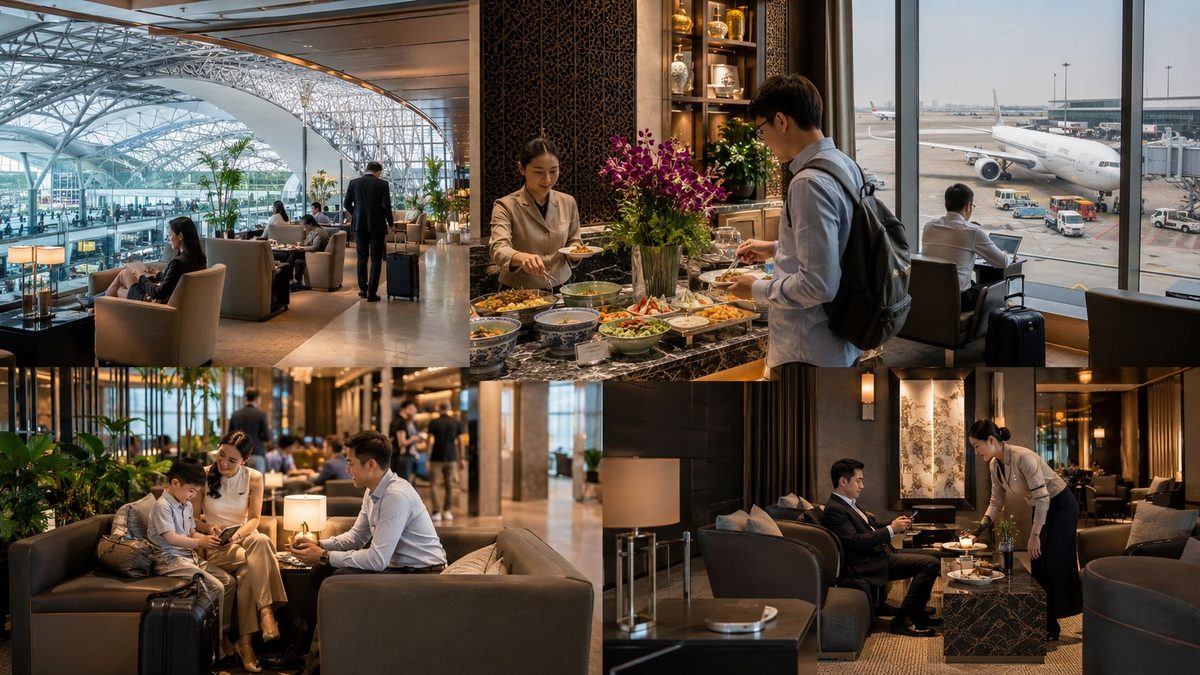
Image generated with Ai
Plaza Premium Group has launched its first two lounges in Thailand at Bangkok Suvarnabhumi Airport. This is the first time Plaza Premium Lounge and Plaza Premium First have access to Thailand’s markets. Both lounges are designed to accommodate international passengers and serve customers across all travel classes and airline groups. Plaza Premium First sits at 212 square meters and 51 guests, while Plaza Premium Lounge serves at 578 square meters and 98 guests. Together, the lounges add 810 square meters and 149 seats of capacity for international travel to Bangkok. Thailand is positioned for one of the strongest areas of growth for international travel of any country in the region. Plaza Premium Group has made the strategic choice to plant itself in this burgeoning area.
Why Suvarnabhumi Matters to Global Travellers
The timing carries significance beyond the opening of two hospitality spaces. Suvarnabhumi remains Thailand’s principal international gateway and a major connecting point across Southeast Asia. Airports of Thailand recorded 29.36 million international passenger movements at Suvarnabhumi during January-July 2025. Domestic traffic added another 7.23 million movements during that period. Total passenger movements therefore reached 36.58 million in seven months.
That traffic creates a substantial addressable market for independent lounge operators. It also explains why premium airport services increasingly compete on experience rather than simple seating. Travellers now expect reliable connectivity, food, privacy, charging facilities and a calmer airport environment.
AOT reports that Suvarnabhumi has an annual passenger handling capacity of 65 million. Its minimum connecting time target also stands at 75 minutes. Those figures underline the airport’s importance for connecting passengers.
Advertisement
Advertisement
For travellers facing a short connection, the location of the new lounges could prove particularly useful. Both facilities sit within the international departures environment. However, passengers should still allow sufficient time for security, gate transfers and boarding.
Advertisement
Advertisement
Two Lounges Create Two Distinct Journeys
The central commercial idea is straightforward. PPG has avoided placing every passenger inside one uniform lounge proposition. Instead, it has created two experiences aimed at different expectations and spending levels.
| Feature | Plaza Premium Lounge | Plaza Premium First |
|---|---|---|
| Location | Concourse G, near Gate G1 | Concourse G, near Gate G1 |
| Area | 578 sq m | 212 sq m |
| Maximum capacity | 98 guests | 51 guests |
| Positioning | Flagship independent lounge | Elevated premium experience |
| Access | All airlines and travel classes | All airlines and travel classes |
| Food proposition | Thai-inspired cuisine and live cooking | Bespoke dining |
| Service model | Flexible lounge hospitality | Personalised concierge service |
| Seating emphasis | Solo, family and business zones | Intimate and private spaces |
| Additional focus | Regional culture and comfort | Meetings, rest and productivity |
The difference matters for business travellers and premium leisure passengers. Plaza Premium Lounge focuses on broad accessibility and practical comfort. Plaza Premium First takes a more personalised approach.
The premium facility includes concierge assistance, curated food and beverage options, signature cocktails and premium international spirits. It also provides quieter spaces for rest, meetings and work.
The larger lounge takes a more democratic approach. Its design accommodates solo travellers, families and business passengers. Regional dishes and live cooking stations bring Thai culinary identity into the airport environment.
That local element is strategically important. Airport lounges can easily become interchangeable spaces. A Thai-focused food and hospitality proposition gives the BKK facilities a stronger sense of place.
Advertisement
Advertisement
Thailand Debut Extends a Wider Global Network
The Bangkok launch represents a new country for PPG rather than simply another airport opening. The group says its Plaza Premium First concept began in Hong Kong in 2018. It has since expanded into Kuala Lumpur, Jakarta, Macau, Vancouver, Phnom Penh, Rome and Dallas-Fort Worth.
The company also points to 28 years of independent lounge operations. That history gives the Bangkok launch a broader strategic context.
Independent lounges have become increasingly relevant as airline networks and passenger profiles evolve. Not every traveller holds elite status. Many passengers also fly on airlines without dedicated lounges at particular airports.
An independent facility can therefore bridge that gap. It can serve passengers who want premium airport services without tying access to a specific carrier.
That model also fits Bangkok’s diverse visitor base. Thailand attracts long-haul tourists, regional leisure travellers, business visitors and connecting passengers. Their needs differ, but their airport experience increasingly influences perceptions of the wider journey.
Advertisement
Advertisement
Bangkok’s Tourism Momentum Raises the Stakes
Thailand enters this expansion phase against a strong tourism backdrop. The Tourism Authority of Thailand reported more than 14 million international visitors by 2 June 2026. Those visitors generated about THB679 billion in tourism revenue. TAT expects 33 million international arrivals for the full year.
Bangkok also holds an unusually strong position within global travel demand. TAT reported that Bangkok ranked as the world’s most booked destination city for 2026 in Ticket Collection’s January report. The same report recorded a 37% increase in bookings for 2026 travel compared with the corresponding period a year earlier.
The airport therefore sits at the intersection of two growth stories. One concerns passenger volumes. The other concerns the quality of the travel experience.
For destination managers, that distinction matters. A larger visitor count does not automatically translate into stronger visitor satisfaction. Airport services provide one of the first and final touchpoints for international visitors.
A well-designed lounge can consequently support the wider premium tourism ecosystem. It gives higher-spending travellers another reason to view Bangkok as a sophisticated regional gateway.
Advertisement
Advertisement
What Travellers Can Expect at BKK
The two facilities offer several practical advantages for international passengers.
First, airline and cabin-class independence broadens potential access. Travellers do not need to be flying business or first class simply to use the services. That creates a useful option for economy passengers facing long waits.
Second, the location near Gate G1 reduces uncertainty for passengers departing from the same area. Travellers should nevertheless verify their gate because airport operations can change.
Third, both lounges provide core facilities such as Wi-Fi, charging and food and beverage services. The official booking platform currently lists both facilities as operating around the clock.
The official listing also shows indicative starting prices of THB2,400 for Plaza Premium First and THB1,750 for Plaza Premium Lounge. Travellers should check the booking platform before travelling because packages, prices and access conditions can change.
Advertisement
Advertisement
Pre-booking is available, although the operator says walk-in guests can also proceed to the lounge. It recommends booking at least one hour before arrival.
| Traveller Type | More Suitable Option | Why |
|---|---|---|
| Economy passenger | Plaza Premium Lounge | Broad access and practical amenities |
| Family traveller | Plaza Premium Lounge | Dedicated zones for families |
| Business traveller | Either | Lounge supports work and charging |
| Premium leisure traveller | Plaza Premium First | More personalised service |
| Passenger seeking privacy | Plaza Premium First | Quieter and more intimate environment |
| Short connection | Either, subject to gate and security time | Convenient Concourse G location |
| Food-focused traveller | Either | Thai culinary elements feature prominently |
Thailand’s Lounge Market Is Getting More Sophisticated
The arrival of PPG adds another layer to an already competitive lounge environment at Suvarnabhumi. The operator’s own Bangkok directory lists other independent facilities, including Coral-branded lounges in several international departure concourses.
This competition should benefit travellers in several ways. Operators must differentiate through food, design, service, convenience and value. Merely providing seats and refreshments becomes less compelling as the market matures.
The PPG model also introduces a sharper segmentation strategy. Plaza Premium Lounge addresses volume and accessibility. Plaza Premium First targets travellers prepared to pay more for service and privacy.
That distinction mirrors developments across the broader hospitality sector. Hotels increasingly separate product tiers without abandoning a common brand ecosystem. Airport lounges are following a similar path.
Advertisement
Advertisement
The commercial opportunity is substantial. AOT says its six-airport network had a total passenger handling capacity of 116 million annually in 2025. It has also set passenger targets of 130 million for 2026 and 140 million for 2027.
For lounge operators, growing airport capacity creates opportunities beyond Bangkok. However, Suvarnabhumi remains the obvious flagship location because of its international traffic and connectivity.
Thai Flavours Become Part of Airport Hospitality
Food provides another important point of differentiation. The new Plaza Premium Lounge incorporates Thai dishes and live cooking. Plaza Premium First takes a more curated approach to dining.
That strategy fits Thailand’s broader tourism proposition. Gastronomy remains one of the country’s strongest destination assets. Bringing local cuisine into an international airport environment extends that identity beyond hotels and restaurants.
The approach also supports travellers during transit. Connecting passengers may have limited time to leave the airport. A lounge can provide a controlled opportunity to experience regional flavours without adding another journey.
Advertisement
Advertisement
PPG’s Bangkok proposition therefore goes beyond convenience. It uses Thai culinary identity as part of the passenger experience.
This could prove particularly valuable for first-time visitors. It can also reinforce destination recognition among repeat travellers who associate Thailand with food, hospitality and cultural warmth.
A Wider Push for Premium Travel Experiences
Thailand’s tourism strategy is increasingly focused on value rather than visitor numbers alone. TAT has described its 2026 direction as quality-led growth, with an emphasis on higher-value experiences and stronger visitor confidence.
Airport hospitality fits naturally within that approach. Premium facilities can improve the experience without requiring travellers to extend their stay.
The concept also complements Thailand’s expanding international connectivity. TAT continues to pursue partnerships with airlines and travel platforms to strengthen access and visitor flows. Recent initiatives have targeted markets including Malaysia and Indonesia.
Advertisement
Advertisement
Meanwhile, China remains Thailand’s largest international visitor market. TAT recorded 2.88 million Chinese arrivals between January and 20 July 2026. It expects more than 5.13 million Chinese visitors during the year.
Such market diversity makes flexibility important. Bangkok receives passengers with different languages, budgets, travel purposes and expectations. Independent lounges can respond to that diversity more readily than a single airline-specific model.
How the Opening Changes the Passenger Choice
The most immediate impact is greater choice inside one of Asia’s busiest aviation gateways. Passengers now have another independent lounge option in the international departures area.
The more significant development, however, is the arrival of a dual-tier independent lounge concept. Travellers can choose between a larger communal environment and a more intimate premium setting.
That choice could influence future lounge development across Southeast Asia. Operators may increasingly divide their products by traveller need rather than simply offering one generic lounge.
Advertisement
Advertisement
For passengers, that means checking the details before purchasing access. The cheapest lounge is not automatically the best choice. Families may value space, while business travellers may prioritise quiet areas. Premium travellers may place greater weight on personalised service.
The Bangkok opening therefore strengthens competition while making lounge selection more sophisticated.
What Travellers Should Check Before Booking
Travellers should first confirm that their journey uses the international departures area at Concourse G. The lounges are airside, so passengers must have the appropriate boarding documentation and pass through the relevant departure formalities.
They should then check their flight’s gate and allow enough time for security and boarding. Lounge access does not replace airport security or airline boarding requirements.
Passengers should also compare the two products before paying. Plaza Premium First carries a higher price but provides a more personalised proposition. The standard Plaza Premium Lounge offers a broader experience at a lower entry point.
Advertisement
Advertisement
Finally, travellers should verify operating hours and current prices immediately before travel. The operator’s booking information remains the most reliable source for live access conditions.
A Strategic Opening at Southeast Asia’s Gateway
Plaza Premium Group’s Thailand entry gives passengers of Bangkok’s Suvarnabhumi Airport an opportunity to chose a new hospitality model. This is especially notable as Suvarnabhumi Airport’s area of movement is in the tens of millions.
The size of Suvarnabhumi reminds us that this deal will likely be significant. For example, the airport’s estimated annual passenger movement of 65 million combined with international traffic and connecting traffic brings a generous runway. The positive outlook on Thailand tourism further enhances its opportunity.
Passengers in Thailand now have an additional option, and a greater opportunity for product selection and more varied food offerings.
This move speaks to a more profound shift in airport hospitality. Now, lounges are competing against one another with their level of service, private rooms, identity, and personalization. Premium Airport Services Thailand Co Ltd. now has both ends of that proposition.
Advertisement
Advertisement
As Thailand Airlines become more focused on high-value tourism, the airport experience is becoming part of the destination experience. The two new lounges place that idea firmly inside Suvarnabhumi’s international Terminal.
Advertisement
