
Corfu Set to Become First Adriatic Cruise Port to Surpass One Million Passengers in 2026, Driving its Maritime Tourism Growth and Capacity Challenges in Greece

Published
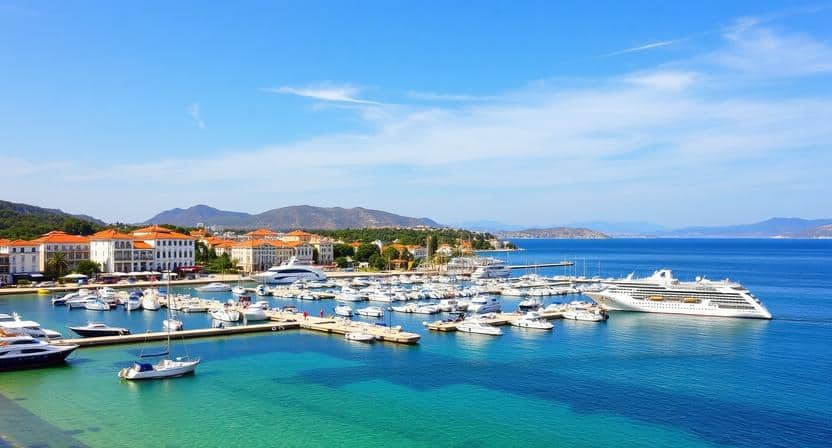
It will be estimated that Corfu will become the first Adriatic cruise destination to exceed one million passenger movements in 2026, making the Greek island at the heart of a dramatic change in maritime tourism. This forecast, released in the 2026 Adriatic Sea Tourism Report, will also suggest a new milestone for the nation in terms of its Adriatic cruise destinations, which are set to exceed the one million passenger movements mark for the first time ever.
For Corfu, this is not just a milestone in cruise tourism statistics. It is about growing demand, higher international recognition, and new challenges in managing tourism on the island.
Advertisement
Advertisement
Corfu Moves Toward a Historic Cruise Milestone
The Adriatic Sea Tourism Report 2026 forecasts that Corfu will reach around one million cruise passenger movements this year. If achieved, the island will become the first port in the Adriatic cruise region to cross that symbolic mark. The report also expects Corfu to retain its position as the region’s busiest cruise destination for a seventh consecutive year.
This milestone carries strong tourism meaning. Cruise passenger movements include transit passengers, embarkations and disembarkations. They show the scale of port activity and the pressure placed on destinations during the season. For Corfu, the forecast points to rising cruise demand and stronger market confidence. It also shows how the island’s position between the Ionian Sea, Italy, the Balkans and the wider eastern Mediterranean continues to support its cruise appeal.
Advertisement
Advertisement
Greece’s Adriatic Cruise Market Crosses a New Threshold
The report estimates that Greece’s Adriatic cruise ports will surpass one million passenger movements in 2026, reaching about 1,004,342 passenger movements. That would mark an estimated 11.6% increase over 2025 and place Greece’s Adriatic cruise traffic more than 30% above 2019 levels.
This is important because the Adriatic region has not recovered in the same way as some other Mediterranean cruise areas. The report notes that the Adriatic remains below its earlier passenger peak, partly because of port infrastructure limits and rules that restrict larger ships in some destinations. Greece’s projected growth therefore stands out. Corfu is doing most of the heavy lifting, while Igoumenitsa and Patras also support Greece’s wider Adriatic maritime role.
Advertisement
Advertisement
Adriatic Cruise Traffic Keeps Rising Despite Constraints
Across the wider Adriatic, cruise passenger movements are forecast to reach about 5.7 million in 2026, up around 6% from the previous year. Cruise calls are expected to rise by 7.7% to about 4,000. This points to steady growth, even though the region still faces structural limits.
The report suggests that the Adriatic is seeing more calls, but not always the same passenger scale seen in other Mediterranean zones. This reflects the growing use of small and mid-sized vessels, infrastructure limits, and local management choices. For travellers, this can be positive because some Adriatic destinations may avoid the heaviest mega-ship pressure. For ports, however, it creates a commercial challenge. They must raise value without relying only on larger ships.
Italy and Croatia Still Lead, but Greece Gains Speed
Italy is forecast to remain the largest Adriatic cruise market in 2026, with more than 2.1 million passenger movements and over 1,000 cruise calls. Croatia follows with about 1.61 million passenger movements. Greece is expected to rank third after crossing the one-million mark.
This ranking shows how competitive the Adriatic has become. Italy has major ports such as Bari, Venice, Trieste, Ravenna, Ancona and Brindisi. Croatia has high-profile destinations such as Dubrovnik, Split, Zadar, Šibenik, Hvar and Korčula. Greece’s Adriatic strength is more concentrated, with Corfu acting as the major driver. This concentration gives Corfu great visibility, but it also means the island must manage peak pressure with care.
Corfu Outpaces Dubrovnik, Kotor, Bari and Venice
The port ranking gives Corfu a clear lead. The report places the island ahead of Dubrovnik, which is forecast at about 675,000 passenger movements, and Kotor, expected to reach around 615,000. Bari follows with about 559,000, while Venice is forecast at around 530,000.
Corfu’s lead is significant because these are all powerful cruise names. Dubrovnik is globally famous for its walled city. Kotor has dramatic bay scenery. Bari is a strong southern Italian gateway. Venice remains one of the world’s most recognised cruise-linked cities, even after regulatory changes reshaped its cruise operations. Corfu’s forecast shows that the island is now operating in the highest tier of Adriatic cruise tourism.
Advertisement
Advertisement
More Than Five Hundred Cruise Calls Add Pressure and Opportunity
The forecast expects Corfu to receive more than 560 cruise calls in 2026, an increase of more than 20% compared with 2025. Passenger movements are expected to rise by almost 12%. This combination of more ships and more passengers can bring strong economic benefits.
Cruise calls support shops, guides, cafés, taxis, bus operators, museums, attractions and local producers. They also bring global exposure. Many cruise guests get only a short look at the island, but that first visit can inspire longer future stays. At the same time, more cruise calls require careful planning. Corfu must manage crowding in the Old Town, port transport, coach movements, shore excursion timing and visitor dispersal across the island.
Corfu’s Heritage Makes the Cruise Boom More Valuable
Corfu’s cruise appeal is not built only on beaches. Official Greek destination promotion highlights the island’s multicultural heritage, historic monuments, natural landscape, clear seas and year-round climate. The Old Town of Corfu is recognised for its preserved historic character, Venetian influence, fortresses, arcades, squares and layered European identity.
This heritage gives Corfu a premium advantage. Cruise visitors can move quickly from the port to a city that offers architecture, museums, churches, cafés, shopping streets and sea views. This makes the island attractive for short calls. It also creates a strong case for shore excursions that connect the port with the Old Fortress, Liston, Spianada, Palace of Saint Michael and Saint George, local food and nearby coastal landscapes.
Port Management Becomes Central to Sustainable Growth
The Corfu Port Authority plays a vital role in this next stage. It manages the main port of Corfu and other nearby island ports, and it operates as a company with the Greek State as its shareholder. That public ownership structure gives the port a central role in balancing commercial activity with destination needs.
As cruise traffic rises, port management becomes more important. The port must support safe berthing, passenger flow, transport links, security, information and environmental responsibility. For a heritage island, cruise growth cannot be judged only by passenger totals. It must also be judged by how well visitors are moved, how much they spend locally, and how well pressure is managed in sensitive areas.
Advertisement
Advertisement
Ferry Growth Strengthens the Wider Maritime Picture
The report also forecasts growth in ferry, hydrofoil and catamaran traffic across the Adriatic. Passenger movements in these segments are expected to reach about 20.6 million in 2026, up around 2.1% year-on-year. Split is projected to remain the busiest ferry port, while Greece’s Igoumenitsa is expected to remain second with more than 3.1 million passenger movements.
This matters because cruise is only one part of maritime tourism. Ferry traffic supports island access, regional mobility, domestic travel, cross-border movement and local economies. For Greece, Igoumenitsa is especially important because it links the mainland with the Ionian region and wider Adriatic routes. Together, Corfu’s cruise role and Igoumenitsa’s ferry strength give northwestern Greece a strong maritime tourism position.
Green Port Investment Becomes a Future Test
Investment is now becoming a key issue across the Adriatic. The report maps more than 843 million euros in planned maritime tourism infrastructure investment for 2027 to 2030. In Greece, Igoumenitsa is linked with a cold ironing investment of about 6.8 million euros by 2027, while Lamda Corfu Marina is expected to open in 2029 with an investment of around 50 million euros.
These projects matter because maritime tourism faces pressure to become cleaner and better managed. Cold ironing allows ships to use shore power while docked, reducing emissions from onboard generators. Marina investment can also strengthen yachting, high-value nautical tourism and longer-stay visitor spending. For Corfu, the marina project could add another layer to the island’s maritime economy beyond cruise calls alone.
The Coast and Hinterland Must Work Together
A major challenge for Corfu and the Adriatic is the relationship between ports and inland areas. Cruise guests often arrive in large numbers within a short time. If they remain concentrated near the port and main old town streets, crowding can rise and visitor spending may stay narrow. If they are guided into wider routes, the benefits can spread.
Corfu has the assets to do this. The island offers villages, beaches, viewpoints, museums, religious sites, food traditions and inland landscapes. Better visitor dispersal can protect the Old Town while giving more communities access to tourism income. This approach also improves the guest experience because visitors see more than one crowded zone.
Advertisement
Advertisement
A Defining Year for Corfu’s Cruise Future
The potential achievement of Corfu being the first Adriatic destination to break the million-passenger barrier for cruise arrivals in 2026 could become one of the biggest stories for the industry within the Adriatic region. There are obvious benefits. More ships mean higher revenues, better exposure and increased confidence in the Ionian cruise destination. There are also obvious risks. The growth needs to be controlled in such a way as not to overwhelm the island’s heritage, infrastructure, transport and communities.
By ensuring that there is an appropriate balance between capacity, sustainability and quality of visitors, this record year could become something far more important. It could become a breakthrough for Corfu, which will demonstrate that historic Greek islands can lead the Adriatic cruise industry without damaging their cultural heritage and uniqueness, which attracted tourists in the first place.
Advertisement
