
Nevada, Hawaii and More US States Trying to Push More Tourism Products to Canada and Mexico Tourists

Published
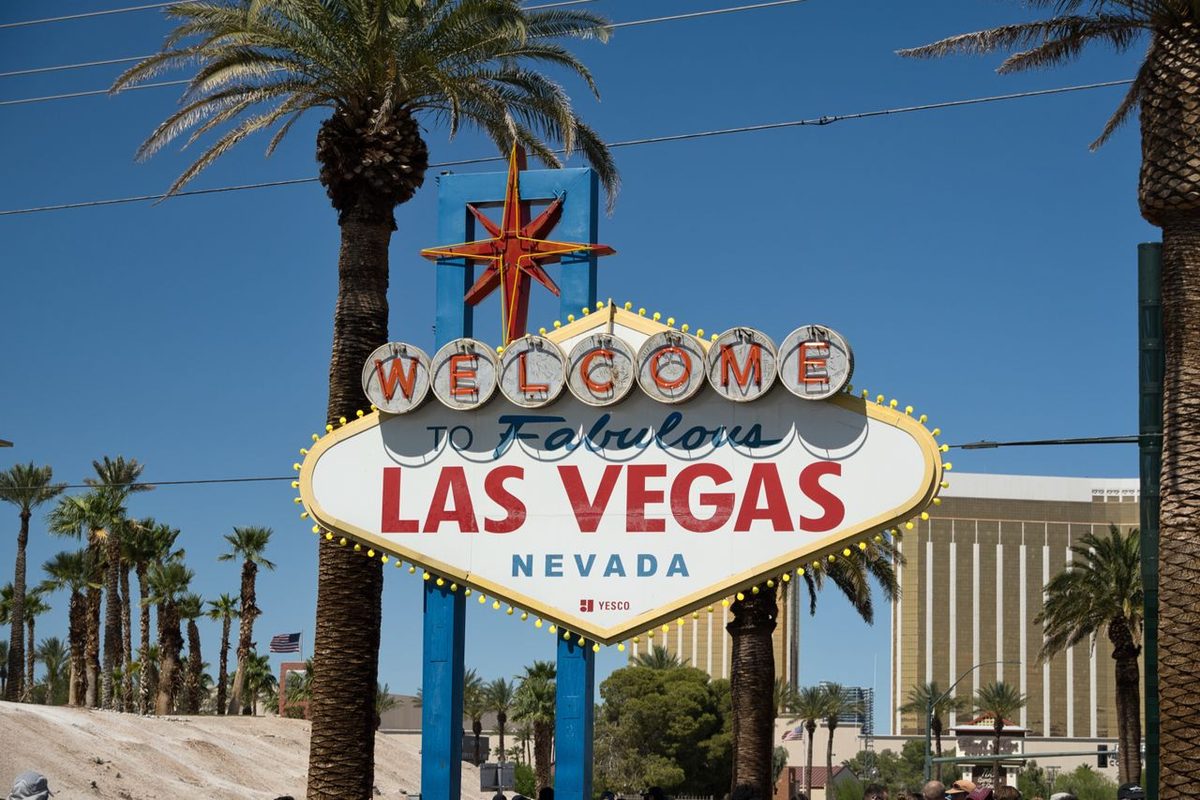
Nevada and Hawaii fight back! As Canadian and Mexican visitors vanish, US states unleash bold new tourism campaigns — could this be America’s biggest comeback yet? Tourists are drifting away, and America is worried. Nevada and Hawaii, once reliable magnets for millions, now face fewer arrivals from Canada and Mexico.
Consequently, state tourism boards are moving fast, and they are not waiting around. They are pushing new products, sharper deals and warmer welcomes to more travellers than ever. Nevada wants Canadians back at its casinos; Hawaii wants sun-seekers fleeing winter’s grip. Texas, meanwhile, is chasing Mexican travellers hard, whilst other states quietly join this race. Why does this matter? Because tourism dollars fuel jobs, and losing them hurts communities badly.
America’s love affair with overseas visitors is not spread evenly across its fifty states, and fresh figures from the U.S. government confirm exactly where the world’s travellers are choosing to land, spend and linger. The National Travel and Tourism Office, a branch of the U.S. Department of Commerce, has released its first state-by-state breakdown of overseas visitor activity since 1997, and the results paint a striking picture of concentration, opportunity and untapped potential across the country’s tourism economy.
The report, titled Overseas Visitor Impact on State Economies, tracks spending, visits and jobs generated by overseas travellers, deliberately excluding Canada and Mexico, whose land-border tourism is measured separately. What it reveals is a tourism economy that leans heavily on a handful of coastal and gateway states, whilst dozens of others quietly punch above their weight in more modest but still meaningful ways.
Advertisement
Advertisement
Top US States by Overseas Visitors
| Indent | State | Overseas Visits | Spending | Jobs Supported |
|---|---|---|---|---|
| 1 | New York | 9,801,000 | $32.1B | 156,840 |
| 2 | Florida | 8,858,000 | $25.2B | 124,970 |
| 3 | California | 6,956,000 | $26.9B | 132,670 |
| 4 | Nevada | 2,642,000 | $5.2B | 25,550 |
| 5 | Texas | 2,087,000 | $7.9B | 45,620 |
| 6 | Hawaii | 1,974,000 | $7.5B | 35,170 |
| 7 | D.C. | 1,629,000 | $4.0B | 18,410 |
| 8 | Massachusetts | 1,500,000 | $7.7B | 42,250 |
| 9 | Illinois | 1,410,000 | $5.7B | 31,250 |
| 10 | New Jersey | 1,228,000 | $3.4B | 16,860 |
| 11 | Arizona | 1,159,000 | $2.6B | 14,360 |
| 12 | Georgia | 1,069,000 | $2.6B | 13,690 |
The Big Three That Dominate Everything
New York sits comfortably at the summit of America’s international tourism ladder, and the numbers explain why. The state welcomed just under 9.8 million overseas visitors, who collectively spent over 32 billion dollars and supported nearly 157,000 jobs. No other state comes close on any of these three measures simultaneously, cementing New York’s position as the undisputed front door for international arrivals into the United States.
Florida follows close behind, drawing almost 8.9 million overseas visitors who spent just over 25 billion dollars, sustaining nearly 125,000 jobs across the Sunshine State’s sprawling hospitality sector. Miami, Orlando and the wider theme park economy continue to act as powerful magnets for travellers from Latin America, Europe and beyond, giving Florida a tourism identity that blends leisure, culture and family entertainment in equal measure.
Advertisement
Advertisement
California rounds out the top tier, hosting nearly 7 million overseas visitors and generating close to 27 billion dollars in spending, the highest average spend per visitor amongst the leading three states. The Golden State’s job-support figure of over 132,000 reflects its labour-intensive hospitality, retail and entertainment industries, spanning everything from Hollywood studio tours to Napa Valley vineyards.
Together, these three states, alongside Texas and Massachusetts, account for nearly 59 per cent of all overseas visitor spending recorded nationwide, a concentration that officials say reflects both historic infrastructure and sustained international marketing investment over decades.
Nevada And Hawaii Punch Well Above Their Size
Whilst New York, Florida and California dominate by sheer scale, Nevada and Hawaii tell a different, equally compelling story. Nevada recorded 2.6 million overseas visitors, a remarkable figure for a state with a comparatively small resident population, driven almost entirely by Las Vegas’s global reputation as an entertainment and events destination. The spending figure of just over 5 billion dollars supported more than 25,000 jobs, proving that a single dominant city can carry an entire state’s international tourism profile.
Hawaii, meanwhile, recorded fewer overall visits at just under 2 million, yet its visitor spending reached 7.5 billion dollars, an unusually high figure relative to visitor numbers. This points to longer average stays and considerably higher per-trip expenditure, unsurprising given Hawaii’s status as a bucket-list, long-haul destination rather than a quick city break. Nearly 35,000 jobs are supported by this spending, underlining how tourism remains the backbone of the islands’ economy.
Texas And Massachusetts Anchor The Second Tier
Texas welcomed just over 2 million overseas visitors, generating almost 7.9 billion dollars in spending and supporting more than 45,000 jobs. With Houston and Dallas serving as major international gateways and business travel hubs, Texas benefits from a blend of corporate visitors, cultural tourists and increasingly, sports-related travel.
Massachusetts, despite its smaller geographic footprint, recorded 1.5 million overseas visitors who spent 7.7 billion dollars, nearly matching Texas’s total spend with a fraction of the visitor volume. Boston’s universities, historic sites and healthcare tourism sector combine to produce one of the highest average spending figures per visitor anywhere in the country, a detail that speaks to the quality, rather than merely the quantity, of the state’s international footfall.
Advertisement
Advertisement
Washington, D.C., Illinois And New Jersey Fill Out The Top Ten
The nation’s capital, Washington, D.C., recorded 1.6 million overseas visitors and 4 billion dollars in spending, reflecting its unique blend of political tourism, museum visits and diplomatic travel, an offering no other American destination can replicate.
Illinois, anchored by Chicago, welcomed 1.4 million overseas visitors, generating 5.7 billion dollars in spending and supporting over 31,000 jobs, positioning it as the Midwest’s clear international tourism leader.
New Jersey, closely tied to New York’s tourism ecosystem, recorded 1.2 million overseas visitors and 3.4 billion dollars in spending, benefitting significantly from shared airport infrastructure and cross-border day-trip patterns with its larger neighbour.
Georgia, Arizona And The Rising Middle Tier
Georgia recorded just over 1 million overseas visitors, generating 2.6 billion dollars in spending and supporting nearly 13,700 jobs, with Atlanta’s role as a major international aviation hub playing an outsized part in these figures. Arizona followed closely with 1.16 million visitors and 2.6 billion dollars in spending, driven largely by winter sun-seekers and outdoor tourism around destinations such as the Grand Canyon.
Pennsylvania, Missouri, Washington state and Ohio each recorded overseas visitor spending exceeding 1 billion dollars, though officials note that estimates for several of these states, along with others including Colorado, Michigan, Virginia and North Carolina, carry a caution flag due to smaller survey sample sizes underpinning the data.
New Mexico And Others Quietly Join The Push
Beyond the headline states, smaller players are moving too. New Mexico’s Tourism Department has pursued direct diplomatic engagement, including a gubernatorial trade mission to Mexico City and Monterrey aimed at strengthening bilateral tourism and airline connections. The state’s “New Mexico True” campaign, meanwhile, continues generating billions in visitor spending, whilst officials explore fresh cross-border partnerships. Other states with strong historical ties to Mexican travellers, including California and Florida, benefit passively from geography and brand recognition, yet even they face pressure to actively defend their share as global competition intensifies.
Advertisement
Advertisement
U.S. Travel Industry Sets Sights on 100 Million International Visitors by 2030
The U.S. Travel Association is pushing for an ambitious new benchmark for the nation’s tourism sector: 100 million international visitors annually by 2030. The proposal emerged following a meeting at the White House between top travel industry executives and President Donald Trump, where leaders discussed how to capitalize on recent momentum in the sector.
Building on Pre-Pandemic Highs
The target isn’t arbitrary. It’s rooted in the industry’s strongest year on record. The United States welcomed close to 80 million international visitors in 2018, a figure that remains the high-water mark for inbound tourism to the country. U.S. Travel argues that with the right mix of policy support and promotional effort, that number isn’t just achievable again — it can be significantly surpassed.
Geoff Freeman, President and CEO of U.S. Travel, framed the moment as an opportunity to build on that historic peak rather than simply return to it. He pointed to a string of recent successes as evidence that the country has the infrastructure and appeal to draw far larger numbers of visitors than before.
What’s Driving the Optimism
Three factors in particular are fueling the industry’s confidence heading into this new push:
- The 2026 FIFA World Cup — hosted across the United States, the tournament brought a wave of international attention and visitors, showcasing the country’s ability to manage large-scale global events.
- America250 celebrations — the commemorations marking the nation’s 250th anniversary are expected to continue drawing interest from travelers abroad throughout the lead-up to 2030.
- A strong summer travel season — domestic momentum this year has reinforced the idea that demand for U.S. travel experiences remains robust.
Freeman described these developments as showing what’s possible when the country gets travel policy right, and said the next goal should be reaching 100 million international visitors a year by 2030, with the broader ambition of positioning the United States as the most visited country in the world.
The Economic Case
Beyond the prestige of a higher visitor count, U.S. Travel has put concrete numbers behind the push. The association estimates that hitting the 100 million mark would generate an additional $81 billion in visitor spending on top of current levels, while supporting more than 400,000 American jobs across the tourism and hospitality sectors.
Advertisement
Advertisement
Those figures underscore why the industry is treating this as more than a symbolic target. International visitors tend to stay longer and spend more than domestic travelers, meaning even incremental gains in inbound tourism can have an outsized effect on local economies, particularly in destination cities and regions that rely heavily on tourism revenue.
A Call for Word-of-Mouth Ambassadors
Freeman also emphasized a softer, less quantifiable benefit of increased international visitation: the ripple effect created by visitors sharing their experiences once they return home. He suggested that everyday Americans — not just marketing campaigns — are the country’s most effective promotional tool, and that growing the base of international visitors creates more opportunities for those personal endorsements to spread.
The idea is that each additional visitor who has a positive experience in the U.S. becomes an informal advocate, encouraging friends and family to make the trip themselves. Multiplied across millions of travelers, that kind of organic promotion could meaningfully support the industry’s broader growth goals.
Industry Ready to Collaborate
Freeman closed his statement by signaling the industry’s willingness to work directly with the Trump administration to translate the meeting’s momentum into concrete policy action. While specifics on implementation — such as visa processing improvements, infrastructure investment, or international marketing campaigns — weren’t detailed in the statement, the tone suggested an openness to close collaboration between the private sector and federal government.
With the 2026 World Cup and America250 celebrations already generating attention, U.S. Travel appears eager to move quickly, framing the next four years as a critical window to reestablish the United States as a top global destination and translate that status into measurable economic gains.
A Note On Reliability And What Comes Next
It is worth being transparent about the data’s limitations, something any credible newsroom owes its readers. The National Travel and Tourism Office bases these estimates primarily on its Survey of International Air Travelers, and for numerous smaller states, marked clearly in the official report, fewer than one hundred survey respondents inform the entire state-level estimate. This does not make the figures unreliable in a broad sense, but it does mean single-year fluctuations in less-visited states should be read with appropriate caution rather than treated as precise counts.
Advertisement
Advertisement
Equally important is understanding what this dataset does not do. It measures 2024 economic impact, not a forward-looking prediction for 2026 through 2030. No federal agency has yet published an official state-by-state forecast covering the next five years, despite the National Travel and Tourism Office’s national forecast projecting total international arrivals rising from 68.3 million in 2025 to 85.2 million by 2030.
What can be said with confidence, however, is which states are structurally positioned to benefit most as that national growth unfolds. The Federation Internationale de Football Association has officially confirmed eleven American host cities for the 2026 World Cup, spread across ten states, Georgia, Massachusetts, Texas, Missouri, California, Florida, New York, New Jersey, Pennsylvania and Washington. Several of these states already sit amongst the nation’s top international tourism performers, suggesting the tournament is likely to reinforce existing strengths rather than dramatically reshape the map.
Why This Matters For The Industry
For destination marketers, hoteliers and policymakers, this report offers something increasingly rare, a genuinely official, methodologically transparent baseline against which future growth can be measured. As America pursues ambitious targets, including calls from industry groups for 100 million annual international visitors by 2030, understanding exactly where today’s visitors go, and why, becomes essential groundwork.
The states at the top of this list did not arrive there by accident. Decades of airport investment, destination marketing, cultural infrastructure and, in several cases, sheer geographic luck have combined to create durable tourism economies. Whether the next five years bring the growth industry leaders hope for will depend, in no small part, on whether these same fundamentals continue to be nurtured, or whether new destinations finally begin closing the gap.
What caused this scramble? Simply put, Canadian and Mexican arrivals softened due to currency pressure, border friction and shifting perceptions of US travel, threatening billions in state-level spending. The answer states chose was direct: launch targeted campaigns, fund dedicated marketing partnerships and speak plainly to nearby travellers rather than distant, costlier markets. The reason is straightforward economics; Canada and Mexico remain the cheapest, fastest markets to recover, given proximity, existing familiarity and lower acquisition costs compared with long-haul international travellers, who require far greater investment to attract, convince and convert.
America’s tourism map is shifting, quietly but unmistakably. Nevada, Hawaii, Texas and New Mexico are not waiting passively for international travellers to return on their own; they are actively rebuilding trust, one campaign at a time. Nevada speaks directly to Canadians, Hawaii reimagines its global story, and Texas invests formally in Mexican partnerships, whilst other states adjust behind the scenes. This is not guesswork; it is documented, funded strategy, backed by official state tourism bodies and government procurement records. Whether these efforts fully reverse 2025’s declines remains uncertain, yet one thing is clear: the states doing nothing risk falling further behind, whilst those investing now may emerge stronger, better connected, and considerably more resilient by 2030.
Advertisement
