
China’s Hangzhou Brings West Lake Heritage and Autumn Moon Tourism Into Focus

Updated
Published
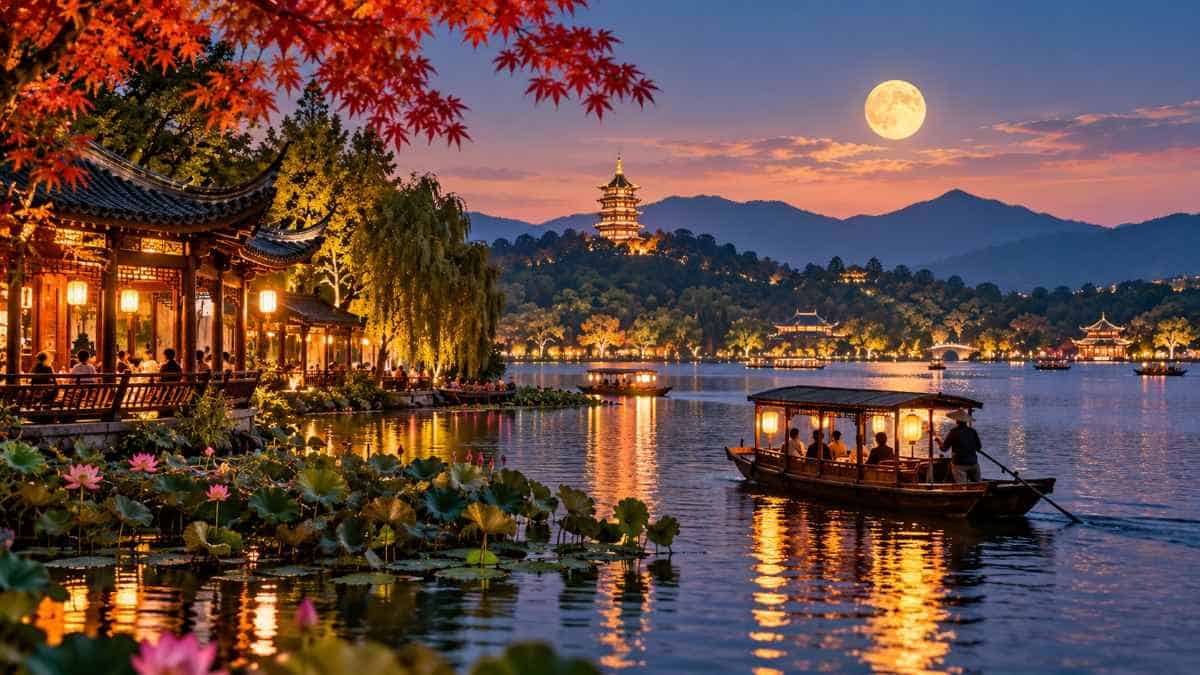
Hangzhou is poised to experience the peak of China’s tourism season, with travellers coming to the city during the Mid-Autumn and National Days, as the attractions at West Lake, historical districts, and the tea farms of Hangzhou attract tourists. Hangzhou’s tourism potential, due to moon-viewing customs, culture and autumn scenery, makes the provincial capital a top spot for domestic tourism in China. The proposed “Mid-Autumn Culture Golden Week & West Lake Private Salon” (September 29 – October 3, 2026) could not be found as an official event. Nonetheless, the holiday travel and recent reports on tourism in Hangzhou suggest significant interest in the traditional feel, nightlife and lakeside scenery of Hangzhou. China’s Mid-Autumn holiday falls between September 25 – 27, whereas the National Day Holiday takes place between October 1 – 7.
West Lake Becomes a Centre of Autumn Travel
West Lake remains central to Hangzhou’s tourism identity. Its causeways, islands, pagodas and landscaped shores provide a setting for walking, boat excursions and cultural visits.
The lake is particularly associated with moon-viewing during Mid-Autumn Festival, when families and visitors gather to appreciate the full moon. The traditional scene combines water, illuminated boats and historic landmarks, making the lake a natural focus for seasonal travel.
Recent reporting by Hangzhou’s city news portal identified the destination among the popular choices for moon-viewing trips during the holiday period. Night-tour bookings across China also rose sharply, reflecting interest in experiences after dark.
Advertisement
Advertisement
The appeal is not limited to the festival itself. Autumn brings changing light and cooler conditions, offering visitors a different perspective on the lake’s gardens and surrounding hills.
A Longer Holiday Is Changing Travel Patterns
The 2026 calendar places the three-day Mid-Autumn holiday immediately before the seven-day National Day break, with some travellers using annual leave to create a longer trip.
Advertisement
Advertisement
China’s national tourism campaign for late September and October includes cultural activities, travel products and consumer incentives intended to encourage spending. More than 20,000 cultural and tourism events are planned nationwide, alongside over 310 million yuan in vouchers and subsidies, according to the central government’s announcement.
For Hangzhou, the extended period creates opportunities for visitors to combine West Lake with nearby destinations, tea villages and cultural sites. It also places pressure on transport, accommodation and popular attractions, making planning important.
Longjing Tea Connects Visitors With Hangzhou’s Landscape
Longjing Village offers a different experience from the city’s lakeside promenades. Its tea gardens, traditional houses and surrounding hills connect visitors with the agricultural and cultural history of Longjing green tea.
Tea experiences can include tasting, learning about processing and visiting local tea businesses. First-harvest Longjing is associated with spring, so autumn visitors should not mistake a seasonal tasting for a fresh spring harvest.
Private tea ceremonies and incense experiences, as described in the proposed event concept, may be arranged by individual venues, but no verified public programme confirms exclusive West Lake salons during September 29 to October 3.
For visitors interested in cultural tourism, the distinction between a commercial experience and a documented traditional practice matters. The strongest itineraries allow time for the landscape, tea production and local context rather than relying only on luxury presentation.
Advertisement
Advertisement
Guochao Adds a Contemporary Layer to Heritage Travel
The term Guochao describes a contemporary interest in Chinese cultural identity expressed through fashion, design, consumer products and heritage-inspired experiences. It has become part of the conversation around how younger consumers engage with traditional aesthetics.
Hangzhou offers several settings for that interest, from tea culture and historic architecture to museums, craft businesses and traditional performance. The city’s cultural appeal can therefore reach beyond conventional sightseeing.
However, the claim that young high-net-worth Chinese travellers are creating exceptional demand for secluded tea estates and architectural retreats around West Lake could not be substantiated with current market data. It is more accurate to describe this as a potential premium niche than a verified demand surge.
The City’s Cultural Offer Extends Beyond the Lake
Visitors can pair West Lake with Leifeng Pagoda, the historic streets around Hefang Street and the China National Tea Museum.
The pagoda offers views across the lake and surrounding city, while the tea museum provides context for the region’s long relationship with tea cultivation and preparation.
Further west, Xixi National Wetland Park provides a different landscape of waterways, vegetation and traditional settlements. It can form part of a longer itinerary for travellers seeking quieter natural settings beyond the central lakefront.
Advertisement
Advertisement
Tourism Growth Meets the Challenge of Visitor Management
Hangzhou’s popularity during national holidays creates an important management question: how can the city welcome large visitor numbers while protecting the experience of its most sensitive heritage and natural sites?
Boat capacity, pedestrian flows, transport arrangements and the management of popular viewing areas all influence the quality of a visit. Travellers seeking a quieter experience may consider early mornings, less central sections of the lake or visits to surrounding cultural districts.
For the luxury segment, privacy and exclusivity are often part of the appeal, but responsible tourism also depends on local access, cultural respect and environmental management.
Hangzhou’s Autumn Appeal Goes Beyond One Festival
Tourism in the city during the autumn season integrates the experience of moon viewing, tea culture, historic architecture, and the broader period of holiday travel in the country. The verified schedule of the holidays and the interest of people in nighttime tours around West Lake have provided a distinctive seasonal identity to the place. Though the idea of private salons is not yet established, the cultural profile of Hangzhou offers a good foundation for autumn tourism.
Advertisement
