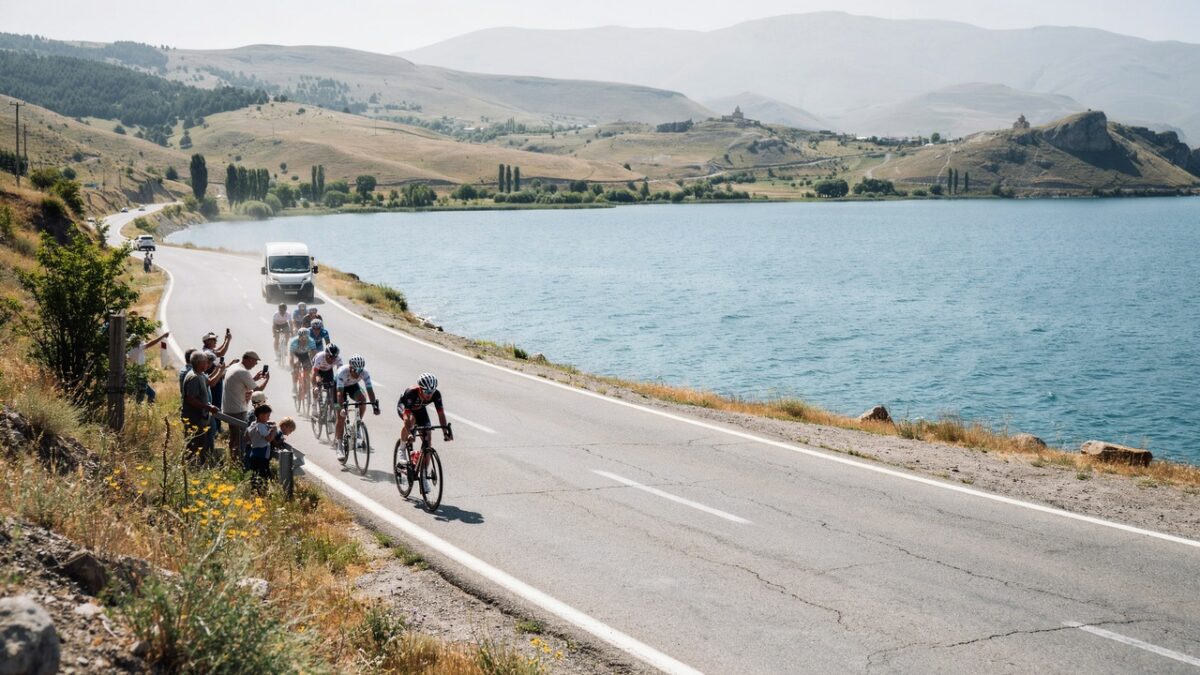
Image generated with Ai
Armenia is creating a new Cycling Tourism opportunity with the inaugural Tour of Armenia, scheduled from 10 to 13 September 2026. The four-stage men’s race will cover 587 kilometres, include about 5,300 metres of climbing and carry a confirmed Class 2.2 classification. Its route will showcase lakes, forests, mountain roads, regional communities and Yerevan to international teams, spectators and media audiences. Bulgaria and Monaco have hosted established Grand Tour openings, Slovenia will stage the European Road Championships in October, and Scotland is preparing for 2027. However, their long-term visitor, hotel and spending benefits still require official measurement after each event.
Professional races can create immediate and longer-term travel opportunities. Competitors, officials, support teams, media crews and spectators require hotels, restaurants, local transport and event services. Broadcast coverage can introduce viewers to landscapes and cities which they may not otherwise associate with cycling holidays. Routes can also connect established tourism centres with smaller communities that receive less international attention.
Long-term value is not automatic. Host destinations must convert race exposure into bookable holidays, mapped routes, bicycle-friendly accommodation and safe infrastructure. Public transport must also accommodate bicycles where possible. Without this work, visitor activity may remain concentrated around several competition days. Economic success must therefore be measured through overnight stays, visitor spending, route use and benefits reaching local communities.
| Country | Major event | Date | Verified scale |
|---|---|---|---|
| Armenia | Tour of Armenia | 10–13 September 2026 | New Class 2.2 four-stage race covering 587 km |
| Bulgaria | Giro opening stages | 8–10 May 2026 | Three established race stages totalling 543 km |
| Slovenia | European Road Championships | 2–7 October 2026 | About 800 competitors from 51 countries |
| Monaco | Vuelta international departure | August 2026 | Established Grand Tour opening |
| Scotland | Tour de France opening stage | 2 July 2027 | Stage beginning in Edinburgh |
| Cycling Tourism model | Race-led destination marketing | Multi-year opportunity | Longer holidays require permanent travel products |
Armenia provides the most distinctive example because it is creating a new national event. The race will begin with a 135-kilometre stage from Gavar to Mets Masrik, passing Lake Sevan. Stage two will cover 177 kilometres from Kirants to Stepanavan. The third stage will run 162 kilometres from Martuni towards Dilijan and Lake Parz. A 113-kilometre Yerevan circuit, completed over ten laps, will provide the finale.
Advertisement
The complete route will expose Gegharkunik, Tavush, Lori, Aragatsotn and Yerevan to race-related audiences. Gegharkunik supplies Lake Sevan and high-altitude scenery. Tavush offers forests, rural roads and cultural attractions. Lori contributes mountain landscapes and heritage locations. Yerevan will provide the principal accommodation base, transport gateway and urban finish. This regional format gives Armenia a stronger foundation for Cycling Tourism than a competition held in one location.Armenian stage Route Distance Destination relevance Stage one Gavar–Mets Masrik 135 km Lake Sevan and Gegharkunik Stage two Kirants–Stepanavan 177 km Tavush, Lori and northern landscapes Stage three Martuni–Dilijan–Lake Parz 162 km Forest and nature-based travel Stage four Yerevan circuit 113 km Capital-city hospitality and attractions Total Multi-regional route 587 km Wider destination visibility Climbing Mountain sections About 5,300 metres Advanced road-cycling potential
Armenia’s event does not create new visa or passport rules. Foreign participants and spectators must follow existing entry requirements. A temporary arrangement from 1 July 2026 to 1 July 2027 allows nationals of 111 listed countries to enter without a visa if they hold an eligible residence permit. The permit must come from specified countries or regions and remain valid for at least six months from entry.
Eligible travellers must present the permit as a physical card or passport sticker. It should show required personal and validity information in Latin script. Qualified visitors may remain for up to 180 days within one year. The exemption is conditional, so nationality alone is not enough. No special event visa or separate border facility has been announced.
Bulgaria hosted the first three stages of the 2026 Giro between 8 and 10 May. It did not create a new national tour. The opening stage travelled 147 kilometres from Nessebar to Burgas beside the Black Sea. The second covered 221 kilometres from Burgas to Veliko Tarnovo. The final Bulgarian stage ran 175 kilometres from Plovdiv to Sofia. Together, they totalled exactly 543 kilometres.
Advertisement
Advertisement
The route showcased coastal tourism, Balkan valleys, historic cities, a mountain pass, a ski area and Sofia. Bulgaria can extend the value through coastal rides, cultural itineraries, food experiences and urban routes. Bicycle-friendly accommodation and amateur events could also encourage longer stays. However, no specific financial return should be claimed without an official post-event study measuring Cycling Tourism demand.
Slovenia will host the European Road Championships from 2 to 7 October 2026. Official tourism information expects 51 countries, around 800 competitors and approximately 500 accompanying personnel. Junior and elite road races and time trials will take place across 12 municipalities. Ljubljana and Šenčur will serve as principal locations, supported by communities across central and northern Slovenia.
An estimated 16 million viewers may follow coverage through European broadcasters. Slovenia already markets Alpine, Mediterranean, Karst and Pannonian cycling experiences, so the championships will strengthen an existing Cycling Tourism identity. Official planning also considers airport access, motorway connections and reducing disruption from road closures. The tourism authority has described the country as a destination for year-round sports and cycling experiences.
Monaco hosted activities from 20 to 23 August, with competitive departures on 22 and 23 August. The programme used prominent urban locations, including Port Hercule and the Place du Casino. It attracted international teams, media activity and spectators while supporting hospitality, luxury travel and event-related business demand.
Monaco has a different tourism model because its territory is compact. It is better suited to short event-led visits than long domestic touring routes. Accommodation demand can spread into neighbouring France, while recreational itineraries may require cross-border planning. Its Cycling Tourism opportunity therefore centres on urban experiences, coastal access, media visibility and links with the wider Riviera.
Scotland will enter the next phase of this European trend on 2 July 2027, when an opening stage begins in Edinburgh. The route will pass through Midlothian, the Scottish Borders and Dumfries and Galloway before the wider race continues through England and Wales. International broadcasting and spectator travel could distribute attention across several southern Scottish communities.
Preparations include a government-backed programme intended to expand the event’s social benefits. A £1 million legacy initiative is planned to support participation and help communities engage with the event. Its success will depend on more than race-day attendance. Scotland must connect international exposure with permanent routes, community programmes and accessible Cycling Tourism products that visitors can use after 2027.Event status Country Correct editorial treatment Completed Bulgaria Await verified post-event visitor and spending results Completed Monaco Assess media reach, hospitality and transport effects Upcoming in September 2026 Armenia Provide route, entry and spectator information Upcoming in October 2026 Slovenia Explain confirmed preparations and official forecasts Future in July 2027 Scotland Focus on planning, participation and legacy
These different stages must not be combined into one economic conclusion. Bulgaria and Monaco can eventually provide completed-event evidence. Armenia and Slovenia currently offer forecasts and practical planning information. Scotland remains a future development whose results cannot yet be measured.
Race locations can support recreational road cycling, mountain biking and self-guided journeys. Easier traffic-separated routes could serve families, while cultural itineraries can link historic centres, museums and monuments. Gastronomy routes could connect local food producers with rural stays. Training camps may attract clubs, while adapted bicycles and inclusive support services could widen access.
Major events can accelerate Cycling Tourism by generating immediate visits and promoting later holidays through broadcasting. Hotels, restaurants, bicycle-rental businesses, repair shops, guides, attractions and event suppliers may benefit. Yet gross economic activity is not the same as profit. Authorities must consider event costs, public expenditure and whether small regional businesses receive a meaningful share of visitor spending.Post-event metric Why it matters Spectator attendance Measures direct interest International visitors Separates tourism from local attendance Hotel nights Shows accommodation demand Average spending Measures visitor value Length of stay Shows whether trips extended beyond the race Broadcast reach Measures destination visibility Route usage Tracks longer-term cycling activity Local revenue Tests benefits for communities Public expenditure Shows the cost of hosting Resident sentiment Measures community acceptance Environmental impact Tests sustainability claims
Cycling events are not automatically sustainable simply because bicycles are involved. Organisers must manage road closures, resident access, waste, event emissions and pressure on protected landscapes. Mountain-bike use can damage trails if riders leave authorised routes. Safe bicycle transport, public consultation, local purchasing and reuse of event infrastructure should form part of future planning.
Spectators should confirm dates, consult official route maps and monitor road restrictions. They should book accommodation early, check bicycle-transport rules and review weather and elevation. Visitors must follow traffic laws, respect protected areas and stay outside restricted zones. Nobody should ride on a closed professional course without permission.
Armenia will provide Europe’s next major Cycling Tourism test when its inaugural stage race begins on 10 September 2026. Final team details, spectator arrangements and traffic measures still require official confirmation. Post-race research should measure hotel nights, visitor origins, spending, media reach and benefits beyond Yerevan. Slovenia will follow in October, while Bulgaria and Monaco can publish evidence from their completed events. Scotland will continue preparing for July 2027. Armenia remains the strongest new example because it is creating a national race. Lasting success will depend on bookable routes, longer visitor stays, safe infrastructure and measurable gains for local communities.
What is the Tour of Armenia?
It is a new Class 2.2 men’s stage race scheduled for 10–13 September 2026.
Is the Armenian race confirmed as an annual event?
Only the 2026 edition is confirmed. Later editions require separate official confirmation.
Did Bulgaria launch a new national race?
No. Bulgaria hosted the first three stages of an established Italian Grand Tour.
How far did the competition travel through Bulgaria?
The three stages covered a combined 543 kilometres.
When will Slovenia host its championships?
The competition is scheduled for 2–7 October 2026.
How many competitors are expected in Slovenia?
Official information forecasts around 800 competitors from 51 countries.
What did Monaco host?
Monaco hosted the international departure of an established Spanish Grand Tour in August 2026.
When will the French Grand Tour begin in Scotland?
The opening stage is scheduled to leave Edinburgh on 2 July 2027.
Can spectators cycle on professional race routes?
Only when public access is legally permitted. All closures and restricted areas must be respected.
How should tourism benefits be measured?
Key measures include visitor numbers, hotel nights, spending, broadcast reach, business revenue and long-term route use.
Advertisement
Advertisement
Advertisement











Wednesday, September 2, 2026

Wednesday, September 2, 2026

Wednesday, September 2, 2026

Wednesday, September 2, 2026

Wednesday, September 2, 2026
Tuesday, September 1, 2026

Wednesday, September 2, 2026
Wednesday, September 2, 2026