
Amsterdam and More Enter the Spotlight as Scenic and Others Unveil 2028 European River Voyages

Published
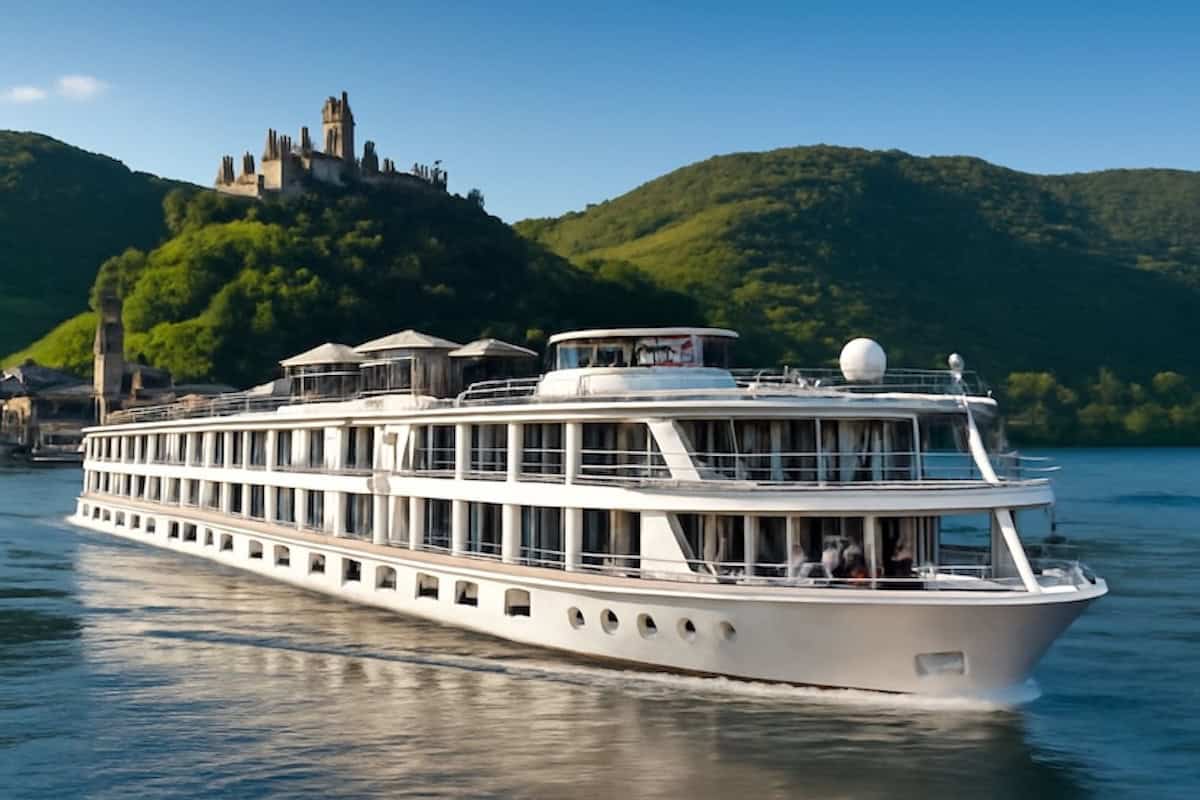
Amsterdam and more European destinations are entering the spotlight as Scenic and others unveil new 2028 European river voyages. Amsterdam, Europe, Scenic and other destinations are attracting attention from travellers planning future river holidays. Meanwhile, these 2028 voyages are creating fresh opportunities to discover Europe by water, with longer journeys, cultural stops and land experiences. As a result, travellers can look beyond traditional city breaks and explore several destinations during one carefully planned holiday. Travel And Tour World urges readers to explore the full story, because Amsterdam and more destinations could become key highlights of Europe’s evolving 2028 river-voyage landscape for global travellers.
Europe River Cruises 2028: Six Major Alternatives, Destinations, Statistics and Detailed Traveller Guide
Europe River Cruises Enter a Wider Competitive Landscape
The early availability of Scenic Group’s 2028 European river programme comes as Europe’s river-cruise market continues to recover and attract international travellers.
Advertisement
Advertisement
The Central Commission for the Navigation of the Rhine (CCNR) recorded 1.39 million river-cruise passengers on European waterways in 2024, up 14% from 2023. Gross ticket revenue also reached about €3.54 billion, another 14% increase. International visitors represented 46% of passengers but generated 71% of total revenue, highlighting the importance of long-haul travellers to European river cruising.
The Rhine and Danube remained the most heavily used European river-cruise corridors. The CCNR also recorded 1.22 million passengers in 2023, with travellers from the United States and Canada forming an important overseas market.
Advertisement
Advertisement
This backdrop helps explain why multiple operators are extending programmes, adding ships, introducing longer voyages and combining cruises with land stays.
European River Cruise Market: Key Statistics
| Indicator | Latest available figure | What it means for travellers |
|---|---|---|
| European river-cruise passengers, 2023 | 1.22 million | Strong recovery after the pandemic |
| European river-cruise passengers, 2024 | 1.39 million | 14% annual increase |
| River-cruise gross ticket sales, 2024 | €3.54 billion | Significant international travel value |
| Overseas share of passengers, 2024 | 46% | Nearly half came from outside Europe |
| Overseas share of revenue, 2024 | 71% | Long-haul guests are commercially important |
| USA/Canada passengers, 2024 | 571,682 | 41% of European river-cruise passengers |
| DACH passengers, 2024 | 506,003 | 37% of European river-cruise passengers |
| Active river cruise vessels, 2023 | 408 | 60,702 beds |
| European tourism nights, 2023 | About 2.9 billion | Broad tourism demand recovered beyond 2019 levels |
| EU tourism nights, 2024 | More than 3 billion | Record accommodation demand |
| EU tourism nights, 2025 | Nearly 3.1 billion | Another record year |
The CCNR figures show that European river cruising is not simply recovering through domestic demand. Overseas travellers generated a disproportionately large share of revenue, making long-haul visitors particularly important to the sector.
Advertisement
Advertisement
Eurostat separately reported nearly 3.1 billion tourist accommodation nights across the EU in 2025, 2.2% higher than 2024. Spain, Italy, France and Germany accounted for 61.7% of the total.
Five-Year European Tourism Recovery Shows Why River Cruising Has Strong Foundations
Travellers planning a 2028 river holiday should understand the wider tourism recovery across Europe.
Advertisement
Advertisement
Government statistics show that EU tourism accommodation demand was severely affected in 2020. The recovery accelerated during 2022 and reached a new benchmark in 2023.
Eurostat recorded 2.9 billion tourism nights in 2023, representing a 6.1% increase over 2022 and 1.4% above 2019.
Final 2024 figures exceeded three billion nights. International visitors were responsible for a substantial part of that additional demand.
The latest 2025 figures show another record, with international tourism nights increasing faster than domestic nights.
Advertisement
Advertisement
EU Tourism Accommodation Comparison
| Year | EU tourism accommodation nights | Annual comparison | Travel-market significance |
|---|---|---|---|
| 2020 | Major pandemic disruption | More than 50% below 2019 | International tourism severely restricted |
| 2021 | Recovery begins | Strong rebound from 2020 | Borders progressively reopened |
| 2022 | Recovery accelerates | Substantial annual improvement | European leisure demand returns |
| 2023 | About 2.9 billion | +6.1% vs 2022 | Above 2019 benchmark |
| 2024 | More than 3.0 billion | About +2.2% | New record |
| 2025 | Nearly 3.1 billion | +2.2% | Another record year |
The figures are not river-cruise passenger counts, but they provide an important destination-demand context. Travellers considering 2028 sailings can expect to encounter major tourism hubs that are already operating at historically strong levels.
Six Major River Cruise Alternatives for 2027 and 2028
Viking River Cruises: Rhine, Danube, Seine, Moselle and More
Viking remains one of the largest names for travellers comparing European river programmes with Scenic. Its European portfolio covers major waterways including the Rhine, Danube, Main, Seine and Elbe, alongside combinations linking several rivers and major cities. Current programmes include the Rhine Getaway between Basel and Amsterdam, Grand European Tour journeys between Budapest and Amsterdam, and routes connecting Central European destinations.
For a first-time visitor, Viking’s Rhine itineraries are useful for combining Amsterdam, Cologne, Rhine Gorge destinations and Basel. Danube voyages can connect Budapest, Vienna, Bratislava and German destinations depending on the itinerary. Travellers should consider adding two or three hotel nights before embarkation in Amsterdam, Budapest or Basel because these cities deserve more time than a scheduled port call allows.
On the Rhine, visitors can explore Cologne Cathedral, historic riverside towns and vineyard country. On the Danube, Vienna’s imperial architecture, Budapest’s riverfront and Bratislava’s compact historic centre provide contrasting experiences. Local food is another attraction, from German regional dishes and Rhine wines to Hungarian goulash, Austrian pastries and Viennese coffee.
A seven- to 10-day itinerary can work well for first-time river cruisers. Travellers with more time can choose longer combinations connecting the Rhine, Main and Danube.
| Viking route family | Principal waterways | Representative destinations |
|---|---|---|
| Rhine | Rhine | Amsterdam, Cologne, Rhine Gorge, Basel |
| Grand European | Rhine, Main, Danube | Amsterdam, Cologne, Vienna, Budapest |
| Danube | Danube | Budapest, Vienna, Bratislava, Passau |
| Seine | Seine | Paris, Normandy |
| Main/European combinations | Main, Rhine, Danube | Germany and Central Europe |
For accommodation, travellers should consider centrally located hotels in Amsterdam, Budapest, Vienna or Basel when extending a voyage. The additional nights also provide protection against tight flight-to-ship connections.
Advertisement
Advertisement
AmaWaterways: Extensive Danube, Rhine, Seine and European Combinations
AmaWaterways offers a particularly broad European programme, with 2028 itineraries covering the Danube, Rhine, Main, Moselle, Seine and connected European waterways.
Its 2028 Europe’s Rivers & Castles itinerary runs for seven nights through Germany and Luxembourg, using the Main-Danube Canal, Main, Moselle and Rhine. The programme lists 2028 port charges of $290 per person and ships including AmaCerto and AmaPrima, each accommodating 162 passengers.
Its Grand Danube programme stretches for 14 nights through Austria, Bulgaria, Croatia, Germany, Hungary, Romania, Serbia and Slovakia.
The Magnificent Europe itinerary combines Amsterdam and Budapest through the Rhine, Main and Danube and operates for 14 nights.
Travellers seeking variety can therefore choose between shorter seven-night journeys and longer multi-country voyages.
For food-focused visitors, the Rhine and Moselle are particularly suited to wine experiences, while the Danube offers Austrian, Hungarian, Slovak, Serbian, Romanian and Bulgarian culinary traditions.
Advertisement
Advertisement
A practical itinerary could begin with two nights in Amsterdam, followed by a 14-night cruise toward Budapest. Travellers could then spend two additional nights in Budapest before flying home.
| AmaWaterways programme | Duration | Countries shown by operator | Rivers |
|---|---|---|---|
| Europe’s Rivers & Castles | 7 nights | Germany, Luxembourg | Main-Danube Canal, Main, Moselle, Rhine |
| Best of the Danube | 7 nights | Austria, Slovakia, Hungary | Danube |
| Gems of Southeast Europe | 7 nights | Bulgaria, Croatia, Hungary, Romania, Serbia | Danube |
| Grand Danube | 14 nights | 8 countries | Danube |
| Magnificent Europe | 14 nights | Austria, Germany, Hungary, Netherlands, Slovakia | Rhine, Main, Danube |
| Grand Seine & Dutch Impressions | 14 nights | France, Netherlands, Belgium | Seine and Dutch/Belgian waterways |
The operator’s current 2028 listings demonstrate that early planning can provide access to a wide range of dates and route combinations.
Avalon Waterways: Panoramic European Cruising With Rhine and Danube Depth
Avalon Waterways provides another strong alternative for travellers interested in combining European cities with river landscapes.
Its 2028 Blue Danube Discovery is an eight-day journey from Budapest to Nuremberg, visiting Hungary, Austria and Germany. The route includes Bratislava-area scenery, Vienna, the Wachau Valley and Melk.
The 2028 Romantic Rhine travels from Amsterdam to Basel for eight days and covers the Netherlands, Germany, France and Switzerland. Stops include Cologne, the Rhine Gorge and Rüdesheim.
Avalon’s 2028 German Grandeur stretches for nine days from Basel to Nuremberg and includes Switzerland, France and Germany. The itinerary combines the Rhine and Main rivers and includes destinations such as Strasbourg, Rüdesheim, Frankfurt, Würzburg, Bamberg and Nuremberg.
Advertisement
Advertisement
For travellers, Avalon is especially interesting when the scenery itself is a priority. The Rhine Gorge, Wachau Valley and vineyard landscapes provide continuous visual experiences from the ship.
A good travel plan would include two nights in Amsterdam before the Romantic Rhine, followed by a post-cruise stay in Basel. For the Danube, Budapest is worth at least two nights before boarding.
Food choices can include Dutch cheeses, German sausages and pastries, Alsatian cuisine, Austrian specialties and Hungarian dishes. Travellers should also reserve time for regional wine tastings around the Rhine and Wachau.
| Avalon 2028 example | Duration | Countries | Main highlights |
|---|---|---|---|
| Blue Danube Discovery | 8 days | Hungary, Austria, Germany | Budapest, Vienna, Wachau, Melk, Nuremberg |
| Romantic Rhine | 8 days | Netherlands, Germany, France, Switzerland | Amsterdam, Cologne, Rhine Gorge, Rüdesheim, Basel |
| German Grandeur | 9 days | Switzerland, France, Germany | Basel, Strasbourg, Frankfurt, Würzburg, Bamberg, Nuremberg |
Avalon’s European fleet uses its Suite Ships, with panoramic accommodation designed around views of the river landscapes.
Uniworld: Long Multi-Country Voyages for Slow European Exploration
Uniworld is particularly relevant for travellers who want longer European journeys rather than a simple one-week river holiday.
Its 2028 programme includes Rhine, Main, Danube, Seine, Rhône, Saône, Moselle, Garonne, Dordogne and the Venice Lagoon, depending on itinerary. Its Danube East & West travels between Vienna and Bucharest for 18 days through seven Danube countries, while Eastern Europe Exploration stretches for 25 days from Bucharest to Prague across nine countries.
Advertisement
Advertisement
Its Amsterdam to the Black Sea programme lasts 30 days and combines the Rhine, Main and Danube.
This makes Uniworld especially interesting for travellers who want to turn a river cruise into a major European holiday.
The shorter alternatives are equally varied. Paris & Normandy uses the Seine, while Burgundy & Provence explores the Rhône and Saône. A Douro programme links Portugal and Spain, while Venice-based journeys focus on the Venetian Lagoon.
Travellers taking a 25- or 30-day voyage should build additional hotel nights into their plans. Amsterdam, Budapest, Bucharest and Prague can each justify several nights.
The culinary experience can be planned around French regional cuisine, Rhine wines, Austrian pastries, Hungarian dishes, Balkan specialties and Portuguese wines.
| Uniworld 2028 programme | Duration | Countries listed | Waterways |
|---|---|---|---|
| Holland & Belgium at Tulip Time | 8 days | Belgium, Netherlands | Rhine |
| Castles along the Rhine | 8 days | France, Germany, Netherlands, Switzerland | Rhine |
| Burgundy & Provence | 8 days | France | Rhône, Saône |
| Danube East & West | 18 days | 7 countries | Danube |
| Eastern Europe Exploration | 25 days | 9 countries | Danube |
| Amsterdam to the Black Sea | 30 days | 9 countries | Rhine, Main, Danube |
| Paris & Normandy | 8 days | France | Seine |
| Venice & Jewels of Veneto | 8 days | Italy | Venice Lagoon |
Uniworld says its ships are designed as destination-inspired floating boutique hotels, with its European fleet offering all-inclusive amenities and curated excursions.
Advertisement
Advertisement
Tauck: Smaller-Scale Luxury and Shorter River Journeys
Tauck is another significant competitor, particularly for travellers looking for fully inclusive journeys.
The company announced 37 European river cruises for 2027, including six Tauck Bridges itineraries designed for families. The programme covers the Rhine, Danube, Douro, Rhône and Seine, alongside Christmas-market journeys.
Tauck is also expanding its river fleet. Its 2027 programme adds two vessels, including a new Douro ship and another vessel for the Seine. The company says its river capacity will increase by 30% compared with 2025, with France capacity rising 50% and Douro capacity nearly doubling.
For travellers, Tauck’s shorter journeys can be useful when a two-week holiday is difficult to arrange. Its six-day Essence of the Seine links Paris and Normandy, while Essence of the Danube connects Budapest and Vienna.
The Douro is another major focus. Tauck’s 2027 programme includes Porto-based journeys featuring vineyards, Port tastings, Guimarães, Salamanca and Madrid extensions.
A Portugal-focused traveller could spend three nights in Porto before cruising, then add Madrid after the Douro voyage.
Advertisement
Advertisement
Food planning should focus on Portuguese seafood, regional cheeses, Port wine, French Normandy produce and Central European cuisine.
| Tauck indicator | 2027 figure/detail |
|---|---|
| European river cruises | 37 |
| Tauck Bridges family itineraries | 6 |
| New riverboats | 2 |
| River capacity change vs 2025 | +30% |
| France capacity change | +50% |
| Douro capacity | Nearly doubled vs 2025 |
| Key rivers | Rhine, Danube, Douro, Rhône, Seine |
Tauck’s programme demonstrates how European river cruising is becoming more flexible, with shorter journeys alongside traditional week-long and longer itineraries.
A-ROSA: Broad European Coverage With 15 Ships and More Than 60 Itineraries
A-ROSA provides a different proposition for travellers comparing European river holidays.
The operator’s 2026 programme included 15 ships and more than 60 itineraries across the Rhine, Main, Moselle, Danube, Seine, Rhône/Saône and Douro.
Its programme includes destinations across Germany, Austria, Hungary, Slovakia, France, Portugal, Spain, Belgium and the Netherlands.
A-ROSA’s Danube routes can include Vienna, Budapest, Bratislava, Esztergom, Krems, Melk, Passau and the Wachau. Its 2027 programme also includes longer Danube journeys toward the delta.
Advertisement
Advertisement
The Douro programme includes Porto, Régua, Pinhão, Barca d’Alva and Vega de Terrón, with Salamanca available as an excursion destination. A-ROSA’s Douro ship carries a maximum of 126 guests. Its Douro press kit records eight cities, 35 annual sailings and 897 river kilometres for the programme.
For travellers, A-ROSA can be useful for shorter breaks as well as longer European routes.
The 2027 programme includes a seven-night Douro Experience and a seven-night Douro Wine & Gusto itinerary.
Visitors can pair Porto with the Douro, Paris with Normandy, Lyon with Provence or Vienna with the Danube.
| A-ROSA measure | Available data |
|---|---|
| Fleet in 2026 | 15 ships |
| 2026 itineraries | 60+ |
| Major European river regions | Rhine/Main/Moselle, Danube, Seine, Rhône/Saône, Douro |
| Douro annual sailings | 35 |
| Douro cities in programme | 8 |
| Douro route distance stated by operator | 897 km |
| A-ROSA ALVA maximum capacity | 126 guests |
A-ROSA’s broad river coverage makes it particularly useful for travellers comparing different European regions without committing to an ultra-long voyage.
Six Cruise Lines Compared
| Cruise line | Key European rivers | Representative countries | Notable 2027/28 data |
|---|---|---|---|
| Viking | Rhine, Danube, Main, Seine, Elbe | Netherlands, Germany, Austria, Hungary, France, Switzerland | 2027–29 European programme |
| AmaWaterways | Rhine, Main, Moselle, Danube, Seine | Germany, Luxembourg, France, Netherlands, Austria, Hungary and more | 2028 departures published |
| Avalon | Rhine, Danube, Main and other European routes | Netherlands, Germany, France, Switzerland, Austria, Hungary | 2028 routes published |
| Uniworld | Rhine, Main, Danube, Seine, Rhône, Saône, Douro, Garonne, Dordogne | Wide European coverage | 2028 long voyages published |
| Tauck | Rhine, Danube, Douro, Rhône, Seine | France, Portugal, Germany, Austria and more | 37 European cruises in 2027 |
| A-ROSA | Rhine, Main, Moselle, Danube, Seine, Rhône/Saône, Douro | Germany, France, Portugal, Spain, Austria and more | 15 ships and 60+ 2026 itineraries |
Five-Year Visitor Comparison for Major River-Cruise Countries
Cruise-line passenger statistics should not be confused with national visitor statistics. A traveller arriving in Paris, Amsterdam or Budapest may be staying in a hotel independently rather than sailing with a particular cruise company.
Advertisement
Advertisement
The most reliable comparison therefore uses official tourism accommodation statistics and river-cruise market data.
| Year | European tourism trend | River-cruise market context |
|---|---|---|
| 2021 | Recovery from pandemic restrictions | River cruising gradually resumed |
| 2022 | Strong reopening-led recovery | International demand returned |
| 2023 | 2.9bn EU accommodation nights | 1.22m European river passengers |
| 2024 | More than 3.0bn EU accommodation nights | 1.39m river passengers |
| 2025 | Nearly 3.1bn EU accommodation nights | Latest complete EU tourism benchmark |
Eurostat confirms that European tourism nights surpassed the 2019 benchmark in 2023 and continued to establish records in 2024 and 2025.
The river-cruise market shows a similarly strong direction. Passenger numbers increased from 1.22 million in 2023 to 1.39 million in 2024.
Five-Year Tourism Data: What Global Travellers Should Understand
| Destination market | 2021 | 2022 | 2023 | 2024 | 2025 |
|---|---|---|---|---|---|
| EU overall | Recovery year | Strong reopening | 2.9bn nights | 3bn+ nights | Nearly 3.1bn nights |
| France | Recovery | Reopening | Strong recovery | Slight accommodation decline in final data | Remained among Europe’s largest markets |
| Germany | Recovery | Strong recovery | Strong tourism demand | Major European accommodation market | 442.1m tourism nights |
| Italy | Recovery | Strong recovery | Major tourism market | 458m nights | 476.9m nights |
| Spain | Recovery | Strong recovery | Major tourism market | 500m nights | 513.6m nights |
| Netherlands | Recovery | Strong recovery | Continued recovery | Part of Europe’s major urban tourism network | Continued international demand |
The 2025 national figures for Spain, Italy, France and Germany come from Eurostat’s final tourism data. Those four countries alone represented 61.7% of all EU accommodation nights.
For a river traveller, this matters because many major cruise embarkation and disembarkation cities sit within Europe’s strongest tourism markets.
Detailed Traveller Guide: What to Do Before and After a River Cruise
A river cruise should ideally be treated as the central part of a larger European holiday.
Advertisement
Advertisement
For an Amsterdam to Budapest itinerary, a practical plan is two nights in Amsterdam, followed by the cruise, and two nights in Budapest. Amsterdam visitors can explore the historic canal district and major museums before boarding. Budapest then provides thermal baths, historic architecture and Danube views after disembarkation.
For a Basel to Amsterdam Rhine itinerary, travellers can spend two nights in Basel before sailing. The journey can then cover Rhine Gorge scenery, Cologne and Amsterdam. Adding another two nights in Amsterdam allows visitors to explore beyond the port schedule.
For the Douro, three nights in Porto are worthwhile before sailing. Travellers can explore Porto’s historic centre, sample Portuguese cuisine and visit wine cellars in Vila Nova de Gaia. The cruise then moves through the Douro Valley, where vineyard landscapes dominate the riverbanks.
For the Seine, two or three nights in Paris before departure provide time for museums, neighbourhoods and landmark attractions. The cruise can then focus on Normandy and riverside towns.
For the Rhône and Saône, Lyon works well as a pre-cruise base. Travellers can explore its historic districts and food culture before continuing toward Provence, Avignon and Arles.
For the Danube, Budapest and Vienna are the strongest choices for longer stays. Travellers should consider spending at least two nights in each city if their schedule allows.
Advertisement
Advertisement
What to Eat Along Europe’s Main River Routes
| River region | Foods and drinks to look for |
|---|---|
| Rhine | Riesling, regional sausages, pretzels, German pastries |
| Danube | Goulash, schnitzel, strudel, Central European wines |
| Douro | Port wine, seafood, cod dishes, regional cheeses |
| Rhône/Saône | Lyonnaise cuisine, Provençal dishes, French wines |
| Seine | Normandy cheeses, cider, Calvados, seafood |
| Main/Moselle | Riesling, regional German dishes, Moselle wines |
Travellers should treat food as part of the destination rather than relying exclusively on onboard dining.
Regional markets can provide a stronger connection to local culture. Wine regions along the Rhine, Moselle, Douro and Rhône are particularly suitable for guided tastings.
Where Travellers Should Stay
For river-cruise extensions, location matters more than simply choosing the highest-rated hotel.
In Amsterdam, staying near the central canal belt or main transport connections makes pre-cruise sightseeing easier.
In Budapest, central Pest provides convenient access to the Danube, major attractions and restaurants.
In Vienna, central districts near the historic core are practical for travellers with limited time.
Advertisement
Advertisement
In Porto, a central location near the historic centre provides easier access to Ribeira and Vila Nova de Gaia.
In Paris, travellers should choose accommodation based on the exact embarkation point because Seine cruise terminals can be outside the central tourist core.
In Basel, central accommodation near the old town and public transport can make the pre-cruise stay easier.
Important Planning Statistics for 2028 Travellers
| Planning factor | Traveller recommendation |
|---|---|
| Pre-cruise stay | 2–3 nights |
| Post-cruise stay | 1–3 nights |
| Long-haul arrival buffer | At least 1 day before embarkation |
| Multi-country itinerary | Check entry rules for every country |
| Travel insurance | Strongly recommended for expensive cruise holidays |
| Passport | Check validity requirements well before departure |
| River conditions | Monitor operator updates before departure |
| Peak season | Summer generally offers longer daylight and warmer weather |
| Shoulder season | Spring and autumn can offer cooler weather and fewer crowds |
| Christmas markets | Late November and December provide a different European experience |
River conditions should also be treated as a practical consideration. Low-water conditions can affect European river operations, and travellers should monitor operator advisories before departure. Current Uniworld notices, for example, identify operational adjustments linked to unusually low water levels on sections of the Rhine, Main and Danube.
Why the 2028 Season Could Matter for Global Travellers
The Scenic Group early-access programme arrives in a European river market where travellers have an unusually broad choice of operators.
Viking provides extensive mainstream European coverage. AmaWaterways offers long and multi-river combinations. Avalon focuses heavily on panoramic river experiences. Uniworld provides some of Europe’s longest multi-country voyages. Tauck combines luxury with shorter formats and land extensions. A-ROSA offers broad regional coverage across several major rivers.
Advertisement
Advertisement
Scenic and Emerald therefore enter a competitive landscape rather than an empty market.
For travellers, that competition creates an important advantage: more choices between itinerary length, destination mix, accommodation style, ship size, inclusions and land extensions.
The strongest strategy for a 2028 European river holiday is to start with the destination rather than the ship.
Travellers should decide whether they want the castles and vineyards of the Rhine, imperial capitals along the Danube, wine country on the Douro, French gastronomy along the Rhône and Saône, or Paris and Normandy along the Seine.
They can then compare cruise lines around that preferred region.
With European tourism reaching record accommodation levels and river-cruise passenger numbers reaching 1.39 million in 2024, advance planning is increasingly useful for travellers seeking specific dates and cabins.
Advertisement
Advertisement
For global tourists, the real attraction of Europe’s river cruises is not simply moving between ports.
It is the ability to combine several countries, historic cities, regional food, wine landscapes and cultural experiences into one continuous journey.
That makes the 2028 season an opportunity to plan a much broader European holiday, with the river serving as the route connecting the experience.
Advertisement
