
Small Ship, Big Impact: How Oceanwide’s New Hybrid Sails Will Save Polar Travel

Published
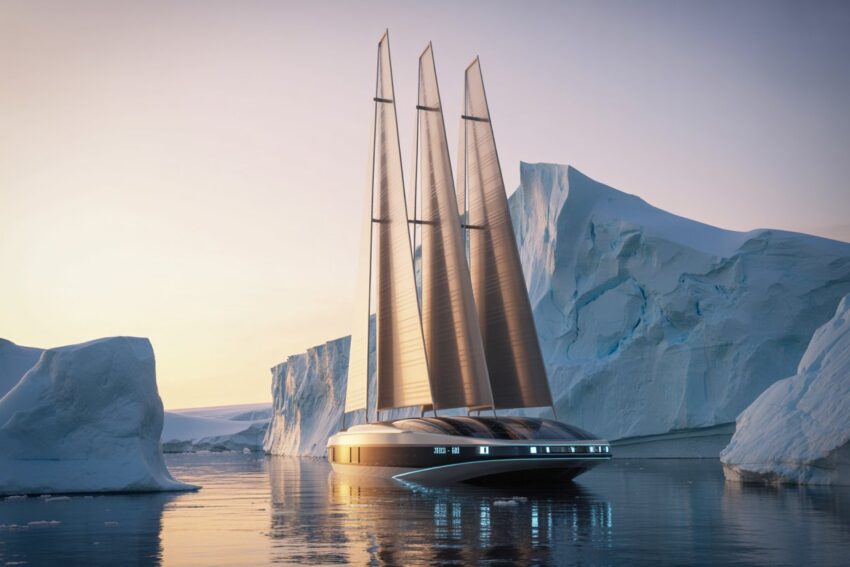 Image generated with Ai
Dutch polar specialist Oceanwide Expeditions has announced a groundbreaking move toward sustainable exploration with two new eco-sail expedition vessels set for a 2029 launch. These ships will accommodate 146 passengers and utilize a hybrid sail propulsion system to drastically cut fuel consumption in the fragile Arctic and Antarctic ecosystems. This project marks a return to the company’s “sailing DNA,” combining traditional wind power with cutting-edge environmental technology.This news originates from the Netherlands, as Oceanwide Expeditions is a Dutch-owned vessel operator headquartered in the port town of Vlissingen.
The golden age of sail is making a high-tech comeback in the world’s most remote corners. Oceanwide Expeditions, a veteran of the polar cruise industry, has just pulled back the curtain on its most ambitious project yet: two custom-built, hybrid-propulsion sailing vessels. For travelers who have long sought a way to visit the “white continent” or the high Arctic with a smaller carbon footprint, the 2029 debut of these ships represents a major shift in how we explore the ends of the Earth.
Advertisement
Advertisement
Quick Summary of the Newbuild Program
- The Vessels: Two hybrid eco-sail ships, the first launching in 2029.
- Capacity: Limited to 146 guests to ensure an intimate, small-ship experience.
- Technology: Innovative hybrid sail systems designed to reduce emissions and noise.
- Heritage: A strategic return to Oceanwide’s roots as a sailing expedition leader.
- Timeline: Contract finalization is complete, with commercial bookings expected by early 2027.
The Traveler’s Perspective: Adventure Without the Impact
The modern traveler is increasingly caught between a desire to see the world’s most vulnerable landscapes and a fear of damaging them. Oceanwide’s move addresses this “eco-anxiety” head-on. By utilizing wind-assisted propulsion, these ships won’t just be cleaner—they will be quieter. Imagine gliding past a colony of Emperor penguins or a breaching humpback whale with only the sound of the wind in the sails, rather than the constant thrum of a diesel engine.
The Advantages: Intimacy and Ethics
- Sustainable Exploration: The primary advantage is the reduced environmental impact. Traveling on a hybrid vessel means you are contributing less to the melting ice you’ve come to see.
- True Small-Ship Access: With only 146 passengers, these ships are small enough to land in spots that larger “mega-expedition” ships (carrying 400+) simply cannot reach. This means more time on the ground and less time waiting for your turn in a Zodiac.
- Authentic Heritage: There is a romantic, historic feel to sailing. These new ships bridge the gap between the rugged spirit of early explorers and the 21st-century luxury of modern cabins.
The Disadvantages: The Trade-offs of Tech
- The Long Wait: If you are planning a trip for next year, these ships won’t help you. With the first launch in 2029, travelers have a three-year wait just to book and five years to actually board.
- Weather Dependency: While the hybrid system ensures the ship moves even when the wind is dead, sailing-centric designs can sometimes be more prone to the “roll” of the Southern Ocean compared to heavy-set modern motor vessels.
- Premium Pricing: Cutting-edge green technology rarely comes cheap. It is likely that these eco-sail voyages will carry a higher price tag than Oceanwide’s older, traditional motor vessels like the Plancius.
Conclusion
Oceanwide Expeditions has announced a revolutionary newbuild program for two eco-sail expedition vessels, with the first ship scheduled for a 2029 launch. These state-of-the-art ships will carry 146 passengers and feature a hybrid sail propulsion system designed to drastically reduce fuel consumption and carbon emissions in the Arctic and Antarctic. Commercial bookings are expected to open in early 2027, marking a major step toward sustainable, small-scale polar exploration.By committing to hybrid sail technology, they are proving that their expertise in polar navigation is matched by a trustworthy commitment to conservation. For the traveler, this means the future of polar exploration looks less like a floating hotel and more like a true, responsible expedition. The 2029 launch can’t come soon enough for those ready to trade engine noise for the snap of a sail.
Advertisement
Advertisement
Advertisement
