
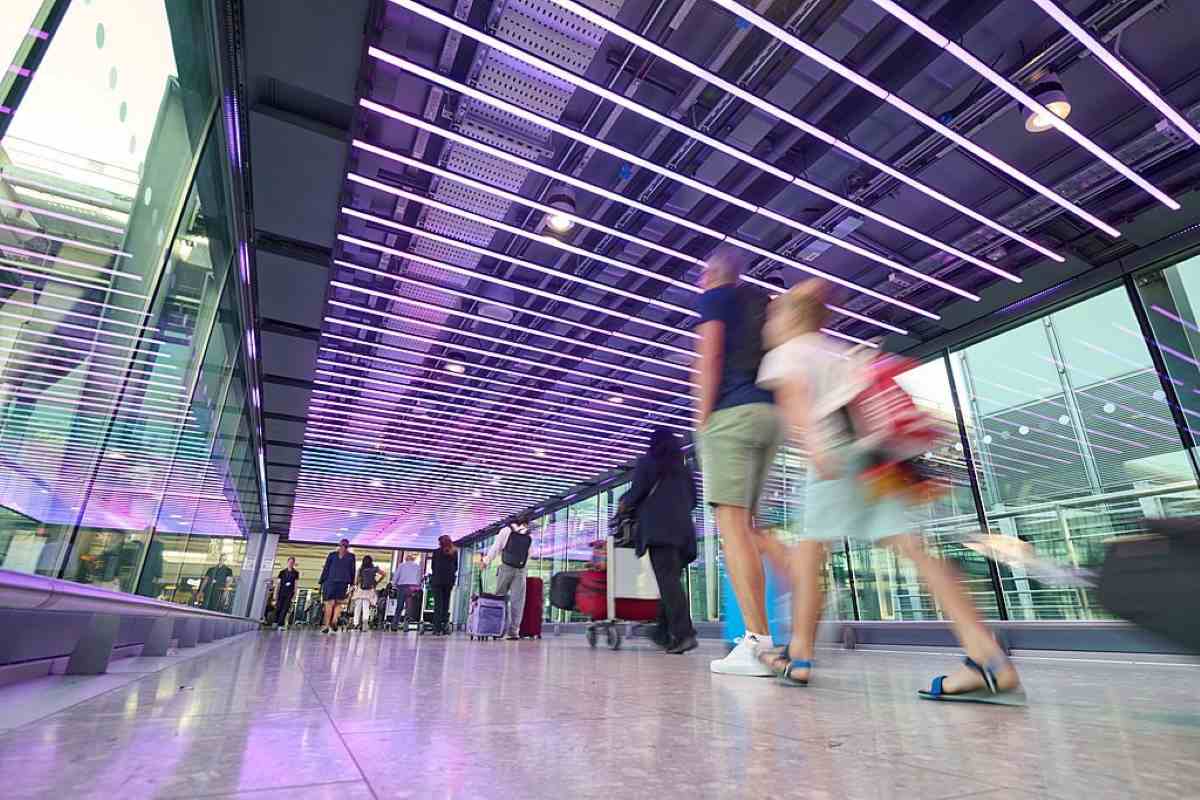
Image: Heathrow Airport
British travelers will feel the effects of the European Union ending its temporary flexibility measures regarding its Entry/Exit System (EES) on September 6, 2026, when a new phase of border controls will go into effect for British travelers on the way to France, Spain, Greece, Italy, and other Schengen countries. This development means that border authorities do not have the ability to invoke a general emergency option to halt biometric control in the case of extremely large numbers of passengers, which has raised concern along the major airports and external Schengen border crossings, and has resulted in long queue times. As a result, British passport holders—as non-EU citizens—must undergo the EES registration procedures for the Schengen area, which include facial recognition and fingerprint capture.
Operational challenges posed by the EES have made the system the biggest challenge to EU digital border controls since the introduction of digital border controls. With the goal of replacing the process of manual passport stamping with an automated system that provides better security and controls the 90-day stay limit and streamlines border processing, the first phase of the EES has caused excessive strain during busy periods at most EU airports since first time registration is much more time consuming than traditional passport checks. Now that the emergency relief period has come to an end, airlines, airports, and travel organizations will be interested to see how the EU border points manage passenger volume during peak demand periods including the school holidays and long weekends.
The Entry/Exit System is a major digital transformation of Europe’s external borders. It replaces the previous system where passports were manually stamped every time non-EU travellers entered or exited the Schengen Area.
Advertisement
Advertisement
Under EES, authorities electronically record:Information Collected Under EES Purpose Passport details Creates a digital traveller record Facial photograph Enables identity verification Fingerprints Provides biometric confirmation Entry and exit dates Tracks permitted stay periods Border crossing location Records movement through Schengen borders
The system applies to short-stay visitors from outside the EU, including British holidaymakers, business travellers and other international visitors. It monitors compliance with the Schengen 90-day-in-180-day rule and helps authorities identify overstays or invalid travel documents.
For travellers making their first EES journey, the process takes longer because border officers must create a biometric profile. Future crossings are expected to become faster because identity verification can rely on previously stored information. However, the initial registration requirement remains the main challenge for airports, ports and railway terminals handling large numbers of non-EU visitors.
During the summer travel period, EU member states had temporary flexibility allowing border authorities to suspend biometric collection for limited periods when queues became excessive. The measure acted as a safety valve during periods of extreme passenger congestion. When border areas became overcrowded, authorities could temporarily rely on standard checks to prevent terminals from becoming overwhelmed. That flexibility expired on September 6.
Following the deadline, border officers are expected to continue collecting required biometric information even during busy periods. This has increased concerns that airports could experience longer waiting times when several international flights arrive simultaneously. Travel industry groups, including airlines and passenger organisations, had called for the temporary arrangements to continue. They argued that the summer travel season was manageable partly because border authorities had the ability to reduce pressure during peak periods. The European Commission rejected calls for a blanket extension, stating that the system had broadly operated successfully during the summer and that remaining challenges should be addressed through targeted improvements at specific border locations rather than through wider exemptions.
The biggest impact for travellers is expected at major Schengen aviation hubs where thousands of passengers pass through border control every day.
Airports including:
could experience increased pressure when passenger volumes rise.
The issue is especially important for UK travellers connecting through Schengen airports. Unlike passengers transferring within the same Schengen zone, British travellers arriving from the UK must pass external border controls before continuing onward. Industry data and airline concerns during the early EES rollout highlighted that biometric processing created additional waiting periods at some locations. Reports showed longer queues at several airports during peak periods, with some passengers facing significant delays while completing first-time registration.
For travellers, the main risks include:
Passengers cannot leave the border queue simply because their flight departure time is approaching. Border procedures must be completed before continuing through the airport.
The introduction of stricter EES processing changes how British travellers should plan European journeys. Previously, many passengers relied on shorter connection times at major hubs. However, longer border processing means that tight transfers are becoming increasingly risky.
Travel planning recommendations include:Situation Recommended Approach Connecting flights inside Schengen Allow at least 2 to 2.5 hours where possible Self-transfer journeys Avoid short connections because missed flights may not be protected First EES registration Expect additional processing time Peak travel periods Prepare for longer queues Family groups Allow extra time because multiple passengers require processing
Travellers should also consider that arriving extremely early at departure airports may not always solve the problem. Airline check-in desks and baggage drop facilities often open only a few hours before departure, meaning the main delay risk remains at border control after arrival in Europe.
While European airports face tighter EES enforcement, UK-France transport routes are operating under different conditions because of technology challenges.
Passengers travelling through:
are not immediately experiencing full biometric implementation in all areas.
The reason is linked to technical difficulties affecting French EES systems and biometric equipment. Software stability issues have delayed complete deployment, particularly for vehicle passengers crossing the Channel. Vehicle travellers have continued to undergo manual border processing while technical problems are resolved. Eurostar operations have also relied on additional staff support while biometric systems continue to develop. The cross-Channel situation demonstrates the complexity of introducing a Europe-wide digital border system across airports, rail networks, ports and road crossings.
The aviation sector has repeatedly raised concerns about operational disruption during the transition period. Airlines and travel groups warned that longer border procedures could affect passenger satisfaction, aircraft schedules and connecting journeys. They argued that additional implementation time would allow airports and border authorities to improve technology, staffing levels and passenger management systems.
The European Commission has instead focused on supporting individual countries and border points facing difficulties. The long-term objective of EES remains improving border security and creating a faster digital travel experience. However, the transition period continues to create challenges for travellers and transport operators.
Before travelling to Schengen destinations, UK passengers should prepare for the following:
British passports must meet Schengen entry rules, including being issued less than 10 years before arrival and remaining valid for at least three months after the planned departure date from the Schengen Area.
Passengers should expect:
Travellers should:
The last days of EES flexibility signify another step in the automation of border management systems across Europe. Border control and management systems will allow travellers to use more convenient and efficient methods in the future, but the change will create significant issues for airports, airlines, and a large number of international travelers during the transitional period.
For British travelers, how automated border control systems will impact travel is highly unpredictable, based on the number of travelers using the system at a given time, the capacity of the airport, and how well countries are able to process traveler biometrics. Travelers will have to get used to longer wait times for travel in the Schengen zone as thedigital borders of the region continue to further integrate.
Advertisement
Tags: British tourists Europe, EES border checks UK travellers, EU Entry Exit System 2026, Europe airport queues, European border changes
Advertisement
Advertisement













Sunday, September 6, 2026

Sunday, September 6, 2026

Sunday, September 6, 2026

Sunday, September 6, 2026

Sunday, September 6, 2026

Saturday, September 5, 2026

Sunday, September 6, 2026

Sunday, September 6, 2026



