
Saudi Arabia Aviation Revolution Takes Flight as Riyadh Air Begins New Era With Boeing 787-9 Dreamliner Service to London Heathrow

Published
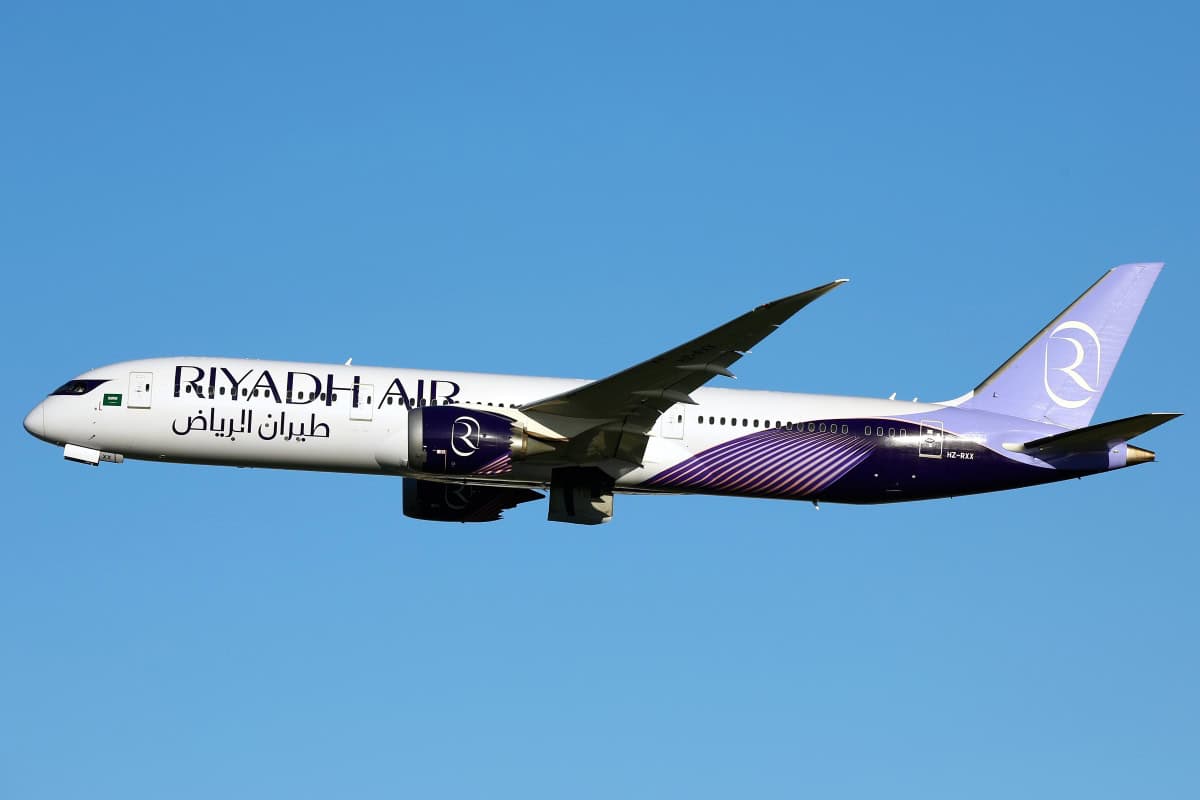
Image generated with Ai
Saudi Arabia aviation revolution takes flight as Riyadh Air begins a new era with Boeing 787-9 Dreamliner service to London Heathrow. Furthermore, the ambitious carrier is preparing to transform regional and global travel through a bold expansion strategy backed by Saudi Arabia vision and investment. Passengers will soon experience modern aircraft technology, premium hospitality, and stronger connections between continents. Moreover, Riyadh Air aims to challenge established airlines by offering innovative experiences from its home base. The launch marks a significant milestone because the airline carries the ambition of creating a powerful aviation hub in the Kingdom. Therefore, this first passenger journey represents more than a flight; it highlights Saudi Arabia’s commitment to becoming a leading force in international aviation.
The launch represents more than the arrival of another airline. It reflects Saudi Arabia’s wider strategy to reshape its position in global tourism, business travel, and international aviation. Riyadh Air has been designed as a premium global carrier capable of competing with established Gulf aviation giants while supporting the goals of Vision 2030.
Why is Riyadh Air considered a major turning point for Saudi Arabia’s aviation ambitions?
The creation of Riyadh Air is closely linked to Saudi Arabia’s economic diversification programme. Under Vision 2030, the Kingdom aims to reduce dependence on oil revenues by expanding sectors such as tourism, logistics, entertainment, and aviation.
Aviation has become one of the most important pillars of this transformation. Saudi Arabia wants to position itself as a global connectivity centre linking Europe, Asia, Africa, and the Americas.
Advertisement
Advertisement
Although Saudi Arabia already operates Saudia, the country’s traditional flag carrier, Riyadh Air has been created with a different purpose. The airline has been structured from the beginning as a modern international carrier focused on premium long-haul travel, advanced technology, and a new passenger experience.
The airline is expected to complement Saudi Arabia’s existing aviation ecosystem by attracting international visitors, increasing business connectivity, and strengthening Riyadh’s role as a global hub.
Advertisement
Advertisement
The carrier is owned by the Public Investment Fund, which has invested heavily in strategic projects supporting the Kingdom’s future economy. Riyadh Air is among the largest aviation investments undertaken by Saudi Arabia and represents a direct challenge to the dominance of established Middle Eastern aviation hubs.
How will the first Riyadh Air passenger flight change international travel?
The first major scheduled public service will connect Riyadh’s King Khalid International Airport with London Heathrow. The route selection carries significant strategic importance because London remains one of the world’s most valuable premium aviation markets.
Advertisement
Advertisement
Riyadh–London is already served by major international airlines, making it a highly competitive environment. However, Riyadh Air intends to enter the market with a new-generation aircraft, fresh cabin design, and a premium positioning aimed at business travellers and luxury passengers.
The airline opened public ticket sales for Riyadh–London Heathrow flights operated by its Boeing 787-9 Dreamliner aircraft. The service is designed to strengthen links between Saudi Arabia and the United Kingdom while supporting tourism and business growth.
The route will also act as a global showcase for Riyadh Air. The airline wants passengers to experience its onboard product, digital services, and hospitality standards from the beginning of commercial operations.
Rather than competing only on price, Riyadh Air is targeting the premium segment where airlines such as Emirates, Qatar Airways, Singapore Airlines, and Turkish Airlines have built strong reputations.
Advertisement
Advertisement
What makes the Riyadh Air fleet one of the most ambitious airline orders?
Riyadh Air’s fleet strategy demonstrates the scale of Saudi Arabia’s aviation ambitions. The airline has placed major aircraft commitments with both Boeing and Airbus, creating a mixed fleet designed for different market segments.
The airline’s widebody foundation is centred around the Boeing 787-9 Dreamliner. Riyadh Air has confirmed 39 Boeing 787-9 aircraft with additional options, creating a strong platform for long-range international routes.
The Dreamliner has become popular among global airlines because of its fuel efficiency, passenger comfort, and ability to operate long-distance routes with strong economics.
Alongside Boeing aircraft, Riyadh Air has also ordered 60 Airbus A321neo aircraft for regional and medium-haul operations. These aircraft will allow the airline to expand across nearby markets while maintaining operational efficiency.
The carrier has further strengthened its long-term plans through an order for 25 Airbus A350-1000 aircraft, with purchase rights for an additional 25 jets. The aircraft will support future ultra-long-haul operations and allow Riyadh Air to expand into some of the world’s busiest intercontinental markets.
This fleet combination gives Riyadh Air flexibility. The Boeing 787-9 can serve important long-distance routes, while the Airbus narrowbody fleet can support regional expansion.
Advertisement
Advertisement
Can Riyadh Air compete with Emirates, Qatar Airways and Turkish Airlines?
The biggest challenge for Riyadh Air will not be launching flights. It will be building a sustainable global airline capable of competing against some of the strongest carriers in the world.
Emirates has developed one of the largest long-haul networks through Dubai. Qatar Airways has built a reputation around premium service and Doha connectivity. Turkish Airlines operates one of the world’s largest international networks.
Riyadh Air will need to create its own identity rather than simply copying existing Gulf airline models.
The airline’s advantage is that it does not carry the burden of older systems, ageing processes, or inherited fleet structures. It has been built from a blank foundation, allowing it to introduce modern technology and new operational methods.
The carrier is also supported by Saudi Arabia’s growing tourism sector. As the Kingdom develops new destinations, resorts, cultural attractions, and business opportunities, Riyadh Air could benefit from increasing passenger demand.
The airline’s leadership, including CEO Tony Douglas, brings experience from major international aviation companies. His previous role at Etihad Aviation Group provides experience in building and managing a global premium airline.
Advertisement
Advertisement
How will Riyadh Air support Saudi Arabia’s tourism growth?
Saudi Arabia has set ambitious tourism targets, and aviation capacity will be essential to achieving them.
The Kingdom wants to attract millions of international visitors by expanding beyond religious tourism. New leisure destinations, luxury developments, cultural projects, and entertainment events are creating additional reasons for travellers to visit.
Riyadh Air is expected to become a key transport link supporting this expansion.
A successful global airline can increase visitor numbers by improving international access and creating convenient connections between continents.
The airline’s planned network growth reflects these ambitions. Riyadh Air aims to connect more than 100 destinations by 2030, creating a major international network centred on Saudi Arabia’s capital.
The future development of King Salman International Airport in Riyadh is also expected to strengthen the city’s aviation position by creating additional capacity for international operations.
Advertisement
Advertisement
What challenges could Riyadh Air face after its historic launch?
Despite huge investment and strong political support, Riyadh Air will face several challenges.
Building passenger loyalty takes years. Established airlines already have millions of frequent travellers, global partnerships, and mature loyalty programmes.
Riyadh Air will also need to maintain consistently high service standards while rapidly expanding its network and fleet.
Airline launches often appear successful during their early stages because of public excitement. The real test comes after several years of operations when passengers evaluate reliability, service quality, pricing, and network convenience.
The carrier must also compete in a region where airlines continuously invest billions of dollars into aircraft, airports, and passenger experiences.
However, Riyadh Air’s supporters argue that the airline has several advantages. It has strong financial backing, a modern fleet, a strategic location, and access to a rapidly developing tourism market.
Advertisement
Advertisement
Riyadh Air marks the beginning of Saudi Arabia’s global aviation transformation
The arrival of Riyadh Air represents a defining moment for Saudi Arabia’s aviation industry. After years of planning, aircraft orders, recruitment, and brand development, the airline is moving into passenger operations and beginning its journey as a global carrier.
The first Boeing 787-9 Dreamliner service to London Heathrow is not only an airline milestone. It is a symbol of Saudi Arabia’s determination to become a major force in international travel.
The coming years will reveal whether Riyadh Air can challenge the world’s strongest airlines. However, one thing is already clear: Saudi Arabia has placed one of its biggest bets on aviation, and the global industry is watching closely as Riyadh Air takes off.
Image Credit: Riyadh Air
Advertisement
