

South Korea’s Incheon Airport Maglev Train Transforms Into a Must-See Tourist Experience Offering Futuristic Technology Amid Operational Overhaul

Published
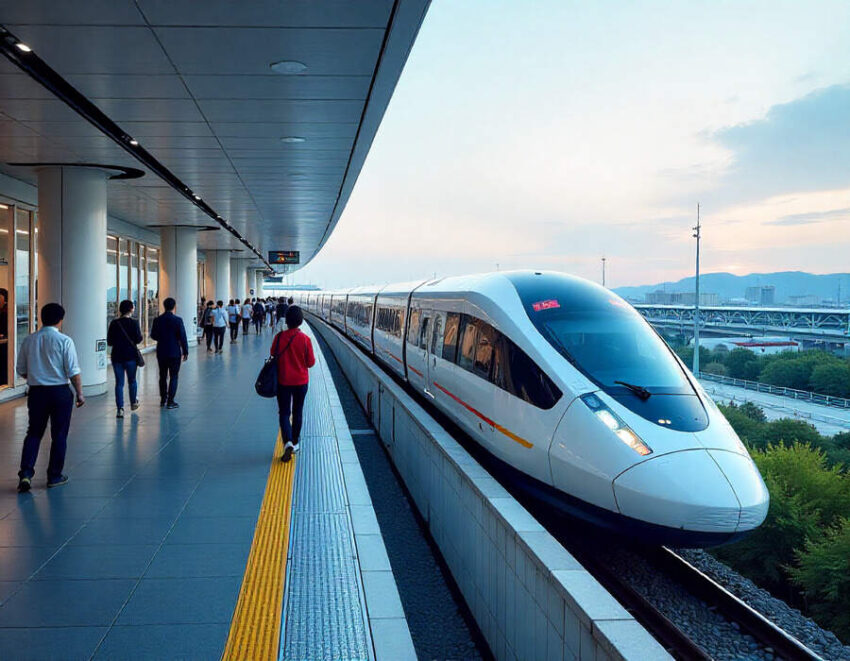 Image generated with Ai
The Incheon Airport Maglev Train in South Korea has officially resumed service, but with a major shift in its role. After facing significant financial challenges and underwhelming ridership, the once-promising public transport system has been reimagined as a unique tourist attraction. Reopened on October 17, 2025, the maglev train now offers visitors an opportunity to experience its cutting-edge, levitating technology in a more leisure-focused setting. This strategic pivot aims to reduce operational costs while showcasing South Korea’s ambition in transportation innovation, blending futuristic travel with scenic views for tourists eager to witness one of the country’s most advanced transit projects.
Incheon Airport Maglev Train Resumes Service as Tourist Attraction Amid Financial Strain
South Korea’s Incheon Airport Maglev Train has officially resumed service after being suspended for over three years. On October 17, 2025, the train began its operations once again, but with a significant shift in its role—what was once a public transportation service has now been reclassified as a tourism and experiential facility.
Originally hailed as the first maglev train in South Korea, the Incheon Airport Maglev Train was a groundbreaking project. With its ability to levitate about 8mm above the tracks, it promised an eco-friendly, smooth, and quiet journey. Developed and constructed at a cost of approximately 4 trillion Korean won, the train was expected to revolutionize public transport while offering a futuristic travel experience.
Advertisement
Advertisement
The train’s route stretches for 6.1 kilometers from Incheon Airport Terminal 1 to Yongyu-dong, Jung-gu, passing through six stations. It operates at a maximum speed of 40 km/h, offering scenic views of the surrounding area. Initially, it was designed to run 103 round trips daily, with departures every 15 minutes, free of charge to passengers.
However, despite the innovative design and state-of-the-art technology, the maglev train never lived up to expectations. The daily ridership was far below projections, averaging around 4,000 passengers per day—only 11% of the original forecast. With the outbreak of the COVID-19 pandemic, the number of trips was cut to just 24 per day, further reducing passenger numbers.
Advertisement
Advertisement
The operational costs quickly became a significant issue for the Incheon International Airport Corporation (IIAC), which had been responsible for the train’s operations. The annual expenditure to maintain the service was about 8 billion Korean won. Faced with financial difficulties and a lack of ridership, the corporation had to explore ways to keep the train service alive while reducing its operational costs.
After conducting a comprehensive review, including a “Maglev Train Operation Diagnosis and Alternative Measures” study, IIAC decided to reclassify the maglev train. Instead of being a public transportation service under the Urban Railway Act, the train would now be classified as a tourist attraction under the Track Transportation Act. This change mirrors the status of other local tourism-based trains, such as the Wolmido Sea Train in Incheon.
Advertisement
Advertisement
The reclassification comes with a significant change in how the train operates. It now runs only 24 round trips per day, compared to the original 103, and the interval between departures has been extended to 35 minutes. The service operates six days a week, with no trains on Mondays, and is open from 10 a.m. to 5 p.m. Furthermore, the service is now free for all passengers, a move aimed at attracting tourists to experience the technology without financial barriers.
The decision to transition the maglev train into a tourism-focused facility was not without controversy. While the technology remains cutting-edge, experts and industry professionals have expressed concerns about the impact this shift will have on South Korea’s standing as a leader in transportation innovation. Some fear that reducing the train’s role to a tourist attraction might undermine the potential for broader public use of maglev technology, which has been touted as a key part of the future of sustainable transport.
Despite the concerns, the change is seen as a necessary step to ensure the long-term sustainability of the service. With the new approach, the train’s operational costs are expected to decrease significantly, from 8 billion to about 5 billion Korean won annually. The shift also allows the IIAC to focus on other aspects of tourism, which have proven to be a more reliable source of revenue in recent years.
While it is now positioned as a tourist attraction, the Incheon Airport Maglev Train remains a symbol of South Korea’s ambition to lead in transportation technology. Its original design was hailed as a major achievement in both innovation and sustainability, and it still serves as a testament to the country’s technological capabilities.
Advertisement
Advertisement
For visitors, the maglev train offers a unique experience, one that combines cutting-edge technology with the opportunity to explore Incheon’s scenic landscapes. Whether it’s the futuristic gliding motion of the train or the tranquil ride through the Incheon area, the train provides a memorable way to experience the region.
However, the future of the maglev train in public transportation remains uncertain. As the train shifts its focus to tourism, the question remains whether South Korea will find another way to integrate this technology into its broader transportation network. The shift to a tourist-focused operation, while practical in the short term, could mean that maglev technology takes longer to become an integral part of everyday public transit.
Despite these uncertainties, the Incheon Airport Maglev Train’s return to service is a positive development for South Korea’s tourism industry. By reimagining the train as a unique tourist experience, the Incheon International Airport Corporation hopes to recoup some of its investment while offering visitors a chance to see cutting-edge transportation technology in action. Whether this model can serve as a long-term solution or a temporary fix remains to be seen, but for now, the maglev train remains a fascinating part of South Korea’s transportation landscape.
Advertisement
