
Sri Lanka Targets 3 Million Tourists in 2026: How the Island Nation Plans to Leverage Tourism for Economic Recovery and Post-Cyclone Growth

Published
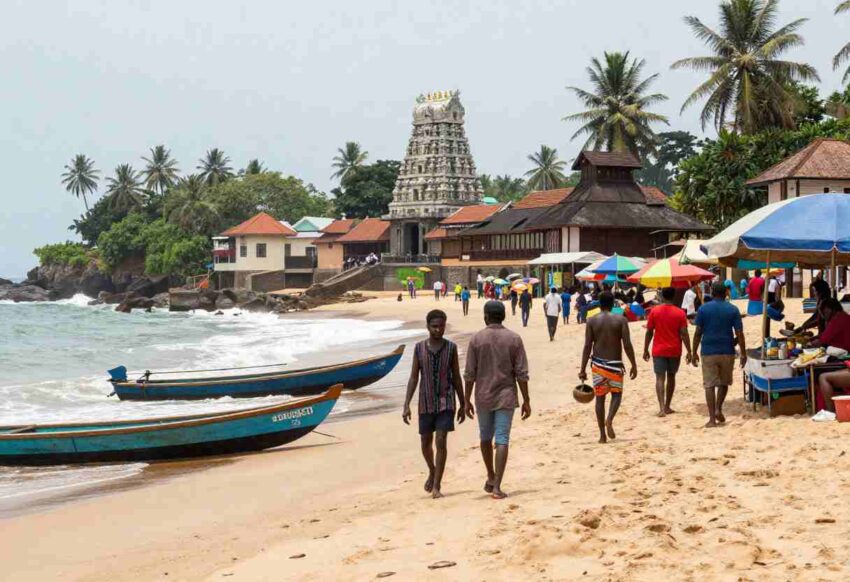 Image generated with Ai
Sri Lanka is targeting 3 million tourists in 2026 to aid its recovery from Cyclone Ditwah, a devastating event that struck the island in late 2025. With a record 2.36 million tourist arrivals in the previous year, this ambitious target marks a 27% increase over the previous year’s numbers. By setting this goal, the Sri Lankan government aims to boost the country’s tourism revenue, which plays a crucial role in the nation’s economic stability.
Tourism is Sri Lanka’s second-largest foreign exchange earner, generating $3.2 billion in 2025. Known for its pristine beaches, ancient temples, and world-famous Ceylon Tea, Sri Lanka has long attracted visitors from around the world. However, Cyclone Ditwah caused significant damage, with over 110,000 houses destroyed and key infrastructure such as roads, railways, and bridges impacted. The government believes that increasing tourist arrivals will help rebuild the economy and support those affected by the cyclone.
Advertisement
Advertisement
The target of 3 million tourists in 2026 is not just an economic goal but a symbol of resilience. As the country works to recover from the devastation, tourism will be vital to restoring livelihoods and rebuilding communities. This target is part of a broader effort to strengthen Sri Lanka’s position as a global tourist destination, attracting visitors from key markets such as the United States, the United Kingdom, and the Middle East.
With a strategic focus on boosting tourism, Sri Lanka hopes to not only recover from the cyclone’s effects but also ensure sustainable growth in the coming years. By increasing tourist arrivals, the country aims to provide jobs, support local businesses, and generate revenue that will aid in the long-term recovery process.
Advertisement
Advertisement
Tourism’s Vital Role in Sri Lanka’s Economy
Tourism has long been a cornerstone of Sri Lanka’s economy. In 2025, the country’s tourism sector generated a substantial $3.2 billion in revenue, making it the second-largest foreign exchange earner after remittances. Famous for its rich heritage, beautiful beaches, and Ceylon tea, Sri Lanka draws millions of visitors annually. However, the damage caused by Cyclone Ditwah has prompted the government to reassess its tourism strategy to ensure a swift recovery and sustained growth.
The target of 3 million tourists in 2026 is seen as both a recovery effort and a strategic push to re-establish Sri Lanka as a global travel destination. By targeting this new milestone, the government hopes to stimulate the local economy, particularly in the wake of the disaster, which left widespread damage across the island.
Advertisement
Advertisement
The Impact of Cyclone Ditwah on Sri Lanka’s Tourism
Cyclone Ditwah, which hit Sri Lanka at the end of November 2025, left a trail of destruction, with over 645 lives lost. In addition to the human cost, the storm caused extensive infrastructure damage, including over 110,000 houses destroyed, and key roads, railways, and bridges rendered impassable. According to estimates from the World Bank, the total financial damage caused by the cyclone amounted to $4.1 billion.
Despite these setbacks, Sri Lanka’s tourism sector has managed to remain resilient. The record 2.36 million tourist arrivals in 2025 was a remarkable achievement considering the devastation caused by the storm. The government’s commitment to recovery has been bolstered by the tourism industry’s importance to the country’s overall economic performance. This determination to revive the sector has been articulated by Vijitha Herath, Sri Lanka’s Minister of Foreign Affairs and Tourism, who noted that tourism revenue would play a crucial role in the country’s economic recovery.
Advertisement
Advertisement
Government Plans to Boost Tourism and Secure Investment
In addition to the tourist arrival target, Sri Lanka is focusing on attracting significant investment to its tourism sector. The government is aiming for around $500 million in investments in 2026, building on the $329 million attracted through 126 tourism-related projects in the previous year. These investments are expected to improve the infrastructure, enhance the tourism offering, and create more jobs in the sector.
The Sri Lanka Tourism Development Authority (SLTDA) is spearheading these efforts, working alongside private investors to rejuvenate the tourism landscape. With key projects underway, including the development of new resorts, the restoration of cultural sites, and enhancements to transportation networks, Sri Lanka is making strides toward becoming an even more appealing destination for global tourists. These projects are not only expected to provide immediate relief but also ensure sustainable growth in the long term.
Diversifying the Tourism Offering
As Sri Lanka works towards meeting its ambitious tourism targets, it is also focused on diversifying its offerings to appeal to a broader range of visitors. While the island has long been known for its beautiful beaches and cultural sites, there is now an increased emphasis on developing eco-tourism and adventure tourism experiences. Sri Lanka’s unique biodiversity, including its national parks, wildlife sanctuaries, and verdant landscapes, offers tremendous opportunities to attract nature-loving travelers.
Cultural tourism will continue to be a significant draw, with ancient temples, heritage sites, and traditional festivals playing an integral role in Sri Lanka’s tourism identity. The Sri Lankan government has also taken steps to enhance the local food scene, which is gaining international recognition for its fusion of spices, seafood, and traditional culinary techniques.
Advertisement
Advertisement
Strengthening Tourism Infrastructure
One of the key areas of focus for the Sri Lankan government is improving the infrastructure that supports tourism. Efforts to repair the damage caused by Cyclone Ditwah have included rebuilding critical infrastructure such as roads, bridges, and airports, which are vital for the smooth transportation of tourists across the island. Additionally, improvements are being made to the public transport system, ensuring that visitors can travel easily between popular destinations.
Luxury tourism, in particular, is being promoted through the development of high-end resorts, wellness retreats, and bespoke travel packages. These initiatives are aimed at attracting high-spending tourists who can help boost the country’s revenue. As part of the recovery plan, Sri Lanka is also working on restoring damaged historical landmarks, ensuring that cultural heritage tourism continues to thrive.
Targeting Key Source Markets
The government has identified key source markets for Sri Lanka’s tourism recovery, focusing on countries such as India, the United Kingdom, Australia, Japan, and the Middle East. India, with its proximity to Sri Lanka, has always been a strong source of tourists, and the country is expected to remain a primary market for Sri Lankan tourism in 2026. Similarly, the UK and Australia are important markets due to the large Sri Lankan diaspora communities in these countries, which can help drive family visits and cultural tourism.
Japan’s growing interest in Sri Lanka, particularly for eco-tourism and wellness retreats, has also been noted as a promising avenue for future growth. In the Middle East, Sri Lanka is attracting high-end tourists seeking luxury holidays, as well as medical tourists seeking affordable treatments.
Recovery in the Wake of Cyclone Ditwah
Despite the challenges posed by Cyclone Ditwah, Sri Lanka’s tourism industry is expected to play a crucial role in the country’s recovery. The government’s proactive approach to rebuilding and promoting the sector is already yielding positive results. As international visitors return to the island in increasing numbers, local businesses are benefiting from the influx of revenue, helping to restore livelihoods in communities that were heavily impacted by the disaster.
Tourism is also providing vital employment opportunities, particularly in areas such as hospitality, transportation, and the arts. As the tourism sector grows, it is expected that more jobs will be created, providing much-needed relief to those who have suffered economic hardship due to the cyclone.
Advertisement
Advertisement
A Bright Future for Sri Lankan Tourism
The ambitious goal of attracting 3 million tourists in 2026 may seem daunting, but with the right combination of government support, private sector investment, and a diversified tourism offering, Sri Lanka is well on its way to achieving this target. As the island continues to recover from the devastation of Cyclone Ditwah, its tourism industry is poised for growth, offering visitors the chance to experience the best of Sri Lanka while contributing to the country’s economic revival.
With increased focus on high-quality, sustainable tourism, Sri Lanka is positioning itself as a destination of choice for travelers seeking both adventure and relaxation. From its lush landscapes to its rich cultural heritage, the country has much to offer, and the government is committed to ensuring that tourism remains a cornerstone of its economic recovery.
Advertisement
