
Strategic Resumption of Flight Operations Between the United Arab Emirates and India

Published
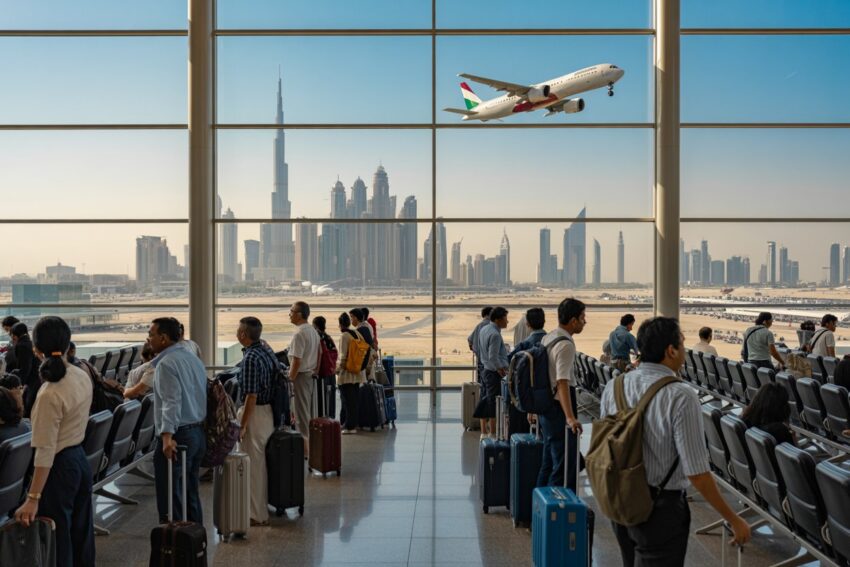 Image generated with Ai
The UAE General Civil Aviation Authority has officially communicated the full restoration of normal air navigation operations within its sovereign airspace. This significant development follows the lifting of temporary precautionary measures that had previously restricted movement due to the regional situation in West Asia. Consequently, a substantial increase in UAE to India flights has been observed, with both Indian and Emirati carriers expanding their schedules to various destinations. This transition is being meticulously monitored by the Ministry of External Affairs, ensuring that the safety and security of the Indian community remains a primary objective during this period of regional stabilization and logistical recovery.
Restoration of Emirati Airspace and Enhanced Connectivity
The announcement by the UAE General Civil Aviation Authority serves as a pivotal marker in the return to regional aviation normalcy. All prior restrictions that were implemented as a safeguard have been withdrawn, allowing for the unhindered movement of commercial aircraft. As a result of this policy shift, a surge in the frequency of flights connecting major cities in the United Arab Emirates to several hubs in India has been documented. Carriers such as Air India, Air India Express, and Indigo have been highlighted as active participants in this revitalized corridor. The resumption is not merely a logistical success but also a relief for thousands of travelers who rely on these routes for employment, trade, and family reunification.
Advertisement
Advertisement
It is reported that the decision to restore full operations was reached following a comprehensive evaluation of security and operational conditions. Technical teams and operational units within the UAE have been placed on high alert to ensure that the transition remains seamless. The cooperation of passengers and various international airlines during the precautionary period has been officially acknowledged by the authorities. This collaborative effort has ensured that while safety was prioritized, the path toward full resumption remained clear.
Status of Aviation Operations Across the Middle East
Beyond the borders of the UAE, a general trend of improvement in the flight situation throughout the Middle East has been reported. Consistent flight operations are being maintained from various international airports located in Saudi Arabia and Oman. These hubs continue to serve as vital links for passengers traveling to diverse Indian destinations. While some complexities remain, the overall trajectory of the aviation sector in the region suggests a steady return to pre-disruption levels of efficiency.
Advertisement
Advertisement
In Qatar, the airspace is currently described as being partially open. Despite these limitations, a robust schedule is being maintained by major airlines. It has been noted that Air India, Air India Express, Indigo, and Qatar Airways are successfully conducting flights from Qatar to multiple Indian cities. This ongoing connectivity ensures that the travel needs of the expatriate population are being met despite the nuanced status of the local airspace. The persistence of these flights indicates a strong commitment by regional carriers to maintain essential air links.
Open Corridors in Kuwait, Bahrain, and Iraq
The aviation environments in Kuwait and Bahrain have been confirmed as fully open. In Kuwait, services are being actively provided by Jazeera Airways and Kuwait Airways, facilitating seamless travel to the Indian subcontinent. Similarly, Bahrain airspace remains accessible to international traffic. Carriers including Air India Express, Indigo, and Gulf Air are operating frequent services from Bahrain, ensuring that the movement of people and goods remains uninterrupted.
Advertisement
Advertisement
The situation in Iraq presents a more cautious but functional landscape. The airspace over Iraq is currently open for limited flight operations. These services are primarily directed toward other destinations within the region, which then serve as transit points for onward travel to India. While not yet at full capacity, these limited corridors provide essential alternatives for those seeking to return to India from the Iraqi territory. The utilization of regional transit points has become a strategic necessity for maintaining flow during this period of adjustment.
Navigational Challenges in Iran and Israel
The aerial status of Iran is characterized by partial accessibility, primarily reserved for cargo and chartered flight operations. Due to the evolving conditions, a specific advisory has been issued by the Ministry of External Affairs. Indian nationals have been cautioned against traveling to Iran at this time. Furthermore, those currently residing within the country have been urged to utilize land border routes to exit. The Indian Embassy in Tehran has played a central role in this effort, having successfully facilitated the departure of 2,504 Indian nationals through land borders.
In contrast, the airspace over Israel has been declared open. Limited flight operations have resumed, connecting Israeli hubs to various regional destinations. These routes are currently being utilized by travelers as a means of securing onward passage to India. The reopening of this airspace marks a critical step in restoring the broader network of international travel within West Asia. Despite the limited nature of these flights, they represent a significant reopening of a previously restricted corridor.
Governmental Oversight and Citizen Welfare Measures
The Ministry of External Affairs remains deeply engaged in monitoring the geopolitical and logistical developments across the Gulf and West Asia. A centralized effort is being directed toward the protection and welfare of the Indian diaspora. To ensure a synchronized response, the Ministry maintains constant communication with various state governments and Union Territory administrations. This collaborative approach allows for the efficient sharing of information and the alignment of relief efforts across different levels of government.
Indian embassies and consulates across the region have been transitioned to a high state of readiness. Round-the-clock helplines have been established to provide immediate assistance to those in need. These diplomatic missions are also engaging in proactive outreach, maintaining close contact with local government authorities to advocate for the interests of Indian citizens. This multi-layered support system is designed to provide a safety net for the community during times of uncertainty, ensuring that every individual has access to guidance and support.
Dissemination of Information and Future Outlook
To keep the public informed, updated advisories are being issued with regularity. These documents contain essential information regarding local government guidelines, real-time flight statuses, and the availability of consular services. Furthermore, detailed accounts of the welfare measures being undertaken for the community are included to provide transparency and reassurance. As air operations continue to stabilize, the focus of the Indian government remains on the gradual and safe restoration of all primary travel routes.
The resilience of the aviation sector, supported by diligent diplomatic oversight, ensures that the bridge between India and the Middle East remains functional. While certain areas require continued caution, the broader trend indicates a successful return to standard operations. The Ministry of Petroleum and Natural Gas has also noted its efforts in ensuring energy supply and maritime safety, further stabilizing the regional environment. The safe passage of vessels like the MT Sarv Shakti through the Strait of Hormuz is a testament to the comprehensive safety measures currently in effect.
Advertisement
