
Austria Travel Landmark Faces New Chapter as Porsche Heir Lists Historic Salzburg Villa After Private Tunnel Controversy Shakes Tourism and Heritage Debate

Published
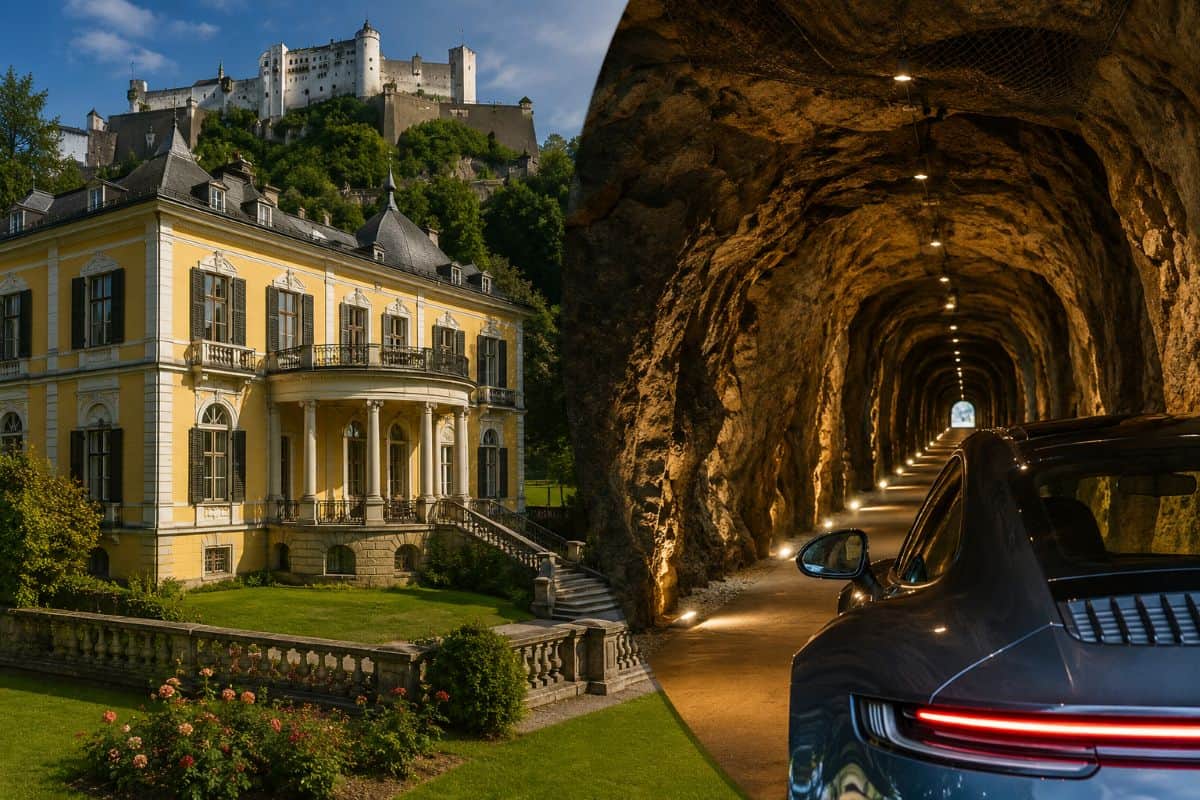
Image generated with Ai
Austria’s cultural tourism landscape has taken another unexpected turn after Wolfgang Porsche, chairman of the Porsche Supervisory Board, placed his historic Salzburg villa on the market following months of public controversy surrounding his proposed private access tunnel. The luxury property, known as the Paschinger Schlössl, has become one of the country’s most discussed heritage estates after plans for a 500-metre underground road sparked widespread criticism from residents, heritage advocates, and tourism supporters. The debate has drawn international attention because the villa was once home to celebrated Austrian writer Stefan Zweig, making it one of Salzburg’s most historically significant residential landmarks. The property is now listed for €12.7 million, substantially higher than its 2020 purchase price of €8.4 million.
The development has reignited conversations about balancing luxury real estate investments, historic preservation, sustainable tourism, and public access to cultural landmarks in Austria. While Porsche has reportedly stepped away from the ambitious tunnel project, the planning approval remains attached to the property until the end of 2028, potentially allowing a future owner to proceed with construction. Tourism experts believe the outcome could shape future policies governing heritage sites in Salzburg, one of Europe’s most visited cultural destinations, where preserving historical authenticity remains central to the city’s global tourism appeal.
Advertisement
Advertisement
Porsche’s Salzburg Property Sparks International Attention
Wolfgang Porsche purchased the 17th-century Paschinger Schlössl in 2020 for €8.4 million with plans to restore the prestigious estate. However, his proposal to construct a private 500-metre tunnel connecting a municipal parking facility to an underground garage beneath the villa quickly became one of Austria’s most debated development projects.
The proposed tunnel would have enabled direct vehicle access to the hilltop property while accommodating up to eight vehicles in a subterranean garage.
Advertisement
Advertisement
| Property Details | Information |
|---|---|
| Property Name | Paschinger Schlössl |
| Location | Salzburg, Austria |
| Purchase Price (2020) | €8.4 million |
| Current Asking Price | €12.7 million |
| Number of Rooms | 12 |
| Planned Tunnel Length | 500 metres |
| Tunnel Approval Valid Until | End of 2028 |
Why the Private Tunnel Triggered Public Backlash
The proposal faced strong opposition because the villa carries exceptional literary and historical importance. It was once the residence of renowned Austrian author Stefan Zweig, who lived there until leaving Austria in 1934 during the rise of Austro-fascism.
Residents argued that constructing a private tunnel beneath the historic hillside would undermine the property’s heritage value while highlighting growing inequality in Salzburg, where rising housing costs and affordability challenges continue to affect local communities.
Advertisement
Advertisement
Public demonstrations adopted the slogan “A city for everyone instead of a tunnel for one,” reflecting broader concerns about privileged access to public infrastructure.
| Main Concerns Raised | Impact |
|---|---|
| Heritage preservation | Possible impact on historic surroundings |
| Public infrastructure | Use of municipal land for private access |
| Social inequality | Perceived preferential treatment |
| Housing affordability | Debate over local development priorities |
| Tourism identity | Protecting Salzburg’s historic character |
Historic Importance Strengthens Salzburg’s Cultural Tourism Appeal
The Paschinger Schlössl remains closely associated with Stefan Zweig, one of Austria’s most influential literary figures. Zweig famously described the property as romantic yet impractical, praising its peaceful location and noting that its charm came partly from being inaccessible by car, requiring visitors to climb more than 100 steps to reach it.
That historical association has transformed the estate into an important landmark within Salzburg’s cultural tourism landscape, attracting interest from literary enthusiasts and international visitors seeking locations connected to Austria’s intellectual history.
Many campaigners had hoped the property would eventually become a museum dedicated to Zweig’s life and legacy, although Salzburg city officials stated that purchasing the estate was financially impossible.
Villa Sale Opens a New Chapter for Salzburg’s Heritage Estate
With the property now officially listed for €12.7 million, estate marketing materials continue to promote the approved tunnel project as one of its most exclusive features. The sales brochure highlights the underground garage and private access tunnel as unique additions that distinguish the estate within Salzburg’s luxury property market.
Although Wolfgang Porsche has not publicly explained his decision to sell, reports suggest the prolonged public controversy influenced the move. Representatives described the debate surrounding the project as driven by public resentment rather than practical planning concerns.
Advertisement
Advertisement
Meanwhile, local Green Party representatives have urged city authorities to revoke the tunnel approval altogether, arguing that public land should not contribute to increasing private property values.
| Current Status | Details |
|---|---|
| Property For Sale | Yes |
| Asking Price | €12.7 million |
| Tunnel Approval | Still valid |
| Approval Expiry | End of 2028 |
| Museum Proposal | Not proceeding |
| Local Political Debate | Ongoing |
What the Decision Means for Austria’s Tourism and Heritage Management
The controversy illustrates the growing challenges European heritage destinations face as luxury investment intersects with cultural preservation. Salzburg welcomes millions of visitors annually because of its historic architecture, literary connections, and UNESCO-recognized heritage environment.
Tourism planners increasingly face pressure to preserve authentic visitor experiences while accommodating private investment and property restoration. The future of the Paschinger Schlössl could become a significant case study in balancing heritage conservation with high-value real estate development.
If a new buyer proceeds with the approved tunnel, the debate surrounding heritage protection, tourism sustainability, and public interest is likely to continue well beyond 2028.
FAQs
1. Why is Wolfgang Porsche selling the Salzburg villa?
The property has reportedly been listed following extensive public controversy over plans for a private access tunnel.
Advertisement
Advertisement
2. Where is the villa located?
The estate is situated on Kapuzinerberg in Salzburg, Austria.
3. What is the asking price for the property?
The villa is currently listed for €12.7 million.
4. Why is the villa historically significant?
It was once the home of renowned Austrian author Stefan Zweig before he left Austria in 1934.
Advertisement
Advertisement
5. What was the proposed tunnel project?
The plan involved constructing a private 500-metre underground road linking a municipal parking area with the villa.
6. Is the tunnel still approved?
Yes. The planning permission remains valid until the end of 2028.
7. Why did local residents oppose the project?
Critics cited heritage preservation, public land use, and concerns over social inequality.
Advertisement
Advertisement
8. Will the villa become a museum?
Currently, no. Salzburg authorities stated they cannot afford to purchase the property.
9. How does this affect tourism in Salzburg?
The debate highlights the importance of protecting cultural heritage while managing luxury development in a major tourism destination.
10. Can a future owner still build the tunnel?
Yes, provided construction begins before the planning approval expires at the end of 2028.
Advertisement
