
Indonesia Follows Thailand and Other Destinations in Asia to Expand Gastronomy Tourism Across 14 Cities

Published
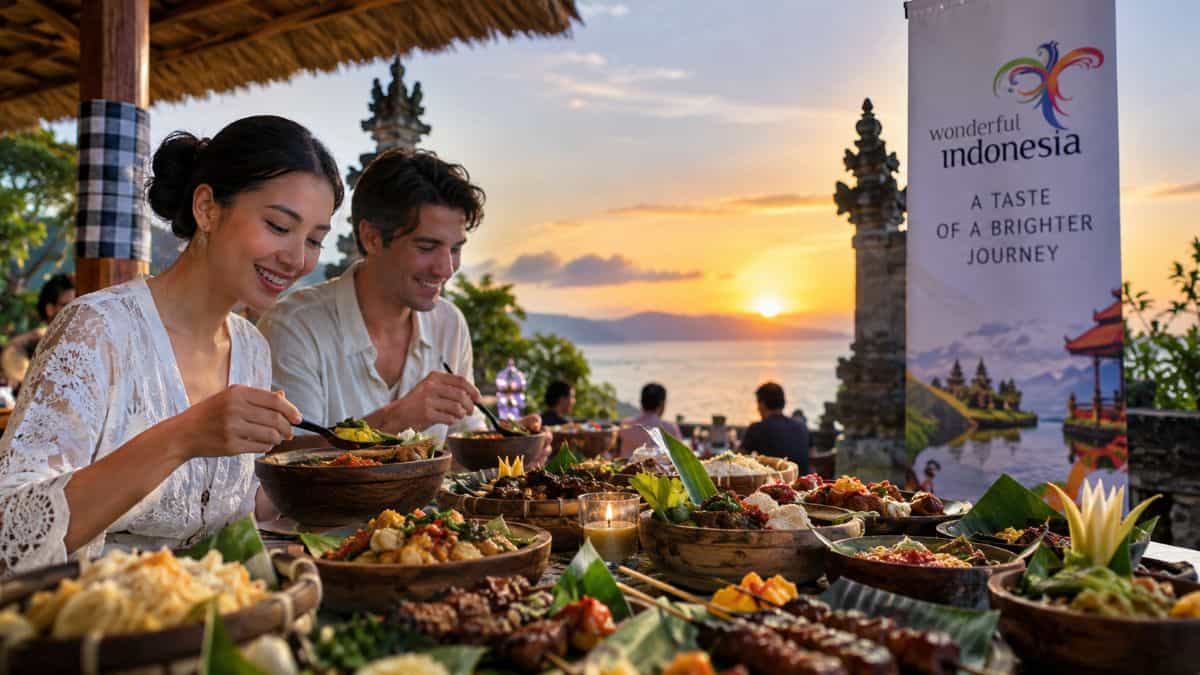
Image generated with Ai
Indonesia follows Thailand and other destinations in Asia to expand Gastronomy Tourism across 14 cities as food becomes a stronger driver of travel demand, local spending and destination discovery. Indonesia is turning gastronomy into a broader tourism experience by leveraging restaurants, artisans and food culture. It’s also a trend that is prevalent across Asia, where Thailand and other countries link food to their culture, heritage and visitor experiences. The expansion presents opportunities to travellers to visit places beyond the “must-sees,” and for global tourism, to see how local food can help drive regional economic growth and extended visits and more fulfilling destination experience.
Indonesia Gastronomy Tourism 2026: What Travellers Need to Know
Indonesia is turning its food culture into a national travel product. Through Wonderful Indonesia Gastronomy 2026, the country is taking culinary tourism beyond restaurants and festivals by linking local producers, chefs, markets, heritage sites and visitor experiences across 14 cities.
The programme includes 32 shopping centres, 150 restaurants across six destinations, two curated food guides featuring 300 dining establishments, and a major Yogyakarta-Solo activation designed to connect visitors with regional ingredients and culinary traditions.
The programme began with major activities in Solo and Yogyakarta before expanding nationally through restaurant promotions and culinary events.
Advertisement
Advertisement
| WIG 2026 programme | Official scale |
|---|---|
| Culinary Festival | 32 malls across 14 cities |
| Indonesia Restaurant Months | 150 restaurants in 6 destinations |
| Indonesia Gourmet Guide | 150 restaurants |
| Indonesia Local Eateries Guide | 150 eateries |
| WIG Talks | 22 speakers |
| Artisan Market | 21 tenants |
| Artisan Market partners | 13 collaborators |
| Artisan Market visitor target | Up to 1,300 |
The 14-city Culinary Festival runs through locations including Jakarta, Bogor, Tangerang, South Tangerang, Bekasi, Surakarta, Sukoharjo, Bandung, Semarang, Magelang, Pontianak, Palembang, Denpasar and Kendari.
That geographical spread is important. Instead of concentrating food tourism in Bali or Jakarta, Indonesia is using gastronomy to direct visitor attention towards a wider network of cities.
Advertisement
Advertisement
Yogyakarta Turns Local Food Into a Full Travel Experience
Yogyakarta is one of the clearest examples of how Indonesia wants gastronomy tourism to work.
The WIG Artisan Market brought together small producers and culinary businesses selling products linked directly to Indonesian agriculture and food culture.
Advertisement
Advertisement
Travellers could encounter ingredients and products such as:
- artisan cheese;
- Indonesian tea and coffee;
- honey;
- traditional jamu;
- coconut sugar;
- tempeh;
- fermented drinks;
- locally produced speciality foods.
The idea goes beyond buying food.
Visitors can learn where ingredients come from, meet producers and connect dishes with landscapes, farming traditions and local communities.
This creates what tourism planners increasingly call experience-led travel: food becomes the entry point into a wider destination rather than the final product.
Advertisement
Advertisement
Original analysis suggests this could be especially effective in Yogyakarta because its culinary offer sits beside major visitor draws such as Borobudur, Prambanan, traditional markets, craft districts and heritage neighbourhoods.
A traveller drawn by food can therefore be encouraged to stay for culture, architecture, crafts and rural experiences.
Indonesia Uses Food Tourism to Spread Visitors Beyond Bali
One of the most important strategic angles is tourism dispersal.
Indonesia already attracts millions of international travellers, but visitor demand remains heavily associated with established gateways such as Bali.
Gastronomy offers a relatively low-cost way to make other cities more visible.
A destination does not need to build a new attraction when it already has:
Advertisement
Advertisement
- regional dishes;
- food markets;
- farms;
- traditional cooking techniques;
- local producers;
- distinctive restaurant cultures.
Indonesia is effectively packaging those existing assets as tourism products.
That approach could help destinations including Solo, Semarang, Yogyakarta and West Sumatra attract travellers who might otherwise pass through them quickly or not visit at all.
The Ministry of Tourism has already indicated that West Sumatra is expected to become the next major WIG destination in 2027, strengthening the programme’s regional direction.
Two New Food Guides Give Travellers 300 Places to Explore
A strong gastronomy strategy needs more than events. Travellers also need practical recommendations.
Indonesia has therefore created two complementary dining guides.
The Indonesia Gourmet Guide features 150 restaurants, while the Indonesia Local Eateries Guide includes another 150 establishments.
Advertisement
Advertisement
Together, they create a network of 300 places to eat.
This two-tier approach is particularly useful.
The Gourmet Guide can serve visitors looking for refined dining and contemporary Indonesian cuisine. The Local Eateries Guide supports travellers seeking traditional dishes, neighbourhood restaurants and more everyday culinary experiences.
From a tourism perspective, this can widen visitor spending.
Instead of concentrating money in a few high-profile restaurants, travellers can discover smaller businesses and regional food operators.
Indonesia Restaurant Months Extends Food Tourism Into Six Destinations
Indonesia is also using Restaurant Months to turn gastronomy tourism into a longer-lasting programme.
Advertisement
Advertisement
Around 150 restaurants are participating across:
| Destination | Tourism opportunity |
|---|---|
| Jakarta | Urban dining and international gateway travel |
| Bali | High-volume international tourism |
| Semarang | Heritage and Central Java food culture |
| Surabaya | East Java city and business tourism |
| Yogyakarta | Culture, heritage and culinary travel |
| Solo | Traditional Javanese gastronomy |
This structure matters because it moves WIG away from a short festival format.
Instead, travellers can encounter food-led promotions across several destinations and over a longer period.
That gives tourism businesses more opportunity to convert curiosity into hotel nights, restaurant bookings and local experiences.
Indonesia’s Tourism Growth Gives Gastronomy a Larger Audience
Indonesia welcomed 15.39 million international visitors in 2025, while international arrivals reached 8.98 million during January–July 2026, according to official Ministry of Tourism reporting.
The government is targeting around 16–17 million international visitors for 2026.
Advertisement
Advertisement
Gastronomy can help Indonesia increase value from those travellers without relying only on higher arrival numbers.
Food spending reaches a particularly wide tourism supply chain.
One visitor meal can support:
- farmers and fishers;
- market traders;
- food processors;
- chefs and restaurant workers;
- transport providers;
- guides;
- local accommodation businesses.
That makes gastronomy tourism useful not only for destination branding but also for local economic distribution.
Thailand Shows How Food Can Convert Interest Into Travel Bookings
Thailand provides one of Asia’s strongest comparisons.
The Tourism Authority of Thailand used Amazing Thailand Fest 2026 in Madrid to combine Thai cuisine with Muay Thai, wellness, crafts and bookable holidays.
Advertisement
Advertisement
The campaign targeted around 5,000 event visitors and at least 20 million consumer exposures.
Around 100,000 customers received travel promotions, while Thailand content appeared across 430 travel-agency screens.
The strategic sequence is powerful:
Taste Thai food → become interested in Thailand → discover experiences → book a trip.
Thailand is therefore using gastronomy as a marketing funnel rather than simply promoting restaurants.
Indonesia is pursuing a related idea, but with greater emphasis on connecting food directly with regional communities and producers.
Advertisement
Advertisement
South Korea Builds Travel Routes Around Regional Food
South Korea has taken another distinctive approach.
The Korea Tourism Organization’s K-Chicken Travel initiative links food experiences with 30 regions.
The programme was informed by around 2,700 public recommendations and connects dishes with markets, attractions, rural areas and festivals.
South Korea’s broader Taste Your Korea programme also identified 33 signature gastronomy tourism products, including:
- 15 regional dishes;
- 15 seasonal ingredients;
- three traditional alcoholic beverages.
This turns food into a geographic travel tool.
A visitor interested in one particular dish can be encouraged to travel to the region where it originated rather than experiencing it only in Seoul.
Advertisement
Advertisement
China and Japan Push Gastronomy Into Bigger Tourism Strategies
China is integrating food into large urban tourism events.
The 2026 Shanghai Tourism Festival features more than 170 activities, including a dedicated food-focused tourism component.
Beijing’s International Gourmet Festival has similarly brought together more than 100 food stalls, restaurants and hotel dining operators.
Japan is taking a more international approach.
The Japan Tourism Agency used its Japan–U.S. Tourism and Culinary Night in New York to promote regional products such as Aomori scallops, Ehime seafood, Iwate wagyu and Shizuoka melon.
Around 220 tourism, media and business representatives attended.
Advertisement
Advertisement
The clever part is the connection between food and transport. Japan promoted regional cuisine alongside improved flight access to destinations such as Hokkaido and Okinawa, encouraging visitors to travel beyond Tokyo, Kyoto and Osaka.
Why Asia’s Gastronomy Tourism Race Is Accelerating
Indonesia, Thailand, South Korea, China and Japan are pursuing different versions of the same opportunity.
| Destination | Gastronomy tourism strategy |
|---|---|
| Indonesia | Food ecosystems across cities, producers and restaurants |
| Thailand | Use cuisine to convert overseas interest into trips |
| South Korea | Build regional routes around signature foods |
| China | Connect food with large city festivals and tourism spending |
| Japan | Pair regional cuisine with inbound travel and air access |
The common goal is no longer simply to tell tourists that the food is good.
The goal is to make cuisine influence where travellers go, how long they stay and how widely their money circulates.
Why Indonesia’s 14-City Food Tourism Push Could Matter Most
Indonesia’s biggest advantage may be its geographic and culinary diversity.
Its thousands of islands support dramatically different cuisines, ingredients, agricultural traditions and dining cultures.
Advertisement
Advertisement
Wonderful Indonesia Gastronomy 2026 gives the country a framework for converting that diversity into actual itineraries.
For travellers, that could mean discovering Indonesia through markets, producers and local dishes rather than visiting only its most famous attractions.
For destinations, the opportunity is even bigger: food can pull visitor spending into neighbourhoods and secondary cities that traditional tourism routes often bypass.
That is what makes Indonesia’s move across 14 cities significant. It is not simply expanding a culinary festival.
It is testing whether gastronomy can become one of the tools that reshapes where tourism grows across Indonesia.
Indonesia follows Thailand and other destinations in Asia to expand gastronomy tourism across 14 cities, boosting food-led travel and local spending.
In conclusion, Indonesia follows Thailand and other destinations in Asia to expand gastronomy tourism across 14 cities by linking food, culture, local producers and visitor experiences. The strategy offers visitors more opportunities to experience things outside of the more popular tourist areas, and supports restaurants, markets and communities to take in a larger share of tourism dollars. Gastronomy can play a significant role in boosting regional tourism, with the 14-city initiative to attract tourists in Indonesia, which makes it more important to take culinary trips.
Advertisement
