
ARTOTEL Group Turns to AI While Protecting Human Service Across Indonesia Hotels

Published
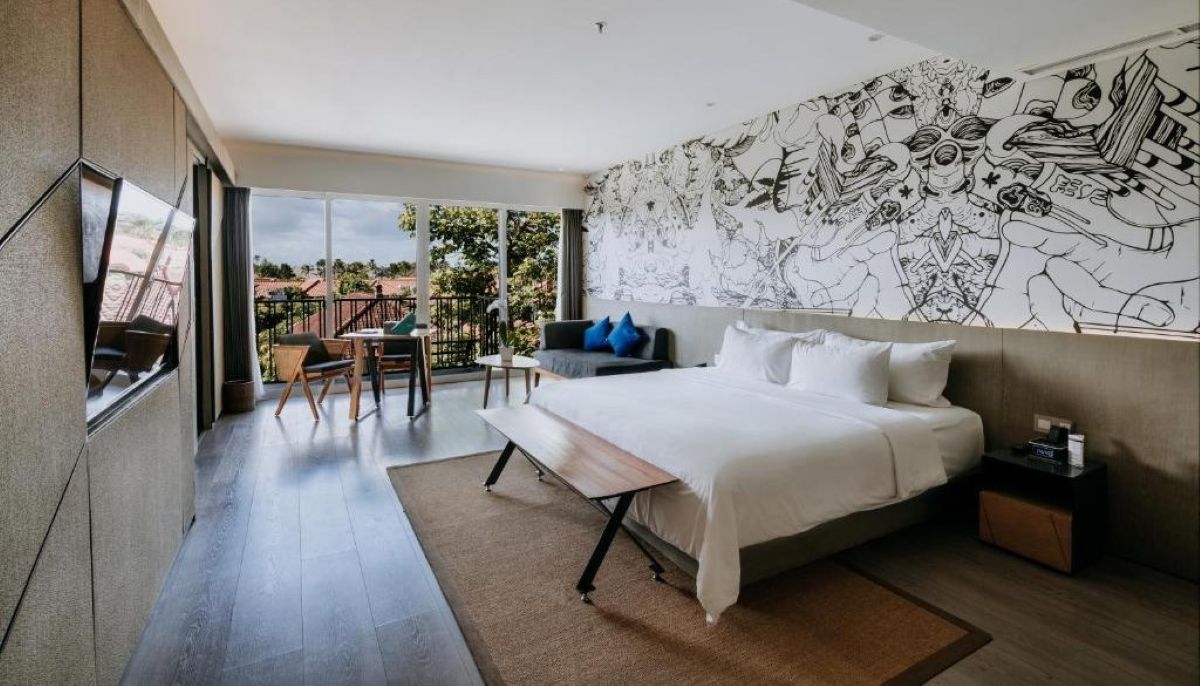
ARTOTEL Group is embracing artificial intelligence as a tool to support hotel operations rather than replace employees, as the Indonesian hospitality company seeks to remain responsive to changing traveller expectations while protecting the human element of service. Speaking exclusively with Travel And Tour World at THINC Indonesia, Jonathan Mokalu, Director of Business Development at ARTOTEL Group, discussed the company’s expansion, evolving hotel demand, sustainability standards and the skills young professionals need to build lasting hospitality careers.
Mokalu, who has spent nine years with ARTOTEL Group, said he has witnessed significant expansion during his time with the company, particularly following the pandemic. He described ARTOTEL as one of Indonesia’s fastest-growing hotel operators and said the company currently ranks third among local hotel chains.
Advertisement
Advertisement
His comments also highlighted a wider challenge facing hospitality businesses: how to adopt new technology without stripping hotel stays of the personal interaction that remains central to the guest experience.
ARTOTEL Sees AI as an Enabler Rather Than a Human Replacement
Artificial intelligence, he said, was becoming more applicable to hotel management, but Mokalu was quick to differentiate between the deployment of technology to increase efficiency, and substituting human staff.
Advertisement
Advertisement
However, ARTOTEL uses AI to help the employees while 6. ARTOTEL does not use robots as replacements for people.
Mokalu mentioned that through AI, the industry can work on recurring activities and operational issues. Nonetheless, he emphasized that hospitality is about service and people.
Advertisement
Advertisement
So, for ARTOTEL, it is therefore about promoting AI adoption and leaving the touch of human touch to each service.
That paradigm shifts the focus of technology from being a lead to playing a supporting role. AI takes care of or automates some of the routine tasks, and the human employees are the focus of many interactions.
Advertisement
Advertisement
Changing Traveller Expectations Shape ARTOTEL’s Development Approach
Mokalu also identified changing demographics as an important consideration for hotel operators and property owners.
He said demand is increasingly coming from younger generations whose expectations differ substantially from those seen 10 or 15 years ago.
ARTOTEL therefore seeks to remain current and differentiate its hospitality offering. Mokalu described adaptability as an important part of creating businesses capable of lasting as markets evolve.
For property owners considering hotel management partners, this ability to respond to changing demand forms part of ARTOTEL’s proposition.
Advertisement
Advertisement
Rather than relying exclusively on established hospitality models, the company seeks to adapt alongside the market and respond to the expectations of newer generations of guests.
ESG and Sustainability Standards Enter Hotel Development Requirements
Environmental, social and governance considerations are also becoming part of the standards surrounding new hotel development.
Asked how ARTOTEL incorporates its ESG framework and GSTC standards into site selection and property development, Mokalu explained that relevant requirements are incorporated into the company’s technical standards.
Hotels developed with ARTOTEL must follow specified standards, including requirements connected with ESG and sustainability considerations.
Mokalu noted that a separate department within the group handles this area in greater detail. He nevertheless described compliance with such standards as increasingly necessary within contemporary hotel development.
His explanation indicates that sustainability considerations are not treated solely as a promotional element but are incorporated into requirements associated with developing properties under the group.
Advertisement
Advertisement
Hard Work, Honesty and Common Sense Remain Core Leadership Skills
Technology and hotel expansion formed only part of Mokalu’s discussion at THINC Indonesia. Drawing on his own career, he also offered practical guidance for younger hospitality professionals seeking to progress into leadership.
He identified hard work, honesty and common sense as three particularly important qualities.
Understanding what colleagues, partners or other counterparts need is equally significant, according to Mokalu. That ability can help professionals move beyond executing individual tasks and develop the broader judgement required for leadership responsibilities.
His own career began at reception roughly two to three decades ago. He recalled the long working hours, night shifts and considerable dedication required in hospitality.
Despite those demands, Mokalu described the industry as rewarding for people who genuinely enjoy meeting and serving others.
Career Path Can Matter More Than Early Salary
For young professionals evaluating potential employers, Mokalu cautioned against focusing exclusively on money at the beginning of a career.
Advertisement
Advertisement
Instead, he emphasised the importance of understanding the career path an employer can offer.
He recalled a former boss explaining during an interview what his next five years could look like, including what he needed to do and what he would be expected to achieve. Mokalu said that experience became an important lesson that he now applies with his own staff.
Career planning, in his view, helps employees avoid remaining in the same position for years without understanding how they can progress.
Young employees may not immediately know exactly where they want their careers to lead, but Mokalu argued that having a development plan is preferable to working without a clear direction.
Human Service Remains at the Centre of ARTOTEL’s Hospitality Strategy
Throughout the interview, one consistent theme was clear: “You can change all you want, but hospitality still has to focus on humans.
ARTOTEL is catering to the younger traveller mindset by rolling sustainability-focused criteria into the development standards while testing out practical applications of artificial intelligence. However, Mokalu’s perspective on technology outlines a distinct limit for automation.
Advertisement
Advertisement
AI can assist employees, take out repetitive jobs and aid in operational issues. It must not, in ARTOTEL’s approach as Mokalu outlined, replace the human service that hospitality relies upon.
So for a hotel industry that is facing technology changes and gradually changing guests’ demands, the ARTOTEL’s niche is more about balancing innovation with service. While the group will continue to expand in Indonesia, Mokalu conveyed the same message at the THINC Indonesia: Hotels can automate, but guests will continue to want the human element.https://www.youtube.com/watch?v=MYaz4siU-qA
Advertisement
