
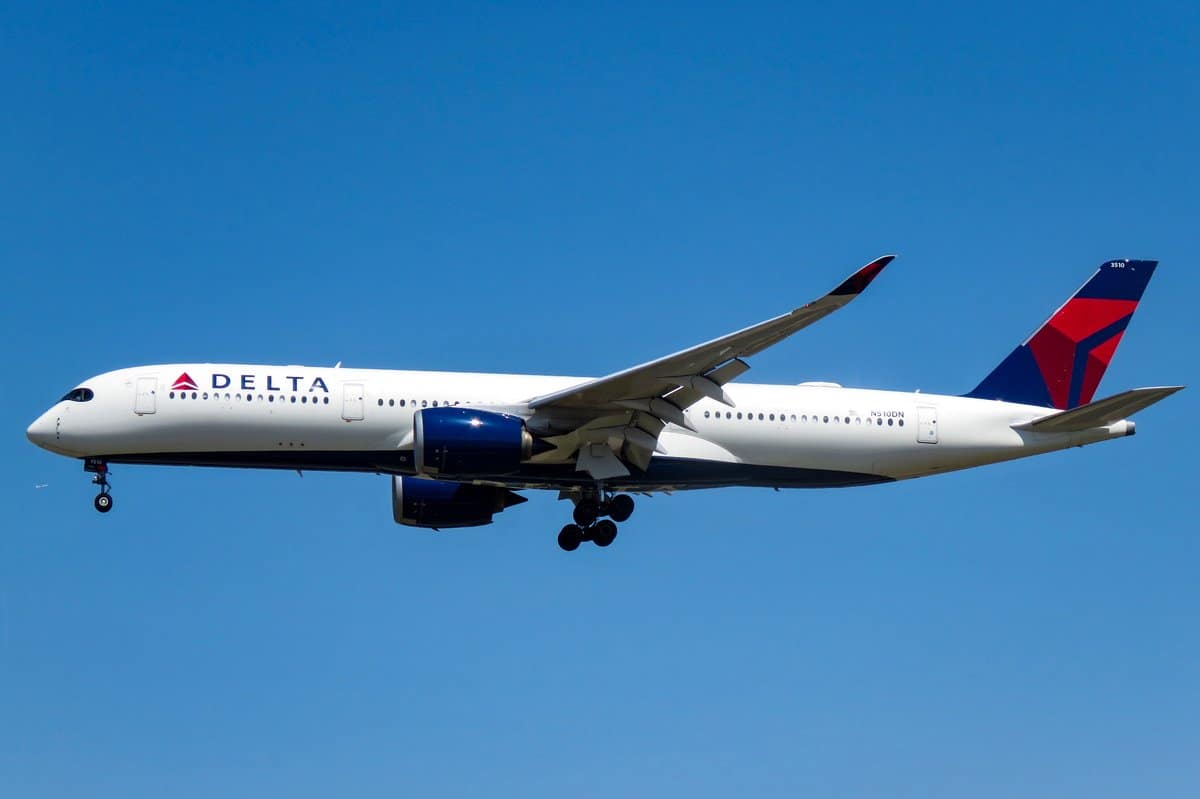
Image generated with Ai
Delta Air Lines Flight DL1324, an Airbus A319-114, made headlines after the Washington-to-Atlanta service diverted to Columbia Metropolitan Airport, United States, on August 4. The Delta Air Lines flight left Washington for Atlanta, but the journey changed unexpectedly. Instead, Flight DL1324 diverted to Columbia Metropolitan Airport before later continuing towards Atlanta. The Airbus A319-114 diversion created a significant delay and raised questions about what happened during the flight. However, the exact reason for the diversion remains unconfirmed. Meanwhile, Travel And Tour World urges readers to read the entire story for the latest details, timeline, aircraft information and confirmed facts surrounding the August 4 diversion.
Delta Air Lines Flight DL1324 was scheduled to operate from Washington Dulles International Airport to Hartsfield-Jackson Atlanta International Airport on August 4, with an Airbus A319-114 registered as N327NB assigned to the service. The flight was scheduled to depart at 10:16 a.m., but it left Washington at approximately 10:43 a.m., before the planned Atlanta arrival time of 12:00 p.m.
Advertisement
Instead of continuing directly towards Atlanta, the aircraft diverted to Columbia Metropolitan Airport, commonly identified by its airport code CAE, creating an unexpected interruption for passengers travelling on the Washington-to-Atlanta route. The diversion was confirmed through flight-tracking information, which recorded the aircraft arriving at Columbia before it subsequently resumed its journey towards Atlanta.
The most important unanswered question concerns the reason for the diversion, because neither the available flight-tracking information nor the publicly accessible information reviewed for this report establishes a definitive cause. Consequently, it would be misleading to claim that the aircraft diverted because of a mechanical problem, medical emergency, severe weather, security concern or another specific incident without an official confirmation.
Advertisement
Advertisement
A diversion does not automatically mean that an aircraft experienced a dangerous situation, as airline crews can divert when operational circumstances make continuing to the scheduled destination less suitable or when another airport provides a more practical option. Columbia Metropolitan Airport can serve as an alternative operating location in the region, and its established commercial facilities made it possible for the Airbus A319-114 to remain within the airline’s wider network.

Image generated with Ai
The diversion substantially changed the timing of the Washington-to-Atlanta journey, because the aircraft did not arrive in Atlanta anywhere close to its original midday schedule. After reaching Columbia Metropolitan Airport, the Airbus A319-114 remained there for several hours before departing again for Atlanta, turning what should have been a routine domestic flight into a much longer journey.
Flight-tracking information indicates that the aircraft eventually departed Columbia at approximately 6:54 p.m. and arrived in Atlanta at about 7:40 p.m. That meant the aircraft reached its scheduled destination roughly seven hours and 40 minutes after the original planned arrival time, highlighting the scale of the disruption even though the flight ultimately completed its journey.
Yes, the aircraft eventually continued from Columbia Metropolitan Airport to Atlanta, meaning the diversion did not become the final destination for the Washington-originating service. The aircraft involved was Airbus A319-114 registration N327NB, and its later movement from Columbia to Atlanta provides a clear indication that the original destination was ultimately restored.
Advertisement
Advertisement
The return to the planned destination is significant because passengers and observers may initially interpret a diversion as the cancellation or termination of a flight. In this case, however, the available tracking record shows a different outcome, with the aircraft leaving Columbia several hours after the diversion and completing the remaining journey to Atlanta later the same evening.
There is currently no sufficient evidence to state that weather caused the DL1324 diversion, although weather can be an important factor in airline operations and may influence routing, arrivals and airport capacity. Atlanta is a major aviation hub, and changing conditions can sometimes create operational challenges, but a general possibility should not be presented as the confirmed explanation for one particular flight.
Likewise, there is no reliable evidence in the information reviewed for this report that establishes a mechanical failure, medical emergency or security event as the cause of the diversion. The responsible approach is therefore to distinguish between what is confirmed — the diversion to Columbia and subsequent continuation to Atlanta — and what remains unknown until Delta Air Lines or an appropriate aviation authority provides a specific explanation.
For passengers, the immediate consequence was a significant extension to the journey, with the scheduled Washington-to-Atlanta service becoming an evening arrival after the unexpected stop in Columbia. Such diversions can create additional uncertainty because travellers may need to wait for operational decisions, aircraft clearance, crew arrangements and onward departure before they can resume their planned journey.
Nevertheless, the eventual continuation to Atlanta meant that the aircraft did not remain stranded at Columbia indefinitely, and the flight reached its intended destination later that day. Until Delta provides further details about the operational circumstances, the diversion should be viewed as a confirmed flight disruption rather than evidence of a particular emergency or technical failure.
Delta Air Lines Flight DL1324, an Airbus A319-114 operating from Washington to Atlanta on August 4, 2026, diverted to Columbia Metropolitan Airport before later continuing to Atlanta. The incident resulted in a lengthy delay, but the aircraft ultimately completed the planned journey.
The central fact remains straightforward: the diversion happened, the aircraft stopped at Columbia, and the service later resumed towards Atlanta. However, the exact cause has not been publicly confirmed in the information available, so speculation should be avoided until Delta Air Lines, the Federal Aviation Administration or another authoritative source provides a definitive explanation.
Advertisement
Tags: Airbus A319-114, Atlanta flight, Columbia Metropolitan Airport, Delta Air Lines Flight DL1324, delta airlines
Advertisement
Advertisement













Friday, September 4, 2026

Friday, September 4, 2026

Friday, September 4, 2026
Friday, September 4, 2026

Thursday, September 3, 2026

Wednesday, September 2, 2026

Friday, September 4, 2026