
Beijing Daxing Airport Hit by Widespread Flight Chaos as China Eastern, Air China, China Southern, China United and XiamenAir Record 40 Grounded Flights and 224 Schedule Hold-Ups, Impacting Travel Across China, Hong Kong and Global Transit Routes—Know the Latest Before Your Journey

Published
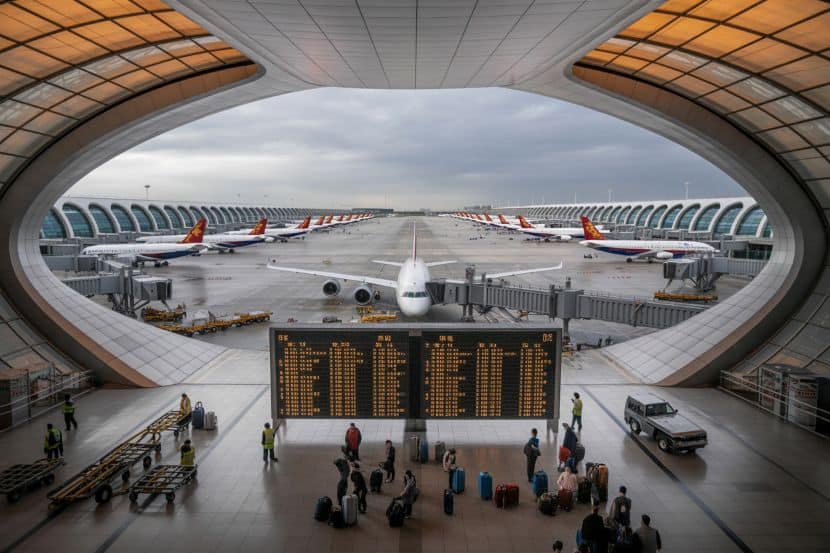
Image generated with Ai
Today, June 19, 2026, travellers flying through Beijing Daxing International Airport are experiencing one of the airport’s more challenging operational days, with 40 flight cancellations and 224 flight delays affecting services within China as well as international connections. The disruption spans several major Chinese airlines, creating widespread scheduling changes for passengers departing from, arriving at, or transiting through one of the country’s busiest aviation hubs.
The largest share of cancellations has been concentrated among China Eastern Airlines, while delays have spread across numerous carriers including China Southern Airlines, China United Airlines, Air China, and XiamenAir. Although not every airline has cancelled flights, the high number of delayed services demonstrates that operational pressure has extended across much of the airport’s daily flight schedule. The combined impact means passengers should expect longer waiting times, aircraft rotations being adjusted, gate changes, and possible rebooking activity throughout the day.
Advertisement
Advertisement
With Beijing Daxing serving as an increasingly important gateway for domestic travel and international connectivity, today’s disruption highlights how operational challenges at a single hub can quickly ripple through airline networks across China. Flights linking Beijing with major commercial centres, tourism destinations, and regional airports may all experience downstream effects as airlines reposition aircraft, crews, and airport resources.
Today’s Overall Operational Snapshot at Beijing Daxing International Airport
| Operational Metric | Total |
|---|---|
| Total Flight Cancellations | 40 |
| Total Flight Delays | 224 |
A total of 264 disrupted flight movements—combining cancellations and delays—illustrate the scale of today’s operational challenge. While cancellations represent the most severe form of disruption because flights are removed entirely from the schedule, the substantially larger number of delayed flights indicates that airport operations continue to function, albeit under considerable pressure.
Advertisement
Advertisement
For many passengers, delayed flights can trigger missed onward connections, revised boarding schedules, longer aircraft turnaround times, and increased congestion throughout terminals. Meanwhile, cancelled flights require airlines to rebook travellers, secure alternative transport where possible, and redistribute aircraft capacity across their networks.
Advertisement
Advertisement
Airline-by-Airline Operational Performance at Beijing Daxing International Airport
| Airline | Cancelled | % | Delayed | % |
| China Eastern | 28 | 15% | 40 | 21% |
| Air China | 10 | 18% | 13 | 24% |
| XiamenAir | 2 | 3% | 22 | 38% |
| Beijing Capital Airlines | 0 | 0% | 4 | 12% |
| Jiangxi | 0 | 0% | 1 | 25% |
| Spring Airlines | 0 | 0% | 2 | 33% |
| Hong Kong Airlines | 0 | 0% | 2 | 100% |
| Shanghai Airlines | 0 | 0% | 2 | 100% |
| China Southern Airlines | 0 | 0% | 84 | 32% |
| China United Airlines | 0 | 0% | 41 | 34% |
| Juneyao Airlines | 0 | 0% | 2 | 100% |
| Donghai Airlines | 0 | 0% | 2 | 100% |
| Hebei Airlines | 0 | 0% | 6 | 17% |
| Beijng Airlines | 0 | 0% | 1 | 16% |
China Eastern Airlines Bears the Largest Cancellation Burden
Among all airlines operating at Beijing Daxing International Airport, China Eastern Airlines experienced the greatest operational disruption in terms of outright cancellations. The airline recorded 28 cancelled flights, representing 15% of its scheduled operations, while another 40 flights were delayed, accounting for 21% of its flights.
This means China Eastern alone was responsible for 70% of all airport-wide cancellations (28 out of 40 cancelled flights), making it the single largest contributor to today’s disruption. The simultaneous occurrence of both high cancellation and delay figures suggests the airline faced operational challenges extending beyond isolated schedule adjustments.
Passengers travelling with China Eastern are likely to encounter aircraft substitutions, revised departure times, longer queues at service counters, and increased rebooking activity throughout the day.
Air China Experiences Both Cancellations and Delays
Air China reported 10 cancelled flights, representing 18% of its operations, together with 13 delayed flights, equal to 24%.
Although Air China cancelled fewer flights than China Eastern, its cancellation percentage is comparatively higher. This indicates that nearly one in every five scheduled Air China flights at Beijing Daxing was cancelled today.
Advertisement
Advertisement
Combined, China Eastern and Air China accounted for 38 of the airport’s 40 cancelled flights, or approximately 95% of all cancellations, highlighting that today’s cancellation activity has been concentrated among just two major carriers.
XiamenAir Shows Limited Cancellations but Elevated Delay Rates
XiamenAir recorded 2 cancelled flights, representing 3% of operations, while 22 flights were delayed, corresponding to 38%.
The contrast between low cancellations and relatively high delays suggests the airline continued operating most scheduled services while attempting to maintain network continuity despite operational constraints. Such a pattern often reflects airlines choosing to absorb disruption through schedule adjustments rather than removing flights completely.
China Southern Airlines Maintains Schedule but Faces Extensive Delays
The most striking delay figure belongs to China Southern Airlines, which reported 84 delayed flights while recording zero cancellations.
Its delay percentage of 32% indicates that nearly one-third of scheduled services experienced timetable disruptions without being removed from the schedule altogether. Operationally, this approach often reflects an airline prioritising passenger completion of journeys, even if departures occur later than planned.
Advertisement
Advertisement
The sheer volume of delayed services also makes China Southern the single largest contributor to the airport’s overall delay count.
China United Airlines Also Records Heavy Operational Delays
China United Airlines reported 41 delayed flights, representing 34% of operations, with no cancellations.
Although cancellations remained at zero, the delay percentage demonstrates that more than one-third of its flights experienced operational disruption. Such figures indicate that while aircraft continued operating, scheduling flexibility became increasingly limited during the day.
Together, China Southern Airlines and China United Airlines accounted for 125 delayed flights, representing more than 55% of all delays recorded across Beijing Daxing today.
Smaller Airlines Continue Operations Despite Moderate Disruptions
Several smaller carriers experienced only limited disruption.
Advertisement
Advertisement
Beijing Capital Airlines reported 4 delayed flights without cancellations, while Hebei Airlines recorded 6 delayed flights with no cancellations.
Jiangxi Airlines, Spring Airlines, Hong Kong Airlines, Shanghai Airlines, Juneyao Airlines, Donghai Airlines, and Beijng Airlines all continued operations without cancellations, although each experienced between one and two delayed services, reflecting operational pressure spreading throughout the airport network rather than affecting only one or two airlines.
For airlines showing 100% delay rates, such as Hong Kong Airlines, Shanghai Airlines, Juneyao Airlines, and Donghai Airlines, the statistic reflects the small number of flights they operated today rather than widespread network disruption.
What Today’s Airline Statistics Reveal About Beijing Daxing’s Operations
The overall distribution of today’s disruption presents several important operational insights.
First, cancellations remain highly concentrated, with China Eastern Airlines, Air China, and XiamenAir accounting for every cancelled flight recorded at the airport. This suggests that today’s cancellations were not evenly spread across all operators.
Advertisement
Advertisement
Second, delays are significantly more widespread than cancellations. Airlines that avoided cancellations altogether nevertheless reported considerable scheduling disruptions, indicating that airport operations remained active but under sustained pressure.
Finally, the contrast between cancellation-heavy airlines and delay-heavy airlines demonstrates differing operational strategies. Some carriers chose to cancel flights outright to protect network reliability, while others kept aircraft operating with delayed departures in order to minimise passenger displacement.
Overall, today’s figures illustrate a complex operational environment in which airlines balanced schedule integrity, fleet availability, crew rotations, passenger demand, and airport capacity while attempting to maintain as much connectivity as possible through Beijing Daxing International Airport.
Why Did So Many Flights Experience Disruptions Today?
Although airlines and airport authorities had not attributed today’s disruption to a single confirmed cause at the time of reporting, aviation experts note that large-scale disruptions involving both 40 cancellations and 224 delays at a major hub such as Beijing Daxing International Airport are usually the result of several operational factors occurring simultaneously rather than one isolated incident.
Among the most common contributors are:
Advertisement
Advertisement
- Adverse weather conditions: Heavy rain, thunderstorms, low visibility, strong winds, or convective weather can reduce runway capacity, increase aircraft separation requirements, and delay departures and arrivals. Even when weather improves, flight schedules often require several hours to recover.
- Air traffic flow management: Beijing’s airspace is among the busiest in Asia. Congestion or temporary air traffic control restrictions can slow aircraft movements, creating cascading delays across multiple airlines throughout the day.
- Aircraft and crew rotations: When an aircraft arrives late from another destination, its subsequent flights are also delayed. Likewise, crew duty-time regulations may require airlines to delay or even cancel flights if replacement crews are unavailable.
- Technical inspections and operational maintenance: Airlines routinely prioritise safety over schedule. Unexpected engineering inspections or maintenance requirements may temporarily ground aircraft, forcing schedule adjustments.
- Network-wide disruption: Many aircraft operating through Beijing Daxing also serve destinations across China and international routes. Disruptions at other airports can quickly spread throughout the network, affecting flights even when local weather remains favourable.
Rather than indicating a system-wide shutdown, today’s statistics suggest that airlines continued operating a substantial proportion of their schedules while making tactical decisions to delay or cancel selected services based on operational priorities.
What Guests Get: Immediate Passenger Ramifications
Passengers travelling through Beijing Daxing International Airport today should prepare for several immediate consequences beyond simply waiting longer for departure.
- Longer Airport Waiting TimesWith hundreds of delayed flights, travellers may spend significantly more time inside terminals as departure times continue to shift. Gate assignments may also change as airlines reorganise aircraft availability.
- Missed Connecting FlightsEven relatively short delays can cause passengers to miss onward domestic or international connections. Those travelling on separate tickets may face additional challenges when arranging alternative flights.
- Higher Demand at Customer Service CountersAirlines experiencing cancellations often see increased demand for rebooking assistance. This can result in longer queues at ticket desks and customer support centres throughout the day.
- Changing Boarding InformationPassengers should monitor departure boards and airline notifications regularly. Boarding gates, departure times, and boarding sequences may change multiple times as airport operations evolve.
- Potential Schedule Changes Beyond TodayAircraft delayed today may operate tomorrow’s flights. As a result, some disruptions can extend into subsequent operating days before airline schedules fully recover.
Understanding Refunds, Rebooking, and Passenger Rights
Passengers affected by cancellations or lengthy delays should review the conditions attached to their ticket and contact their airline directly before making independent travel arrangements.
In general, travellers should consider the following steps:
- If a flight has been cancelled, passengers should first request rebooking on the next available service or enquire about available refund options.
- If a significant delay causes a missed connection, travellers should ask the airline whether alternative routing is available.
- Keep all travel documents, boarding passes, booking confirmations, baggage receipts, and expense records, as these may be useful if reimbursement becomes available under airline policies.
- Travellers who booked through travel agencies or online booking platforms should also contact their booking provider, as itinerary changes are sometimes handled through the original point of purchase.
Compensation policies differ considerably depending on airline conditions of carriage, the cause of the disruption, and whether the itinerary is domestic or international. For this reason, passengers should carefully review the airline’s official passenger assistance policies before submitting any claim.
Advertisement
Advertisement
A Challenging Day for China’s Domestic and International Travel Network
Disruptions at Beijing Daxing International Airport extend beyond individual passengers because the airport functions as one of China’s most important aviation gateways. Every cancelled departure or delayed arrival can influence aircraft rotations serving dozens of destinations across the country and abroad.
For domestic travellers, schedule instability may affect business meetings, family visits, educational travel, and time-sensitive logistics. International passengers could experience missed long-haul connections, revised immigration schedules, or additional overnight accommodation requirements.
The broader tourism industry also feels these effects. Tour operators, hotels, airport transfer providers, conference organisers, and local attractions depend on predictable flight schedules. Even a single day of widespread disruption can create booking adjustments, last-minute cancellations, and operational challenges across multiple sectors of the visitor economy.
Operational Resilience Will Be Closely Watched
While today’s disruption is significant, aviation professionals will be monitoring how quickly airlines restore normal operations. Efficient aircraft repositioning, effective crew management, and proactive passenger communication will play a major role in determining whether the disruption remains confined to today or continues affecting schedules over the coming days.
Passengers travelling through Beijing Daxing International Airport should continue checking official airline notifications before leaving for the airport, arrive with additional time to accommodate possible schedule changes, and remain flexible as carriers work to restore normal operations.
Advertisement
Advertisement
FAQ – Beijing Daxing International Airport Flight Cancellations 2026
Why were so many flights cancelled today?
Today’s disruption involved 40 cancellations and 224 delays. Although no single confirmed cause had been officially identified at the time of reporting, aviation disruptions of this scale are commonly linked to a combination of weather conditions, air traffic congestion, aircraft rotations, crew availability, and operational constraints.
Which airline recorded the highest number of cancellations?
China Eastern Airlines recorded the highest number with 28 cancelled flights, followed by Air China with 10 cancellations, while XiamenAir reported 2 cancelled flights.
Which airline experienced the most delays?
China Southern Airlines recorded 84 delayed flights, the highest delay count among all airlines operating at Beijing Daxing today.
Are flights still operating?
Yes. Although disruptions have been significant, the majority of scheduled operations continue. Many airlines are operating with revised departure times rather than cancelling services entirely.
What should passengers do before travelling to the airport?
Passengers should check their flight status directly with their airline before leaving for the airport, monitor notifications for schedule changes, and allow additional travel time because departure gates and boarding times may change throughout the day.
Advertisement
Advertisement
Can passengers request refunds?
Passengers whose flights have been cancelled should contact their airline regarding available rebooking or refund options. Eligibility depends on the airline’s conditions of carriage and the circumstances surrounding the disruption.
Preparing for Travel Through Beijing Daxing in the Days Ahead
Although today’s disruption is substantial, recovery efforts typically begin immediately once operational conditions improve. Airlines will work to reposition aircraft, restore crew schedules, and minimise further delays across their networks. However, because aircraft operate multiple sectors each day, today’s delays can continue influencing tomorrow’s schedules.
Travellers planning to use Beijing Daxing International Airport over the next several days should remain proactive by confirming flight status before departure, enabling airline notifications, arriving earlier than usual, and maintaining flexibility if itinerary adjustments become necessary. Those with important onward connections should also consider allowing additional transfer time wherever possible.
Advertisement
