
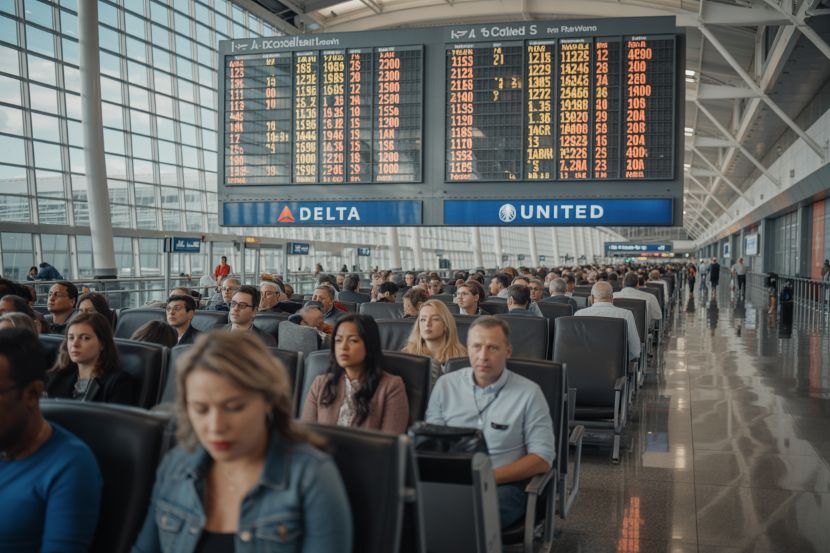
Image generated with Ai
Today’s US air travel network faced a significant upheaval, with 114 flights canceled and 595 flights delayed affecting travel within, into, and out of the United States. From the sprawling runways of Hartsfield‑Jackson International Airport (ATL) in Atlanta to regional hubs like Orlando International (MCO) and Phoenix Sky Harbor (PHX), passengers encountered massive disruptions that ripple through schedules and travel plans nationwide. The severity of this situation highlights systemic pressures on the aviation system that go beyond simple operational blips. With both domestic and international flights affected, this wave of cancellations and delays has left thousands of travelers stranded, forced to make urgent last‑minute changes, or rethink their trips entirely.
Unlike everyday delays, this level of disruption underscores broader challenges facing the US air system — where infrastructure strain, weather volatility, staffing issues, and airline network complexity combine to test the resilience of airlines, airports, and travelers alike.
Flight disruptions aren’t evenly spread across the country. Today’s cancellations and delays show a clear concentration in key air transport hubs and some regional airports that serve large volumes of connecting or tourism‑oriented traffic.
| Airport (Code) | Cancellations (#) | Delays (#) | Key Travel Role |
|---|---|---|---|
| Hartsfield‑Jackson Intl (ATL) | 10 | 15 | World’s busiest passenger airport |
| Tampa Intl (TPA) | 1 | 0 | Florida tourism gateway |
| Harry Reid Intl (LAS) | 1 | 0 | Major West Coast & leisure hub |
| Kansas City Intl (MCI) | 1 | 1 | Mid‑America connector |
| Frederick Douglass/Rochester Intl (ROC) | 1 | 0 | Regional feeder airport |
| Phoenix Sky Harbor Intl (PHX) | 1 | 0 | Southwest US connector |
| Newark Liberty Intl (EWR) | 1 | 0 | East Coast international hub |
| Fort Lauderdale Intl (FLL) | 1 | 1 | Florida tourism and business |
| Milwaukee Mitchell Intl (MKE) | 1 | 0 | Midwest regional hub |
| Miami Intl (MIA) | 1 | 0 | Southeastern international gateway |
| Dallas Love Fld (DAL) | 0 | 1 | Dallas metro short‑haul routes |
| Westchester County (HPN) | 0 | 1 | Suburban New York market |
| Los Angeles Intl (LAX) | 0 | 1 | Major West Coast international hub |
| Orlando Intl (MCO) | 0 | 1 | Central Florida leisure travel |
| Chicago O’Hare Intl (ORD) | 0 | 1 | Midwest connection powerhouse |
| Raleigh‑Durham Intl (RDU) | 0 | 1 | Southeast regional travel |
This table reflects today’s data and highlights airports critical to both domestic connectivity and tourism influx.
Advertisement
A disruption affecting hundreds of flights is often concentrated in carriers with large networks or significant regional operations. The table below captures airlines with notable cancellation and delay figures today — regardless of whether they operate primarily domestic, international, or regional flights.
| Airline | Cancellations (#) | Delays (#) | Operational Impact |
|---|---|---|---|
| Delta Air Lines | 17 | 15 | Highest total disruptions today |
| Frontier Airlines | 4 | 1 | Smaller low‑fare carrier facing operational issues |
| Endeavor Air (DAL) | 0 | 4 | Regional partner with all delays |
| Spirit Airlines | 0 | 2 | Budget carrier with moderate delay impact |
| SkyWest Airlines | 0 | 1 | Regional carrier tied to major networks |
| Southwest Airlines | 0 | 5 | Large domestic network affected |
| United Airlines | 0 | 1 | Global network carrier with slight disruption |
| KLM | 0 | 1 | International operator connecting to US |
Delta emerges as the most affected airline today, with the highest combined cancellations and delays. Southwest and Frontier, despite lower cancellation numbers, are notable because even modest disruptions can cascade significantly through tightly scheduled networks.
Several operational and environmental factors combine to create days like this in the aviation industry. No single issue accounts for the entire picture; instead, multiple pressures intersect.
Winter weather patterns — including fog, ice, snow, and strong winds — frequently disrupt schedules and reduce runway capacity at major airports. This is especially true for hubs like Atlanta (ATL) and Chicago (ORD), where heavy traffic combined with adverse weather increases ripple effects throughout the national system. Weather remains one of the most persistent external causes of flight delays and cancellations.
Airlines function on complex hub‑and‑spoke models — where delays at one airport can ripple across multiple destinations. For example, a delayed inbound aircraft for Delta at ATL often affects departures later in the day across the airline’s broader network, making timely recovery difficult without spare aircraft or crews.
Air traffic control staffing shortages have been ongoing in the US, particularly during government fiscal disruptions. Reduced controller availability can force capacity limitations at high‑volume airports, driving delays. Long‑term labor pressures in control towers and support roles also reduce system resilience.
Mechanical or technical issues, crew unavailability, and scheduling friction can accumulate over stretched flight schedules. Smaller carriers like Frontier and regional partners such as Endeavor Air are particularly sensitive to these pressures because they typically lack large fleets to absorb disruptions quickly.
When flights are delayed or canceled, passengers are often uncertain about what they are entitled to. Under US Department of Transportation rules (DOT):
Unlike some regions (for example, the EU), US carriers are not required by law to pay passengers for delays beyond refunds and rebooking, though some will provide meal vouchers or hotel stays at their discretion.
These disruptions extend beyond individual passengers to affect the US tourism ecosystem:
Major destinations like Florida, Nevada (Las Vegas), and California rely heavily on timely air service. Delays and cancellations risk lost bookings, shorter stays, and increased costs for travelers, directly affecting hotels, attractions, and local businesses.
Ongoing unpredictability can dampen traveler confidence — particularly for international visitors connecting through US hubs such as Newark (EWR) or Los Angeles (LAX). Uncertainty around connections increases booking hesitations and can shift visitor flows to other countries perceived as more reliable.
Airlines face operational costs — crew overtime, hotel accommodations for displaced passengers, and flight rescheduling logistics — that erode profit margins. Airports lose ancillary revenue from passenger spending when travelers are delayed or choose alternate airports.
Given the scale of the disruptions, here are a few practical tips for travelers affected by cancellations or delays:
For cancellations, most airlines, including Delta and Southwest, allow you to be automatically rebooked on the next available flight. If this hasn’t happened yet, reach out to customer service immediately.
Use airline apps, FlightAware, or airport monitors to track real-time flight statuses. If delays are significant, you may be able to rebook or find alternative routes that are less affected.
For international connections, consider alternative airports or later flights to avoid the chaos. For domestic passengers, plan a longer buffer between connecting flights to avoid missed connections.
Air travel disruptions today significantly affect tourism, particularly in Florida, California, and Nevada — all major tourist destinations with heavy flight traffic.
With major airports like Orlando and Miami affected, the state could see reduced tourism revenue as visitors struggle to make it to hotels, theme parks, and other leisure activities. These delays also disrupt international flights into Florida, further exacerbating losses.
Disruptions in Las Vegas and Phoenix affect tourists flocking to resorts and conventions. Even minor delays can lead to missed events or hotel bookings, further hurting local businesses reliant on seamless air travel.
The airline industry must continually evolve to handle the complex logistical needs of travelers. Today’s figures — 17 cancellations from Delta, 4 from Frontier, and several more across different airlines — highlight that airlines and airports need to invest more in predictive analytics, weather adaptation, and staffing solutions to avoid disruptions. Airlines and airports must work together to improve communication with passengers and handle emergencies swiftly.
While the weather, crew shortages, and airline operations will always create unpredictable elements in air travel, improvements in operations, real-time communications, and advanced bookings will help mitigate these issues.
Source: Flight Aware and Affected Airports
Advertisement
Tags: 2026 travel issues, Airline Delays, airport disruptions, Delta cancellations, flight cancellations
Advertisement
Advertisement













Thursday, September 3, 2026

Thursday, September 3, 2026

Thursday, September 3, 2026

Thursday, September 3, 2026

Thursday, September 3, 2026

Wednesday, September 2, 2026

Thursday, September 3, 2026

Thursday, September 3, 2026


