Somudranil Sarkar
Somudranil Sarkar
Somudranil Sarkar

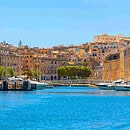
Image generated with Ai
In 2026, Greece remains dominant in international travel due to the influx of high-net-worth American travelers to Hydra, Greece 2026. According to Bank of Greece reports, as of early September, spending by Americans greatly increased, while the number of American travels slightly decreased. Direct flights to Athens from Dallas-Fort Worth, Atlanta, Boston, and New York, make it easy for high-end travelers to visit Greece. From Athens, travelers can go to the car-free and culturally rich island of Hydra. This shift in travel to Greece meets the government’s tourism objectives of quality travel over quantity and will change the Saronic Gulf area for decades.
The Mediterranean tourism landscape has undergone a profound transformation during the first eight months of 2026, with Greece emerging as a primary beneficiary of shifting global travel patterns. While geopolitical instability in the Middle East has prompted many international holidaymakers to reconsider their itineraries, Greece has capitalised on its reputation as a secure, culturally rich, and highly accessible destination. According to officially verified data published by the Bank of Greece in late August 2026, the nation’s tourism sector recorded remarkable fiscal triumphs during the first half of the year. Greece welcomed approximately 13.5 million inbound travellers between January and June, representing a 15.4% increase compared to the corresponding period in 2025. Concurrently, overall travel receipts surged by 14.8% to reach an impressive €8.8 billion.
Advertisement
However, beneath these headline figures lies a far more nuanced economic narrative, one defined by the evolving demographic profile of the international visitor. The Ministry of Tourism Greece and the Greek National Tourism Organisation (GNTO) have spent recent years strategically pivoting away from the sheer volume-based models of the past, focusing instead on attracting high-yield demographic segments that generate greater local economic impact whilst exerting less pressure on public infrastructure. The influx of affluent US tourists in Hydra Greece 2026 serves as the ultimate validation of this national strategy. This distinctive cohort of American visitors—primarily originating from major economic hubs—has demonstrated an unprecedented willingness to invest heavily in premium accommodation, private transportation, and high-end culinary experiences, fundamentally altering the revenue dynamics of the Saronic Gulf.
The remarkable upsurge in high-spending American visitors cannot be entirely attributed to destination appeal alone; it is heavily underpinned by an unprecedented expansion in transatlantic aviation capacity. Throughout the 2026 summer season, Athens International Airport (ATH) has functioned as the critical gateway for this lucrative market. Official aviation schedules confirm that Athens now offers 103 weekly departures to the United States, translating to nearly 15 daily flights connecting the Greek capital to nine distinct US destinations.
Advertisement
Advertisement
One of the most consequential developments in this aviation network was the launch of a new, direct daily route operated by American Airlines connecting Dallas-Fort Worth (DFW) to Athens. Utilising high-capacity B773 and B772 aircraft, this new route augmented American Airlines’ seat capacity in the Athens market by an astonishing 30% compared to the summer of 2025. By tapping into the massive Dallas-Fort Worth hub—which offers onward connections to over 230 destinations across the Americas—Greece successfully unlocked a vast new reservoir of affluent Southern and Midwestern US travellers who previously faced cumbersome layovers in Western Europe.
Simultaneously, legacy carriers have fortified their established strongholds. Delta Air Lines has maintained aggressive scheduling from key Eastern Seaboard and Southern hubs, operating highly lucrative direct flights from Atlanta, Boston, and New York (JFK). United Airlines and other carriers operating out of Newark (EWR) have similarly expanded their seasonal footprint. For the discerning traveller departing from Atlanta or Boston, the ability to board a direct, premium-cabin flight and disembark in Athens less than ten hours later has dramatically reduced the friction of international travel. This unparalleled connectivity ensures that American tourists arrive in Greece refreshed and ready to transition immediately to their final destinations, with the cosmopolitan island of Hydra consistently ranking as a preferred choice.
While legendary Cycladic destinations like Mykonos and Santorini have historically monopolised American attention, the 2026 season has witnessed a definitive shift towards “quiet luxury.” Hydra, located a mere hour and a half from the port of Piraeus via high-speed ferry, has perfectly positioned itself to capture this changing sentiment. The island’s defining characteristic—a strict, government-enforced ban on all wheeled vehicles, including cars, motorcycles, and even bicycles—creates an atmosphere of suspended time that is immensely appealing to urban professionals escaping the relentless pace of New York or Dallas-Fort Worth.
For the modern American luxury traveller, Hydra offers an intoxicating blend of authentic Greek heritage and understated elegance. The island’s amphitheatrical harbour, lined with impeccably preserved 18th-century stone mansions built by wealthy shipping merchants, presents an architectural purity rarely found in heavily developed resort towns. Visitors navigate the island’s cobbled streets on foot, or rely on traditional mules and private water taxis to access secluded, pebbled coves like Kamini and Bisti. This deliberate preservation of traditional island life, entirely free from the noise and pollution of modern traffic, has transformed Hydra into an exclusive enclave for those who equate true luxury with tranquillity, privacy, and cultural authenticity.
Advertisement
Advertisement
To truly comprehend the economic magnitude of this trend, one must examine the granular data provided by the Bank of Greece for the period of January through August 2026. The statistics reveal a fascinating paradox regarding the American market: visitor volume and visitor value moved in completely opposite directions. During the first half of 2026, total arrivals from the United States actually declined by 5.4%, settling at 656,700 visitors. Under traditional tourism metrics, this drop might be perceived as a failure. However, travel receipts from these American travellers concurrently spiked by an impressive 10.8%, reaching nearly €797 million.
This divergence vividly illustrates the concept of high-yield tourism. American visitors in 2026 were spending substantially more per individual trip than in previous years. Data from the first five months of 2026 indicated that average spending per trip by US tourists reached approximately €1,187, a 22% increase from the €974 recorded during the same period in 2025. In May 2026 alone, as the lucrative transatlantic routes from Boston and Atlanta gained seasonal momentum, the average spend per trip for US visitors skyrocketed to roughly €1,491.
When contrasted with established European source markets, the value of the American tourist becomes even more pronounced. For instance, the Bank of Greece reported that arrivals from Germany increased by 10.4% in the first half of 2026, yet total receipts from German tourists actually fell by 6.3%. Similarly, French visitor numbers remained stagnant while their corresponding financial contribution dropped by 7.4%. Consequently, the Greek economy is increasingly reliant on the immense purchasing power of transatlantic visitors, who consistently opt for premium boutique accommodation, private chartered transport, and high-end dining, thereby injecting vital capital directly into the local economies of islands like Hydra.
The current trajectory of Greek tourism is not accidental; it is the direct result of comprehensive policy frameworks implemented by the Ministry of Tourism Greece and the Greek National Tourism Organisation. Recognising the existential threat posed by overtourism in heavily congested Aegean hotspots, government officials have actively championed the geographic dispersion of tourists. Recent official statements and the rollout of the New Special Spatial Planning Framework for Industry demonstrate a concerted effort to balance economic development with environmental stewardship and cultural preservation.
Hydra stands as a textbook example of this policy in action. By refusing to compromise on its strict preservation laws—prohibiting modern architectural developments and the introduction of motor vehicles—the island naturally limits its own carrying capacity. This scarcity inherently drives up value, organically attracting a demographic capable of absorbing premium pricing. The Greek National Tourism Organisation has subtly shifted its international marketing campaigns in the United States, targeting affluent demographics in Dallas-Fort Worth, New York, and Boston with messaging that highlights heritage, art, gastronomy, and sustainable travel practices over mass-market beach holidays.
Managing the expectations and logistical requirements of high-net-worth individuals within the constraints of a highly protected, car-free environment presents unique policy challenges. The local municipal authorities on Hydra, operating under the auspices of national heritage laws, must strictly regulate all commercial activities to ensure the island’s delicate infrastructure is not overwhelmed. For instance, the regulation of commercial water taxis—the primary mode of transport to the island’s premier beach clubs—requires careful oversight to prevent marine congestion and preserve the pristine water quality of the Saronic Gulf.
Furthermore, building regulations on Hydra are notoriously stringent, effectively banning the construction of the sprawling, mega-resort complexes favoured in other parts of the Mediterranean. Instead, local zoning laws mandate the careful restoration of existing historical structures. This policy has fostered a thriving micro-economy of elite boutique hotels, where traditional stone facades conceal state-of-the-art luxury amenities designed to satisfy the exacting standards of international visitors arriving via American Airlines and Delta Air Lines. By maintaining these rigid regulatory frameworks, the government ensures that the very characteristics that make Hydra desirable are legally protected in perpetuity.
The economic ripple effects generated by the influx of US tourists in Hydra Greece 2026 are profoundly felt across all tiers of the local hospitality industry. Unlike massive all-inclusive resorts that trap tourist spending within a single corporate entity, the Hydra model forces capital to circulate widely throughout the local community. Visitors typically engage a vast network of independent service providers, from private airport transfer companies navigating the often-congested Athens International Airport to the operators of the high-speed ferries departing from Piraeus.
Upon arrival, American tourists distribute their wealth across a diverse ecosystem of local enterprises. Establishments such as the elegant Orloff Boutique Hotel or the exclusive Mandraki Beach Resort have reported exceptional booking rates throughout the 2026 season, with lead times stretching months in advance. The local culinary scene has similarly flourished, with iconic waterfront tavernas like Piato hosting a steady stream of elite international patrons.
Additionally, Hydra’s burgeoning reputation as a global art hub has been solidified by this affluent demographic. The presence of world-class installations, such as Jeff Koons’ Apollo at the DESTE Foundation’s slaughterhouse-turned-gallery, perfectly aligns with the cultural appetites of collectors and art enthusiasts travelling from New York and Boston. This synthesis of high art, luxury hospitality, and traditional island life creates a multifaceted economy that is highly resilient to standard seasonal fluctuations.
The economic mechanics behind the 2026 tourism data offer vital lessons for the broader European travel sector. The phenomenon of fewer American arrivals generating substantially higher aggregate revenue fundamentally challenges the outdated industry metric that equates success solely with border crossings. When a tourist from Dallas-Fort Worth or Atlanta visits Greece, the sheer distance and cost of the transatlantic flight dictate a longer length of stay—often 10 to 14 days—compared to a European traveller on a brief weekend city break.
During these extended stays, the cumulative daily expenditure on premium services compounds rapidly. Affluent US tourists are overwhelmingly more likely to utilise private guided tours, charter luxury yachts for island hopping, and purchase high-value local goods, including fine jewellery and bespoke art. Furthermore, the strength of the US Dollar against the Euro throughout early 2026 provided American consumers with enhanced purchasing power, further incentivising luxury expenditures.
This high-yield model is exceptionally beneficial for the Greek national economy. It maximises foreign exchange earnings and tax revenues while simultaneously minimising the physical wear and tear on historical sites, public utilities, and waste management systems. In essence, by attracting the right type of visitor through strategic airline partnerships and premium destination marketing, Greece is achieving superior economic outcomes with a smaller ecological and infrastructural footprint.
The sociological and public impact of this economic boom on the permanent residents of the Saronic Gulf is broadly positive, though it requires careful ongoing management. The injection of millions of euros into the local economy guarantees robust employment opportunities for the island’s youth, stemming the tide of urban migration that plagues many remote Greek communities. The lucrative nature of the luxury service sector allows local hospitality workers to earn substantial incomes during the extended operating season, which now robustly spans from early April through late October.
However, the rapid influx of elite US tourists in Hydra Greece 2026 also necessitates a delicate balancing act to ensure that the island remains a living, breathing community rather than a mere playground for the global wealthy. The local municipality continues to prioritise initiatives that support permanent residents, ensuring that essential services, affordable local housing, and traditional industries such as small-scale fishing and agriculture are not entirely displaced by tourism demands. The enduring harmony between the local populace and international visitors is largely maintained because the American demographic drawn to Hydra explicitly seeks out—and deeply respects—authentic local interactions and cultural immersion.
The success of the 2026 tourism strategy has been widely acknowledged by leading authorities within the Greek aviation and economic sectors. The Bank of Greece, in its official August 2026 bulletin, explicitly highlighted the disproportionate financial contribution of the American market, noting that “net receipts from travel services more than offset the goods trade deficit by 119.2% and accounted for 96.1% of total net services receipts” during the first half of the year.
At the infrastructure level, the seamless integration of transatlantic flights has been heralded as a major operational triumph. Commenting on the pivotal role of aviation, Ioanna Papadopoulou, Director of Communications & Marketing at Athens International Airport, stated earlier in the year that the launch of new direct connections, particularly the American Airlines route from Dallas-Fort Worth, was “a highly significant and exciting development, further enhancing Athens’ connectivity with the United States of America.” These official endorsements underscore the reality that the current tourism boom is structurally sound, resulting from deliberate, coordinated efforts between government ministries, airport authorities, and international airline partners.
As the 2026 season transitions into the autumn months, the outlook for US tourism to Hydra and the broader Greek islands remains exceptionally strong. Advance booking data suggests that the demand for high-end, culturally immersive European travel will persist unabated into 2027. The critical challenge facing the Ministry of Tourism Greece will be maintaining the delicate equilibrium that currently makes destinations like Hydra so appealing.
To ensure long-term sustainability, future initiatives will likely focus on further extending the tourism season into the winter months and promoting lesser-known regional destinations to distribute the economic benefits more evenly across the nation. However, as long as major carriers like Delta Air Lines and American Airlines continue to provide robust, direct connectivity from key wealth centres like New York, Boston, Atlanta, and Dallas-Fort Worth, Hydra’s status as the quintessential Mediterranean sanctuary for the affluent American traveller is completely assured. The verified data from 2026 unequivocally proves that when a destination steadfastly protects its unique heritage, it does not sacrifice economic growth; rather, it guarantees it.
The influx of elite US tourists to Hydra Greece, especially in 2026, was a positive sign for transitioning to a sustainable high-value travel system. Per the Bank of Greece, there was a positive financial impact for tourists traveling from Dallas-Fort Worth, Atlanta, Boston and New York and others. Hydra values cultural preservation with even more valuation of avoiding mass tourism. Because of these factors, it has attracted the most elite and discerning travelers from America to make it the best and only Mediterranean refuge for the elite. This success extends beyond Hydra and shows other Greek islands that using direct international air links and protecting your heritage will allow you to grow your economy beyond what you have ever imagined while maintaining the natural beauty of the Saronic Gulf.
Advertisement
Tags: American Airlines Greece, Bank of Greece reports, Dallas-Fort Worth to Athens, Greece tourism statistics, Travel News
Advertisement
Advertisement












Thursday, September 3, 2026

Thursday, September 3, 2026

Thursday, September 3, 2026

Thursday, September 3, 2026

Wednesday, September 2, 2026

Thursday, September 3, 2026

Thursday, September 3, 2026