
Travel Disrupted at Miami International Airport as American Airlines, Cayman Airways, Delta Air Lines, Envoy Air and Frontier Face 62 Delays, Affecting Major Routes in London, Casablanca, Austin, Boston, Dallas and Beyond

Published
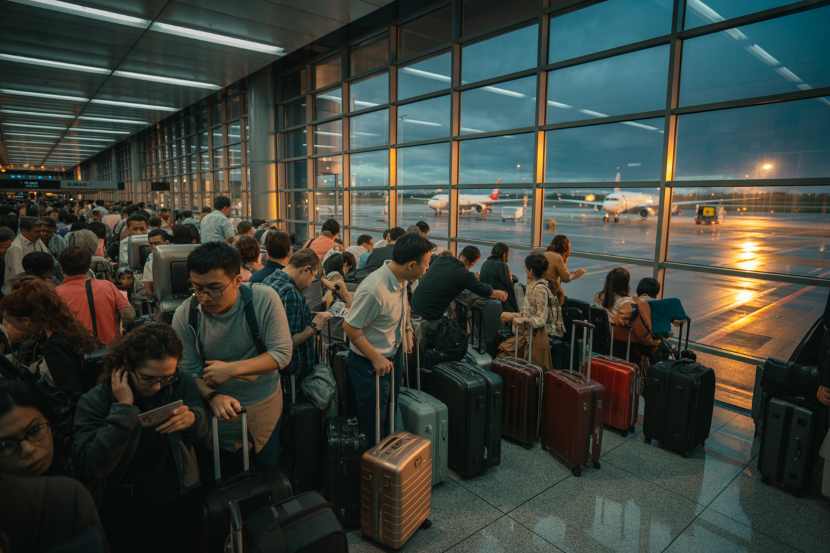
Travel Disrupted at Miami International Airport is unfolding rapidly as American Airlines, Cayman Airways, Delta Air Lines, Envoy Air and Frontier face 62 delays, and consequently operations remain under pressure. Moreover, these delays are affecting major routes in London, Casablanca, Austin, Boston, Dallas and beyond, creating widespread passenger concern. Passengers are experiencing disruptions, and airlines are actively managing schedules. Importantly, ground operations at Miami International Airport continue to adjust in real time. Meanwhile, connectivity between international and domestic networks is being tested. As a result, travellers across London, Casablanca, Austin, Boston, Dallas and beyond are seeing cascading impacts. Therefore, airlines including American Airlines, Cayman Airways, Delta Air Lines, Envoy Air and Frontier are responding with operational changes. Overall, this travel disruption at Miami International Airport highlights how 62 delays can quickly affect global aviation flows.
Affected Cities
Miami, London, Casablanca, Austin, Boston, Dallas, Fort Worth, Newark, Houston, New York, Chicago, Phoenix, St. Louis, Barcelona, Madrid, Lisbon, Zurich, Punta Cana, Montego Bay, Cozumel, Mexico City, Cancun, Havana, Holguin, George Town, Nassau, Belize City, Doha, Buenos Aires, Quito, Medellin, San Juan, Liege, Los Angeles, Rome, Lima, Saint Croix, Oranjestad.
Overview of Flight Cancellations
Flight delays across the concentrated among a mix of major full-service carriers, low-cost airlines and international operators, reflecting broad but uneven operational pressure rather than a single-system breakdown. American Airlines leads by a wide margin with 35 delays at 6%, indicating high flight frequency where volume amplifies disruption visibility. Delta Air Lines follows with 4 delays at 5%, while Southwest Airlines and United Airlines report 3 delays each at 12% and 7% respectively, suggesting moderate strain across domestic networks. Regional and affiliate operators such as Envoy Air show 2 delays at a low 1%, highlighting resilience despite tight schedules. Meanwhile, carriers including Frontier Airlines and Swiss International Air Lines each record 2 delays but with higher percentages of 16% and 50%, pointing to smaller operational bases where disruptions have amplified proportional impact. Several international airlines such as Qatar Airways, ITA Airways, Ethiopian Airlines and Royal Air Maroc each show single delays but elevated percentages up to 50%, reinforcing that limited schedules magnify disruption ratios. Overall, the pattern reveals that while absolute delay numbers remain manageable, the distribution underscores operational sensitivity across both high-capacity US carriers and lower-frequency international routes.
What to Do if Your Flight Gets Delayed: A Quick Guide
Flight delays can disrupt plans and test patience. However, taking the right steps early can help you stay in control and reduce inconvenience. Here’s how to handle a delayed flight effectively:
Advertisement
Advertisement
Stay Updated
Keep a close eye on your email, SMS alerts, and the airline’s mobile app for real-time updates. Airlines often revise departure times, gate numbers, or boarding details, so staying informed helps you react quickly.
Stay Calm and Monitor Announcements
As soon as you learn your flight is delayed, remain calm and listen carefully to airport announcements. Check display boards and the airline’s website regularly. Delays can change frequently, so accurate information is essential.
Advertisement
Advertisement
Contact the Airline
Speak with airline staff at the airport or contact customer support via phone or live chat. If queues are long, digital channels are often faster. Ask for updated departure times and available support options.
Know Your Rights
Understand your passenger rights based on the airline and region. In many cases, especially for long delays, airlines may provide meals, vouchers, or accommodation. In regions like the EU, compensation rules may apply depending on delay duration and cause.
Plan Alternatives
If the delay is extensive, explore rebooking options. Ask about earlier flights, partner airlines, or alternative routes. You may also consider other transport options such as trains or buses if feasible.
Prepare for the Wait
Use the extra time wisely. Charge your devices, secure essentials like food and water, and stay comfortable. Keeping calm and prepared can make the delay far more manageable.
Flight delays can be inconvenient, but they are manageable with the right approach. Staying informed, remaining calm, and communicating promptly with the airline are essential steps to reduce disruption. Understanding your passenger rights helps you access support such as meals, accommodation, or compensation when applicable. Exploring alternative travel options can also save time during extended delays. Preparation plays a key role, so keeping essentials ready ensures greater comfort while you wait. Ultimately, a proactive and informed response allows travellers to navigate delays more efficiently, minimise stress, and maintain control over their journey despite unexpected schedule changes.
Authors Observation: All information is manually obtained from FlightAware’s official website, and all operations are subject to change based on real-time updates. In order to maintain safety, airlines actively modify schedules and itineraries. In order to get to their destinations safely, passengers are asked not to panic in such situations and to look for alternate travel choices. Relying on real-time updates, reviewing airline rebooking restrictions, and maintaining flexibility with travel plans are all highly recommended.
Source: FlightAware
Advertisement
