
India to Extend Optional Railway Travel Insurance to Reservation Counters from 27 October 2026 with Digital Payment Requirement

Published
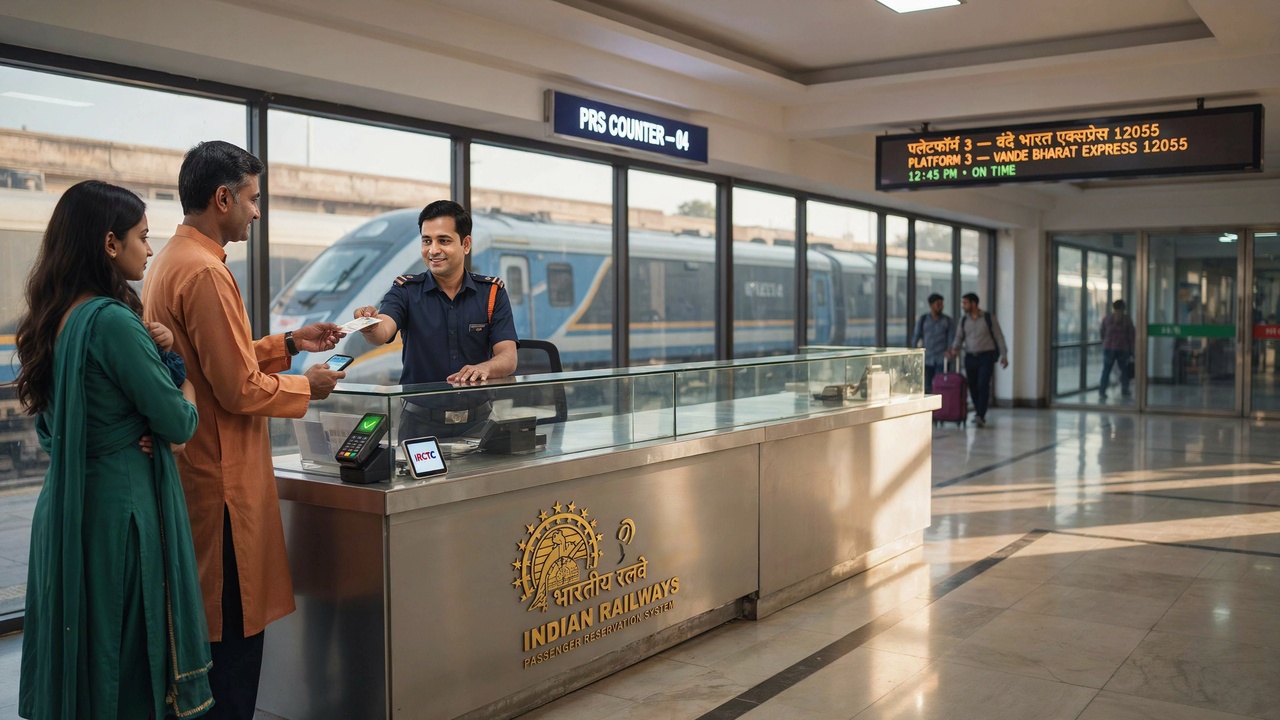
India is preparing to extend optional railway travel insurance to passengers booking reserved train tickets at physical Passenger Reservation System counters from 27 October 2026, widening access to accident-related financial protection beyond online reservations. Under the reported arrangement, passengers must provide a mobile number, give their consent and complete payment digitally to obtain insurance. Cash-paying passengers will not qualify for the new counter-based option. The initiative follows a reported Supreme Court order dated 6 October 2026 and involves technical preparations by Indian Railways, IRCTC and the Centre for Railway Information Systems. Maximum benefits reportedly include ₹10 lakh for accidental death or permanent total disability.
What Is Changing Under India’s Railway Travel Insurance Scheme?
Indian Railways is reportedly preparing to extend its Optional Travel Insurance Scheme to passengers purchasing reserved tickets at physical reservation counters.
The facility has previously been associated primarily with online ticket bookings through the Indian Railway Catering and Tourism Corporation.
Under the proposed expansion, eligible passengers visiting Passenger Reservation System centres will be informed about the insurance option during the ticket-booking process.
Advertisement
Advertisement
They will be able to decide whether to purchase the policy.
The insurance will remain voluntary, meaning passengers will not be required to buy it to obtain a railway ticket.
Advertisement
Advertisement
However, the new arrangement introduces specific eligibility conditions.
Passengers must provide a mobile number and use an accepted digital payment method.
Advertisement
Advertisement
Those paying entirely in cash will not qualify for the insurance option under the reported instructions.
This creates an important distinction between railway ticket eligibility and insurance eligibility.
Passengers can continue to purchase railway tickets through existing permitted payment methods, but access to the additional insurance facility will depend on the reported digital-payment requirement.
The proposed implementation date is 27 October 2026.
Advertisement
Advertisement
However, the precise October 2026 rollout instructions have not been independently confirmed against a publicly accessible Railway Board circular.
The development should therefore be understood as a reported scheduled expansion pending official confirmation of operational availability.
When Will Railway Travel Insurance at Reservation Counters Begin?
Railway travel insurance at reservation counters is scheduled to become available from Tuesday, 27 October 2026.
The reported change follows a Supreme Court order dated 6 October 2026.
Railway zones have been instructed to prepare reservation centres, train employees and ensure that the necessary technical systems are ready.
The initiative involves coordination between Indian Railways, IRCTC and the Centre for Railway Information Systems.
Advertisement
Advertisement
Key Details of the Proposed Insurance Expansion
| Category | Reported arrangement |
|---|---|
| Scheduled implementation | 27 October 2026 |
| Country | India |
| Railway organisation | Indian Railways |
| Booking channel | Physical Passenger Reservation System counters |
| Insurance scheme | Optional Travel Insurance Scheme |
| Passenger participation | Voluntary |
| Consent | Required |
| Mobile number | Mandatory for participating passengers |
| Payment method | Digital payment |
| Cash payment | Not eligible for the new counter-based insurance option |
| Policy communication | Sent to the supplied mobile number |
| Technical organisations | IRCTC and CRIS |
| Implementation monitoring | Railway divisional and commercial officials |
| Maximum accidental death benefit | ₹10 lakh |
| Maximum permanent total disability benefit | ₹10 lakh |
The implementation date represents the reported start of the new facility rather than evidence that every reservation centre has already begun offering it.
Passengers should verify availability at their chosen counter after the scheduled launch.
Why Is Indian Railways Extending Insurance Beyond Online Ticket Booking?
The proposed expansion addresses a difference between passengers booking railway tickets online and those using physical reservation counters.
IRCTC’s online booking system has offered eligible passengers the opportunity to purchase optional accident-related insurance during the reservation process.
However, passengers who prefer booking tickets in person have not had the same access through the counter-booking process.
The new arrangement is intended to extend that option to eligible physical reservations.
Advertisement
Advertisement
This matters because railway passengers use different booking channels for practical reasons.
Some travellers are comfortable making reservations online, while others prefer receiving assistance from railway employees.
Physical reservation counters remain relevant for passengers who need help understanding ticket availability, travel classes or reservation procedures.
The insurance expansion would allow qualifying counter customers to obtain financial protection without changing their preferred booking channel.
However, the digital-payment requirement means the facility will not be available to every person using a physical counter.
The policy therefore expands the available booking channels for insurance while maintaining specific conditions for participation.
Advertisement
Advertisement
How Much Insurance Coverage Will Railway Passengers Receive?
The reported scheme provides accident-related financial benefits according to the nature and severity of an eligible incident.
The highest stated benefits apply to accidental death and permanent total disability.
Other provisions cover permanent partial disability, qualifying hospital treatment expenses and transportation of mortal remains.
Railway Travel Insurance Coverage and Benefits
| Insurance category | Maximum reported benefit |
|---|---|
| Accidental death | ₹10 lakh |
| Permanent total disability | ₹10 lakh |
| Permanent partial disability | ₹7.5 lakh |
| Hospitalisation and medical expenses | ₹2 lakh |
| Transportation of mortal remains | ₹10,000 |
These amounts represent maximum coverage limits rather than guaranteed payments following every incident.
Actual compensation depends on the policy’s definitions, eligibility requirements, exclusions and claims procedures.
For example, the hospitalisation provision should not be interpreted as general health insurance.
Advertisement
Advertisement
It relates to qualifying medical expenses associated with covered railway incidents.
Similarly, disability benefits depend on the type and extent of the injury as defined in the insurance contract.
Passengers should read the policy conditions carefully rather than relying exclusively on the headline coverage amounts.
The benefits correspond to the established optional railway travel insurance framework, but the precise wording of the policy issued through the new counter-booking facility should be confirmed when implementation begins.
What Does the ₹10 Lakh Accidental Death Benefit Mean?
The accidental death benefit provides a maximum reported payment of ₹10 lakh when an insured passenger dies as a result of a qualifying railway accident or covered incident.
This is intended to provide financial assistance to eligible beneficiaries.
Advertisement
Advertisement
However, the existence of the benefit does not mean that every death occurring during a journey automatically qualifies.
The incident must satisfy the terms and conditions of the insurance policy.
The insurer may require supporting documents establishing the circumstances of the incident and the passenger’s eligibility.
Beneficiaries may also need to provide identification, policy details and other relevant records.
The amount payable will depend on the applicable policy provisions.
Passengers should therefore ensure that their personal information is accurate when purchasing insurance.
Advertisement
Advertisement
Correct documentation can become particularly important if a claim is required.
How Does Permanent Disability Coverage Work?
The reported insurance framework distinguishes between permanent total disability and permanent partial disability.
Permanent total disability carries a maximum benefit of ₹10 lakh.
Permanent partial disability has a maximum reported benefit of ₹7.5 lakh.
The distinction is important because the extent of disability can affect the compensation payable.
A policy may define specific injuries and corresponding benefit percentages.
Advertisement
Advertisement
The maximum amount should not be interpreted as a standard payment for every injury.
Medical documentation and the insurer’s assessment may be required to determine whether the claim meets the policy conditions.
Passengers should also distinguish permanent disability benefits from temporary injuries or medical treatment expenses.
The latter may fall under different policy provisions.
Understanding these distinctions can help travellers assess what protection the insurance actually provides.
Why Is Digital Payment Required at Railway Reservation Counters?
One of the most important features of the proposed arrangement is the requirement to pay digitally.
Advertisement
Advertisement
Passengers who choose optional insurance must pay the premium through an accepted digital payment method along with the ticket transaction.
The reported instructions exclude passengers who pay entirely in cash.
This does not mean that cash payments for railway tickets are being discontinued.
Instead, the restriction concerns eligibility for the new insurance facility at physical reservation counters.
Digital payment creates an electronic record of the transaction, which can support premium processing and reconciliation.
However, the supplied report does not provide a detailed technical explanation for the restriction.
Advertisement
Advertisement
It also does not identify every accepted payment method or clarify whether mixed cash-and-digital transactions will qualify.
Passengers should therefore ask reservation staff about the available payment options before completing their booking.
The distinction is particularly relevant to travellers who normally use cash at railway counters.
They may need to choose a permitted digital payment method if they wish to purchase the insurance.
Why Must Passengers Provide a Mobile Number?
A mobile number is required under the reported counter-based insurance arrangement because policy information will be communicated electronically.
Passengers selecting insurance must provide a number during the reservation process.
Advertisement
Advertisement
The insurance details are expected to be sent to that number after the transaction has been completed.
This provides a way for travellers to access their policy information without relying exclusively on printed documents.
However, passengers should not assume that supplying a mobile number automatically activates insurance.
The policy must be selected, the premium processed and the insurance issued according to the applicable procedure.
Travellers should verify that the number entered by reservation staff is correct.
An incorrect number could create difficulties when retrieving policy information.
Advertisement
Advertisement
Passengers should also retain their railway ticket and digital payment confirmation.
These records may be useful when contacting the insurer or checking whether the insurance transaction was completed successfully.
How Will Reservation Counter Staff Explain the Insurance Scheme?
The reported instructions require railway reservation staff to inform passengers about the optional insurance facility.
Employees are expected to explain the process before obtaining passenger consent.
This is important because insurance involves contractual conditions that differ from ordinary railway ticketing.
Passengers should understand that the product is optional and that purchasing a ticket does not automatically provide the additional insurance.
Advertisement
Advertisement
Staff are also expected to explain the payment requirement and assist passengers with questions about policy communication.
Training preparations reportedly include premium collection, passenger consent and handling enquiries.
The effectiveness of the rollout will depend partly on how clearly these procedures are communicated.
Passengers should be able to distinguish between the ticket fare and the insurance premium.
They should also know how to confirm that the policy has been issued.
However, the supplied report does not establish a standard script or detailed training programme for every reservation centre.
Advertisement
Advertisement
Those operational arrangements remain subject to the railway administration’s implementation instructions.
What Technical Changes Are Needed at Passenger Reservation System Centres?
The proposed expansion requires changes to the reservation software used at physical railway counters.
The Centre for Railway Information Systems and IRCTC are reportedly coordinating the technical work.
The system must support passenger consent, insurance selection, digital premium collection and the communication of policy information.
These functions need to operate alongside the existing ticket reservation process.
The reported instructions also require railway zones to prepare their reservation centres before the scheduled launch.
Advertisement
Advertisement
Divisional railway managers and commercial department officials have been assigned monitoring responsibilities.
Technical difficulties are to be referred to the relevant CRIS and IRCTC personnel.
The changes are significant because reservation counters process a wide variety of transactions.
Insurance must be integrated without creating confusion between the ticket fare and the additional optional product.
However, the available information does not establish that every counter has completed testing.
It also does not provide a confirmed number of reservation centres that will offer the facility on the first day.
Advertisement
Advertisement
Passengers should therefore verify availability locally after implementation begins.
What Is the Role of IRCTC and CRIS in the New Arrangement?
IRCTC and CRIS have different responsibilities within India’s railway ticketing environment.
IRCTC is associated with online railway reservations and the existing optional travel insurance facility offered through eligible e-ticket bookings.
CRIS develops and supports information technology systems used by Indian Railways.
The proposed counter-based insurance expansion requires coordination between these functions.
Reservation systems must identify eligible transactions, record passenger consent and support the collection of insurance premiums.
Advertisement
Advertisement
The resulting information must also be communicated through the appropriate channels for policy issuance.
The supplied report identifies both organisations as responsible for the necessary technical preparations.
However, it does not establish a detailed division of every implementation responsibility.
The operational success of the scheme will depend on reliable coordination between ticketing systems, payment processing and insurance administration.
How Will the Expansion Affect Passengers Who Prefer Offline Booking?
Passengers who prefer purchasing reserved tickets at railway counters are among the main groups affected by the proposed change.
The new arrangement would allow eligible travellers to obtain optional insurance without completing an online ticket reservation.
Advertisement
Advertisement
This may be useful for passengers who prefer assistance from railway employees.
It may also benefit travellers who use physical counters for more complicated booking enquiries.
However, the requirement for digital payment means that the expansion does not remove every barrier associated with purchasing insurance.
Passengers who rely entirely on cash will not qualify under the reported rules.
The mobile-number requirement may also affect travellers who cannot provide a usable number.
Consequently, the scheme broadens access to insurance but does not establish universal eligibility.
Advertisement
Advertisement
Its practical value will depend on whether passengers can meet the payment and documentation requirements.
What Should Passengers Know About Insurance Premiums?
The supplied October 2026 report does not specify the exact premium that will apply to insurance purchased at reservation counters.
The existing online optional travel insurance scheme has historically involved a low per-passenger premium.
However, that historical pricing should not automatically be applied to the new counter facility without official confirmation.
Passengers should ask reservation staff to identify the applicable premium before agreeing to purchase insurance.
They should also confirm whether the amount is charged separately or included in the total digital transaction.
Advertisement
Advertisement
The premium should be clearly distinguished from the railway ticket fare.
Travellers should not assume that insurance is complimentary simply because the coverage is described as optional.
Likewise, they should not assume that purchasing a higher-priced railway ticket increases the maximum insurance benefit.
Coverage depends on the policy conditions rather than the ticket’s travel class unless the insurer specifically provides otherwise.
How Can Passengers Prepare for an Insurance Claim?
Passengers who purchase optional insurance should retain their policy details and understand the claims procedure.
The insurance is intended to provide financial protection for specified incidents, but benefits are subject to documentation and eligibility requirements.
Advertisement
Advertisement
A claim may require evidence of the insured journey, the incident and the resulting injury or loss.
The precise documents depend on the type of claim and the insurer’s policy conditions.
For example, a hospitalisation claim may require medical records and treatment bills.
A disability claim may require medical certification establishing the extent of the injury.
Claims involving accidental death may require additional official documentation.
Passengers should not rely solely on the railway ticket when making a claim.
Advertisement
Advertisement
They should retain the insurance confirmation and follow the insurer’s stated procedure.
The supplied announcement does not identify a new claims portal or separate process specifically for counter-booked policies.
Travellers should therefore consult the policy document issued to them for the correct contact details and deadlines.
Does Optional Travel Insurance Replace Existing Railway Passenger Protections?
Optional travel insurance is an additional financial-protection product.
It should not be confused with other compensation or assistance arrangements that may apply to railway passengers under relevant laws and regulations.
The availability of insurance does not establish that all other passenger protections have been replaced.
Advertisement
Advertisement
Similarly, choosing not to purchase optional insurance should not automatically be interpreted as a waiver of every statutory right.
Different arrangements may apply depending on the circumstances of an incident.
Passengers should distinguish between contractual insurance benefits and any compensation available under applicable railway legislation.
The supplied report concerns the expansion of an optional insurance product rather than a comprehensive reform of railway passenger compensation rules.
For travellers, the important point is to understand what the policy adds and what it does not cover.
Why This Matters
The proposed expansion of railway travel insurance to reservation counters is significant because it extends an existing financial-protection option to another booking channel.
Advertisement
Advertisement
Passengers who previously relied on physical counters would gain an opportunity to purchase accident-related insurance during the reservation process.
This could make the product more accessible to travellers who prefer in-person assistance.
The reported maximum benefits also provide a clearer framework for understanding the financial protection available under the policy.
However, the digital-payment requirement limits eligibility.
Cash-paying passengers will not receive the same option through the new arrangement.
The initiative therefore combines wider access with continuing payment-related restrictions.
Advertisement
Advertisement
For Indian Railways, the rollout also represents an additional integration between physical ticketing systems and digital financial services.
Its effectiveness will depend on technical readiness, clear staff guidance and accurate communication with passengers.
The supplied report does not provide a forecast for insurance uptake or the number of passengers expected to participate.
Any claim about future enrolment or financial impact would therefore be speculative.
What Travellers Should Know
Passengers planning to purchase reserved railway tickets from 27 October 2026 should ask whether the optional insurance facility is available at their chosen reservation centre.
They should understand that insurance remains voluntary and that additional conditions apply.
Advertisement
Advertisement
Before Booking
- Scheduled start date: 27 October 2026.
- Booking channel: Physical Passenger Reservation System counters.
- Participation: Voluntary.
- Consent: Required before insurance is processed.
- Mobile number: Mandatory under the reported arrangement.
- Payment: Accepted digital payment method required.
- Cash transactions: Not eligible for the new counter-based insurance option.
- Coverage: Accident-related benefits subject to policy conditions.
- Premium: Confirm the applicable amount before payment.
- Policy documentation: Verify that insurance details have been received.
- Claims: Follow the insurer’s published procedure and deadlines.
Passengers should also check the accuracy of their personal information before completing the transaction.
Frequently Asked Questions
When will railway travel insurance become available at reservation counters?
The reported implementation date is 27 October 2026. The exact rollout remains subject to confirmation through official Railway Board instructions.
Is railway travel insurance compulsory for reserved tickets?
No. The insurance is optional. Passengers must give their consent before it can be purchased.
Can passengers paying cash obtain the new insurance?
Not under the reported counter-booking arrangement. An accepted digital payment method is required.
What is the maximum insurance coverage?
The reported maximum benefit is ₹10 lakh for accidental death or permanent total disability, with separate limits for partial disability, hospitalisation and transportation of mortal remains.
How will passengers receive their policy details?
The reported procedure provides for insurance information to be communicated to the mobile number supplied during booking.
Advertisement
Advertisement
Closing Update: Indian Railways Prepares to Expand Optional Insurance Beyond Online Reservations
Indian Railways’ reported plan to introduce optional travel insurance at physical reservation counters from 27 October 2026 represents an expansion of passenger access to accident-related financial protection.
The arrangement would allow eligible passengers to purchase insurance while booking reserved tickets in person.
However, participation will depend on passenger consent, digital payment and the provision of a mobile number.
The reported coverage includes benefits for accidental death, disability, hospitalisation and transportation of mortal remains.
Technical preparations involving IRCTC and CRIS are intended to support the introduction of the facility across railway reservation centres.
For passengers, the most important consideration is to understand that insurance remains
Advertisement
