
Dublin MetroLink Moves Ahead as AECOM and Jacobs Lead Ireland’s Major Airport Rail Transformation in 2026

Published
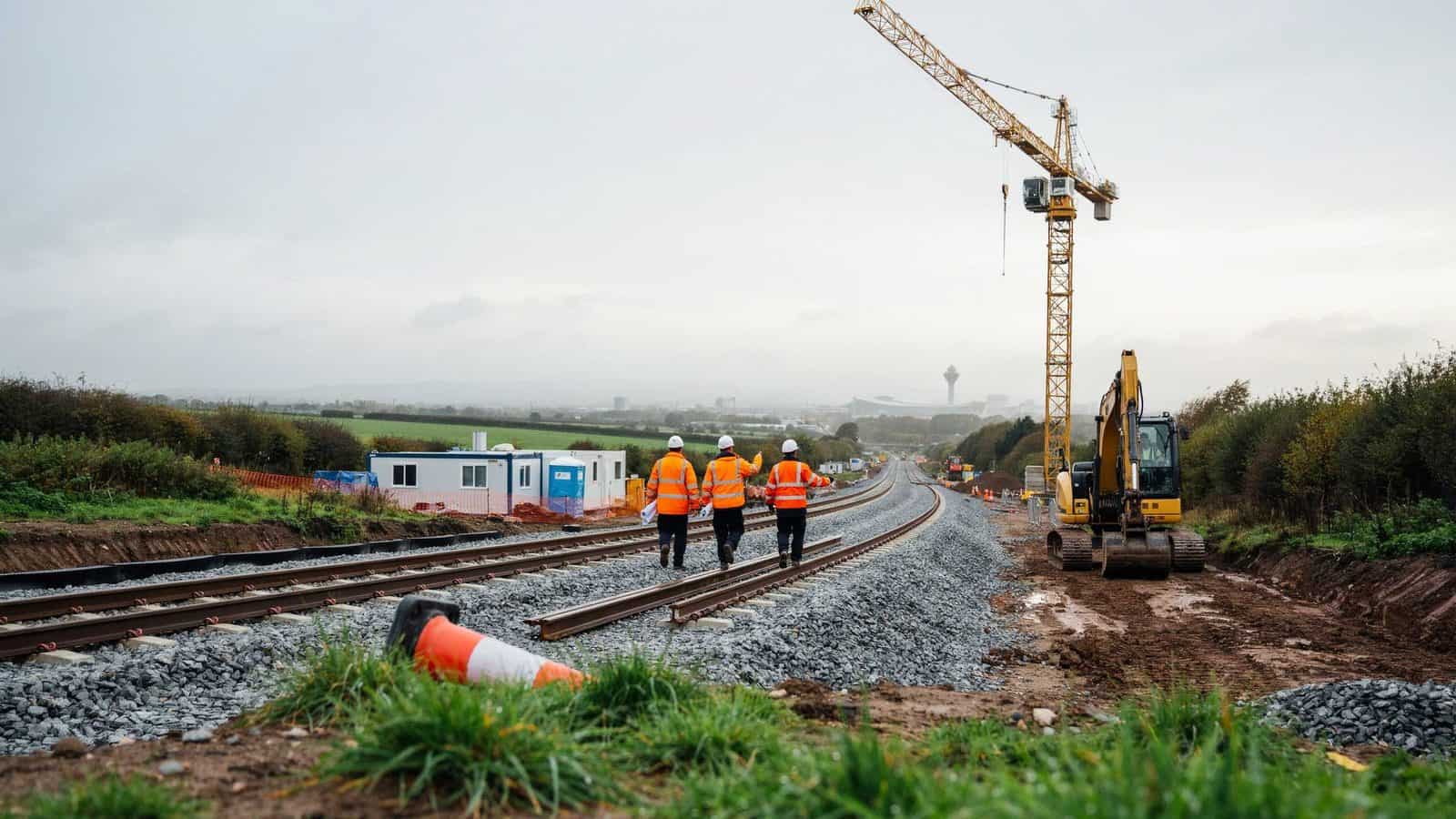
Dublin, Ireland — September 14th, 2026: The engagement of AECOM and Jacobs Joint Venture by Transport Infrastructure Ireland (TII) shows the reliance Transport Infrastructure Ireland (TII) has on the MetroLink Programme Delivery Partner. Dublin’s metro and flight passenger growth at the airport are demanding more of existing transport networks, and are growing congestion on travel routes and increasing travel times. A fully separated metro system in Ireland would serve in the future millions of passengers and commuters and the businesses in the Greater Dublin region.
MetroLink, in contrast to more rail systems, is much more than just a rail system. It presents the opportunity to connect the Dublin City and Dublin Airport to other transport infrastructure and connected cities in Europe, along the same corridor.
Advertisement
Advertisement
Fully developed, there will be, for the first time, access for international travelers through Dublin Airport to experience Ireland. MetroLink will connect all comprehensive rail and light rail services, Dublin Airport, downtown, Irish Rail and DART, the Luas, and the BusConnects.
Why Dublin’s MetroLink Is Becoming More Than a Transport Project
The appointment of the AECOM and Jacobs partnership signals a new delivery phase for MetroLink. The two global infrastructure companies will provide programme management, governance support, risk coordination and delivery expertise for one of Ireland’s most ambitious transport developments.
Advertisement
Advertisement
MetroLink is designed to address several long-term challenges facing Dublin:
- Increasing population growth across Greater Dublin
- Rising passenger volumes at Dublin Airport
- Road congestion affecting productivity
- The need for lower-carbon transport options
- Improving access between residential areas, employment centres and tourism destinations
The project aims to create a high-capacity metro system connecting Swords in North County Dublin, Dublin Airport and Dublin city centre.
Advertisement
Advertisement
Unlike conventional rail services that share tracks with other operations, MetroLink will operate as a fully segregated metro system. This means trains will have dedicated infrastructure, allowing more reliable journeys and higher service frequencies.
For travellers, this could significantly change the airport arrival experience. Instead of relying mainly on buses, taxis or private vehicles, passengers will eventually have a direct rail connection into Dublin’s central districts.
Advertisement
Advertisement
The €9.5 Billion Question: Why Ireland Is Betting Big on Metro Connectivity
The scale of MetroLink places it among Ireland’s largest infrastructure investments.
The project represents a long-term economic decision rather than only a transport upgrade. Major cities worldwide increasingly use airport rail links as economic tools because efficient connectivity improves tourism competitiveness, business travel and investment appeal.
| MetroLink Feature | Expected Impact |
|---|---|
| 16 new stations | Wider access across Greater Dublin |
| Dublin Airport connection | Faster airport-city movement |
| Fully segregated metro system | More reliable passenger journeys |
| Integration with DART, Luas and BusConnects | Stronger national transport network |
| AECOM and Jacobs delivery partnership | Global infrastructure expertise |
| Reduced dependence on road transport | Lower congestion and emissions |
The global trend is clear. Cities with efficient airport connections often gain advantages in attracting international visitors, conferences, investment and skilled workers.
London, Madrid, Singapore, Hong Kong and Copenhagen have demonstrated how airport rail links can become part of a city’s international identity.
Advertisement
Advertisement
Dublin’s challenge has been different. While the city has experienced strong economic growth and increasing international recognition, airport connectivity has remained heavily dependent on road-based transport.
MetroLink aims to close that gap.
What Others Get Wrong About Dublin’s MetroLink Future
Many infrastructure discussions focus only on construction costs and engineering complexity. However, the wider impact of MetroLink extends far beyond tracks, tunnels and stations.
What others get wrong is viewing MetroLink as only a commuter solution.
The project is also a tourism infrastructure strategy.
Dublin Airport is Ireland’s primary international gateway, welcoming millions of passengers every year. The ability to move directly between the airport and city centre can influence visitor satisfaction, destination competitiveness and travel behaviour.
Advertisement
Advertisement
For international tourists, the first and last journey often shapes their perception of a destination.
A fast, reliable airport connection can:
- Improve visitor confidence
- Encourage city breaks
- Support business events
- Reduce transport uncertainty
- Strengthen Dublin’s position as a European destination
Travel analytics increasingly show that connectivity is becoming a deciding factor for travellers. Visitors are not only comparing attractions, hotels and experiences. They are comparing how easily they can move through a destination.
Cities offering seamless mobility increasingly gain an advantage.
AECOM and Jacobs Bring Global Infrastructure Experience to Dublin
The selection of AECOM and Jacobs reflects the complexity of delivering a major metro programme involving multiple contractors, government agencies and technical disciplines.
AECOM has delivered major transport programmes globally, including metro, rail and urban mobility projects. Jacobs also brings experience from complex transportation programmes requiring coordination between engineering, construction, technology and public-sector stakeholders.
Advertisement
Advertisement
The joint venture’s role will include:
- Programme governance
- Managing contractor interfaces
- Risk management
- Delivery coordination
- Supporting procurement activities
- Improving project certainty
AECOM Europe and India Chief Executive Richard Whitehead highlighted the importance of MetroLink in supporting Ireland’s growth and improving connectivity across Dublin and surrounding communities.
Jacobs Executive Vice President and General Manager Europe Richard Sanderson described the project as a major opportunity to transform movement across Dublin while supporting economic growth.
The partnership reflects a wider industry trend where governments increasingly rely on specialist delivery partners for large-scale transport programmes.
MetroLink and Dublin Airport: The Hidden Tourism Impact
The strongest new angle behind MetroLink is its potential role in reshaping Ireland’s tourism journey.
Transport infrastructure often determines how visitors experience a destination. A traveller arriving at an airport immediately evaluates accessibility, convenience and reliability.
Advertisement
Advertisement
Dublin currently welcomes international visitors through one of Europe’s busiest airports, but the lack of direct metro connectivity has remained a long-standing challenge.
MetroLink could change this by creating a more integrated visitor pathway:
Airport arrival → Metro connection → City centre access → Regional transport links
This model could strengthen Dublin’s appeal for:
- Leisure travellers
- Business visitors
- Conference delegates
- International students
- Long-stay visitors
For the tourism sector, improved transport connectivity can encourage visitors to explore more areas because easier movement reduces travel barriers.
The benefits could extend beyond Dublin city centre. Through connections with wider rail and bus networks, MetroLink may support greater exploration of Ireland’s attractions and regions.
Advertisement
Advertisement
How MetroLink Could Place Dublin Among Europe’s Smartest Connected Cities
The future success of MetroLink will not only depend on engineering excellence but also on how effectively it transforms Dublin into a more connected European capital.
Across the world, leading cities have invested heavily in airport rail systems because mobility has become a key measure of global competitiveness. Transport is no longer viewed simply as infrastructure. It has become a foundation for tourism growth, business expansion and urban resilience.
Cities with efficient airport links often create stronger first impressions among international visitors.
| City | Airport Rail System | Connectivity Advantage |
|---|---|---|
| London, United Kingdom | Heathrow Express, Elizabeth Line | Multiple airport-city connections supporting global business travel |
| Copenhagen, Denmark | Airport Metro and Rail Links | Direct city access strengthening tourism mobility |
| Madrid, Spain | Metro and Cercanías Rail | Integrated airport access supporting millions of visitors |
| Singapore | MRT Airport Link | Seamless international visitor movement |
| Dublin, Ireland | MetroLink (planned) | Future direct airport-city metro connection |
MetroLink gives Dublin an opportunity to compete with these global mobility models.
The project could become a defining part of Ireland’s infrastructure identity, similar to how airport rail connections have become symbols of modern urban development in other international destinations.
The key difference is that Dublin is not only solving congestion. It is preparing for future demand.
Advertisement
Advertisement
The Airport Connection Race: Why Dublin Cannot Ignore Passenger Growth
Dublin Airport has become increasingly important for Ireland’s economy, tourism sector and international links.
As passenger numbers continue to grow, transport systems must evolve alongside aviation demand. Airports are no longer isolated travel hubs. They are becoming extensions of city networks.
A lack of efficient airport connectivity can create several challenges:
- Longer journey times for visitors
- Increased road congestion
- Higher emissions
- Greater pressure on taxi and bus services
- Reduced competitiveness compared with other European capitals
MetroLink addresses this challenge by creating a dedicated high-capacity transport corridor.
The planned connection between Dublin Airport and the city centre could significantly improve passenger movement, particularly during peak travel periods.
For international travellers, the ability to step off a flight and quickly access the heart of Dublin could influence destination choice.
Advertisement
Advertisement
Travel behaviour is changing. Modern travellers increasingly expect destinations to provide convenience from arrival to departure.
The airport journey is now part of the overall visitor experience.
What Others Are Missing: MetroLink Could Become Ireland’s Tourism Gateway
The biggest overlooked opportunity is the relationship between transport infrastructure and tourism growth.
Many infrastructure discussions measure success through passenger numbers, construction milestones and financial investment.
However, MetroLink’s deeper impact could come from changing how visitors interact with Ireland.
A visitor arriving at Dublin Airport will potentially experience:
Advertisement
Advertisement
- Faster movement into the city
- Easier access to hotels and attractions
- Better connections with regional transport
- Reduced uncertainty during travel planning
This could particularly benefit Dublin’s growing short-break tourism market.
European city tourism is highly competitive. Travellers often compare destinations based on accessibility, affordability and convenience.
A destination with efficient transport can encourage longer stays because visitors feel more confident exploring beyond the immediate airport area.
MetroLink could therefore support not only Dublin but Ireland’s wider visitor economy.
How MetroLink Supports Ireland’s Sustainable Transport Ambitions
Climate targets are another major factor behind the project.
Transport remains one of the most significant contributors to urban emissions. Shifting passengers from private vehicles to high-capacity public transport is considered an important strategy for reducing environmental impact.
Advertisement
Advertisement
MetroLink is expected to contribute by:
- Encouraging public transport use
- Reducing dependence on cars
- Supporting lower-emission journeys
- Improving transport efficiency
The fully segregated metro design is intended to provide predictable and reliable services, making public transport a more attractive option for daily commuters and visitors.
For Dublin, sustainability is becoming increasingly connected with tourism competitiveness.
Many international travellers now consider environmental performance when choosing destinations.
Cities that combine accessibility with sustainable mobility are increasingly positioned as future-ready destinations.
The Economic Ripple Effect Beyond Rail Construction
Large infrastructure projects create impacts beyond transport.
Advertisement
Advertisement
MetroLink has the potential to influence:
Employment Growth
The programme will require specialists across engineering, construction, technology, project management and operations.
Business Investment
Improved connectivity can make areas around stations more attractive for commercial development.
Housing Accessibility
Better transport links can expand access between residential communities and employment centres.
Tourism Expansion
Improved airport access can strengthen Dublin’s appeal for international visitors and business events.
Infrastructure investment often creates long-term economic effects because transport networks shape where people live, work and travel.
Advertisement
Advertisement
MetroLink’s impact could therefore extend well beyond its stations.
AECOM and Jacobs Partnership Highlights the Complexity of Modern Rail Delivery
The involvement of AECOM and Jacobs demonstrates the increasingly complex nature of major transport programmes.
Modern metro projects require coordination across multiple areas:
| Delivery Challenge | Programme Requirement |
|---|---|
| Multiple contractors | Strong coordination and governance |
| Large investment scale | Financial and risk management |
| Technical complexity | Engineering integration |
| Public impact | Community engagement |
| Long construction timeline | Programme certainty |
A project of this size requires more than construction expertise. It requires strategic management capable of aligning government objectives, engineering requirements and public expectations.
The Programme Delivery Partner model allows TII to access international experience while maintaining oversight of Ireland’s national infrastructure goals.
MetroLink’s Role in Dublin’s Future Travel Economy
The future of travel is increasingly built around connected ecosystems.
Advertisement
Advertisement
Passengers no longer separate airports, hotels, attractions and transport. They expect every stage of their journey to work together.
MetroLink fits into this changing travel landscape.
For tourism businesses, improved mobility could create opportunities including:
- Easier visitor movement
- Increased city exploration
- Stronger conference tourism potential
- More competitive city-break packages
- Improved visitor satisfaction
For residents, the project could provide a reliable alternative to congested road networks.
For businesses, it could improve access to talent and markets.
For Ireland’s tourism sector, it could strengthen the country’s position in European travel competition.
Advertisement
Advertisement
Editorial Perspective: Why MetroLink Represents a Strategic Tourism Investment
From an editorial viewpoint, MetroLink should be viewed as more than a railway project.
It represents a strategic decision about Ireland’s future role in international travel.
The modern visitor economy depends heavily on connectivity. Attractions may attract travellers, but transport systems determine how easily visitors experience a destination.
Dublin’s ability to connect its airport, city centre and wider transport network will influence how competitive the capital becomes in the next decade.
Travel analytics consistently show that convenience, accessibility and seamless movement are increasingly important factors in destination selection.
A traveller who experiences a smooth arrival journey begins a holiday with confidence. A traveller facing complicated transfers begins with frustration.
Advertisement
Advertisement
MetroLink has the potential to transform that first impression.
The project could become a major contributor to:
- Dublin’s tourism growth
- Business travel expansion
- Sustainable mobility goals
- International city competitiveness
Final Outlook: Dublin’s MetroLink Could Redefine Ireland’s Global Connectivity
A milestone for both MetroLink and Ireland’s Transportation sector is the appointment of AECOM and Jacobs as Programme Delivery Partner.
One of Ireland’s largest undertakings is the development of the 16-station metro system that connects Swords and Dublin Airport to Central Dublin.
MetroLink means more than just prompting Dublin commuters to think about faster transport. It is about the potential development of future Dublin.
All forms of transport develop the economy in a positive manner and, as a result, influence tourism. It is about making Dublin a destination and drawing in visitors, talent and investors.
Advertisement
Advertisement
The years to come will see many cities developing new methods of transport to draw more visitors, talent and investors.
MetroLink is the system Dublin needs to attract the edge it seeks against other cities.
The system will make it easier to travel to and within Dublin. It will also benefit the businesses and communities of Ireland.
The system, which will connect Dublin to the world for the first time, could be the basic rail system along with the metro network of Dublin and help achieve connection of Dublin to the rest of the world.
Advertisement
