
Italy Stands Shoulder To Shoulder With France And More To Power Oman Tourism Through Cultural Ties As August Hotel Revenue Jumps 29% Month On Month

Published
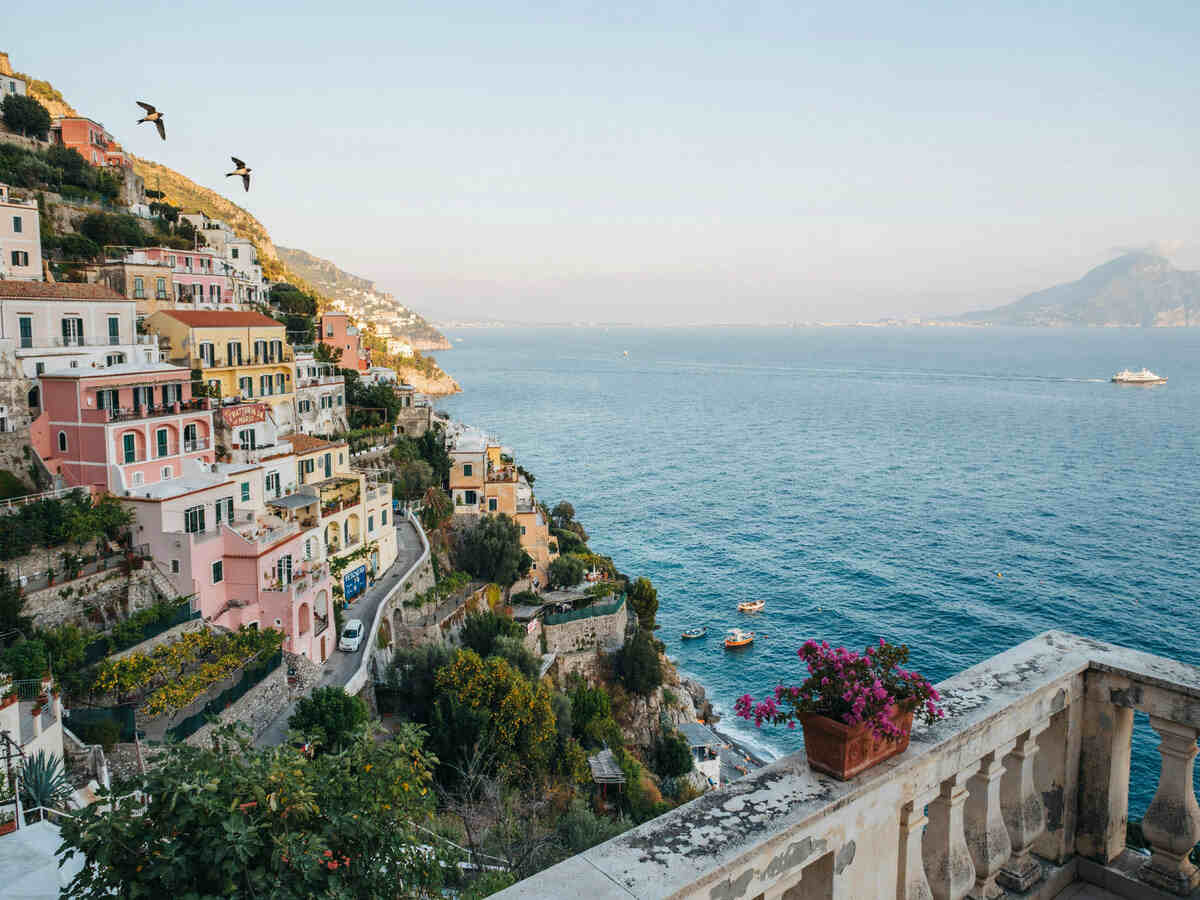
The countries of Italy and France have been key players behind the rise in the cultural tourism of Oman. Oman is currently transforming itself in the international tourism industry through its integration of its rich culture with modern hospitality in order to develop an economy which is more diversified than before. This has been achieved in accordance with the parameters set out under the Oman Vision 2040 plan and the country is moving away from its dependency on oil towards the development of a high-value tourism economy. It has done so through a strategic network of alliances with various countries in Europe such as Italy, France, Germany and Spain.
Simultaneously, the domestic hospitality infrastructure is demonstrating its capacity to capture and monetize this growing international interest. In August 2026, premium accommodation sectors reported a sudden and substantial financial resurgence, underscoring the immediate economic viability of Oman’s expanding global footprint.
Advertisement
Advertisement
The August 2026 Hospitality Financial Resurgence
The late summer of 2026 provided a critical indicator of the Omani hospitality sector’s latent earning power. Data attributed to the National Centre for Statistics and Information (NCSI) revealed a sharp, highly lucrative spike in short-term hotel performance across the nation’s premium inventory.
- The Revenue Surge: Three- to five-star hotel properties recorded a remarkable 29.1% month-on-month revenue increase in August 2026 compared to July.
- The Guest Influx: This financial leap was directly supported by a 22.1% month-on-month rise in the total volume of hotel guests checking into these premium accommodations.
- The Occupancy Yield: Operational efficiency saw a massive boost, with the national hotel occupancy rate climbing from a subdued 42.6% in July to a robust 51.4% in August—an 8.8 percentage point improvement that effectively maximized available room capacity.
However, this monthly triumph requires pragmatic contextualization. The January to August 2026 macro-timeline paints a more cautious picture: year-on-year hotel guest numbers for this eight-month period actually declined by 10.7%, accompanied by an approximate 11% contraction in cumulative hotel revenue compared to 2025. Therefore, the 29.1% August revenue spike is not an indicator of cumulative annual growth, but rather a vital, localized recovery. It emphasizes exactly why cultivating reliable, high-spending European markets is a matter of urgent economic necessity to stabilize long-term, year-round demand.
Advertisement
Advertisement
Forging the European Alliance: Country-by-Country Impact
To counteract seasonal fluctuations and build a permanent baseline of high-yield visitors, Oman has customized its engagement strategy across four distinct European powerhouses. Each nation contributes a unique asset to Oman’s hospitality and cultural ecosystem.
Italy: The Vanguard of Cultural Exchange and Heritage Revenue
Italy has evolved into a foundational pillar of Oman’s tourism economy, bridging high-volume visitor growth with elite institutional cooperation in heritage management.
Advertisement
Advertisement
- The Data Profile: Oman welcomed 24,769 Italian visitors on tourist visas in the first quarter of 2026 alone, marking a 10.4% surge compared to Q1 2025. This builds on a stellar 2025, which saw 80,769 Italian arrivals (a 12% annual increase), securing Italy’s rank as Oman’s third-largest European source market.
- The Strategic Action: Between October 5 and 9, 2026, H E Ibrahim Said Al Busaidi, Oman’s Minister of Heritage and Tourism, executed a pivotal diplomatic mission across Rome, Florence, and Tivoli. This culminated in a historic Memorandum of Understanding with Italy’s Ministry of Culture for heritage preservation, alongside a joint tourism development agreement with the Italian Ministry of Tourism.
- Hospitality & Cultural Impact: Italians are predominantly high-yield cultural travelers. By partnering with Italian conservation experts, Oman ensures its ancient forts and settlements maintain the world-class authenticity required to attract this demographic. These travelers directly boost hospitality revenue by booking extended stays at premium properties located near inland cultural landmarks, ensuring tourist dollars penetrate beyond the capital’s coastal resorts and into regional economies.
France: Pioneering the High-Yield Adventure Tourism Frontier
While Italy secures the historical demographic, France is serving as Oman’s primary catalyst for capturing the lucrative, rapidly expanding global adventure and sports tourism market.
- The Strategic Action: In September 2026, Oman’s Ministry of Heritage and Tourism embedded itself in the activities surrounding the globally recognized IRONMAN 70.3 World Championship in Nice, France.
- Hospitality & Cultural Impact: Unlike standard leisure tourism, sports and adventure travel demand specialized infrastructure. Athletes and outdoor enthusiasts seeking to conquer Oman’s rugged mountain ranges, expansive deserts, and varied coastlines require extended itineraries, specialized logistical support, and premium accommodations for recovery. While current French arrival data is not separated into specific revenue columns, aligning Oman’s brand with elite French sporting platforms acts as a high-visibility billboard. It diversifies Oman’s cultural identity from a strictly “historical” destination to a dynamic “active” destination, paving the way for future luxury lodge and eco-resort bookings.
Germany: The Bedrock of European Volume and Baseline Occupancy
Germany operates as the volume-driver of Oman’s European strategy. It provides the massive, consistent baseline of travelers required to keep large-scale hospitality operations profitable year-round.
- The Data Profile: German interest is both massive and stable. In 2025, Oman hosted 137,386 German tourists (a 1.7% year-on-year growth). This momentum remained unyielding into the first half of 2026, delivering approximately 68,000 visitors.
- The Strategic Action: Germany is Oman’s primary gateway to the international travel trade architecture. Oman utilized the massive ITB Berlin 2026 exhibition to lock in commercial contracts with major European tour operators, travel agencies, and aviation partners.
- Hospitality & Cultural Impact: German tourists are characterized by their preference for comprehensive, multi-week itineraries that combine cultural site visits with outdoor exploration. This behavior directly powers hospitality revenue across a wide geographic footprint. By securing bulk contracts through German trade shows, Omani hoteliers can guarantee a baseline of advance bookings, allowing them to optimize pricing strategies and forecast revenue with greater accuracy.
Spain: The Mediterranean Marketing Hub and Future Pipeline
Spain represents the strategic expansion frontier. It is functioning as both a target market and a high-visibility broadcasting hub to capture wider international attention.
- The Data Profile: Between January and November 2025, Oman registered 10,749 Spanish visitors. While a smaller volume than Germany or Italy, it represents an untapped demographic with high growth potential.
- The Strategic Action: Oman utilized FITUR 2026 (January 21–25 in Madrid) to push its natural and cultural assets to the Spanish travel trade. More aggressively, Oman launched high-impact, direct-to-consumer digital advertising campaigns across Madrid’s busiest public arteries, including the Gran Vía and the Atocha railway station.
- Hospitality & Cultural Impact: Madrid is a primary European aviation and rail hub. By dominating public advertising spaces in Spain, Oman isn’t just targeting Spanish nationals; it is capturing the attention of transient European and Latin American travelers. This is a top-of-funnel marketing strategy designed to build destination awareness, which will ultimately trickle down into future direct bookings and increased demand for Omani hotel inventory.
Strategic Matrix: European Contributions to Omani Tourism
| European Market | 2025 / 2026 Volume Metrics | Strategic Engagements & Initiatives | Direct Impact on Hospitality & Revenue |
| Italy | 80,769 in 2025; 24,769 in Q1 2026 (+10.4%) | Oct 2026 Ministry visit (Rome/Florence); Heritage preservation MoU. | Injects high-yield cultural travelers into regional hotels; elevates the authenticity of heritage sites to drive ticket sales and guided tour revenues. |
| France | Future growth market; exact 2026 figures unquantified. | Sept 2026 engagement at IRONMAN 70.3 World Championship in Nice. | Opens the lucrative adventure/sports niche; seeds future demand for specialized eco-resorts, mountain lodges, and extended-stay logistics. |
| Germany | 137,386 in 2025 (+1.7%); ~68,000 in H1 2026 | Sustained commercial integration via ITB Berlin 2026 travel exhibition. | Provides massive, reliable baseline occupancy; generates high-volume advance bookings necessary for hotel financial stability. |
| Spain | 10,749 (Jan–Nov 2025) | Jan 2026 FITUR Madrid; major digital ad campaigns at Atocha & Gran Vía. | Acts as a top-of-funnel marketing engine; increases global brand awareness to build a future pipeline of diverse hotel bookings. |
Oman Vision 2040: The Architecture of an Economic Shift
Oman’s European outreach and its domestic hospitality wins are not isolated events; they are meticulously planned components of Oman Vision 2040. This definitive national roadmap aims to drastically reduce the country’s reliance on fluctuating global oil markets by engineering a self-sustaining, multi-billion-rial tourism economy.
The economic metrics validate this transition. Tourism’s direct contribution to Oman’s Gross Domestic Product (GDP) accelerated from 1.6% in 2020 to 2.7% by 2024, generating an economic output of approximately OMR 2.1 billion. In 2025, the sultanate successfully processed 3.9 million international visitors. The ultimate Vision 2040 objective is exponentially larger: securing 12 million annual visitors by the end of the next decade.
Heritage as an Economic Engine
To achieve this, the Ministry of Heritage and Tourism has weaponized cultural preservation as a primary economic engine. Between 2021 and 2025, the government completed over 100 meticulous restoration projects on historic properties. By the end of 2025, 28 major historic landmarks had successfully attracted targeted commercial investment. These are not merely museums; they are the anchors of local micro-economies. When a historic fort is restored, it generates surrounding demand for boutique hotels, traditional dining, and artisan retail, ensuring tourism revenue directly empowers local Omani communities.
Advertisement
Advertisement
Mega-Projects and Digital Modernization
Simultaneously, the sultanate is executing a staggering physical infrastructure build-out. Under the parameters of the tenth five-year development plan, tourism investments surpassed OMR 2.6 billion, funding the development of more than 12 integrated tourism complexes.
This momentum accelerated during the October Urbanism 2026 summit in Muscat (October 5–8), where the Ministry advanced agreements for massive waterfront and accommodation hubs, including the Port Sultan Qaboos waterfront, Yenkit Hills, and Al Bandar complexes. These mega-projects are designed to offer the exact blend of luxury, retail, and maritime leisure demanded by affluent European travelers.
Furthermore, the Eleventh Five-Year Development Plan (2026–2030) introduces a strict mandate for digital transformation, targeting the digitization of 80% of the entire tourism sector. By modernizing B2B booking systems and B2C visitor services, Oman is actively removing operational friction, making it easier for European tour operators to sell Oman, and easier for independent travelers to navigate it.
The Future Trajectory of Omani Travel
For the modern international traveler, Oman in 2026 presents a highly curated, multifaceted value proposition. The capital of Muscat continues to serve as the sophisticated gateway, offering seamless access to high-end coastal resorts and architectural landmarks. Inland, the restored fortresses of Nizwa offer an uncompromised view into Arabian history, directly benefiting from Italian conservation alliances. For those drawn by the active lifestyle promotions in France and Spain, the stark beauty of the deserts and mountains awaits, while the southern region of Dhofar—particularly Salalah—continues to offer its completely unique seasonal green transformation during the Khareef.
Cultural tourism growth is being propelled in Oman through the use of its European diplomatic partners, Italy and France, to generate an increase in revenue for the month of August by 29%.
The story of Oman’s hospitality industry is that of resilience. The unexpected 29.1% jump in hotel revenue in August highlights that both the physical facilities and the staff at these establishments have what it takes to deal with sudden demand increases. Nonetheless, Oman’s strategy succeeds through its diplomatic efforts with Europe. Through agreements on cultural preservation with Italy, adventure marketing with France, volume agreements with Germany, and mass marketing in Spain, Oman will make sure that not only will its hotels be full during August, but all-year round.
Advertisement
