

Croatia Shines Across Europe as Dubrovnik and Rovinj Break into 2026 Elite City Travel League: All You Need to Know

Published
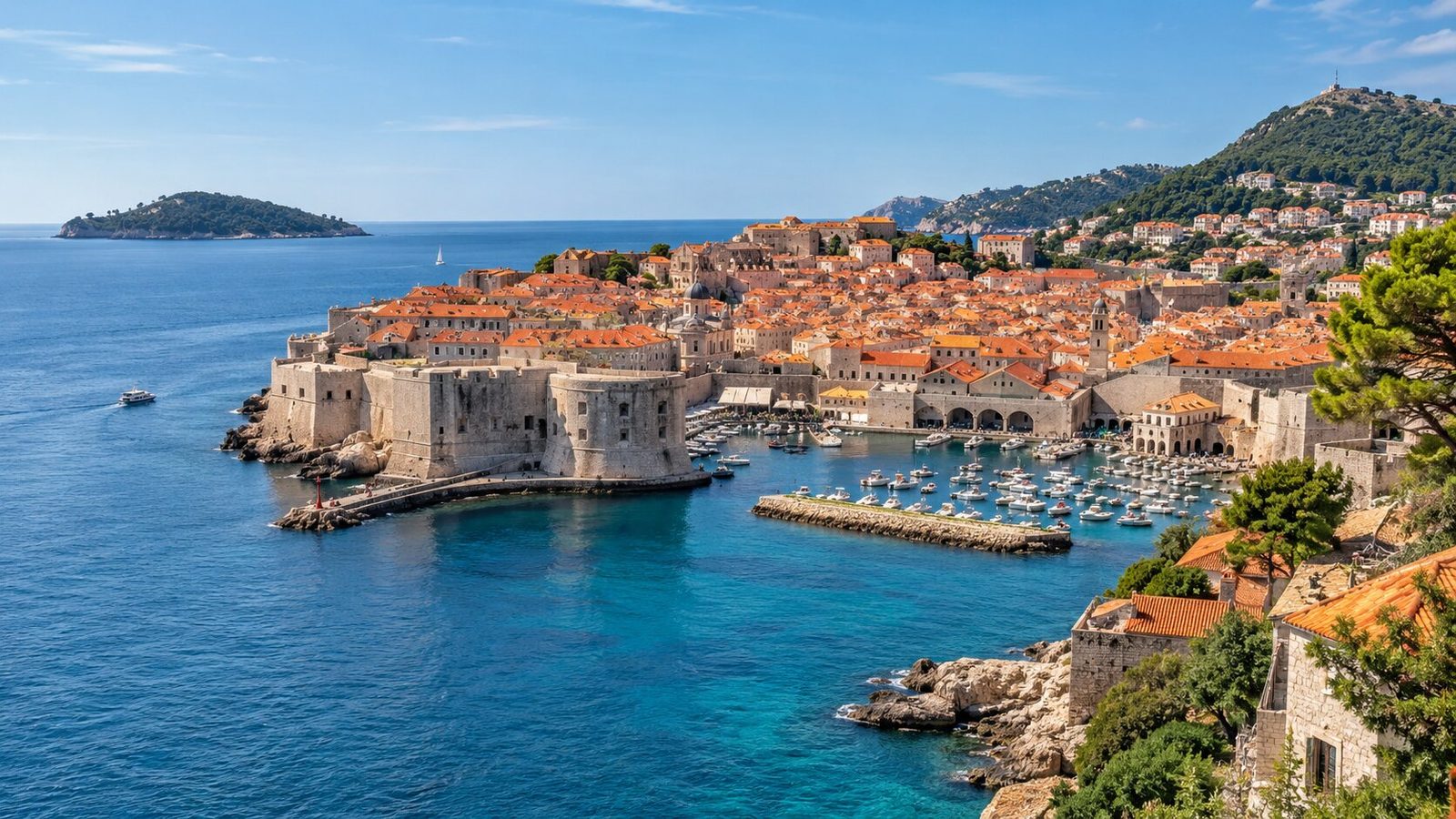
Croatia has gained another powerful international tourism moment in 2026, with Dubrovnik and Rovinj both appearing among Europe’s highly rated city destinations. Dubrovnik placed 15th with a reader score of 87.24, while Rovinj followed in 17th position with 86.29.
Yet the significance extends well beyond two ranking positions.
Advertisement
Advertisement
Fresh Croatian tourism statistics show that the two Adriatic destinations are also recording some of the country’s strongest international visitor demand. Dubrovnik led Croatia for foreign tourist overnight stays in May 2026, while Rovinj moved ahead in June and July, showing how the country’s tourism strength stretches from southern Dalmatia to the Istrian peninsula.
Why Dubrovnik and Rovinj Are Giving Croatia Fresh European Travel Momentum?
Dubrovnik and Rovinj offer two very different interpretations of the Croatian Adriatic.
Advertisement
Advertisement
Dubrovnik presents monumental history, fortified architecture and one of Europe’s most recognisable old-city landscapes. Rovinj offers a smaller-scale Istrian experience shaped by a historic waterfront, Mediterranean atmosphere, hotels, resorts and coastal leisure.
Their simultaneous appearance in a prominent European city ranking reinforces a broader strength in Croatian tourism: the country does not depend on one city or one tourism region.
Advertisement
Advertisement
Official statistics make that particularly clear.
In May 2026, Dubrovnik recorded about 499,000 overnight stays by foreign tourists, making it Croatia’s leading destination for international visitor nights that month. Rovinj followed with approximately 366,000 foreign overnight stays.
Only one month later, the positions changed dramatically. Rovinj became Croatia’s most popular destination among foreign tourists in June, generating approximately 675,000 foreign overnight stays, while Dubrovnik followed with 593,000.
That pattern reveals two powerful tourism centres operating at opposite ends of Croatia’s Adriatic geography.
Dubrovnik Continues to Command Global Attention Through Its Extraordinary Heritage
Dubrovnik’s attraction begins with its historic core.
The Old City of Dubrovnik has been inscribed on the UNESCO World Heritage List since 1979. UNESCO recognises the city for the extraordinary survival of its Gothic, Renaissance and Baroque churches, monasteries, palaces, fountains and defensive architecture.
Advertisement
Advertisement
Dubrovnik developed into an important Mediterranean maritime power from the 13th century onwards.
Its historical identity therefore reaches far beyond its famous walls and coastal panoramas. Visitors encounter centuries of maritime history, architecture and cultural development concentrated within a compact urban landscape.
The UNESCO-listed property covers 96.7 hectares, while its current buffer zone extends across 1,188.6 hectares. The protected property also includes Lokrum Island as one of its components.
This unusual combination of heritage, architecture, sea views and island access gives Dubrovnik exceptional appeal for cultural travellers and European city-break visitors.
Dubrovnik Was Croatia’s Leading Foreign-Visitor Destination in May
The strength of Dubrovnik is visible directly in Croatia’s official tourism figures.
According to the Croatian Bureau of Statistics, Dubrovnik generated approximately 499,000 overnight stays from international tourists in May 2026.
Advertisement
Advertisement
That placed it ahead of Rovinj, Split, Poreč and Zagreb for foreign visitor nights during the month. International nights in Dubrovnik were also 3.6% higher than in May 2025.
At the wider regional level, Dubrovnik-Neretva County recorded 254,212 tourist arrivals and 800,186 overnight stays in May.
Foreign travellers were overwhelmingly important to the county’s tourism economy, accounting for 239,365 arrivals and 765,120 nights.
| Dubrovnik Tourism Indicator | May 2026 |
|---|---|
| Foreign tourist nights in Dubrovnik city | 499,000 |
| Dubrovnik-Neretva County arrivals | 254,212 |
| Foreign county arrivals | 239,365 |
| County overnight stays | 800,186 |
| Foreign county overnight stays | 765,120 |
Rovinj Is Emerging as One of Croatia’s Most Powerful International Tourism Destinations
Rovinj’s tourism performance is equally striking.
Located in Istria on Croatia’s northern Adriatic coast, the city offers a completely different experience from Dubrovnik.
Its old town rises from a compact coastal peninsula, while the surrounding destination combines beaches, resorts, hotels, campsites and private accommodation.
Advertisement
Advertisement
The official Rovinj Tourist Board presents the destination across multiple accommodation categories, including hotels, resorts, private properties and campsites, demonstrating the diversity of its tourism economy.
Rovinj’s importance becomes even clearer when visitor statistics are examined.
In June 2026, Rovinj generated approximately 675,000 foreign tourist overnight stays, making it the leading Croatian destination for international nights that month.
Dubrovnik ranked immediately behind it with around 593,000, followed by Poreč with 481,000 and Split with 413,000.
Rovinj Strengthened Its Lead During Croatia’s Peak July Travel Season
Rovinj’s momentum continued in July.
Foreign visitors generated approximately 989,000 overnight stays in Rovinj during July 2026, once again making it Croatia’s leading destination for international tourist nights.
Advertisement
Advertisement
Poreč followed with 778,000, Medulin with 777,000, Dubrovnik with 735,000, Split with 646,000 and Umag with 640,000.
Foreign tourist nights in Rovinj were also 2.7% higher than in July 2025.
The numbers underline the scale of Rovinj’s tourism economy. While it may not have the worldwide name recognition of Dubrovnik, it competes at the very top of Croatia’s tourism market during the crucial summer season.
Dubrovnik and Rovinj Show Two Different Sides of Croatia’s Adriatic Success
| Destination | Region | Major Travel Strength | 2026 Tourism Highlight |
|---|---|---|---|
| Dubrovnik | Southern Dalmatia | UNESCO heritage, city walls, culture, Adriatic scenery | 499,000 foreign nights in May |
| Rovinj | Istria | Old town, waterfront, resorts, beaches | 675,000 foreign nights in June |
| Dubrovnik | Southern Dalmatia | International city breaks and cultural tourism | 593,000 foreign nights in June |
| Rovinj | Istria | Summer and resort tourism | 989,000 foreign nights in July |
| Dubrovnik | Southern Dalmatia | Peak-season international tourism | 735,000 foreign nights in July |
Croatia’s Wider Tourism Numbers Explain Why These Cities Matter
Dubrovnik and Rovinj are part of a much larger tourism economy.
Croatia registered almost 2.97 million tourist arrivals in commercial accommodation during June 2026, including approximately 2.58 million international visitors.
Tourists generated around 13.47 million overnight stays, with foreign visitors responsible for more than 12.26 million of them.
Advertisement
Advertisement
International travellers therefore accounted for approximately 91% of commercial accommodation nights during June.
The strength of coastal Croatia was especially visible in regional figures.
Istria County, home to Rovinj, generated approximately 4.30 million overnight stays in June 2026. Dubrovnik-Neretva County recorded approximately 1.23 million, while Split-Dalmatia County generated around 2.69 million.
These numbers show why Croatia’s international tourism image remains closely connected to the Adriatic.
Istria Gives Rovinj a Powerful Regional Tourism Platform
Rovinj benefits enormously from being located within Istria.
The region is one of Croatia’s dominant tourism centres and recorded 770,874 arrivals and almost 4.30 million overnight stays in June 2026.
Advertisement
Advertisement
Foreign travellers accounted for more than 4.07 million of those overnight stays.
July pushed those figures even higher.
Istria recorded approximately 7.46 million overnight stays during July, including more than 7.25 million generated by international travellers.
Rovinj therefore benefits not only from its individual attractions but from its position within one of Europe’s strongest seasonal coastal tourism regions.
Dubrovnik-Neretva Remains Heavily Driven by International Visitors
Dubrovnik’s surrounding county demonstrates a similarly strong dependence on overseas tourism.
Dubrovnik-Neretva County recorded 321,472 arrivals in June 2026, of which around 301,000 were international.
Advertisement
Advertisement
The region generated approximately 1.23 million overnight stays, with foreign tourists responsible for about 1.16 million.
In July, the county welcomed approximately 415,838 tourists and generated almost 1.875 million overnight stays.
International visitors accounted for approximately 387,289 arrivals and 1.74 million overnight stays.
Those figures explain why Dubrovnik’s international reputation matters economically as well as symbolically.
Croatia Offers Far More Than a Traditional Beach Holiday
The strong performances of Dubrovnik and Rovinj also demonstrate how Croatia has broadened its tourism proposition.
Travellers can experience historic cities, island excursions, beaches, cultural landmarks, coastal dining and resort accommodation during a single Croatian journey.
Advertisement
Advertisement
Dubrovnik works especially well for travellers prioritising cultural heritage and architecture.
Rovinj suits visitors seeking a smaller historic coastal environment combined with resort tourism and access to wider Istria.
Both cities also demonstrate that Croatia can support tourism extending beyond the conventional image of a simple Adriatic beach holiday.
Why Dubrovnik’s UNESCO Status Remains Central to Its International Appeal?
Dubrovnik’s World Heritage designation is particularly important because it gives the destination cultural significance extending beyond tourism trends.
UNESCO describes Dubrovnik as an important Mediterranean maritime centre whose historic fabric survived major challenges, including the destructive earthquake of 1667 and damage during armed conflict in the 1990s.
The city’s preservation therefore forms part of its international importance.
Advertisement
Advertisement
For travellers, this creates an experience where the destination itself becomes the principal attraction.
Rather than visiting one isolated monument, tourists walk through an entire historic urban environment of fortifications, churches, palaces, streets and public spaces.
Croatia’s Tourism Strength Now Runs From Istria to Southern Dalmatia
The simultaneous recognition of Dubrovnik and Rovinj highlights an important geographical advantage for Croatia.
The country’s major visitor destinations are distributed across different sections of the Adriatic.
Rovinj strengthens the northern tourism corridor in Istria.
Dubrovnik anchors the far south.
Advertisement
Advertisement
Between them lie destinations including Zadar, Šibenik, Split, Poreč, Medulin and numerous island communities.
Official statistics repeatedly show several of these destinations competing for Croatia’s highest volumes of international overnight stays.
That geographic diversity reduces Croatia’s dependence on one flagship destination and gives international travellers reasons to return for entirely different experiences.
What Travellers Should Know Before Choosing Dubrovnik or Rovinj?
Dubrovnik is particularly suitable for travellers who place architectural heritage, historical atmosphere and landmark sightseeing at the centre of their trip.
Rovinj provides a more relaxed Istrian coastal experience, combining its historic centre with beaches, resorts and broader regional exploration.
The two destinations therefore complement rather than duplicate one another.
Advertisement
Advertisement
Visitors planning a longer Croatian itinerary can experience both and see how dramatically the country’s Adriatic character changes between Istria and southern Dalmatia.
Frequently Asked Questions
1. Why is Dubrovnik internationally famous?
Its fortified Old City is a UNESCO World Heritage property known for its Gothic, Renaissance and Baroque architecture and its historical importance as a Mediterranean maritime power.
2. How strong is international tourism in Dubrovnik?
Dubrovnik recorded about 499,000 foreign tourist overnight stays in May 2026, more than any other Croatian destination that month.
3. Why is Rovinj important to Croatia tourism?
Advertisement
Advertisement
Rovinj is one of Croatia’s most heavily visited international destinations. It recorded around 675,000 foreign tourist nights in June 2026 and approximately 989,000 in July.
4. Which is better for heritage travel, Dubrovnik or Rovinj?
Both provide historic settings, but Dubrovnik has the additional international recognition of UNESCO World Heritage status and an exceptionally well-preserved fortified urban landscape.
5. Which city recorded more international overnight stays in July 2026?
Rovinj recorded approximately 989,000 foreign tourist nights compared with around 735,000 in Dubrovnik.
6. Is Croatia mainly dependent on foreign tourism?
Advertisement
Advertisement
International tourism is extremely important. In June 2026, foreign visitors accounted for more than 12.26 million of Croatia’s approximately 13.47 million commercial accommodation nights.
Croatia’s Two-City Success Tells a Bigger Tourism Story
Dubrovnik and Rovinj entering the European travel conversation together is more than a ranking story.
Official visitor statistics show that both destinations already compete at the highest level of Croatia’s international tourism market.
Dubrovnik combines globally recognised heritage with extraordinary international demand. Rovinj has become one of the country’s strongest summer tourism performers, supported by the immense visitor economy of Istria.
Together they reveal the depth of Croatia’s Adriatic appeal.
One represents monumental Mediterranean heritage in the country’s south. The other delivers an intimate Istrian coastal experience in the north.
That contrast may be Croatia’s greatest tourism strength: travellers do not encounter one uniform Adriatic destination, but a chain of distinctive cities and regions capable of delivering very different European journeys.
Advertisement
