
SriLankan Airlines to Resume Kuwait Flights from July 2 via Colombo Hub

Published
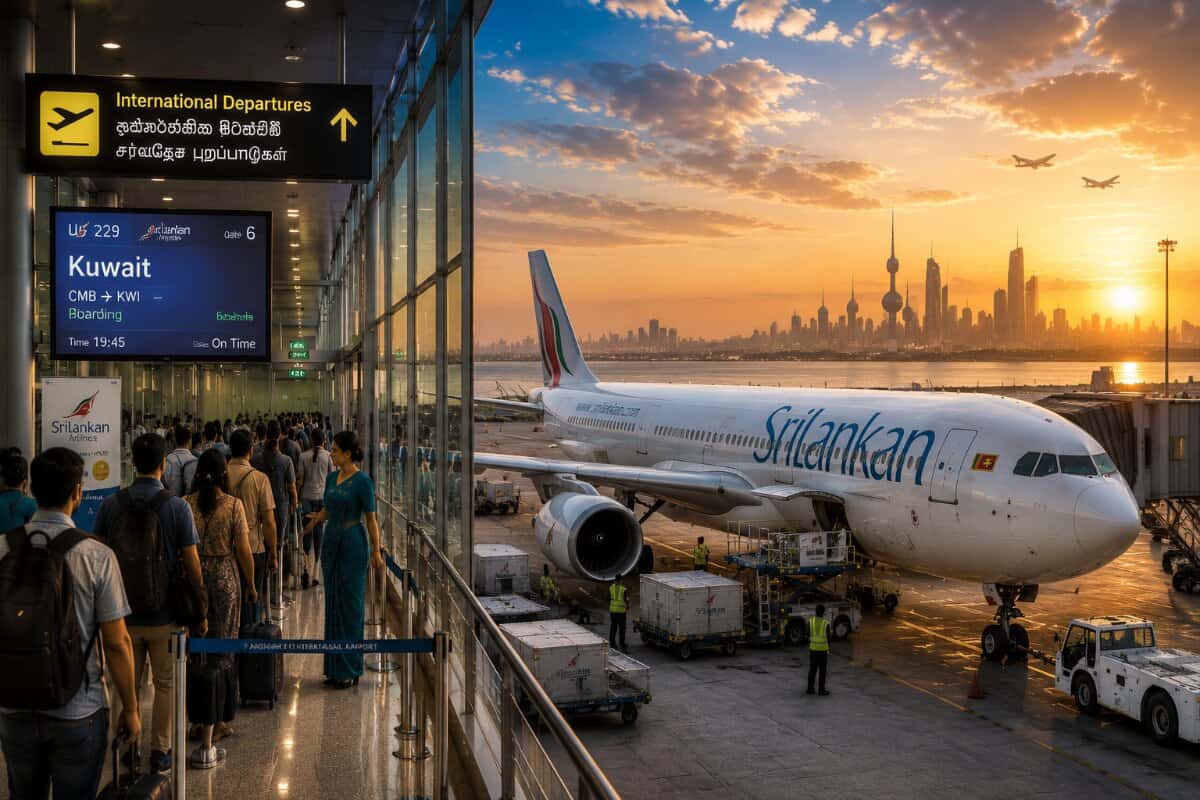
SriLankan Airlines has confirmed the resumption of its SriLankan Airlines Kuwait flights beginning July 2, restoring an important international connection between South Asia and the Middle East. The service will operate via Colombo, reconnecting Tiruchirappalli (Trichy) in India with Kuwait International Airport through the airline’s central hub at Bandaranaike International Airport.
The reinstated route is part of SriLankan Airlines’ broader effort to rebuild its international network and strengthen connectivity across key Gulf destinations. The Colombo hub continues to serve as the airline’s primary transit gateway for passengers travelling between India and the Middle East.
Advertisement
Advertisement
The return of this service is expected to improve travel convenience for migrant workers, business travellers, and families who rely heavily on this route for regular movement between India and Kuwait.
Colombo Hub Strengthens South Asia–Middle East Air Connectivity
The resumed Kuwait service reinforces Colombo’s strategic role as a transit hub in SriLankan Airlines’ global network. The Trichy–Colombo–Kuwait routing enables passengers from southern India to access Gulf destinations through a single-stop connection.
Advertisement
Advertisement
This hub-and-spoke model remains central to the airline’s international operations, allowing efficient distribution of traffic across multiple regions.
Key operational structure of the restored route
Flight routing details
• Trichy (India) → Colombo (Sri Lanka) → Kuwait
• Kuwait → Colombo → Trichy
• All connections routed through Colombo hub
Advertisement
Advertisement
Connectivity advantages for passengers
• Seamless travel between South India and Kuwait
• Reduced need for long-haul direct alternatives
• Improved scheduling flexibility for Gulf-bound travellers
The restored route is designed to improve regional mobility and strengthen international connectivity through Colombo.
Advertisement
Advertisement
Strong Demand on India–Kuwait Travel Corridor
The India–Kuwait air corridor remains one of the most important travel routes in the Gulf region. A large portion of passengers travelling on this route are migrant workers employed across Kuwait’s construction, service, and business sectors.
In addition, frequent family visits and business-related travel continue to drive steady demand for flights between the two countries.
Key travel demand factors
Labour and workforce mobility
• Large South Indian expatriate population in Kuwait
• Regular movement for employment-related travel
• High dependency on affordable connecting flights
Business and family travel needs
• Ongoing commercial ties between India and Kuwait
• Frequent family reunions and long-term visits
• Demand for consistent flight availability
Advertisement
Advertisement
These factors ensure sustained passenger flow on this corridor throughout the year.
SriLankan Airlines Expands International Network Recovery
The resumption of Kuwait flights is part of SriLankan Airlines’ broader network recovery strategy. The airline has been gradually restoring international routes that were previously reduced or suspended due to operational restructuring and market adjustments.
The Gulf region remains a key focus area due to its strong passenger demand and strategic importance for South Asian connectivity.
Network restoration priorities
Route rebuilding strategy
• Gradual reinstatement of Middle East destinations
• Strengthening Colombo as an international transit hub
• Improving connectivity from South Asia to Gulf markets
Operational optimisation efforts
• Efficient aircraft deployment across regional routes
• Balanced capacity management across hubs
• Enhanced passenger load distribution strategies
The Kuwait route restart supports the airline’s long-term international expansion plans.
Advertisement
Advertisement
Impact on Passengers and Regional Mobility
The reinstated service is expected to significantly benefit passengers travelling between southern India and Kuwait. The Trichy–Colombo–Kuwait connection offers a reliable and structured travel option for those dependent on Gulf connectivity.
Colombo continues to play a critical role in facilitating smooth transit for passengers across multiple international routes.
Passenger benefits of restored service
Improved accessibility and convenience
• Easier connections between India and Kuwait
• Simplified transit through Colombo hub
• More predictable travel scheduling options
Regional mobility improvements
• Strengthened South Asia–Middle East connectivity
• Better support for migrant worker travel needs
• Enhanced role of Colombo as transit gateway
These improvements contribute to smoother and more efficient travel across the corridor.
Broader Significance for Gulf Aviation Network
The resumption of Kuwait flights reflects wider recovery trends in Gulf aviation connectivity, where airlines are gradually restoring services to meet increasing passenger demand. The India–Sri Lanka–Kuwait corridor remains a vital segment of regional air traffic.
Advertisement
Advertisement
Colombo’s position as a transit hub continues to strengthen as airlines optimise networks across Asia and the Middle East.
Regional aviation developments
Hub-based connectivity expansion
• Growing importance of Colombo transit operations
• Increased reliance on connecting flight networks
• Strengthened South Asia–Gulf aviation links
Market recovery trends
• Gradual restoration of suspended international routes
• Rising demand for Gulf-bound travel
• Stabilisation of regional airline operations
These trends highlight ongoing recovery in international aviation networks.
Economic and Social Impact of the Route Restoration
The return of Kuwait flights also carries broader economic and social significance. For many passengers, especially migrant workers, this route is essential for employment stability, remittances, and family connectivity.
Improved air connectivity also supports trade and business relations between India and Kuwait.
Advertisement
Advertisement
Wider socio-economic effects
Labour mobility and remittances
• Easier travel for migrant workers
• Continued flow of remittances to India
• Support for expatriate workforce stability
Business and trade connectivity
• Strengthening of bilateral economic links
• Improved access for business travellers
• Enhanced regional cooperation opportunities
The restored route plays an important role in sustaining these cross-border interactions.
The resumption of SriLankan Airlines Kuwait flights from July 2 marks a significant step in restoring air connectivity between South Asia and the Middle East. By reactivating the Trichy–Colombo–Kuwait route, the airline is improving travel access while reinforcing Colombo’s role as a key international hub.
The move reflects steady recovery in regional aviation networks and continued strong demand for Gulf travel routes.
Advertisement
