
Malta Teams Up With, Croatia and More as New Nonstop Flights Bring Europe Closer to Global Travellers

Published
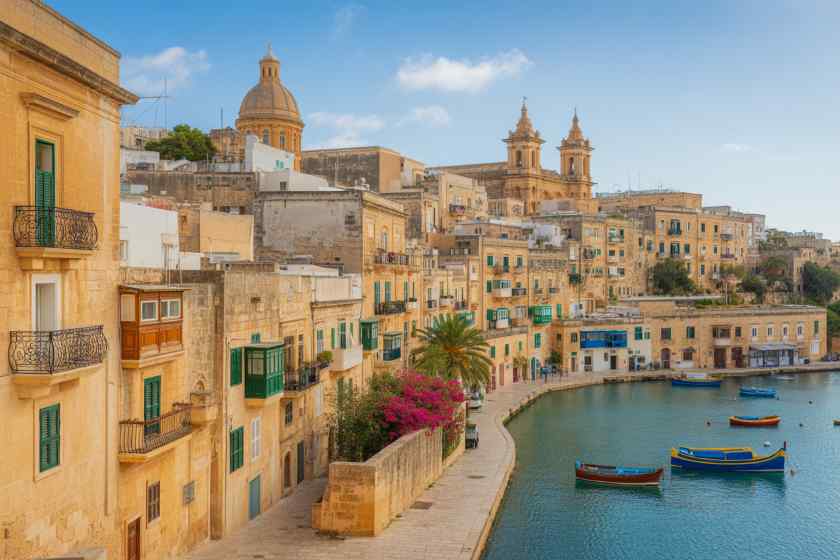
Image generated with Ai
Malta Teams Up With Croatia and more as new nonstop flights bring Europe closer to global travellers seeking easier journeys. Malta and Croatia are gaining fresh attention as nonstop flights create simpler ways to reach Europe’s captivating destinations. Meanwhile, travellers can explore more European escapes with fewer connections and more convenient flight options. As new nonstop services reshape travel planning, Europe is becoming increasingly accessible to global travellers looking for culture, coastlines, heritage and unforgettable experiences. Travel And Tour World explores how Malta, Croatia and more destinations could benefit from these new nonstop flights. Read the entire story for essential travel insights and planning inspiration.
New Nonstop Flights Could Give These European Destinations a Fresh Tourism Advantage
The expansion of nonstop air services is more than an aviation story. For travellers, a new direct route can change which destinations feel practical for a short holiday.
It can also alter how tourists build multi-country itineraries. A city that once required a connection may become a realistic starting point for a seven-day or 10-day European trip.
The current wave of new U.S.-Europe services includes destinations such as Budapest, Prague, Athens, Zurich, Bari and Split. Other new or forthcoming services highlighted in the route research include Malta, Sardinia, Ibiza, Luxembourg and the Azores.
Advertisement
Advertisement
For destinations, the potential tourism effect is particularly interesting because several already have substantial accommodation demand.
European Tourism Has Reached Another Major Milestone
Eurostat recorded almost 3.1 billion nights in EU tourist accommodation during 2025.
Advertisement
Advertisement
That represented an increase of 66.4 million nights, or 2.2%, compared with 2024.
International guests accounted for a particularly important part of the movement. International tourism nights increased by 3.4%, while domestic nights increased by 1.1%.
Spain recorded 513.6 million nights in 2025, followed by Italy with 476.9 million, France with 471.7 million and Germany with 442.1 million.
Together, those four countries represented 61.7% of all EU tourism nights.
The figures show the enormous scale of Europe’s established tourism markets. However, the most interesting opportunities for new nonstop flights can also exist beyond the biggest markets.
Malta recorded the largest year-on-year increase among EU countries in 2025, with tourism nights up 10.1%. Poland followed with 7.2%.
Advertisement
Advertisement
Eurostat also found that international guests represented almost half of EU accommodation nights in the first half of 2025.
The foreign share was particularly high in Malta, Cyprus and Croatia, making air connectivity especially relevant to these destinations.
Five-Year European Tourism Data at a Glance
The table below uses nights spent in tourist accommodation establishments, rather than attempting to combine different national definitions of international arrivals.
| Destination | 2021 tourism nights | 2022 tourism nights | 2023 tourism nights | 2024 tourism nights | 2025 tourism position |
|---|---|---|---|---|---|
| Spain | 259.6m | 451.6m | 485.0m | 505.2m | 513.6m |
| Italy | 289.2m | 412.0m | 447.2m | 466.2m | 476.9m |
| Greece | 73.9m | 132.7m | 147.2m | 152.9m | +2.0% vs 2024 |
| Portugal | 42.4m | 76.9m | 84.9m | 88.1m | +1.8% vs 2024 |
| Croatia | 70.2m | 90.0m | 92.3m | 93.6m | 94.8m |
| Malta | 4.6m | 8.2m | 9.9m | 11.3m | +10.1% vs 2024 |
Spain’s 2021-2024 accommodation figures come from Eurostat’s tourism series, while its 2025 national tourism total reached 513.6 million nights. Italy reached 466.2 million nights in 2024 and 476.9 million in 2025. Greece reached 152.9 million in 2024, while Croatia reached 94.8 million in 2025. Malta recorded 11.32 million nights in 2024 before another strong year in 2025.
Spain Could Capture More Long-Haul Attention
Spain is already one of Europe’s largest tourism markets, but additional nonstop access can help spread demand across its major cities and regions.
Official Spanish statistics show that international tourist arrivals climbed from 31.2 million in 2021 to 71.7 million in 2022.
Advertisement
Advertisement
The number reached 85.2 million in 2023, followed by 93.8 million in 2024 and 96.8 million in 2025.
That means Spain added roughly 65.6 million international tourist arrivals between 2021 and 2025.
The 2025 figure was a historical high, according to Spain’s National Statistics Institute.
For travellers arriving through Madrid or Barcelona, Spain can also become the gateway to longer journeys.
Madrid suits visitors seeking museums, royal heritage, food markets and neighbourhood culture. Barcelona combines architecture, Mediterranean beaches and Catalan cuisine.
Travellers can continue south to Seville, Granada and Málaga or head toward Valencia and the Balearic Islands.
Advertisement
Advertisement
A practical seven-day itinerary could begin with three nights in Madrid, followed by two nights in Seville and two nights in Barcelona.
Visitors should explore the Prado Museum, Royal Palace and historic centre in Madrid. Seville offers the Alcázar, Cathedral and Santa Cruz district.
Barcelona adds the Sagrada Família, Gothic Quarter, Park Güell and Mediterranean waterfront.
Food should be part of the journey. Travellers can try tapas, paella, jamón, tortilla española and regional seafood.
Accommodation ranges from historic central hotels to modern properties near major railway stations.
The strongest benefit of nonstop access is flexibility. Travellers can choose their first Spanish destination around the flight rather than building an itinerary around a connection.
Advertisement
Advertisement
Spain Tourism Comparison
| Year | International tourist arrivals | Change from previous year |
|---|---|---|
| 2021 | 31.2m | Recovery year |
| 2022 | 71.7m | +129.8% |
| 2023 | 85.2m | +18.7% |
| 2024 | 93.8m | +10.1% |
| 2025 | 96.8m | +3.2% |
Spain’s main international source markets in 2025 included the United Kingdom, France and Germany, while U.S. travellers represented another important long-haul market.
Italy Offers Direct Access Beyond Rome
Italy could benefit from nonstop services that take travellers closer to regions traditionally reached through major gateways.
The route research specifically highlights new direct access to Bari and other Italian destinations.
Bari is especially significant for travellers interested in Puglia. The city provides a useful base for exploring Alberobello, Polignano a Mare, Monopoli, Ostuni and Lecce.
A seven-day Puglia plan could begin with two nights in Bari, two nights around the Valle d’Itria and three nights near Lecce or the Salento coast.
Visitors can explore Bari Vecchia, the Basilica of Saint Nicholas and the seafront.
Advertisement
Advertisement
Alberobello is known for its traditional trulli buildings. Polignano a Mare offers dramatic coastal scenery.
Food is another major attraction. Travellers can try orecchiette pasta, burrata, focaccia barese, seafood and local olive oil.
For accommodation, staying inside Bari’s historic centre works well for short city visits. Coastal travellers can choose restored masserie, boutique hotels or seaside properties.
Italy’s overall accommodation market is enormous. Istat reported 139.6 million tourist arrivals and 466.2 million overnight stays in 2024.
Foreign arrivals increased 8.9% that year, while foreign overnight stays increased 8.4%.
Italy therefore combines a large established tourism market with regional destinations that can become easier to reach when nonstop services bypass traditional hubs.
Advertisement
Advertisement
Italy’s Five-Year Tourism Accommodation Picture
| Year | Tourism nights |
|---|---|
| 2021 | 289.2m |
| 2022 | 412.0m |
| 2023 | 447.2m |
| 2024 | 466.2m |
| 2025 | 476.9m |
The 2025 total placed Italy among the four largest EU tourism markets, alongside Spain, France and Germany.
Greece Can Turn Athens Connectivity Into Wider Island Trips
Athens is already a major European tourism gateway, but new nonstop access from major U.S. hubs can simplify journeys for travellers who want to continue into the Greek islands.
American Airlines launched new nonstop service between Dallas-Fort Worth and Athens in 2026, creating a direct Texas-Greece connection.
Travellers can use Athens as the first stage of a wider Greek itinerary.
A seven-day plan could include three nights in Athens, followed by four nights on an island such as Santorini, Naxos or Crete.
Athens provides the Acropolis, Acropolis Museum, Ancient Agora and Plaka.
Advertisement
Advertisement
For a more relaxed island experience, Naxos combines beaches, villages and local food. Santorini offers volcanic landscapes and caldera views.
Crete works better for travellers seeking a longer itinerary, with archaeological sites, mountain villages and beaches.
Greek food is central to the experience. Visitors can try moussaka, souvlaki, Greek salad, grilled seafood, dakos and local cheeses.
Athens has accommodation across central neighbourhoods. On the islands, travellers can choose from family-run guesthouses, boutique hotels and larger resorts.
Greece recorded 73.9 million accommodation nights in 2021.
That figure climbed to 132.7 million in 2022 and 147.2 million in 2023.
Advertisement
Advertisement
The total reached 152.9 million in 2024, while Eurostat reported another 2% increase in 2025.
The country’s regional tourism intensity is particularly high on Greek islands. Eurostat identified Notio Aigaio, Ionia Nisia and Kriti among the EU regions with more than 50,000 tourism nights per 1,000 residents in 2024.
Malta Has One of the Strongest International Tourism Profiles
Malta stands out because international visitors make up an unusually large share of its accommodation demand.
Eurostat reported that foreign guests represented 93.6% of Malta’s accommodation nights during the first half of 2025.
That makes international air connectivity particularly important for the island.
Malta’s accommodation nights rose from 4.61 million in 2021 to 8.21 million in 2022.
Advertisement
Advertisement
The total reached 9.89 million in 2023 and 11.32 million in 2024.
Eurostat then recorded a 10.1% increase during 2025, the strongest annual increase among EU countries.
For travellers, Malta works well for a compact four-to-seven-day itinerary.
Valletta can serve as the base for two or three nights. Visitors can explore St John’s Co-Cathedral, the Grand Harbour and the city’s historic streets.
A second stay can be based around Mdina and Rabat or near the northern coast.
Gozo is suitable for travellers seeking countryside, coastal scenery and a slower pace.
Advertisement
Advertisement
Malta’s food culture includes pastizzi, rabbit dishes, ftira, seafood and local cheeses.
Travellers can stay in historic Valletta properties, resort areas around St Julian’s or quieter accommodation in Gozo.
A nonstop route can make Malta particularly attractive for travellers who previously considered the island inconvenient because of connections.
Croatia Could Gain From Easier Access to the Adriatic Coast
Croatia is another destination where air connectivity can influence how easily long-haul tourists reach the coast.
The current nonstop route research highlights Split as a new U.S. access point.
Split is an important base for the Dalmatian coast and islands.
Advertisement
Advertisement
A seven-day trip could include three nights in Split, two nights around Hvar and two nights in Dubrovnik.
Travellers can explore Diocletian’s Palace in Split before taking ferries toward nearby islands.
Hvar offers beaches, historic streets and Mediterranean scenery.
Dubrovnik provides its historic Old Town, defensive walls and Adriatic views.
Travellers can also add Trogir or Šibenik for smaller historic-city experiences.
Croatian cuisine varies by region. Along the coast, visitors can try grilled fish, octopus, black risotto, pašticada and local olive oil.
Advertisement
Advertisement
Split has accommodation ranging from historic-centre guesthouses to modern waterfront hotels.
Visitors seeking a quieter stay can use smaller coastal towns as bases.
Croatia recorded 70.2 million accommodation nights in 2021.
The figure increased sharply to 90.0 million in 2022 and 92.3 million in 2023.
It reached 93.6 million in 2024 and 94.8 million in 2025.
Foreign guests accounted for 87.6% of accommodation nights in Croatia during the first half of 2025.
Advertisement
Advertisement
That high international share shows why additional direct international services can be relevant to Croatia’s tourism network.
Portugal Combines City Breaks With Longer Atlantic Holidays
Portugal offers another strong case for nonstop connectivity.
Lisbon is already a major international gateway, but travellers can use it as the starting point for broader journeys.
A seven-day itinerary could include three nights in Lisbon, two nights in Porto and two nights in the Algarve.
Lisbon offers Belém, the Jerónimos Monastery, São Jorge Castle and its historic neighbourhoods.
Porto provides riverside scenery, historic architecture and the Douro Valley.
Advertisement
Advertisement
The Algarve adds beaches, coastal cliffs and smaller towns.
Food-focused travellers can explore bacalhau, grilled sardines, pastel de nata, caldo verde and regional wines.
Lisbon is suitable for visitors seeking centrally located hotels and easy public transport.
Porto works well for travellers interested in historic districts and riverfront accommodation.
The Algarve provides resorts, boutique properties and quieter coastal stays.
Portugal recorded 42.4 million accommodation nights in 2021.
Advertisement
Advertisement
The total climbed to 76.9 million in 2022, 84.9 million in 2023 and 88.1 million in 2024.
Eurostat reported a further 1.8% increase in 2025.
This long-term recovery means new nonstop services can arrive into a tourism market that has already demonstrated substantial demand for accommodation.
Five-Year Tourism Comparison for Key Potential Beneficiaries
| Destination | 2021 | 2022 | 2023 | 2024 | 2025 |
|---|---|---|---|---|---|
| Spain | 259.6m | 451.6m | 485.0m | 505.2m | 513.6m |
| Italy | 289.2m | 412.0m | 447.2m | 466.2m | 476.9m |
| Greece | 73.9m | 132.7m | 147.2m | 152.9m | +2.0% |
| Portugal | 42.4m | 76.9m | 84.9m | 88.1m | +1.8% |
| Croatia | 70.2m | 90.0m | 92.3m | 93.6m | 94.8m |
| Malta | 4.6m | 8.2m | 9.9m | 11.3m | +10.1% |
Important: 2025 percentages for Greece, Portugal and Malta in this table represent Eurostat’s published year-on-year changes. They should not be converted into exact annual totals without using the underlying final country dataset. Eurostat’s 2025 release identifies Malta as the EU’s fastest-growing destination by accommodation nights, while Greece and Portugal also recorded increases.
New Nonstop Routes and Their Potential Tourism Geography
| Destination | Relevant U.S. access highlighted in route research | Main tourism appeal | Suggested stay |
|---|---|---|---|
| Spain | New and expanded European access from U.S. gateways | Culture, beaches, food, islands | 7–10 nights |
| Italy | Bari and wider Italian network | Food, heritage, coastline | 7–10 nights |
| Greece | Dallas-Fort Worth–Athens | Ancient heritage, islands, beaches | 7–10 nights |
| Malta | New U.S. nonstop access | History, coast, diving | 4–7 nights |
| Croatia | Newark–Split | Adriatic coast, islands, heritage | 7 nights |
| Portugal | Expanded transatlantic connectivity | Lisbon, Porto, Algarve | 7–10 nights |
| Hungary | Philadelphia–Budapest | Thermal baths, architecture, culture | 4–6 nights |
| Czechia | Philadelphia–Prague | Heritage, food, architecture | 4–6 nights |
| Switzerland | Dallas-Fort Worth–Zurich | Alps, lakes, rail journeys | 5–8 nights |
| Iceland | Washington Dulles–Reykjavik | Nature, geothermal attractions | 5–7 nights |
American Airlines’ 2026 European launches included Philadelphia-Budapest, Philadelphia-Prague, Dallas-Fort Worth-Athens and Dallas-Fort Worth-Zurich.
Budapest and Prague Could Benefit From Easier City-Break Planning
Budapest and Prague are particularly suited to the growing market for shorter European breaks.
Advertisement
Advertisement
Budapest offers the Parliament building, Buda Castle, thermal baths and Danube views.
A four-night itinerary can cover the historic centre, Buda, the riverfront and several traditional food districts.
Travellers should try goulash, lángos, chimney cake and Hungarian pastries.
Prague can similarly be explored over four or five nights.
Its attractions include Prague Castle, Charles Bridge, the Old Town Square and historic neighbourhoods.
Czech cuisine includes svíčková, roast duck, goulash and traditional pastries.
Advertisement
Advertisement
For accommodation, travellers should consider central neighbourhoods where major attractions can be reached on foot or by public transport.
These destinations are particularly relevant to nonstop aviation because a direct flight makes a four-night city break much more realistic than a complicated connecting itinerary.
The route launches therefore have relevance beyond summer holidays. They can support city-break demand during spring, autumn and winter, depending on airline schedules and seasonal capacity.
How Travellers Can Build a 10-Day European Trip Around Nonstop Flights
A useful strategy is to avoid treating the nonstop destination as the entire holiday.
Travellers can use it as the first or final gateway.
Option 1: Madrid, Seville and Barcelona
Days 1–3: Madrid
Days 4–5: Seville
Days 6–10: Barcelona
Advertisement
Advertisement
This itinerary combines museums, heritage, food, architecture and Mediterranean scenery.
Option 2: Athens and the Greek Islands
Days 1–3: Athens
Days 4–7: Naxos or Santorini
Days 8–10: Athens
Travellers should build ferry and flight buffers into the schedule.
Option 3: Split and Dubrovnik
Days 1–3: Split
Days 4–6: Hvar
Days 7–10: Dubrovnik
This route combines historic cities, islands and Adriatic landscapes.
Option 4: Lisbon, Porto and Algarve
Days 1–3: Lisbon
Days 4–6: Porto
Days 7–10: Algarve
Advertisement
Advertisement
This plan suits travellers who want architecture, food, wine, beaches and a slower final stage.
The Shoulder Season Could Become More Important
New nonstop routes do not have to operate only during Europe’s busiest summer period.
The original route research highlights several seasonal European services beginning earlier in spring.
That creates an opportunity for travellers to examine April, May, September and October.
Shoulder-season travel can offer different weather, crowd levels and accommodation conditions compared with peak summer.
However, travellers should not assume every route operates year-round.
Advertisement
Advertisement
Airlines can adjust schedules according to demand, aircraft availability and seasonal planning.
The exact operating dates should therefore be checked before booking accommodation, rail tickets or ferries.
Airport Data Shows Why New Connections Matter
European airports already handle enormous passenger volumes.
Eurostat reported that Paris Charles de Gaulle handled 70.3 million passengers in 2024.
Amsterdam Schiphol handled 66.8 million, while Madrid-Barajas reached 66.1 million.
Frankfurt handled 61.5 million and Barcelona-El Prat recorded 54.9 million.
Advertisement
Advertisement
Rome Fiumicino reached 48.7 million passengers, with a 20.8% annual increase.
Athens also entered the EU’s top 10 airport group in 2024, helped by a 19.6% passenger increase.
These figures show that major airports remain crucial to European tourism.
However, new nonstop routes can reduce the need for travellers to use one of the largest connecting hubs.
That can make secondary cities more visible in international travel planning.
Accommodation Demand Shows Where Travellers Are Already Going
| Destination | Latest major tourism-night figure | Key 2025 movement |
|---|---|---|
| Spain | 513.6m | +1.6% |
| Italy | 476.9m | +2.3% |
| France | 471.7m | +4.5% |
| Germany | 442.1m | +0.6% |
| Greece | 2024: 152.9m | +2.0% in 2025 |
| Portugal | 2024: 88.1m | +1.8% in 2025 |
| Croatia | 94.8m | +1.2% |
| Malta | 2024: 11.3m | +10.1% |
The 2025 EU-wide figures show that tourism remained concentrated in Europe’s biggest markets, but smaller markets could post faster percentage changes.
Advertisement
Advertisement
Malta’s performance is especially notable because its accommodation base is far smaller than Spain or Italy.
That makes percentage changes more dramatic, while also demonstrating the importance of international visitors to island destinations.
What Travellers Should Check Before Booking a New Nonstop Route
A nonstop flight should not automatically be treated as the best itinerary for every traveller.
Passengers should first verify whether the route operates on the intended travel date.
They should then compare arrival times with hotel check-in, airport transfers and onward rail or ferry schedules.
Baggage rules can also differ between airlines and fare classes.
Advertisement
Advertisement
For multi-city trips, travellers should compare the total cost of separate tickets with a conventional connecting itinerary.
Entry requirements remain separate from flight availability.
Travellers should verify passport validity, visa rules, insurance requirements and local entry conditions through official government sources.
They should also monitor airline notifications because schedules can change after booking.
The Bigger Tourism Picture
The current nonstop-flight expansion creates an important shift in how travellers can think about European holidays.
The traditional model often begins with a major hub.
Advertisement
Advertisement
The emerging model can begin with the destination itself.
Bari can become the gateway to Puglia.
Split can become the gateway to the Dalmatian coast.
Athens can become the beginning of an island itinerary.
Budapest and Prague can become short city-break destinations.
Malta can become a compact Mediterranean holiday without an additional European connection.
Advertisement
Advertisement
The data show that these destinations already attract substantial tourism.
The new connectivity does not guarantee additional visitor numbers, because demand also depends on fares, capacity, schedules, economic conditions and traveller preferences.
It does, however, remove one practical barrier from international travel.
For tourists planning their next European journey, that can make the route map almost as important as the destination list itself.
Conclusion
New nonstop flights are creating fresh possibilities for travellers looking to explore Europe with greater convenience. Malta, Croatia and other destinations can become easier starting points for memorable European journeys. From historic cities and Mediterranean coastlines to local cuisine and cultural experiences, these destinations offer varied reasons to travel. However, travellers should always check flight schedules, seasonal operations, entry requirements and airline policies before booking. As connectivity continues to evolve, Travel And Tour World will continue tracking the routes and destinations shaping international travel. For global travellers, these nonstop connections could make planning the next European adventure simpler, more flexible and more exciting.
Advertisement
