

Vietnam Rail Tourism Finds Fresh Momentum as Hanoi Heritage Train Draws Travellers in 2026

Updated
Published
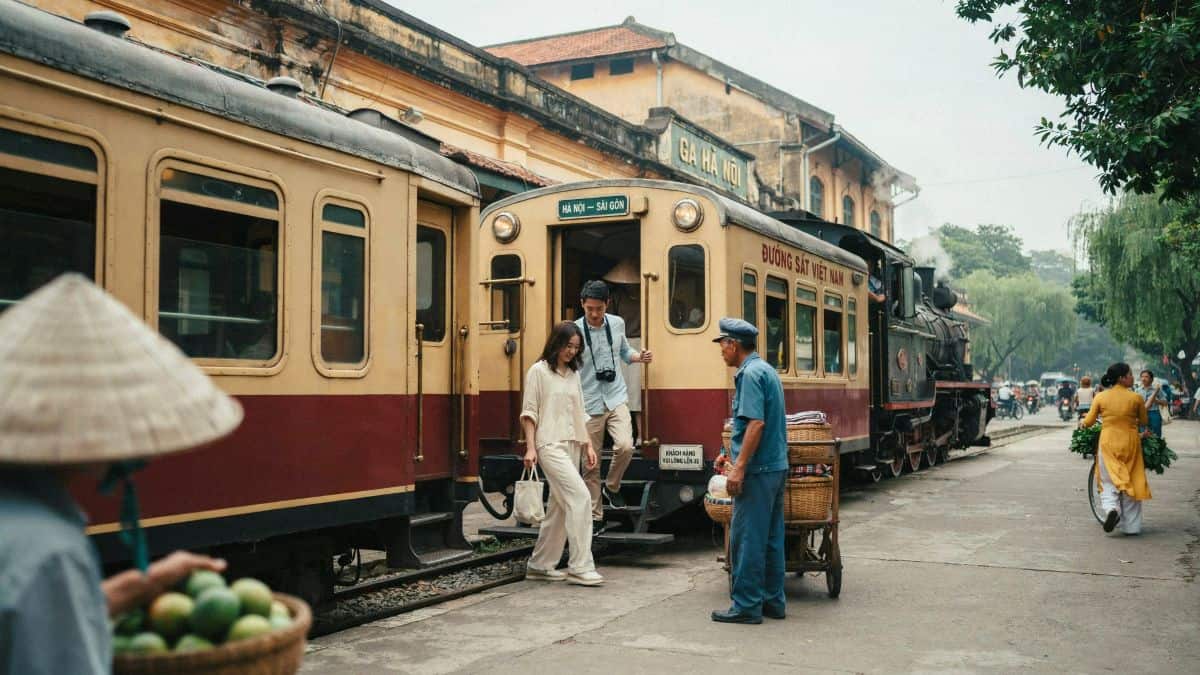
Tourism on the railway of Vietnam is revitalized in 2026 thanks to the heritage train of Hanoi, which attracts tourists on board because of the route that offers experiences through stories, music, and food. Rather than moving tourists from station to station, the train provides them with an opportunity to experience the culture and history of the capital city and its surroundings like Kinh Bac. The journey covers the distance between Hanoi Railway Station, Tu Son, and Long Bien and back to Hanoi. Tourists can enjoy musical performances and find out about the surrounding areas and their stories. Among other attractions, in Tu Son, they will have a chance to visit Do Temple, which is related to Vietnam’s Ly dynasty. It is possible to understand the attraction of the train from the statistics provided for its first year when 100,000 people traveled with it for almost 400 times, with the average occupancy rate of 80%.
Vietnam’s Hanoi heritage train turns the ride into an attraction
Hanoi’s Five City Gates train shows how rail travel can become a holiday experience in its own right. The service began regular commercial operations in September 2025. It follows a loop from Hanoi Railway Station to Tu Son and Long Bien before returning to Hanoi.
Advertisement
Advertisement
The train does not only move passengers. It introduces them to the history and culture of the capital and the nearby Kinh Bac region. Travellers can hear traditional music, learn about local heritage and try regional food. At Tu Son, passengers can visit Do Temple, which is linked to Vietnam’s Ly dynasty.
This gives the service a clear tourism purpose. The train connects visitors with cultural places while also telling stories during the journey. That approach could interest travellers who want more than a quick transfer between two stations.
Advertisement
Advertisement
It also creates a strong editorial angle: railways can help destinations package local culture into a bookable visitor experience. In this case, the journey itself becomes part of the attraction.
Hanoi’s first-year figures reveal demand for cultural rail travel
The Five City Gates train has produced significant first-year figures. It operated nearly 400 trips and carried almost 100,000 passengers. Average occupancy was reported at about 80 per cent. International visitors made up around 40 per cent of the passengers.
Advertisement
Advertisement
These numbers suggest that cultural rail tourism can appeal to visitors from both Vietnam and overseas. They also show how an existing rail corridor can support a new tourism product without requiring a new high-speed line.
The figures need careful wording. They describe the train’s first year of operation, not only the months of 2026. They also measure passenger journeys, rather than hotel stays, tourist spending or the number of unique visitors. They show demand for the train, but they do not prove that the service has increased overnight stays across the region.
For a travel-focused article, the useful point is clear: travellers are showing interest in experiences that combine rail travel with heritage, performance and local stories.
China–Laos rail journeys are growing across a border
The China–Laos Railway offers a different kind of travel story. It connects Kunming in China with Vientiane in Laos, with destinations such as Xishuangbanna and Luang Prabang along the route.
From January to August 2026, the railway handled 245,000 cross-border passenger trips. That marked a 39.1 per cent rise compared with the same period in 2025. The route’s international passenger service began in April 2023. By April 2026, it had handled more than 800,000 cross-border passenger trips since its launch.
The journey gives travellers a way to combine destinations in two countries on one overland holiday. Instead of treating each city as a separate flight stop, visitors can consider a multi-stop trip by train. That may appeal to travellers who want to see more of the region at a slower pace.
Advertisement
Advertisement
However, the figures count passenger trips. They do not confirm that every passenger was a holidaymaker. A careful article should describe rising cross-border rail use, rather than claiming an equal rise in tourism arrivals or visitor spending.
Border rules matter as much as railway lines
An international rail link does not remove the need to check entry rules. Travellers crossing into Laos still need to confirm which visa applies to their nationality and what documents they must carry.
The official Lao eVisa system lists Boten Railway Station and Khamsavath Railway Station among its designated entry points. Its guidance says that eligible travellers must present a printed eVisa approval letter. The eVisa allows a single entry and a stay of up to 30 days.
This practical detail can make an article more useful to readers. A route map may show a direct connection, but travellers also need to know where border checks take place and what paperwork to prepare. Rail tickets do not grant permission to enter another country.
The China–Laos corridor therefore offers two story angles. One examines the growth of cross-border travel. The other explains what a visitor needs to plan before booking. Together, they make the rail story both analytical and relevant to holiday planning.
South Korea’s east coast is easier to explore by train
South Korea’s Donghae Line KTX-Eum service gives travellers a faster way to move along the country’s east coast. The service began operating in December 2025. It links Gangneung with Busan’s Bujeon station and stops at places including Jeongdongjin, Donghae, Samcheok, Uljin, Yeongdeok, Pohang, Gyeongju and Taehwagang.
Advertisement
Advertisement
The full journey takes around three hours and 50 minutes. That is more than an hour faster than the comparison journey on the ITX-Maeum service. The KTX-Eum runs six times each day, with three departures in each direction.
For tourism, the route matters because it links a string of coastal and regional destinations. Travellers can plan a journey that includes beaches, local markets and cultural sites without returning to Seoul between every stop. The line also offers sea views along parts of the route.
This is a useful example of rail travel supporting regional itineraries. The service may make it easier to visit several east coast destinations in one trip. Whether it leads to longer stays or more visitor spending still requires separate evidence.
Malaysia’s ETS extension brings Johor Bahru into a wider rail trip
Malaysia’s Electric Train Service now runs between Kuala Lumpur and Johor Bahru. The KL Sentral–JB Sentral service began in December 2025 after the completion of the Gemas–Johor Bahru electrified double-track project.
The new section covers 192 kilometres and includes 11 stations. The 2026 timetable includes services to JB Sentral and stops such as Kluang and Kulai. This gives rail passengers more options for reaching towns in southern Malaysia, as well as travelling between Kuala Lumpur and Johor Bahru.
The change creates a practical tourism angle. Visitors can consider adding southern destinations to a Malaysia rail itinerary, rather than treating Johor Bahru only as a road or bus stop. Intermediate towns may also benefit if travellers choose to break their journey.
Advertisement
Advertisement
The service is operating, but travellers should check current timetables and fares before they book. Introductory promotions from the launch period should not be presented as current deals. The story is about the expanded connection and its possible effect on travel planning.
India’s Jammu–Srinagar service opens a mountain journey
In India, the Jammu–Srinagar Vande Bharat Express was extended to Jammu Tawi in April 2026. The service was also enlarged from eight to 20 coaches.
The extension links Jammu and Srinagar by passenger train for the first time. Travellers arriving at Jammu Tawi can connect with other rail services and continue towards the Kashmir Valley. The train also serves Katra, an important point for visitors travelling to the Shri Mata Vaishno Devi shrine.
This creates scope for a combined trip that includes pilgrimage and leisure travel. Visitors may be able to plan their journey around several destinations in Jammu and Kashmir, with the railway forming one part of the route.
The service was designed to operate in difficult winter conditions. That can improve access when road travel faces seasonal challenges, although no train can remove every risk of disruption. The practical value for visitors depends on the operating schedule, weather and onward transport at each stop.
The main tourism story is improved access, not a promise that every journey will be direct or disruption-free.
Advertisement
Advertisement
A major cross-border project is still planned for 2027
The Johor Bahru–Singapore Rapid Transit System Link is often discussed as a future boost to cross-border travel. But it should not be described as an operating railway in 2026.
In October 2026, authorities in Singapore and Malaysia said passenger service was expected to begin in February 2027. The timeline depends on final system testing, independent safety certification and regulatory approval.
This distinction matters to travellers. Malaysia’s ETS service between Kuala Lumpur and Johor Bahru is already operating. The RTS Link between Johor Bahru and Singapore is a separate project that remains under testing and approval.
The line could make future cross-border journeys easier once it opens. For now, travellers should plan around services that are available and check for updates before they travel.
This is also a useful reminder for coverage of rail investments: a project can be substantially complete without being ready to carry passengers. Clear status updates help readers separate a future possibility from a current travel option.
Better connections can help travellers reach more places
Across these examples, rail is changing the shape of possible holidays. Vietnam offers a cultural excursion. South Korea connects coastal destinations. Malaysia extends electric services into the south. India links Jammu and Srinagar. China and Laos have an international passenger route with rising use.
Advertisement
Advertisement
The benefits for travellers depend on the route. A faster journey may make a day trip easier. A direct train may remove the need to change services. A heritage train may offer an activity that visitors would not find on a standard commuter journey.
Yet a new connection does not automatically create a complete holiday. Visitors still need hotels, local transport, clear station information and access to nearby attractions. For international journeys, they also need border guidance and valid travel documents.
The best rail tourism stories therefore look beyond the train itself. They ask how visitors reach the station, where they sleep, what they can see and how they continue the journey.
Passenger growth does not tell the whole tourism story
Railway figures can show that more people are travelling. They cannot always explain why those passengers travelled or how much they spent at their destination.
China–Laos passenger trips, for example, include cross-border rail journeys, not only tourists. Hanoi’s heritage train figures describe demand for that service, not the wider tourism economy. South Korea’s timetable gives journey times and stops, but not changes in hotel bookings.
These limits do not make the figures less useful. They help writers explain exactly what the evidence shows. To measure tourism impact more fully, reporters would need data on overnight stays, visitor spending, attraction visits and travel purpose.
Advertisement
Advertisement
A balanced article can report the available numbers and identify the questions that remain. That approach keeps the story informative without claiming more than the evidence supports.
What travellers should check before planning an Asian rail holiday
Travellers should check the current timetable, ticket availability and station names before building an itinerary. This is especially important when a route has several stops or a limited number of daily departures.
People travelling across a border should confirm visa rules and designated entry points. They should also check whether an eVisa approval must be printed. Anyone planning to connect between separate railway services should leave enough time for the transfer.
For regional journeys, visitors should look at transport from the arrival station to hotels and attractions. A railway can bring a traveller closer to a destination, but the final part of the trip may still require a bus, taxi or local train.
Travellers should also confirm whether a service is already running. The Malaysia ETS extension is operational. The Singapore–Johor Bahru RTS Link is targeted for 2027. Knowing the difference can prevent costly planning mistakes.
Asia’s rail tourism story is about the journey and what follows
The Vietnamese rail tourism takes a new direction in 2026 due to the heritage train of Hanoi attracting tourists to the city through a tour that is inspired by storytelling, music, and food. Unlike conventional trains, which transport people from one station to another, this train aims at introducing the culture and history of Hanoi and Kinh Bac region to travelers. The route of the train runs from Hanoi Railway Station to Tu Son and Long Bien and back to Hanoi. Visitors have the chance of hearing traditional shows and learning about the places and stories associated with the locations. At Tu Son, for instance, travelers get the chance of visiting Do Temple, which is linked with Vietnam’s Ly dynasty. This combination of travel and learning makes heritage trains appealing. During its first year of operation, it carried more than 98,000 tourists through 370 trips, with an average occupancy rate of 80%. In addition, foreigners constituted about 40% of the passengers.
Advertisement
