
Four Aviation Start-ups Reach World Aviation Festival Final in Lisbon

Published
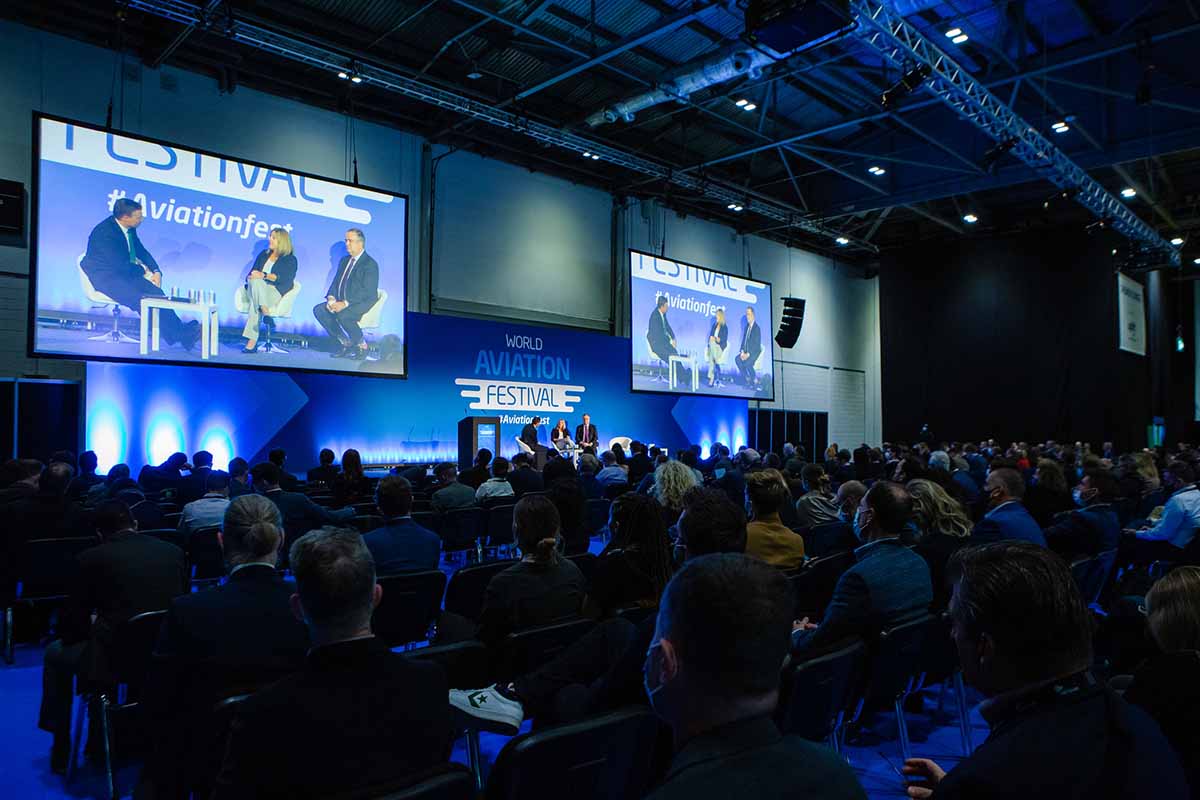
The World Aviation Festival has named four start-ups for its 2026 Start-up Competition final in Lisbon, highlighting new solutions for AI-led travel search, airline ancillary sales and airport boarding. The companies will present to aviation executives and investors on 13 October at FIL Lisbon.
The four selected firms are Zerolook, Bonafide, Altitude and Gate Stream. Each addresses a distinct challenge facing airlines, airports and travel technology providers as artificial intelligence changes how passengers search, book and move through airports.
Advertisement
Advertisement
The competition forms part of the World Aviation Festival, which runs from 13 to 15 October 2026 at FIL Lisbon. Organiser Terrapinn expects the event to bring together more than 4,500 senior leaders from airlines, airports, travel technology companies and related businesses.
Four start-ups addressing AI-driven flight shopping, AI search optimisation, airline ancillaries, and airport boarding processes have been selected to compete in the World Aviation Festival’s annual Start-up Competition next week.
Advertisement
Advertisement
Four finalists focus on major aviation technology pressures
The selected companies reflect some of the most active areas of aviation innovation. Airlines are facing growing pressure to respond to an expanding volume of searches created by AI-powered travel tools. They are also looking for ways to maintain control of how their brands, fares and products are represented across digital channels.
At airports, passenger experience remains a major priority. Boarding can create congestion, delays and stress for passengers and frontline staff. At the same time, airlines continue to seek new sources of revenue beyond base fares, particularly through premium seats, upgrades and other ancillary products.
Advertisement
Advertisement
The four finalists have been chosen from 84 entries, according to World Aviation Festival organiser Terrapinn. Their pitches will be assessed live by a panel of aviation, technology and investment specialists.
The winner will gain industry visibility at one of the sector’s major annual technology gatherings. For young companies, that exposure can be as valuable as the competition title itself, providing access to airline decision-makers, airport leaders, investors and potential commercial partners.
Zerolook targets the rise of AI-driven flight searches
Zerolook has been selected for its flight shopping API, which is designed to manage the growing volume of travel searches generated by AI-powered services.
Flight shopping has become increasingly complex. Travellers now compare fares, schedules, baggage rules, seating options, loyalty benefits and connections across a wide range of channels. AI assistants and travel platforms could significantly increase the number of searches sent to airline systems as they compare multiple options in real time.
This creates both an opportunity and a technical challenge. Airlines want their content to be available through new digital channels, but they must also protect system performance and ensure that search activity produces useful commercial outcomes.
Zerolook’s proposition is therefore closely linked to a wider industry question: how can airlines handle a much larger volume of search traffic without adding unnecessary cost or weakening the shopping experience?
Advertisement
Advertisement
The company’s pitch in Lisbon will place it at the centre of a wider discussion about the future of airline retailing. As AI tools become more common in travel planning, airlines will need technology capable of responding quickly, accurately and at scale.
Bonafide focuses on accurate AI representation
Bonafide is an AI alignment platform that develops context layers intended to help AI systems understand and accurately represent a business.
For travel brands, this issue is becoming increasingly important. Airlines, airports, hotels and travel sellers are investing heavily in digital distribution, customer service and AI-enabled communication. However, AI systems can only provide reliable answers when they have access to clear, current and properly structured information.
An inaccurate answer about a fare, cabin product, baggage allowance, route or loyalty benefit can quickly cause customer frustration. It can also create pressure for frontline teams, especially when travellers arrive at the airport with expectations based on information that does not match the airline’s policies.
Bonafide’s technology is intended to help organisations create stronger context for AI systems. In practical terms, that could help businesses make sure their products, services and commercial rules are interpreted more consistently across emerging AI-led search and service environments.
The selection of Bonafide signals how rapidly AI governance has become a travel industry concern. The debate is no longer limited to whether companies should adopt AI. It now includes how brands can make sure that AI tools present their information accurately, safely and in line with their commercial strategy.
Advertisement
Advertisement
Altitude aims to help airlines expand ancillary revenue
Altitude has been chosen for a travel technology platform designed to help airlines create incremental ancillary revenue through paid premium-cabin upgrades.
Ancillary revenue has become a vital part of the airline business model. Airlines earn income from products and services beyond the basic ticket, including baggage, preferred seats, lounge access, onboard retail, fast-track services and cabin upgrades.
Premium-cabin upgrades are especially attractive because they can create value for both the airline and the passenger. For the airline, they can produce additional revenue from seats that may otherwise remain unsold. For travellers, an upgrade may offer greater comfort, more space, priority services or an improved onboard experience.
However, converting available premium inventory into sales requires accurate timing, relevant offers and simple digital journeys. Offers must reach passengers when they are most likely to consider them, while pricing needs to reflect demand, remaining inventory and the wider customer relationship.
Altitude’s platform is designed to support that process. Its appearance in the final also reflects the ongoing importance of commercial technology at airline events. While operational resilience and sustainability remain major subjects, revenue generation continues to shape airline technology investment decisions.
The company will now seek to demonstrate how its approach can help airlines make upgrade offers more effective without creating unnecessary complexity for customers or commercial teams.
Advertisement
Advertisement
Gate Stream looks to improve the boarding experience
Gate Stream is the fourth finalist. Its solution combines a predictive algorithm with proprietary gate signage to make boarding a more efficient and commercially valuable part of the airport journey.
Boarding is one of the most visible moments in a passenger’s airport experience. It is also a highly time-sensitive process. Delays at the gate can affect aircraft turnaround times, crew schedules, airport operations and onward connections.
Airlines and airports have long used boarding groups, priority lanes, mobile alerts and gate announcements to manage the process. Yet congestion often remains a challenge, particularly when passengers gather at the gate before their group is called or when operational changes occur at short notice.
Gate Stream’s approach aims to use prediction and signage to improve the flow of passengers. The company describes boarding as a potential competitive advantage, rather than simply a final operational step before departure.
That framing is significant. A smoother boarding process can improve passenger confidence, reduce pressure on staff and support more reliable aircraft departures. It may also influence how travellers perceive an airline, particularly when service standards are compared across busy airports and short-haul networks.
For airports, better gate management can contribute to more efficient use of terminal space. For airlines, it can support punctuality and help create a calmer experience at a point where customer satisfaction can easily be affected.
Advertisement
Advertisement
Industry leaders and investors will judge the live pitches
The final will be hosted by Irra Ariella Khi, Co-Founder and Chief Executive of Zamna. The shortlisted start-ups will present before a judging panel made up of senior leaders from investment, aviation, technology and travel.
The 2026 judges are Cara Whitehill, Venture Partner at Thayer Investment Partners; Martin Beitia, Head of Innovation, Design and Research at Iberia; Walé Adepoju, Partner, Investor and Entrepreneur at IMDC and Oxford Innovation Finance; Dee Waddell, Global Head of Consumer, Travel and Transportation Industries at IBM; Massimo Morin, Global Head of Travel and Hospitality at Amazon Web Services; and David Peller, Founder of If Not You Capital.
The breadth of the panel reflects the type of scrutiny aviation start-ups face when seeking commercial growth. A promising product must do more than attract attention. It must also show a credible use case, an understanding of airline or airport operations, a realistic route to adoption and the potential to scale.
For finalists, the live pitch is an opportunity to explain how their technology fits into a complex sector where long sales cycles, legacy systems, regulation and operational risk can slow innovation.
Ancillary Arena adds a new platform for commercial ideas
The 2026 event will also introduce Ancillary Arena, a separate competition for start-ups, entrepreneurs and independent innovators with ideas focused on airline ancillary revenue.
Five shortlisted participants will pitch their concepts to a panel of five senior airline commercial leaders. The initiative places further attention on the way airlines are reshaping retail strategies around personalised offers and additional services.
Advertisement
Advertisement
Ancillaries are no longer limited to checked bags or seat selection. Airlines are increasingly exploring tailored bundles, premium products, connectivity, disruption support and services that can be offered before, during and after a journey.
The new competition could give emerging businesses a direct route into commercial conversations with airline leaders. It also underlines the value placed on innovation that can deliver measurable revenue while improving choice and relevance for passengers.
Anup Kumar Keshan, Founder and Editor-in-Chief, Travel And Tour World, said: “These finalists show that aviation innovation is becoming more practical, passenger-focused and commercially relevant. Their ideas address real industry pressures, from AI-led travel discovery to smoother boarding and better airline retailing. Lisbon offers an important global stage for new businesses ready to support aviation’s next phase of growth.”
Lisbon event will bring together aviation and travel technology leaders
The World Aviation Festival is expected to host three days of keynote sessions, panel discussions, meetings and networking. Its programme brings together stakeholders from across the aviation value chain, including airlines, airports, technology providers, investors and travel businesses.
For the wider industry, events of this kind offer a useful view of where aviation technology investment is moving. AI is likely to remain a central theme in Lisbon, but the finalist list shows that the sector’s priorities are broader than automation alone.
The selected start-ups deal with practical issues: managing search demand, representing a brand accurately in AI systems, selling premium products effectively and making boarding more predictable. These are everyday commercial and operational concerns that have a direct impact on airline profitability and passenger confidence.
Advertisement
Advertisement
The Start-up Competition final on 13 October will offer the four companies a high-profile opportunity to show whether their solutions can move from promising concepts to scalable aviation products.
The World Aviation Festival final brings together four start-ups focused on some of aviation’s most urgent technology needs. From AI search to premium upgrades and smoother boarding, the Lisbon pitches will show how early-stage businesses are seeking practical ways to improve airline revenue, operational efficiency and passenger journeys.
Advertisement
