JetBlue launches BlueFirst as American, Delta and United expand premium seats. The move intensifies the US airline race for higher-value travellers, with comfort, technology and service becoming key battlegrounds.
JetBlue launches BlueFirst at a crucial moment for US aviation. Meanwhile, American, Delta and United expand premium seats, giving travellers more reasons to compare airlines beyond the basic ticket price. BlueFirst will bring JetBlue a dedicated domestic first-class product later in 2026, with bookings expected this autumn.
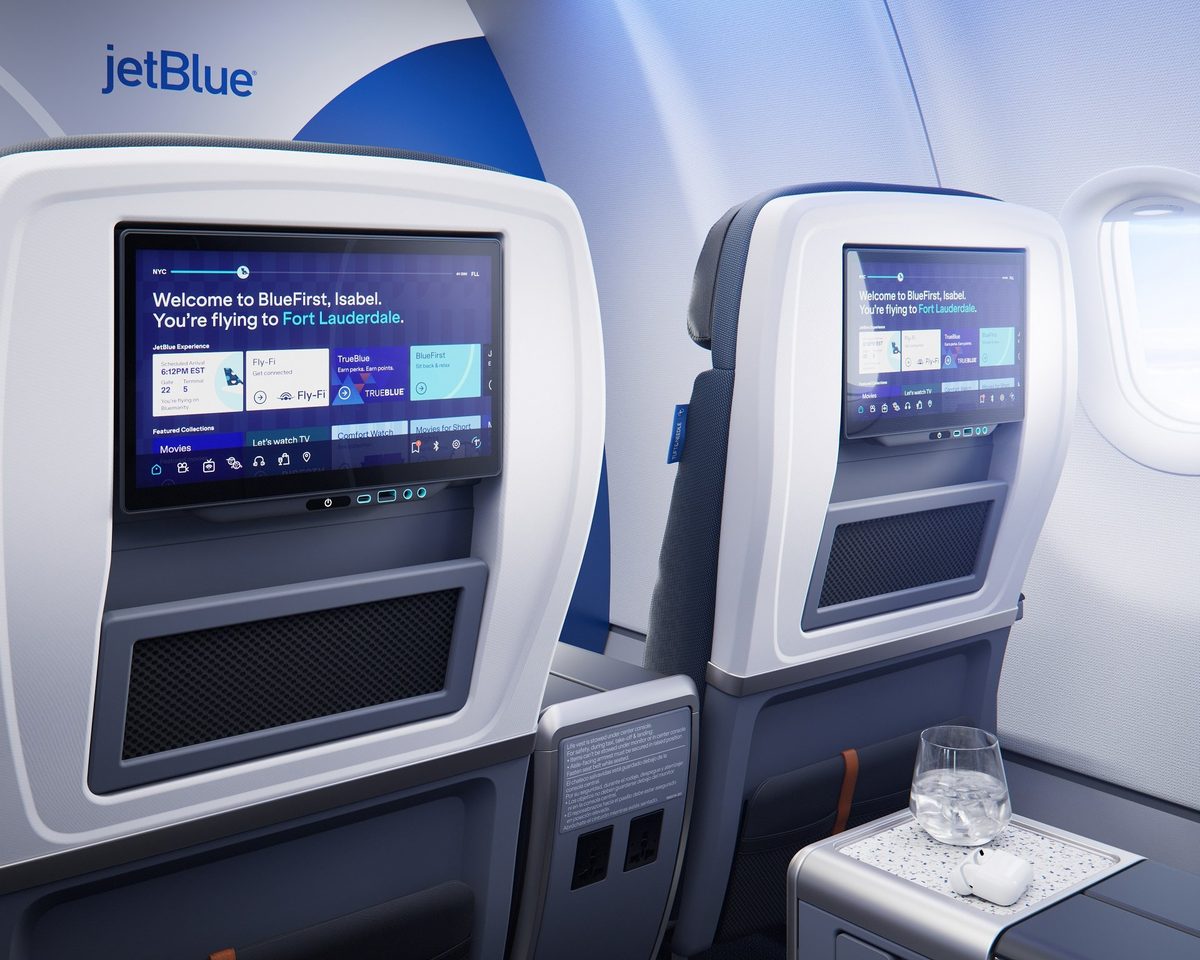
The cabin will feature 2-2 seating, Tuft & Needle foam, up to seven inches of additional legroom, seatback entertainment and digital food and cocktail ordering. Meanwhile, rivals are increasing premium capacity and upgrading onboard experiences. As a result, the competition for higher-spending passengers is becoming sharper, with comfort, flexibility and service increasingly influencing airline choices.
JetBlue’s BlueFirst is entering a US airline market where premium travel is expanding rapidly. American Airlines plans to increase premium seating on narrowbody departures to about 40% over the coming years. Delta is putting more First Class seats on selected A321neos, while United continues to expand premium capacity and introduce new high-end cabins. Alaska is adding First and Premium Class seats, and Southwest has moved to assigned seating with Extra Legroom options. Against that backdrop, JetBlue is introducing BlueFirst with wider premium seating, Tuft & Needle foam, seatback ordering, upgraded dining and cocktail customisation. The result is a much more competitive domestic premium market for travellers.
Advertisement
JetBlue is entering the US domestic first-class market with BlueFirst just as major rivals are expanding premium seating, upgraded cabins, technology and bundled benefits. The timing is significant for travel because American, Delta, United, Alaska Airlines and Southwest are all reshaping their onboard products to capture passengers willing to pay more for comfort and service.
For tourism, the shift means travellers are gaining more choices between standard economy and the highest-end cabins. Airlines are also changing how they package space, food, entertainment, baggage and airport benefits.
JetBlue is preparing to enter the US domestic first-class market with BlueFirst, a new premium cabin combining recliner-style seating, Tuft & Needle foam, seatback ordering, upgraded dining and personalised cocktail requests. The first aircraft is due to debut later in 2026, while initial routes and booking details are still to be announced.
JetBlue has unveiled BlueFirst, its new domestic first-class experience for aircraft that do not offer Mint. The airline says bookings will open this autumn, with the first aircraft entering service later this year.
The move gives JetBlue another premium option for travellers who want more space and service without a lie-flat Mint seat. It also places the airline more directly into the competitive US first-class market.
For travel and tourism, the product could appeal to business travellers, leisure passengers and higher-spending customers taking domestic trips or connecting through major US gateways.
BlueFirst seats will use a 2-2 configuration, with five inches of recline and up to seven inches of additional legroom compared with JetBlue’s Main seats. The seats feature T&N Flex foam from Tuft & Needle, designed to provide support and pressure relief.
Each seat will have a 13.3-inch screen with Bluetooth connectivity. USB-A, USB-C and 110V AC power will also be available, alongside complimentary Fly-Fi high-speed internet.
The screen will run the latest Blueprint by JetBlue experience, making it a service tool as well as an entertainment system.
A key feature is Mixologist Mode. Passengers can choose their spirit, mixer and flavourings on the seatback screen, then send the order to the inflight crew. Meals can also be selected through the screen.
JetBlue is introducing FirstFare, with meals presented in a bento-inspired box. On flights of 899 miles or longer, each selection will include an entrée, side and dessert. Announced choices include sweet or savoury crepes and sesame noodles with beef or tofu.
The drinks programme includes wines selected by Parcelle, coffee from Cometeer and Joe Coffee, and Smith Teamaker teas. Rotating premium snacks will vary by route and flight.
For travel customers, digital ordering could make service more convenient. For tourism businesses and corporate travel planners, it adds another premium product to compare when choosing domestic flights.
Overnight BlueFirst passengers will receive a blanket and snooze kit. Ground benefits include Group 1 boarding, dedicated overhead-bin space, priority check-in and access to expedited security lanes at more than 30 airports.
BlueFirst and BlueFirst Flex fares will include two free checked bags, priority baggage delivery and no change or cancellation fees. JetBlue says benefits can vary on BlueFirst Base fares.
JetBlue has not yet announced the initial BlueFirst routes or detailed booking availability. Travellers should therefore wait for confirmed schedules before planning around the new cabin.
The airline says BlueFirst will expand across markets where JetBlue does not currently operate Mint. The distinction is important: Mint remains JetBlue’s lie-flat premium product, while BlueFirst is its conventional domestic first-class proposition.
BlueFirst is part of JetBlue’s wider premium strategy, which also includes EvenMore and Mint and follows the opening of its second BlueHouse lounge in Boston.
For tourism, the launch adds another choice for passengers willing to pay more for comfort and service. For the airline industry, it raises the pressure to compete on the full passenger experience, including technology, food, seating and airport benefits.
The real test will come when JetBlue reveals routes, fares and launch dates. Until then, BlueFirst is a confirmed product, but its commercial impact remains to be seen. That matters for travel demand because premium cabins can influence airline choice, especially when travellers compare time, comfort, baggage allowances and flexibility across competing carriers.
JetBlue unveiled BlueFirst on 1 September 2026, describing it as a new domestic first-class experience. The cabin will begin rolling out later this year, with booking expected to become available this autumn. Initial routes and further booking details have not yet been announced.
BlueFirst will operate on JetBlue aircraft and routes that do not currently offer Mint. It will therefore complement rather than replace Mint, which remains JetBlue’s lie-flat premium product on selected routes.
The product uses a 2-2 configuration, five inches of recline and up to seven inches of additional legroom compared with JetBlue’s Main seats.
Seats use Tuft & Needle T&N Flex foam, while each passenger receives a 13.3-inch seatback screen with Bluetooth. USB-A, USB-C and 110V power are also included.
The technology goes beyond entertainment.
BlueFirst will introduce seatback ordering through Blueprint by JetBlue. Passengers can select meals and browse onboard products from their screens.
Its Mixologist Mode allows customers to choose a spirit, mixer and flavourings before sending the cocktail request to cabin crew.
Food is also being repositioned through FirstFare. On flights of at least 899 miles, passengers will receive an entrée, side and dessert in a bento-inspired presentation.
For the travel industry, this matters because JetBlue is not simply adding another seat category. It is creating a product that combines physical comfort with digital service and premium food.
American Airlines is taking one of the most significant approaches in the market.
The carrier says premium seating represents approximately 25% of seats on narrowbody departures today. Over the coming years, American expects that proportion to reach approximately 40%.
The strategy includes more First Class seats and more Main Cabin Extra seating.
American is retrofitting Airbus A319 and A320 aircraft to add another row of First Class. Its future Boeing 737 MAX 10 aircraft will have 24 First Class seats, while A321neo aircraft will also receive additional First Class seating.
The airline is also expanding Main Cabin Extra, giving more passengers access to additional legroom, earlier boarding, dedicated overhead-bin space and a complimentary beverage.
American is also investing heavily in inflight technology.
The airline plans to install next-generation seatback entertainment screens on all new Airbus and Boeing narrowbody aircraft deliveries beginning in 2028, alongside retrofits of existing aircraft.
That creates a direct point of comparison with BlueFirst.
JetBlue is putting a 13.3-inch screen into its new first-class seat. American is working towards a broader fleetwide screen strategy that extends beyond premium passengers.
For travellers, the difference is important. A premium cabin increasingly involves not just more space, but also the ability to charge devices, watch content without using a personal phone and receive a more integrated onboard service.
Delta Air Lines is also increasing premium capacity.
Seven of its newest Airbus A321neos entered service with an unusually large 44-seat Delta First cabin, more than twice the carrier’s usual 20-seat configuration for that aircraft type.
Delta said the temporary configuration was intended to give customers more premium options while the airline waited for flat-bed suites to arrive on those aircraft.
The aircraft were scheduled for routes including Atlanta to Los Angeles, San Francisco, Seattle and San Diego.
The significance extends beyond the 44-seat cabin.
Delta continues to distinguish conventional First Class from Delta One, which provides a flat-bed option on applicable routes. Delta also offers Premium Select, giving customers another step between First and standard economy on relevant aircraft and services.
That creates a tiered premium model.
JetBlue is doing something comparable, although its BlueFirst product is positioned differently from Mint. The airline is effectively adding another rung between its standard experience and lie-flat premium travel.
For tourism, this gives travellers greater flexibility when allocating their holiday budget. A passenger may decide that extra legroom, food and priority services are worth paying for, without needing a lie-flat seat.
United Airlines is pursuing an even broader premium strategy.
United reported a record 27.4 million premium seats across its fleet in 2025, representing 12% of all seats flown that year.
Its new 787-9 with the Elevated interior has 99 premium seats, including eight United Polaris Studio suites and 56 United Polaris seats. The aircraft has already entered service on selected international routes.
United Polaris Studio brings a significantly more private proposition, with lie-flat seating and large screens.
United has also announced the A321neo Coastliner, part of its future aircraft plans. The airline describes it alongside the new 787-9 Elevated interior as part of a broader fleet investment programme.
The strategy shows how far the premium race has moved.
JetBlue’s BlueFirst is a conventional domestic first-class cabin with upgraded recliner seating. United is simultaneously developing premium aircraft and products that push towards long-haul-style experiences.
That does not make one product automatically better.
It means airlines are targeting different willingness-to-pay groups.
Alaska Airlines has been expanding its premium inventory through both First Class and Premium Class.
The airline previously announced plans to add 1.3 million premium seats annually to its mainline fleet. The programme included increasing First Class seating on selected Boeing 737 aircraft and expanding Premium Class on others.
On the 737-800, First Class was planned to increase from 12 to 16 seats. The 737-9 MAX was also planned to receive 16 First Class seats while Premium Class expanded to 30 seats.
Alaska’s current Premium Class provides four inches more legroom than Main Cabin seats. Passengers on most flights over 350 miles can also receive complimentary beer, wine and cocktails, alongside early boarding and access to reserved overhead-bin space.
The airline has also unified its extra-legroom proposition across Alaska and Hawaiian operations under the Premium Class name.
That makes Alaska particularly relevant to the wider industry trend.
Premiumisation is not limited to First Class. Airlines are creating several levels of paid comfort so travellers can spend according to their priorities.
Southwest Airlines represents the most dramatic change in the group because it has moved away from its long-standing open-seating model.
Since 27 January 2026, Southwest has used assigned seating. Customers can now choose among Extra Legroom, Preferred and Standard seats, depending on fare and availability.
Extra Legroom seats are positioned at the front and around exit rows. They offer up to five additional inches of pitch on the 737-700, while the 737-800 and MAX 8 provide three additional inches compared with Standard seats.
Southwest’s Choice Extra fare includes Extra Legroom seating when available, Group 1 boarding and two free checked bags. Customers can also purchase seat upgrades where available.
The change puts Southwest closer to the product architecture already used by its competitors.
It also shows why JetBlue’s BlueFirst launch matters beyond First Class. Airlines are increasingly treating seating as a differentiated product that can be sold at multiple price points.
For travel customers, that can mean more choice. It can also mean more complexity when comparing fares, because the cheapest ticket may no longer include the seat location, baggage or flexibility a passenger actually wants.
The US airline industry is moving towards a more segmented cabin model.
JetBlue is adding BlueFirst. American is targeting approximately 40% premium seating on narrowbody departures. Delta is expanding First Class capacity on selected aircraft. United is increasing premium capacity and introducing new high-end products. Alaska is growing both First and Premium Class. Southwest has introduced assigned seating and Extra Legroom options.
The common factor is simple: airlines see value in giving passengers more reasons to pay for an upgraded experience.
That trend matters for travel because passengers now have more variables to compare. Seat pitch, cabin layout, baggage, boarding, Wi-Fi, entertainment, food and flexibility can all affect the final value of a fare.
It matters for tourism because the cost and quality of air travel influence how visitors plan trips. A premium domestic connection can be attractive to travellers with limited time, while families may place greater value on baggage and seat selection.
For the airline industry, the development is also about revenue management. More cabin categories allow carriers to separate customers according to what they value and what they are willing to pay.
BlueFirst has a clear identity.
Its Tuft & Needle seating, digital ordering and Mixologist Mode give it features that are easy for travellers to understand. But competitors already have established First Class products, large loyalty programmes and extensive networks.
JetBlue’s next announcement will therefore matter.
The airline still has to reveal the initial BlueFirst routes and booking details.
Until then, travellers cannot properly compare the product on price or route availability.
The broader message is already clear.
The US premium cabin market is becoming more competitive, and JetBlue’s arrival adds another serious option for travellers who want more than economy without necessarily needing a lie-flat suite.
“JetBlue’s BlueFirst launch arrives at an important moment for the US travel and tourism industry. Travellers are increasingly comparing airlines not only by ticket price, but by comfort, flexibility, food, connectivity and the quality of the overall journey. JetBlue’s decision to combine a dedicated first-class cabin with digital ordering, upgraded dining and Tuft & Needle seating gives it a distinctive proposition. At the same time, American, Delta, United, Alaska and Southwest are strengthening their own premium offerings. This competition is positive for travellers because it creates more choice and encourages airlines to improve the experience at different price levels. The next question is how routes and fares shape demand.”, says, Anup Kumar Keshan, Editor-in-Chief, TTW
Why is JetBlue launching BlueFirst while American, Delta and United expand premium seats? The answer lies in changing passenger demand and airline economics. Premium cabins can generate more revenue from travellers prepared to pay for greater comfort and additional services. JetBlue is therefore adding a conventional domestic first-class product to complement its Mint offering, while competitors continue expanding their premium seating strategies. The reason matters to travellers because the US market is moving towards more differentiated cabin choices. Passengers can increasingly select the level of space, service, entertainment and flexibility they want. This also gives airlines more ways to target different budgets and travel priorities.
Why are airlines adding premium seats? The answer is changing passenger demand and the opportunity to sell higher-value experiences. American expects premium seating to grow from about 25% to roughly 40% of narrowbody seats, while United reported a record 27.4 million premium seats in 2025. Delta, Alaska and Southwest are also changing their cabin structures. JetBlue’s BlueFirst is therefore part of a wider commercial response rather than an isolated product launch. The reason it matters is that travellers can increasingly choose between several levels of comfort and service. For tourism, this can influence budgets, route choices, connections and the overall value passengers place on air travel.
Ultimately, JetBlue launches BlueFirst as American, Delta and United expand premium seats, creating a stronger contest for travellers seeking more than standard economy. JetBlue is betting on a distinctive combination of cushioned seating, extra legroom, digital ordering, premium dining and personalised service. American is increasing its premium footprint, while Delta and United continue investing heavily in higher-end cabins. Therefore, the competition is no longer limited to who offers the biggest seat. Airlines are competing through technology, food, connectivity, flexibility and airport benefits. For travellers, this creates more choice. For the industry, it signals that premium travel will remain an important battleground across the US domestic market.
Advertisement
Tags: American Airlines First Class, Delta First Class, JetBlue BlueFirst, Southwest Assigned Seating, United Airlines premium
Advertisement
Advertisement












Wednesday, September 2, 2026

Tuesday, September 1, 2026
Wednesday, September 2, 2026

Wednesday, September 2, 2026

Tuesday, September 1, 2026

Tuesday, September 1, 2026

Tuesday, September 1, 2026

Tuesday, September 1, 2026