
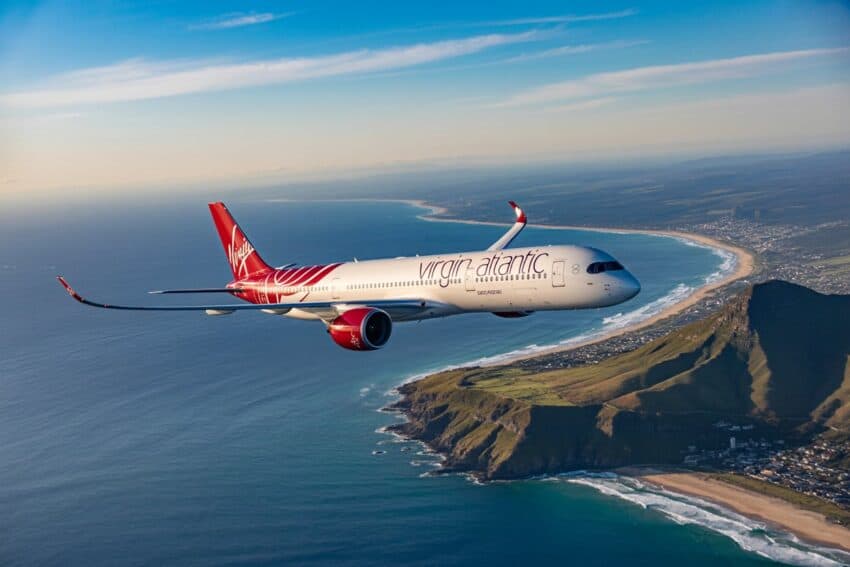
Image generated with Ai
Virgin Atlantic has decided to end its flights between London Heathrow and Dubai International after just three years, citing rising geopolitical tensions and shifting market conditions as key reasons for the move. Despite initial optimism about tapping into one of the world’s busiest long-haul corridors, the airline has opted not to resume services for the 2026/27 winter season. With the Middle East experiencing growing instability, Virgin Atlantic has shifted its focus to more stable, profitable routes, ultimately prioritizing the safety of its passengers and long-term sustainability over continuing on the Dubai-London path.
In a move that has sent ripples through the aviation industry, Virgin Atlantic has officially announced that it will not resume flights between London Heathrow Airport (LHR) and Dubai International Airport (DXB) for the 2026/27 winter season. This marks the end of the airline’s latest attempt to re-enter one of the world’s busiest and most lucrative international flight corridors after just three years of operation. The decision not only signals a strategic shift for the airline but also underscores the increasingly volatile nature of international aviation, as geopolitics and shifting market conditions continue to reshape global travel networks.
The London Heathrow to Dubai route, long known as one of the busiest long-haul corridors in the world, has seen heavy demand from both business and leisure travelers. Dubai, a global hub for trade, tourism, and luxury, attracts millions of travelers from around the globe. Similarly, London, with its significant international connections, financial prowess, and cultural influence, serves as a central destination for many in the Middle East.
For Virgin Atlantic, entering this market was an ambitious move. The airline’s decision to reintroduce flights between these two cities in 2023 was an effort to capture a slice of the growing demand for travel to and from the UAE. However, despite the initial fanfare, this route now seems to have become a casualty of broader challenges within the airline industry, with Virgin Atlantic pulling back from what was once seen as a prime connection.
Advertisement
Virgin Atlantic first suspended its flights on the LHR-DXB route in February 2026, citing the escalating tensions in the Middle East as the primary reason. At that time, the airline did not provide a definitive timeline for the suspension, only stating that it was a temporary measure. Given the ongoing geopolitical instability in the region, it was clear that there were significant risks to operating flights in and out of Dubai, a city whose strategic location makes it vulnerable to regional conflicts and disruptions.
The airline’s leadership at the time expressed concern over the safety of its passengers and the feasibility of running operations in such a high-risk environment. The suspension was not an isolated incident but part of a broader trend where multiple international airlines paused or canceled services in the Middle East due to the growing uncertainty in the region.
The Middle East has historically been a region of interest for many international airlines due to its strategic location as a major air hub. However, recent years have seen a rise in tensions in parts of the region, particularly with the ongoing conflicts in Syria, Iraq, and Yemen, as well as more recent flare-ups in Iran and Israel. These geopolitical developments have created a complex landscape for airlines, who must consider both the safety of their operations and the potential economic impact of flying in and out of volatile areas.
Virgin Atlantic’s decision not to restart the LHR-DXB route for the 2026/27 winter season is indicative of the challenges airlines face when operating in such an environment. The airline’s brief return to the route, which had only been relaunched three years ago, shows the volatility of long-haul routes in a rapidly changing world. Market conditions in the airline industry are also in flux, and airlines must continuously assess whether the risks of operating in certain regions outweigh the benefits.
Advertisement
Advertisement
The decision also points to the broader trend of airlines adapting to new realities post-pandemic. After the disruptions of COVID-19, airlines were forced to reevaluate their strategies, focusing on profitability and sustainability. For Virgin Atlantic, this means trimming unprofitable routes, especially those that require significant investment in terms of aircraft, crew, and resources, yet face uncertainty from external factors like geopolitical instability.
This decision to pull out of the London-Dubai corridor also signals a broader shift in Virgin Atlantic’s strategic direction. The airline, which has historically positioned itself as a disruptor in the market, offering premium services with a touch of flair and personal attention, is now faced with the need to reevaluate how it competes in an increasingly competitive global market. With major players like Emirates, British Airways, and other Gulf carriers already dominating the LHR-DXB route, Virgin Atlantic’s entry was always going to be a challenge.
Virgin Atlantic’s operations on this route were relatively short-lived, and the airline will now focus its energies on other parts of its network. The decision not to resume the Dubai route, particularly during the lucrative winter season when many travelers head to Dubai for both business and leisure, shows that Virgin Atlantic is refocusing its efforts on more stable and profitable markets. This may involve concentrating on existing European routes, strengthening its connections with North America, and tapping into emerging markets where competition is less fierce.
While the decision to end flights on such a high-profile route may seem like a setback, it is important to understand the business considerations behind this choice. Dubai is a major international business hub, attracting a wide range of high-net-worth individuals, corporate travelers, and tourists. For Virgin Atlantic, the costs associated with running flights on this route may not have been yielding sufficient returns, especially when compared to other destinations where demand for travel is more consistent and operational challenges are lower.
In the world of aviation, routes like LHR-DXB are highly competitive, and with several major carriers already dominating this market, there may have been limited room for Virgin Atlantic to carve out a sustainable niche. Additionally, with ongoing concerns about fuel prices, economic downturns, and the complexity of operating in politically unstable regions, the financial risks may have simply outweighed the potential rewards.
The aviation industry is constantly evolving, and airlines must remain agile to stay competitive. Virgin Atlantic’s decision is part of a broader pattern of airlines reevaluating their networks and routes in response to external pressures. The suspension and subsequent cancellation of flights on the LHR-DXB route highlight the delicate balance airlines must strike between demand, safety, geopolitical risks, and operational costs.
While Virgin Atlantic’s withdrawal from the route may be disappointing for some travelers, it is a reflection of the changing dynamics of global aviation. Airlines are increasingly forced to adjust their strategies in response to factors that are often beyond their control, such as political instability, economic shifts, and the ongoing effects of the COVID-19 pandemic. The decision to cut the LHR-DXB route will undoubtedly prompt other carriers to rethink their own operations in the Middle East and beyond.
As Virgin Atlantic moves forward with its revamped strategy, all eyes will be on how the airline adapts to these new realities. While Dubai may no longer feature prominently in Virgin Atlantic’s network, the airline still has a strong portfolio of routes to rely on. It will likely focus on other high-demand destinations, especially in the US, Europe, and emerging markets where it can maintain its competitive edge.
The airline has made it clear that its commitment to providing passengers with unique experiences remains strong, even if that means retreating from certain markets. By doing so, Virgin Atlantic can ensure that it remains a key player in the competitive world of international aviation, even if it means taking a step back from certain routes like LHR-DXB.
Virgin Atlantic has decided to permanently end its flights between London Heathrow and Dubai International after just three years, citing rising geopolitical tensions in the Middle East and a shift in strategic priorities as the main reasons for halting services in the 2026/27 winter season.
While it may have been a high-profile route with great potential, the realities of geopolitics, market conditions, and the airline’s strategic priorities have ultimately led to this decision. For travelers who had hoped for a quick return of Virgin Atlantic on the LHR-DXB corridor, this news will come as a disappointment. But for the airline, it’s a calculated decision to prioritize safety, profitability, and sustainability in an ever-changing industry.
Advertisement
Advertisement
Advertisement













Saturday, September 5, 2026

Saturday, September 5, 2026

Saturday, September 5, 2026

Saturday, September 5, 2026

Saturday, September 5, 2026

Saturday, September 5, 2026

Saturday, September 5, 2026

Saturday, September 5, 2026



