
World Nomad Games: Ultimate Guide to Nomadic Sports, History & Travel of Kyrgyzstan

Published
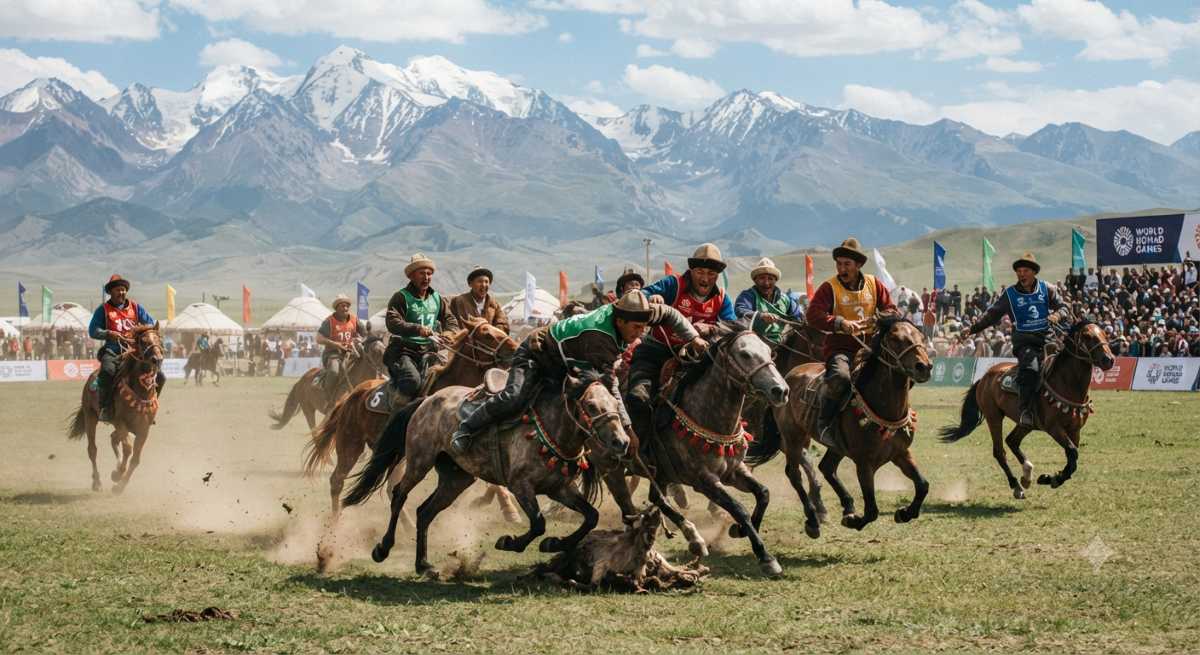
Image generated with Ai
The World Nomad Games are widely celebrated as a unique international biennial event dedicated to preserving, reviving, and promoting the rich cultural heritage and traditional sports of nomadic civilizations. Originating as a grand initiative to safeguard ancient traditions that risk being forgotten in contemporary society, the festival serves as a living museum of human history.
Instead of conventional modern athletics, the competition highlights time-honored disciplines deeply rooted in the historical lifestyle of Central Asian inhabitants, including horseback wrestling, traditional archery, falconry, and strategic board games. By gathering delegations, athletes, and cultural practitioners from dozens of countries, the festival fosters intercultural dialogue and mutual respect through shared ancestral roots.
Advertisement
Advertisement
Impact on Travellers
For visitors and global explorers, attending this extraordinary gathering offers an immersive, unparalleled encounter with living history rather than a standard tourist excursion. Travellers are presented with the rare opportunity to witness authentic nomadic life firsthand by walking among traditional yurt camps, tasting regional culinary delicacies, and engaging with folk artisans.
Spectators can observe high-energy equestrian competitions like kok-boru alongside intricate displays of craftsmanship and epic poetry. However, because the events often take place in high-altitude mountain regions and remote valleys, careful preparation is required regarding changing weather conditions, local transportation logistics, and limited accommodation capacities.
Advertisement
Advertisement
Industry Insights
From a tourism and cultural economics perspective, the hosting of these international games triggers significant development across local infrastructure, hospitality sectors, and regional promotion. Tourism boards and specialized tour operators increasingly design integrated itineraries that combine the main sporting events with broader regional exploration, thereby dispersing economic benefits beyond urban centers.
Advertisement
Advertisement
Industry analysts note that the festival elevates the global visibility of host destinations, transforming them into prominent hubs for cultural tourism. Furthermore, academic and scientific forums are frequently held alongside the athletic competitions to discuss environmental sustainability in high-mountain ecosystems and the formal preservation of intangible cultural heritage.
Practical Information
Attendees are strongly advised to secure accommodations, transport passes, and event schedules well in advance due to high global demand and remote venues. Essential preparations include packing adaptable layers of clothing suitable for strong alpine sun as well as sudden temperature drops, sturdy footwear for uneven terrain, and local currency for small vendors and rustic facilities.
Transportation to peripheral gorge locations typically relies on shared minibuses or organized shuttles, which require early morning departures to manage heavy traffic and limited seating. Visitors should also remain flexible, as event timetables are occasionally adjusted to accommodate local traditions and opening ceremonies.
Comparison with Previous Policies or Developments
In comparison to its early iterations—which primarily focused on regional participation and establishing foundational formats within initial host locations—the event has evolved into a massive, globally mobile phenomenon. While the earliest editions were centralized in specific domestic venues, subsequent rotations have seen the games successfully cross international borders to be hosted by different nations before returning to their geographic origins.
This rotation policy has expanded international media coverage, diversified the range of participating nations, and enhanced the formal standardization of traditional sports rules to accommodate a broader, multicultural audience on the world stage.
Advertisement
