
Japan Hotel Investment Summit is Set to Tackle Costs and Seek New Opportunities for Better Stays in Tokyo

Published
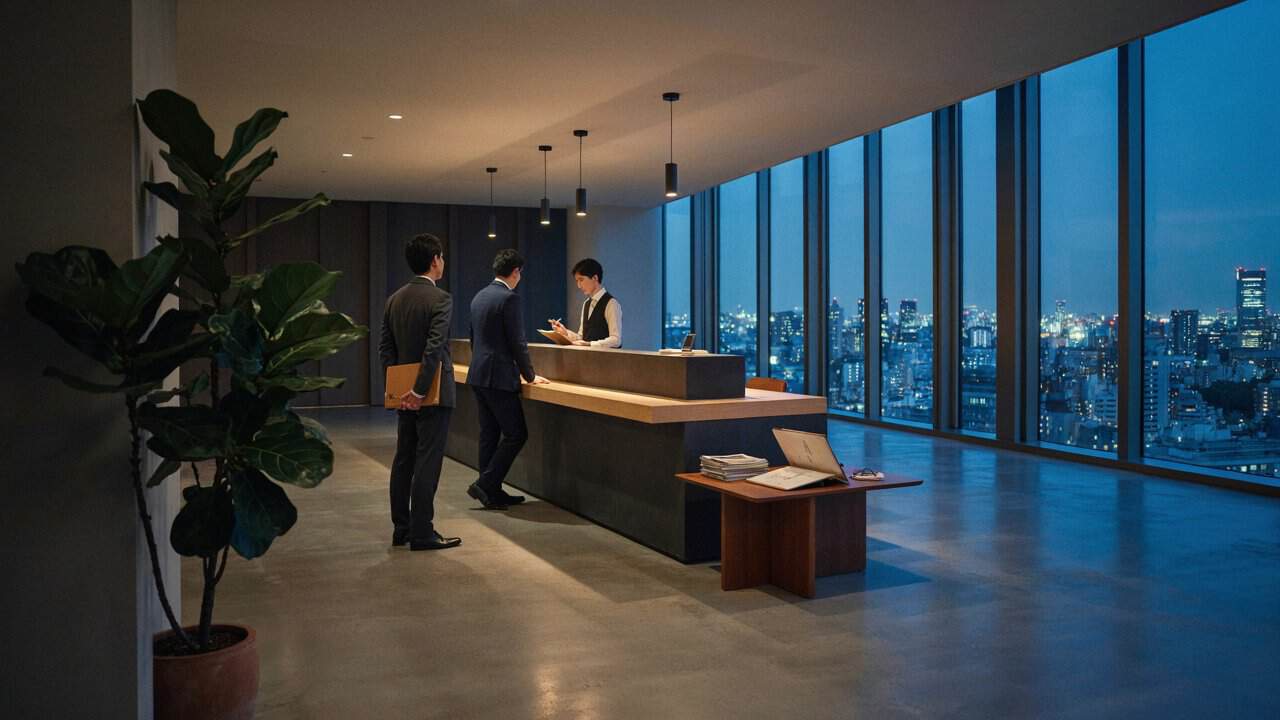
Image generated with Ai
Tokyo’s Japan Hotel Investment Summit is scheduled for 6 October 2026, opening a two-day hospitality conference examining accommodation finance, design and revenue. The official programme brings together investors, operators and advisers to assess Japan’s hotel market. Government figures provide a mixed backdrop: international arrivals have declined, while borrowing conditions have changed. For accommodation businesses and business travellers, the immediate development is a scheduled industry meeting. The announcement does not establish new room prices, hotel openings or changes to entry requirements.
What the Evidence Establishes
The central story concerns accommodation planning and commercial decisions. The wider conference advertises more than 90 speakers, 200 companies and 40 sessions, with investment and design programmes on 6 October and revenue discussions on 7 October. These are advertised programme figures, not independently counted attendance totals. The table below assigns editorial percentages according to the importance of each verified subject. They total 100% and describe this article’s focus; they are not official economic statistics or estimates of the event’s impact.
| News Component | Share of Story | Officially Verified Finding | Relevance to Travellers | Official Source |
|---|---|---|---|---|
| Accommodation development | 40% | Published programme covers investment, design and revenue | Discussion concerns future accommodation decisions | Official event programme. |
| Financing conditions | 25% | Overnight policy-rate target around 1.25% from 24 September | Background for development funding | Central-bank decision. |
| Tourism demand | 25% | August arrivals down 9.6% year on year | Shows uneven demand conditions | National tourism statistics. |
| Regional tourism policy | 10% | National tourism plan covers 2026–2030 | Sets direction for regional development | Government tourism plan. |
The Japan Hotel Investment Summit therefore belongs primarily to hospitality and tourism development coverage. Its significance lies in the decisions under discussion, rather than an immediate change to holiday arrangements. The programme confirms an industry forum; official statistics establish its wider economic context. Neither establishes signed deals or completed projects. Keeping those distinctions clear prevents an event announcement from becoming an unsupported claim about nationwide growth, cheaper stays or improved visitor facilities.
The Decisions Leading Up to October
The policy background began before the conference. On 27 March 2026, a national tourism plan covering fiscal years 2026–2030 received Cabinet approval. It retained targets of 60 million international visitors and ¥15 trillion in annual international visitor spending by 2030. The plan also sets a goal of 40 million repeat visitors, representing two-thirds of the overall arrivals target. Regional international guest-nights are targeted at 130 million, with a one-to-one balance against the three major metropolitan areas. On 16 September, preliminary August arrival figures were published. A monetary decision followed on 18 September, with the new rate target taking effect on 24 September. Accommodation estimates published on 30 September then supplied a separate measure of overnight demand.
Advertisement
Advertisement
On 1 October, selected applicants were announced under a programme supporting abandoned-building removal and regeneration in regional hot-spring destinations and similar areas. Applications remained open on a rolling basis, subject to funding availability. These developments form a documented sequence of policy, financial and statistical updates before the Tokyo gathering. They arose through separate processes. The available evidence does not establish that the conference caused any of them, or that programme support has produced completed hotel improvements.
Understanding the Context Behind the Development
Hotel Investment now takes place against an overnight policy-rate target of around 1.25%. This is a benchmark for short-term money-market conditions, rather than the rate charged on every property loan. The official economic assessment also identifies rising construction costs and tight labour conditions. However, it describes financial conditions as supportive and lenders as proactive. The balanced reading is that accommodation projects face cost pressures within a functioning financing market. Actual borrowing terms depend on individual lending arrangements.
Advertisement
Advertisement
The Japan Hotel Investment Summit sits within this environment, but the figures do not establish a single cause for the event. Its published agenda includes urban land, luxury supply, resorts, branded residences and property-sale strategies. These themes connect financing choices with the accommodation that businesses seek to develop or operate. As analysis, their relevance is straightforward: projects require both viable funding and sufficient demand. Discussions can examine that relationship, but they cannot guarantee construction, operating returns or particular benefits for guests. The wider agenda also includes workforce productivity, guest experience and technology. Their inclusion shows that the meeting addresses operating performance alongside property development. These remain subjects for discussion, with implementation dependent on subsequent business decisions across Japan’s accommodation sector.
Visitor Figures Show Why Local Evidence Matters
Japan recorded 3,098,900 international arrivals in August 2026, down 9.6% against August 2025. January–August arrivals reached 27,626,300, down 2.7% against the equivalent period. Both figures are preliminary. August arrivals from South Korea increased 28.7%, while those from China fell 59%, showing how differently individual markets performed. These are arrivals, not accommodation sales. Separately, August’s first accommodation estimates recorded 62.68 million guest-nights, down 6.7% year on year, with national room occupancy at 64.4%.
Advertisement
Advertisement
Domestic guests accounted for 50.04 million guest-nights and foreign guests for 12.64 million. Calculated from those rounded totals, their shares were approximately 79.8% and 20.2%, respectively. One guest-night means one person staying one night. Hotel Investment assessments therefore need domestic demand alongside international trends. The accommodation survey also changed its grouping method in January 2026, from employee numbers to room numbers. Official guidance warns that annual comparisons may reflect that change. National averages consequently require careful interpretation before applying them to individual properties.
Check Confirmed Arrangements and Watch the Next Updates
Business delegates should follow the published programme and their confirmed registration arrangements. Leisure travellers have no event-related instruction to change bookings within the material reviewed. Existing immigration requirements remain separate from attendance or accommodation investment. They depend on nationality, residence and travel purpose. The practical priority is to verify arrangements that directly affect the journey, rather than assume that industry discussions have already changed room availability or services. For affected visitors, the relevant checks are:
- Confirm the conference date, registration status and current programme.
- Review accommodation and ground-transport arrangements against confirmed bookings.
- Check applicable passport and visa requirements through official guidance.
- Follow property notices if a booked hotel is undergoing refurbishment.
The published conference schedule continues with revenue discussions on 7 October. Revised August accommodation estimates are scheduled for 30 October and may alter the initial figures. Regional regeneration applications also remain subject to the programme’s budget limit. These are identifiable next steps, rather than predictions of investment success. Hotel Investment outcomes will require separate evidence, including project announcements, financing decisions and confirmed opening dates. Travellers can continue planning around existing reservations while monitoring information relevant to their destination.
The Outlook Depends on Evidence Beyond the Conference
The Japan Hotel Investment Summit brings accommodation strategy into focus while official figures show changing financial conditions and uneven visitor demand. Its confirmed programme concerns industry discussion, while wider government measures address regional tourism and regeneration. For travellers, the announcement itself establishes no new hotel opening, room charge or entry rule. Future benefits depend on separately documented projects and their delivery. Businesses should distinguish national trends from local performance and recognise the limits of preliminary statistics. The next scheduled data revision will sharpen the picture. Until then, confirmed bookings, published requirements and official updates remain the basis for travel decisions.
Advertisement
