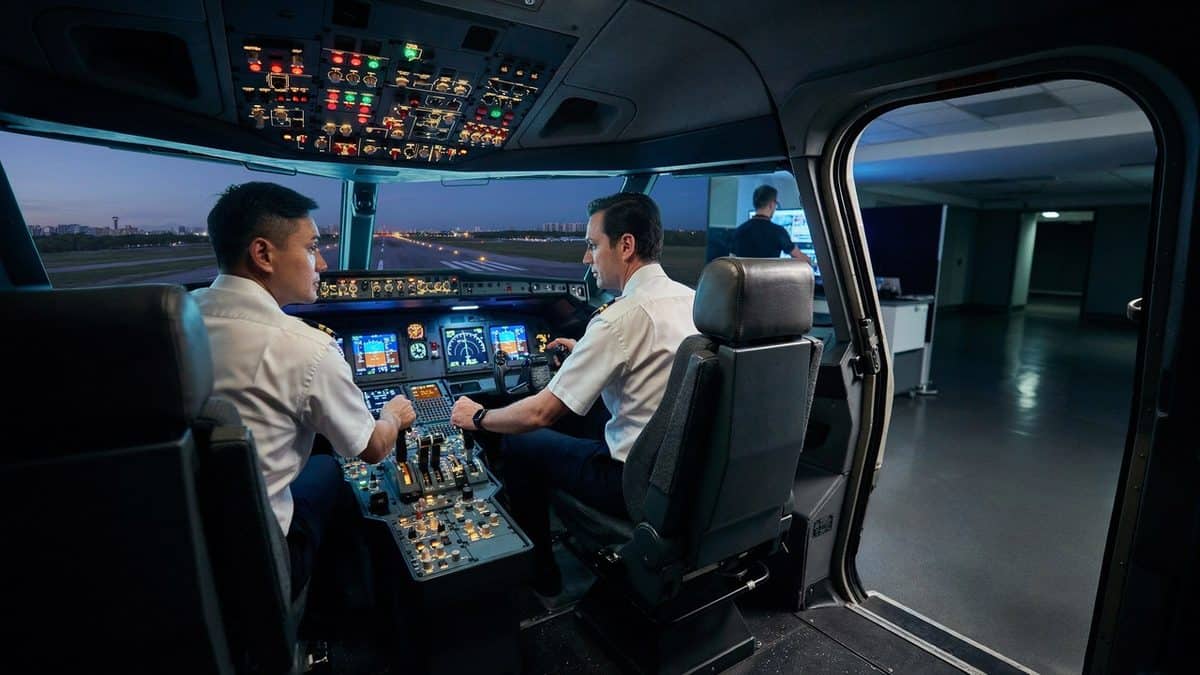
Image generated with Ai
Singapore is strengthening its position as one of Asia-Pacific’s leading aviation hubs as Singapore Airlines expands its pilot training capabilities with advanced simulator technology. The selection of the ALSIM Airliner simulator by the Singapore Airlines Training Centre highlights a wider industry shift, where airlines are investing heavily in aviation education, digital training tools and workforce development to support future air travel growth.
The move comes as Asia-Pacific aviation enters a new expansion phase, with airlines increasing fleets, reopening international routes and preparing for rising passenger demand. For Singapore, aviation training is becoming a strategic priority alongside airport infrastructure and airline connectivity.
Advertisement
The Singapore Airlines Training Centre plays a critical role in developing pilots for one of Asia’s most internationally connected airlines. The introduction of the ALSIM Airliner simulator adds a flexible training platform designed to support multi-crew pilot development and advanced flight preparation.
The simulator is capable of representing multiple commercial aircraft environments, allowing pilots to train in realistic cockpit conditions without requiring aircraft availability. This helps airlines reduce training costs, improve efficiency and maintain high safety standards.
Advertisement
Advertisement
Singapore Airlines operates a large global network connecting Singapore with destinations across Asia, Europe, North America, Australia and beyond. As the airline continues to strengthen its network, maintaining a highly trained pilot workforce becomes essential.
Asia-Pacific is expected to remain one of the fastest-growing aviation markets globally. Rising middle-class populations, increasing tourism demand and stronger regional connectivity are driving airline expansion.
According to the International Air Transport Association (IATA), Asia-Pacific has become one of the strongest contributors to global passenger recovery and future aviation growth. The region is expected to account for a significant share of new passenger demand over the coming decades.
This growth is creating a major challenge: airlines need more qualified pilots, instructors and aviation professionals.
Advertisement
Advertisement
The global aviation industry has faced a growing pilot supply challenge due to:
For countries such as Singapore, developing aviation talent has become as important as building airports and expanding routes.
Singapore’s aviation training strategy places it in competition with other global aviation centres that are investing in pilot education.Country Aviation Training Development Key Aviation Strength Singapore Singapore Airlines Training Centre and advanced simulator investment Asia-Pacific aviation gateway United Arab Emirates Emirates Flight Training Academy Global pilot development hub Qatar Qatar Airways training infrastructure International aviation connectivity India Rapid airline expansion and growing pilot demand One of the world’s fastest-growing aviation markets Japan Strong airline-based training systems Advanced aviation technology
Singapore’s advantage comes from its combination of airline expertise, world-class airport infrastructure and strategic location between major Asian markets.
Singapore’s aviation ecosystem is closely connected with Singapore Changi Airport, one of the world’s busiest international aviation hubs.
The airport handled millions of passengers annually before the pandemic and has continued its recovery as global travel demand returns.
Changi Airport serves as a major gateway between Southeast Asia and international markets, connecting travellers from China, India, Europe, Australia and North America.
A stronger pilot training system supports this wider aviation network by helping airlines maintain reliable operations and expand future connectivity.
Modern aviation training is moving away from traditional aircraft-only instruction towards advanced simulator-based learning.
High-quality flight simulators allow pilots to experience:
This technology improves safety while allowing airlines to train more pilots efficiently.
The ALSIM Airliner simulator selected by Singapore Airlines represents this wider transformation in aviation education.
As aircraft fleets become more advanced, simulator technology will become increasingly important in preparing pilots for next-generation aircraft operations.
The biggest aviation growth opportunities in Asia-Pacific are expected to come from emerging travel markets.
India is experiencing rapid aviation expansion, with airlines adding aircraft and launching new domestic and international routes. The country’s growing aviation market is creating significant demand for pilots and training infrastructure.
China remains one of the world’s largest aviation markets, with airlines requiring a continuous supply of trained aviation professionals.
Countries including Indonesia, Vietnam, Thailand and Malaysia are expanding tourism connectivity, increasing demand for aviation services.
Singapore’s location gives it a strategic advantage as a regional training and aviation support centre.
Aviation training investment directly supports international tourism growth.
More qualified pilots help airlines:
For Singapore, stronger aviation capability supports its ambition to remain a global tourism, business and transit hub.
The country welcomed millions of international visitors annually before COVID-19 and has continued rebuilding its tourism sector through stronger air connectivity and destination development.
Singapore’s investment in advanced pilot training reflects a larger transformation happening across the aviation industry. Airlines are no longer focusing only on aircraft purchases and airport expansion. They are also investing in the people and technology required to operate future aviation networks.
As Asia-Pacific passenger demand continues to rise, countries with strong aviation training ecosystems will gain a competitive advantage.
Singapore’s latest simulator investment shows how the country is preparing for the next generation of aviation growth, where technology, skilled pilots and global connectivity will define the future of travel.
Advertisement
Tags: Asia Pacific Aviation, aviation technology, flight simulator, pilot training, Singapore Airlines
Advertisement
Advertisement













Saturday, September 5, 2026

Saturday, September 5, 2026

Saturday, September 5, 2026

Saturday, September 5, 2026

Saturday, September 5, 2026

Saturday, September 5, 2026

Saturday, September 5, 2026