
Travel Crisis Deepens Throughout China as Extreme Weather Causes 4,133 Delayed and 133 Cancelled Flights

Updated
Published
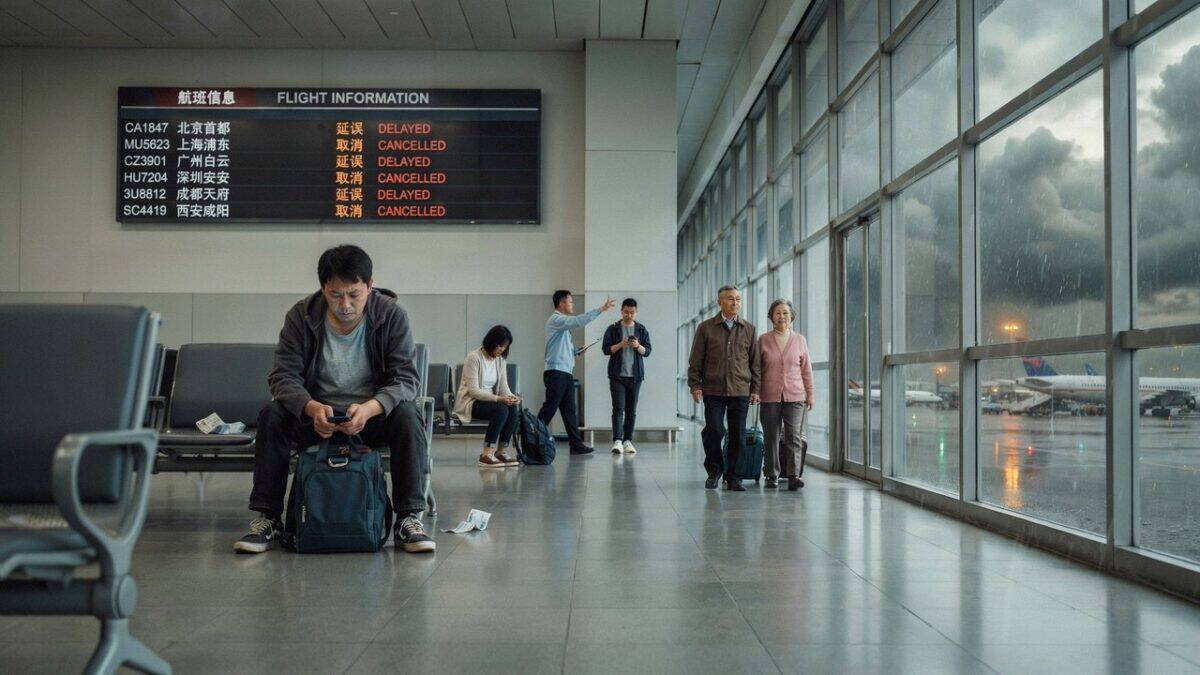
Travel operations across China faced a major setback as extreme weather conditions created a growing travel crisis throughout the country. Extreme weather linked to Typhoon Noul, heavy rainfall and flooding caused widespread aviation disruption, resulting in 4,133 delayed and 133 cancelled flights across major airports. The disruption deepened as powerful storms affected several regions, forcing airlines and airports to reduce operations to protect passengers and aircraft safety. Therefore, major aviation hubs in cities including Chengdu, Beijing, Guangzhou, Shanghai and Kunming experienced severe schedule disruptions. Heavy rain, flash flood warnings and strong winds affected airport capacity, while difficult ground conditions added further challenges for travellers. The ongoing weather emergency highlighted how quickly extreme weather can impact China’s air travel network, leaving thousands of passengers facing delays, cancellations and changing travel plans.
The disruption came as parts of China faced heavy rainfall, flooding risks and dangerous weather conditions linked to Typhoon Noul. Authorities issued severe weather warnings in several provinces, while rescue operations continued in areas impacted by flash floods and landslides.
How Did Typhoon Noul and Extreme Weather Affect China’s Aviation Network?
The primary reason behind the aviation disruption was the impact of Typhoon Noul and widespread extreme weather conditions across southern and central China. Strong winds, heavy rainfall and flooding created challenging operating conditions for airports and airlines.
The storm affected several regions, including Guangdong, Hunan, Jiangxi, Sichuan, Gansu and Xinjiang, where authorities issued flash flood warnings. Poor weather conditions reduced operational efficiency at airports, affecting aircraft departures, arrivals and ground handling activities.
Advertisement
Advertisement
Heavy rainfall also created additional challenges for passengers travelling to and from airports. Flooding, road disruptions and difficult weather conditions contributed to delays beyond airport operations, creating a wider impact on regional connectivity.
The disruption also followed reports of rescue operations in flood-affected areas, including tourist locations where visitors were stranded due to mudslides and dangerous conditions. These wider impacts increased pressure on transport networks as authorities worked to manage safety concerns.
Advertisement
Advertisement
Which Airports and Cities Experienced the Highest Flight Disruptions in China?
Major Chinese aviation hubs recorded significant delays, with some airports experiencing hundreds of affected flights.
Chengdu Tianfu International Airport (TFU) recorded the highest number of delays among the listed airports, with 449 delayed flights and 12 cancellations. The airport became one of the most affected hubs as weather conditions disrupted operations in southwestern China.
Guangzhou Baiyun International Airport (CAN) also faced major challenges, recording 428 delayed flights and four cancellations. Guangzhou, located in Guangdong province, was among the regions affected by Typhoon Noul and heavy rainfall.
Kunming Changshui International Airport (KMG) reported 403 delayed flights and six cancellations, while Shanghai Pudong International Airport (PVG) experienced 357 delays and six cancellations, reflecting the impact on two major passenger gateways.
Other airports with notable disruptions included:
| Airport | City | Cancelled Flights | Delayed Flights |
|---|---|---|---|
| Chengdu Tianfu International Airport (TFU) | Chengdu | 12 | 449 |
| Beijing Capital International Airport (PEK) | Beijing | 11 | 192 |
| Haikou Meilan International Airport (HAK) | Haikou | 9 | 160 |
| Beijing Daxing International Airport (PKX) | Beijing | 7 | 223 |
| Wuhan Tianhe International Airport (WUH) | Wuhan | 7 | 165 |
| Tianjin Binhai International Airport (TSN) | Tianjin | 7 | 75 |
| Chongqing Jiangbei International Airport (CKG) | Chongqing | 7 | 217 |
| Ningbo Lishe International Airport (NGB) | Ningbo | 7 | 85 |
| Changsha Huanghua International Airport (CSX) | Changsha | 6 | 214 |
| Xiamen Gaoqi International Airport (XMN) | Xiamen | 5 | 240 |
| Chengdu Shuangliu International Airport (CTU) | Chengdu | 4 | 213 |
Additional airports affected included Zhuhai, Dalian, Shijiazhuang, Kaohsiung, Aksu, Hohhot, Nanchang, Hefei, Yangzhou Taizhou and Kashgar.
Advertisement
Advertisement
As of 27 July 2026, (4:17 pm ET USA, 28 July 2026, 4:19 am, GMT+8) China faces 4,133 delays and 133 cancellations.
Which Airlines Were Most Affected by China Flight Disruptions?
Several major Chinese airlines experienced operational pressure as airports reduced capacity and weather conditions affected schedules.
China Eastern Airlines recorded the highest number of delayed flights among the listed carriers, with 818 delays and 10 cancellations. The airline’s extensive domestic network meant that disruptions across multiple airports affected its operations.
China Southern Airlines experienced 512 delays and eight cancellations, while Air China reported 307 delayed flights and 30 cancellations, making it the airline with the highest number of cancellations in the provided data.
Other affected carriers included:
| Airline | Cancelled Flights | Delayed Flights |
|---|---|---|
| Air China | 30 | 307 |
| China Express Airlines | 17 | 102 |
| Hainan Airlines | 13 | 164 |
| China Eastern Airlines | 10 | 818 |
| China Southern Airlines | 8 | 512 |
| Tianjin Airlines | 7 | 106 |
| Spring Airlines | 3 | 138 |
| XiamenAir | 2 | 294 |
| Juneyao Airlines | 2 | 107 |
| Shenzhen Airlines | 1 | 322 |
| Lucky Air | 1 | 112 |
| Jiangxi Airlines | 1 | 29 |
| Urumqi Air | 1 | 20 |
The figures show that both full-service carriers and regional airlines faced operational challenges as weather disruptions affected aircraft rotations, airport capacity and passenger movement.
Advertisement
Advertisement
What Should Passengers Do After China Flight Disruptions?
Passengers affected by delays and cancellations should closely monitor updates from airlines and airports before travelling. Weather-related disruptions can change quickly, and schedules may be adjusted as conditions improve.
Travellers should:
- Check flight status through airline websites, mobile applications or airport information systems before leaving for the airport.
- Allow additional travel time because road conditions and airport access may also be affected by heavy rainfall.
- Contact airlines directly regarding rebooking options if flights are cancelled.
- Keep essential documents, medication and personal items in carry-on baggage in case of extended waiting periods.
- Follow official airport announcements and avoid travelling to airports during severe weather warnings unless necessary.
Airlines and airport authorities are expected to gradually restore normal operations as weather conditions improve. However, passengers should remain prepared for possible further delays while aviation networks recover from the impact of Typhoon Noul and extreme weather conditions.
China’s latest aviation disruption highlights how increasingly severe weather events can create widespread challenges for air travel. With thousands of delayed flights across major cities, passengers and airlines continue to face the task of managing the effects of extreme weather on one of the world’s busiest aviation networks.
Data Verification Notice
The Data is extensively curated by me with figures derived from Flightaware dated 27 July 2026, (4:17 pm ET USA, 28 July 2026, 4:19 am, GMT+8)
Primary Source: Real-time data aggregated via FlightAware.
Verification Protocol: Statistics are cross-checked by our human editorial desk. Timestamped logs and feed snapshots are securely archived internally to maintain historical accuracy.
Note: Real-time tracking figures represent active airspace data and may experience minor variances from local airport terminal gates.
Travelers are advised to check respective airline and airports for more latest information and updates
Advertisement
