
South Korea’s Regional, Big Tourism Boom Is Pulling Travellers Beyond Seoul

Published
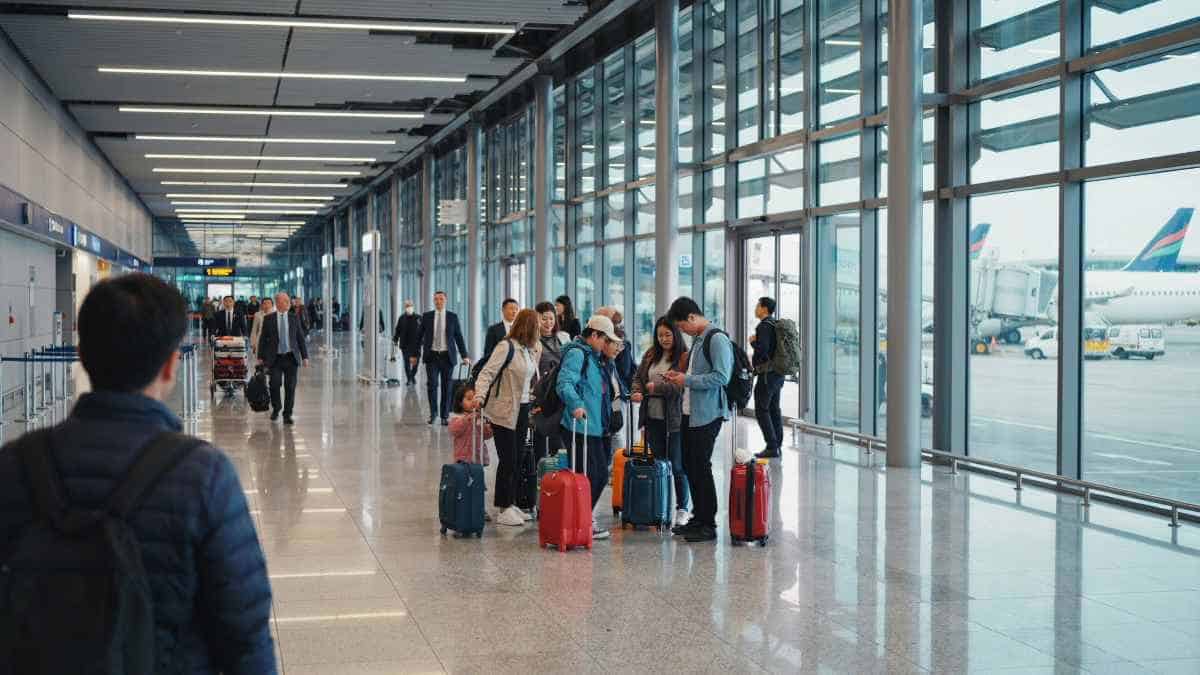
Image generated with Ai
South Korea, including Busan, Jeju, Daegu, Cheongju, and Sokcho, has been receiving a much larger share of international tourists in 2026, and the figures are hard to overlook. The number of foreign tourists who used five regional airports exceeded 1.57 million people during January – May, increasing by about 42% year on year, which was much higher than at airports that serve the Seoul metropolitan area. Cruise tourism has also been developing in Korean ports.
Regional Airports Are Having Their Moment
The surge is being led by Gimhae, Jeju, Daegu, Cheongju and Yangyang airports, where international arrivals reached 1.57 million in the first five months of 2026. That represented growth of approximately 42% from the previous year and exceeded the corresponding 2019 figure of 1.11 million.
Advertisement
Advertisement
The growth rate was also substantially higher than the 17% increase recorded at metropolitan-area airports, which handled 6.15 million foreign arrivals during the same period.
And there is the travel-planning advantage: visitors flying directly into regional airports can begin their holidays closer to the destination they actually want to explore, rather than automatically starting in Seoul.
Advertisement
Advertisement
Gimhae Opens The Door To Busan
Gimhae International Airport is central to the regional aviation expansion and provides direct access to Busan, South Korea’s major port city.
Advertisement
Advertisement
New and resumed international services in 2026 have expanded connections from Gimhae to destinations including Miyakojima, Shizuoka, Takamatsu, Taichung, Phu Quoc and Almaty. During the summer operating period, regional airports were scheduled to handle 2,874 international flights per week across 98 routes and 13 regions.
For tourists, arriving at Gimhae places Busan’s beaches, markets, temples, waterfront districts and culinary attractions within reach immediately.
Busan’s own tourism figures underline the momentum. By May 2026, the city had recorded 1.94 million foreign visitors cumulatively, an increase of 40% year on year. Gimhae Airport accounted for 806,108 of those arrivals.
Advertisement
Advertisement
Jeju Keeps Its International Appeal
Jeju is another major gateway in the regional tourism network. The island combines direct international access with volcanic landscapes, coastal scenery, hiking routes, beaches and food experiences.
Cruise tourism is adding another arrival channel. Jeju’s tourism data showed cumulative cruise visitors reaching 431,982 by 12 August 2026, up 11.2% year on year.
Advertisement
Advertisement
That gives travellers arriving by air or sea different ways to build a Jeju itinerary, while keeping tourism activity outside the Seoul metropolitan area.
Cheongju And Daegu Expand The Map
Cheongju and Daegu are also gaining from expanded international connectivity.
Cheongju International Airport has strengthened links with major Asian destinations, including a new Shanghai route in 2026. The expansion is intended to support travel itineraries centred on central Korean regions rather than requiring visitors to transit through Incheon or Gimpo.
Daegu is similarly included among the regional airports recording strong foreign-arrival growth. Together, these gateways give international visitors more entry points for exploring Korea’s inland cities and surrounding provinces.
Cruise Ships Are Bringing A Different Visitor Flow
The maritime side of the tourism story is moving quickly too. Foreign passengers and crew arriving by cruise ship in South Korea surpassed 200,000 in May alone, reaching 206,542, up 12.2% from a year earlier.
Advertisement
Advertisement
Busan is preparing for particularly strong cruise activity. The city expects 447 cruise calls and approximately 800,000 visitors during 2026, alongside efforts to expand overnight and homeport operations.
Incheon is also targeting major cruise growth, with 133 cruise calls and around 200,000 passengers scheduled for 2026, more than four times the number of calls recorded the previous year.
Sokcho Turns Cruise Arrivals Into Regional Tourism
Sokcho offers cruise passengers a very different Korean experience. Its international cruise terminal provides access to Seoraksan National Park, Naksansa Temple, local seafood and traditional markets, allowing visitors to combine coastal tourism with mountain and cultural experiences.
The government is also planning local tourism programmes and shuttle services at key cruise destinations including Busan, Incheon and Sokcho, alongside Yeosu, Seosan and Pohang.
The strategy creates a more direct link between port arrivals and regional sightseeing.
Advertisement
Advertisement
Key Stats
- 10.71 million: International visitors to South Korea in H1 2026.
- 1.57 million: Foreign arrivals through regional airports from January to May.
- 42%: Approximate year-on-year increase in regional-airport arrivals.
- 447: Expected cruise calls at Busan in 2026.
- 800,000: Expected cruise visitors to Busan in 2026.
- 133: Cruise calls scheduled for Incheon in 2026.
- 200,000: Expected Incheon cruise passengers.
- 206,542: Foreign cruise passengers and crew disembarking in May 2026.
Timeline and Events
January–May 2026: Regional airports recorded 1.57 million foreign arrivals.
12 January 2026: AIDAdiva made its first 2026 call at Busan Port with around 2,000 passengers.
April 2026: Regional airport connectivity expanded with new routes from Gimhae and Cheongju.
May 2026: Foreign cruise arrivals exceeded 200,000 in a single month.
2026: Busan, Incheon and Sokcho continue expanding cruise tourism infrastructure and visitor programmes.
Advertisement
Advertisement
FAQ
1. Which regional Korean airports are seeing the strongest foreign-arrival growth?
Gimhae, Jeju, Daegu, Cheongju and Yangyang collectively recorded approximately 1.57 million foreign arrivals from January to May 2026.
2. Which Korean destinations are expanding cruise tourism?
Busan, Incheon, Jeju and Sokcho are among the country’s key cruise destinations, alongside Seosan, Yeosu and Pohang.
3. Why does direct regional access matter for tourism?
Direct flights and cruise calls allow visitors to begin trips closer to regional attractions, supporting travel beyond the Seoul metropolitan area.
Dates
January–May 2026: 1.57 million foreign arrivals through regional airports.
12 January 2026: AIDAdiva’s first 2026 Busan call.
Advertisement
Advertisement
May 2026: Foreign cruise arrivals surpassed 200,000.
2026: Busan expects 447 cruise calls, while Incheon has 133 scheduled calls.
Conclusion
The tourism map of Korea is developing at a very fast pace. The increase in flights from outside the country is boosting the inflow of tourists in Busan, Jeju, Daegu, and Cheongju, while cruise development has led to the creation of gateways by the sea to reach Busan, Incheon, and Sokcho. Therefore, an ever-increasing number of points of arrival are making it possible for tourists from all over the world to visit Korea without necessarily visiting Seoul first.
Advertisement
