
Changi Airport Leads Other International Airports in Autonomous AI Tarmac Orchestration For Real-Time Disruption Resilience

Published
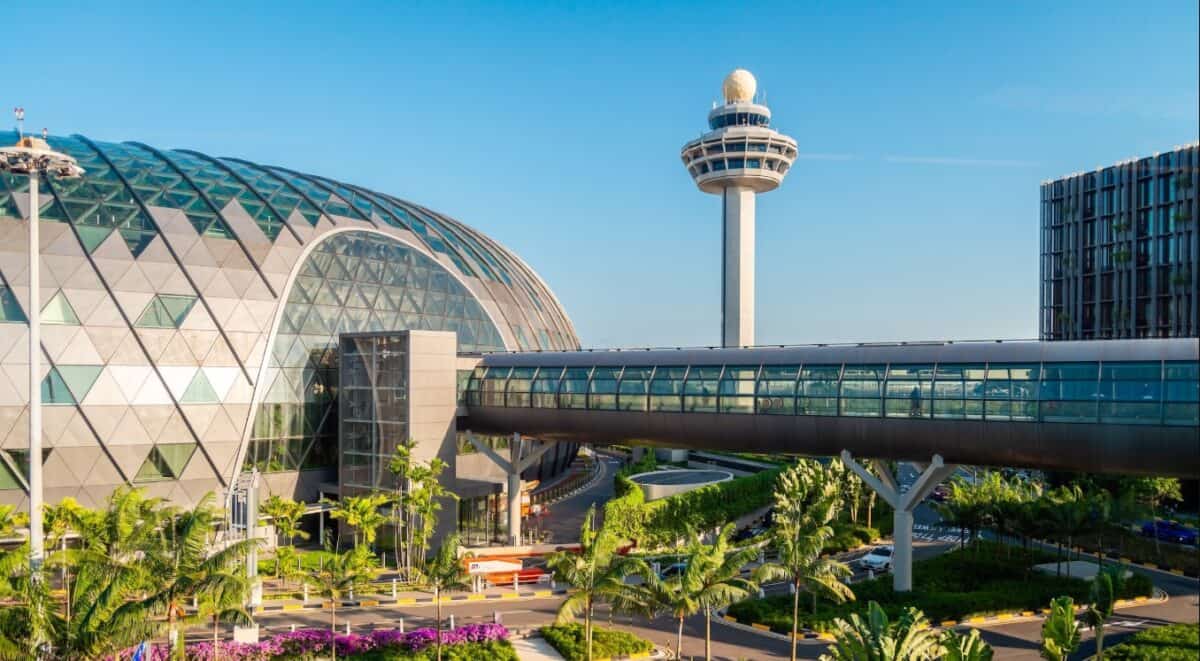
Intelligent automation is inherently changing modern airfield logistics. Changi Airport is leading other international hubs in autonomous AI tarmac orchestration to be able to handle real-time disruption resilience through smart multi-modal agent frameworks. These high-level systems are constantly monitoring intricate ground movements, avoiding terminal bottlenecks, and conducting dynamic resource allocations in severe operational crises, which allows for aviation networks to achieve unprecedented levels of efficiency, safety, and passenger satisfaction.
Advanced digital twins and machine learning models process live operational feeds instantly. Changi Airport leads other international airports in autonomous AI tarmac orchestration for real-time disruption resilience because predictive algorithms eliminate any form of human latency when it comes to unexpected weather events and airspace ground stops. Therefore, ground controllers have absolute situational awareness in complex multi-terminal environments without having traditional scheduling gridlocks.
Generative multi-modal artificial intelligence agents embedded in real-time airport digital twins are transforming mega-hub tarmac coordination through autonomous bottleneck prediction, optimized gate allocations and dynamic resolution of irregular ground operations during severe weather disruptions.
How Do Real-Time Digital Twins Revolutionize Airport Tarmac Management?
Airport digital twins merge operational technology and information technology data streams into a high-fidelity virtual replica that mirrors physical airspace and terminal flows. These virtual environments ingest radar feeds, IoT sensor arrays, and meteorological telemetry to continuously process massive volumes of complex operational data. Generative multi-modal AI agents operate within these simulation frameworks to evaluate live conditions against historical patterns without human latency. Consequently, major aviation hubs can bridge the critical gap between passive data visualization and active, automated system orchestration.
Advertisement
Advertisement
Advanced simulation architectures allow global mega-hubs to stress-test terminal capacity constraints and evaluate scheduling strategies before implementing changes in the physical world. This capability significantly reduces the operational friction traditionally associated with sudden weather fronts and air traffic control ground stops.
“The rapid integration of autonomous artificial intelligence into mega-hub operations marks a definitive turning point for global aviation. By harnessing high-fidelity digital twins and real-time data streams, forward-thinking facilities like Changi are successfully eliminating traditional bottlenecks and minimizing costly turnaround delays. Furthermore, this seamless shift toward machine-driven tarmac orchestration not only safeguards passenger schedules during severe weather disruptions but also establishes a scalable blueprint for future airport management worldwide.”
Advertisement
Advertisement
— Anup Kumar Keshan, Founder and Editor-in-Chief, Travel And Tour World
What Role Do Generative AI Agents Play During Mass Aviation Disruptions?
During severe irregular operations, traditional static scheduling methods collapse under the weight of cascading delays and mismanaged connection windows. Generative AI agents mitigate these operational shocks by executing real-time decisions across critical ground domains like gate allocation and ramp services. These autonomous systems instantly recalculate aircraft connection times, passenger walking distances, and towing requirements to reassign gates effectively. Furthermore, automated tracking of ground service equipment ensures optimized turnaround paths for baggage tractors and fueling trucks.
Advertisement
Advertisement
Predictive modeling minimizes aircraft idle times and reduces overall fuel burn by carefully sequencing pushback procedures and coordinating taxiway routing. Such dynamic orchestration ensures that localized equipment failures do not paralyze an entire multi-terminal aviation ecosystem.
Which Global Mega-Hubs Are Leading the Implementation of Autonomous Tarmac Technologies?
Singapore’s Changi Airport utilizes extensive simulation frameworks and predictive control mechanisms to manage complex terminal expansions and dense ground logistics. Meanwhile, Dubai International implements sophisticated multi-terminal digital twin architectures designed to synchronize massive turnaround schedules for widebody aircraft fleets. Frankfurt Airport integrates real-time operational feeds with automated resource allocation tools to streamline hub connectivity and reduce turnaround variances. Additionally, Dallas/Fort Worth International deploys automated decision-support platforms to optimize multi-concourse taxiway flows and curb arrival queues.
These pioneering facilities demonstrate how advanced digital infrastructure can dramatically improve on-time performance and asset utilization across varied geographical regions. Strategic investments in these technologies establish new benchmarks for international aviation resilience and operational efficiency.
How Will Autonomous Ecosystems Shape the Future of Airport Workforce Teaming?
Moving toward full intelligent autonomy requires a fundamental structural shift in workforce design and supervisory governance protocols. Airports are establishing fully designated autonomous operational zones where software agents coordinate vehicle and aircraft movements directly without manual intervention. Concurrently, human operators transition smoothly from tactical execution roles to high-level supervisory oversight and policy management. This evolving balance ensures robust operational safety while maintaining the agility needed to absorb severe schedule shocks across global transport networks.
Advertisement
Advertisement
Strict exception-handling protocols allow human staff to intervene only when complex anomalies demand intuitive judgment and strategic direction. Ultimately, this collaborative framework redefines the modern airport as an intelligent, self-healing ecosystem capable of sustained autonomous performance.
| Airport Hub | Core Digital Twin & AI Focus | Key Operational Benefit |
| Singapore Changi Airport | Simulation frameworks and predictive control mechanisms for terminal expansion | Manages high-density ground logistics and capacity stress-testing smoothly |
| Dubai International | Multi-terminal digital twin architectures for complex turnaround management | Synchronizes massive widebody aircraft fleets and shared ground resources |
| Frankfurt Airport | Real-time operational data integration and predictive resource allocation tools | Streamlines hub connectivity and minimizes turnaround time variances |
| Dallas/Fort Worth International | Automated decision-support platforms for surface movement and taxiway flows | Optimizes routing to curb arrival queues and reduce gate holding times |
Smart mega-hubs are investing significantly in autonomous systems to ensure that their extensive operations are future-proof against continuously growing global passenger numbers. Changi Airport is one of the global leaders in implementing self-governing AI on tarmac to avoid disruptions in real-time and manage human operations effectively. In this way, smart hubs address the current issues and ensure economic sustainability and competitiveness in the future.
Advertisement
