
How to Experience Canada’s Jasper Dark Sky Festival: Ultimate Stargazing Guide in Canada’s Rockies

Updated
Published
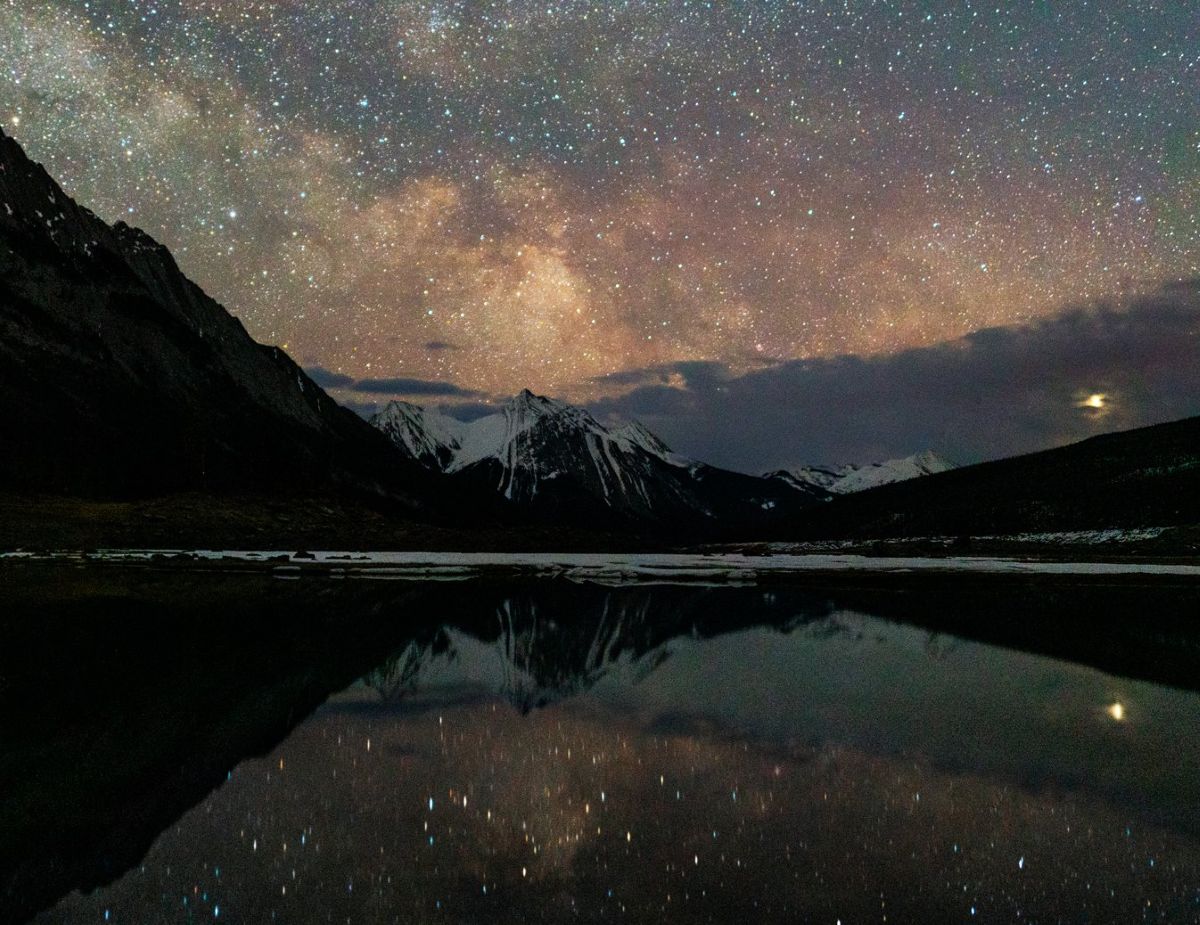
When October arrives in the Canadian Rockies, Jasper does not simply quiet down for the shoulder season. Instead, it leans directly into the shadows. The Jasper Dark Sky Festival has evolved from a niche gathering of telescope hobbyists into one of North America’s most distinctive cultural spectacles—an immersive, interdisciplinary celebration where astronomy converges with contemporary art, Indigenous sovereignty, community resilience, and sustainable mountain tourism.
Cultural Reconnection and Land-Based Storytelling
Long before international certifications declared Jasper a Dark Sky Preserve, these alpine skies served as a living archive for Indigenous nations across Treaty 6 and Treaty 8 territories. The festival marks a profound shift away from passive scenic tourism toward meaningful cultural reconnection.
Advertisement
Advertisement
Fireside gatherings led by First Nations and Métis Knowledge Keepers dismantle standard Western pedagogical astronomy. In place of distant Greek constellations, skywatchers encounter ancestral star maps tied to seasonal caribou migration, harvest cycles, traditional hand games, and creation oral histories. It reframes dark skies not merely as optical scenery to be photographed but as intangible heritage held in stewardship for thousands of years.
Artistic Expression Under Alpine Darkness
The festival’s curatorial vision treats pitch-black night as an acoustic and aesthetic canvas. Rather than confining visitors to indoor auditoriums, programming deliberately pairs classical and contemporary performing arts with raw mountain wilderness:
Advertisement
Advertisement
- Symphony Under the Stars: At the edge of Lac Beauvert, the Edmonton Symphony Orchestra Strings perform in open mountain air. With artificial spotlights extinguished, string reverberations echo off the surrounding peaks under an arch of celestial light, demonstrating how natural darkness enhances auditory intimacy.
- The Collision of Folk and Technology: In Commemoration Park, live roots concerts yield to choreographed fleets of hundreds of synchronized drones. These illuminated aerial formations paint lunar cycles and constellations across the sky, demonstrating how modern light technology can tell stories in harmony with strict conservation goals.
- Cosmic Soundscapes and Visual Arts: Events like Art After Dark and planetary frequency sound baths invite visitors to encounter the universe through ambient vibrations, meditative listening, and plein-air painting sessions that challenge traditional daytime gallery formats.
Economic Transformation and Nocturnal Civic Design
For mountain gateway communities, autumn is historically a vulnerable “shoulder” period between summer hiking rushes and winter ski openings. Jasper’s festival has fundamentally restructured the local visitor economy by pioneering high-value, low-impact astro-tourism.
Rather than relying on resource-heavy infrastructure expansions, the township’s dark-sky tourism relies on subtraction. The town of Jasper operates under rigorous municipal light-mitigation bylaws: downward-shielded street fixtures, capped lumen outputs, and darkened shopfront displays. Local restaurants, boutique lodges, and transit operators adapt their operations to nocturnal rhythms. Visitors arrive not to consume daytime attractions but to support a quiet economy built on low light pollution, prolonged nighttime stays, and educational programming led by institutions like the Jasper Planetarium and visiting astrophysicists.
Advertisement
Advertisement
A Sanctuary for Ecological Integrity
Beyond the stage lights and lectures, the festival serves as an annual public referendum on conservation science. Artificial Light at Night (ALAN) is increasingly recognized as a pervasive driver of biodiversity loss across North America. In a national park spanning over 11,000 square kilometres, natural darkness is as vital an ecological resource as clean glacial water or preserved forest corridors.
The event makes nocturnal conservation visible. It offers visitors a rare direct experience with an unfragmented nocturnal environment—one where grizzly bears, alpine ungulates, and migratory birds navigate by natural circannual rhythms rather than urban light domes. The festival demonstrates that celebration and stewardship are not mutually exclusive, establishing Jasper as a living blueprint for how wilderness tourism can heal nightscapes rather than erode them.
Advertisement
