
Trieste Follows Koper and More as a New Adriatic-Ionian Rail Journey Could Unlock Seven-Country Adventures for Global Travellers!

Published
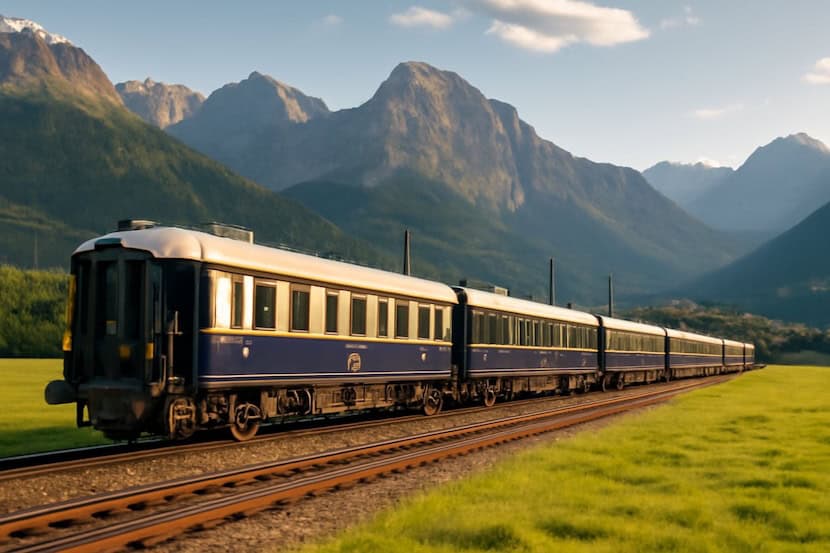
Image generated with Ai
Trieste follows Koper and more destinations as a proposed Adriatic-Ionian rail journey captures attention among global travellers. The new Adriatic-Ionian rail vision could unlock seven-country adventures, connecting remarkable destinations across Southern Europe. Trieste follows Koper as travellers look toward a future journey combining coastal cities, cultural treasures and scenic landscapes. Meanwhile, the seven-country route could create fresh possibilities for exploring Italy, Slovenia, Croatia and the wider Adriatic-Ionian region. As this proposed rail journey develops, global travellers are watching its potential carefully. Travel And Tour World urges readers to read the entire story to discover how Trieste, Koper and more could shape future European adventures.
Adriatic-Ionian Railway Corridor: Detailed Traveller Guide to the Proposed Seven-Country Rail Journey
The proposed Adriatic-Ionian railway corridor could create a new travel geography across Southern Europe, linking Italy, Slovenia, Croatia, Bosnia and Herzegovina, Montenegro, Albania and Greece.
The initiative announced in Zagreb in October 2026 is still at an early development stage. It should therefore be treated as a future transport proposal rather than an existing passenger railway. The currently discussed Croatian alignment includes Trieste, Koper, Rijeka, Zadar, Šibenik, Split and Ploče, followed by connections toward Montenegro, Albania and Greece.
For travellers, the significance is not simply the possibility of another train. A functioning corridor could eventually allow visitors to combine northern Adriatic cities, Croatian islands and heritage sites, the Bay of Kotor, Albanian coastal destinations and Greek cities within one extended itinerary.
Advertisement
Advertisement
The wider Adriatic-Ionian region already has an established policy framework for improving multimodal transport, rail interoperability and sustainable tourism. EUSAIR’s transport programme specifically identifies missing links, bottlenecks and cross-border rail connections as priorities.
What the Proposed Adriatic-Ionian Railway Corridor Could Cover
The seven participating countries are Italy, Slovenia, Croatia, Bosnia and Herzegovina, Montenegro, Albania and Greece. The initiative is intended to improve connections between their transport systems and encourage coordinated infrastructure investment.
Advertisement
Advertisement
A separate EU transport framework is already relevant to much of this geography. The Western Balkans–Eastern Mediterranean European Transport Corridor includes Italy, Slovenia, Croatia, Greece, Albania, Montenegro and Bosnia and Herzegovina, among other countries. It is a multimodal corridor rather than the same thing as the proposed Adriatic-Ionian railway.
Proposed route geography at a glance
| Country | Proposed/identified destination or rail geography | Traveller appeal | Current status |
|---|---|---|---|
| Italy | Trieste and northeastern Adriatic | Historic waterfront, Italian cuisine, museums | Existing railway network; future corridor integration proposed |
| Slovenia | Koper | Adriatic coast, Venetian heritage | Existing railway network; future integration proposed |
| Croatia | Rijeka | Kvarner Gulf, port city, islands | Existing rail; major upgrades proposed |
| Croatia | Zadar | Old town, Roman heritage, Adriatic islands | Existing rail access requires onward connections |
| Croatia | Šibenik | Medieval centre, fortresses, islands | Future corridor connection proposed |
| Croatia | Split | Diocletian’s Palace, Dalmatian coast | Existing rail network |
| Croatia | Ploče | Port, Neretva region, southern Croatia | Strategic proposed corridor point |
| Bosnia and Herzegovina | Wider southern corridor | Mostar, Neretva Valley, Sarajevo | Connections require infrastructure development |
| Montenegro | Bar and wider coast | Adriatic beaches, Old Bar, mountains | Existing railway in Montenegro; corridor integration proposed |
| Albania | Durrës | Adriatic coast, Roman and Byzantine heritage | Future international rail connectivity proposed |
| Greece | Greek Adriatic-Ionian centres | Historic cities, beaches, archaeological attractions | Final passenger alignment not confirmed |
The exact stations, journey times, frequencies and ticketing arrangements cannot yet be stated as confirmed facts. Infrastructure studies and government decisions will be required before travellers can purchase tickets for a continuous Italy-Greece train.
Advertisement
Advertisement
The Scale of Tourism Across the Proposed Corridor
The tourism statistics demonstrate why improved connectivity could matter to travellers and destination planners.
Croatia recorded 20.699 million tourist arrivals and 94.821 million overnight stays in commercial accommodation in 2025. Foreign visitors generated 17.614 million arrivals and 85.612 million nights, representing 90.3% of total nights.
Slovenia recorded 6.994 million tourist arrivals and 17.843 million overnight stays in 2025. Foreign visitors represented approximately three-quarters of overnight stays.
Montenegro recorded 2.729 million arrivals and 15.367 million overnight stays in 2025. Foreign tourists accounted for 95.8% of overnight stays, while seaside resorts generated 92.6%.
Advertisement
Advertisement
Bosnia and Herzegovina registered 1.963 million tourist arrivals and 4.084 million overnight stays in 2025, according to its national statistical agency.
Italy remained one of Europe’s largest tourism markets. Istat reported 458.4 million accommodation nights in 2024, including more than 250 million generated by non-residents.
Across the EU, tourism accommodation reached about 3.1 billion nights in 2025, with Italy recording 476.9 million nights.
Five-year tourism comparison
| Country | 2021 | 2022 | 2023 | 2024 | 2025 |
|---|---|---|---|---|---|
| Croatia* | ~13.8m | ~18.9m | 19.493m | 20.246m | 20.699m |
| Slovenia | 4.004m | 5.868m | ~6.2m | 6.583m | 6.994m |
| Montenegro | 1.660m | 2.180m | 2.613m | 2.607m | 2.729m |
| Bosnia and Herzegovina** | Pandemic-affected | Pandemic-affected | 1.733m | 1.957m | 1.963m |
| Italy*** | Pandemic-affected | Recovery year | Record-era recovery | 129.3m arrivals | 476.9m accommodation nights |
| Greece*** | Pandemic-affected | Recovery year | Strong recovery | Strong tourism year | Record-level EU tourism nights |
* Croatia figures refer to commercial accommodation arrivals.
** Bosnia and Herzegovina figures are national accommodation statistics.
*** Italy and Greece have different statistical releases and definitions, so their figures should not be directly compared with Croatia’s arrival series. Istat reported 129.3 million arrivals and 458.4 million nights for Italy in 2024, while Eurostat reported 476.9 million tourism nights in 2025.
The comparison shows a broad recovery from the pandemic disruption. Slovenia’s official statistics, for example, show arrivals rising from 4.004 million in 2021 to 5.868 million in 2022 and almost 6.6 million in 2024.
Croatia’s commercial accommodation arrivals rose from 19.493 million in 2023 to 20.246 million in 2024 and 20.699 million in 2025. Foreign visitors accounted for more than 85% of arrivals in 2024 and about 85% in 2025.
Advertisement
Advertisement
1. Trieste, Italy: A Natural Northern Starting Point
Trieste would provide a compelling starting point for a future Adriatic-Ionian rail journey. The northeastern Italian city sits close to Slovenia and offers travellers a distinctive mixture of Central European and Mediterranean influences. Visitors can spend two nights exploring Piazza Unità d’Italia, the waterfront, Miramare Castle and the historic cafés associated with Trieste’s literary culture. The city is also useful for travellers arriving from Venice, Milan or other Italian destinations because Italy already possesses an extensive railway network. Food should be a major part of the stop. Travellers can sample jota, a hearty bean and sauerkraut soup, as well as seafood, local pastries and Triestine coffee. Stay in the city centre if walking access to the waterfront and historic district matters. A three-day plan could begin with the central square and Grand Canal, continue with Miramare on day two, then reserve the final morning for coffee and local markets before continuing east. The proposed corridor does not yet guarantee a continuous passenger service from Trieste, so travellers should currently use existing Italian and Slovenian rail services separately. Trieste’s importance also fits the wider European transport geography. The EU’s Western Balkans–Eastern Mediterranean corridor includes Italy and Slovenia and links Adriatic transport gateways with the Western Balkans and Eastern Mediterranean.
2. Koper, Slovenia: A Compact Adriatic Stop
Koper could become one of the most convenient short stops for travellers seeking a Slovenian coastal experience. The compact old town makes it possible to explore many attractions on foot without spending several days travelling between neighbourhoods. Visitors can see Tito Square, the Praetorian Palace, the Cathedral of the Assumption and the waterfront before continuing toward Piran or other coastal destinations. Seafood should feature strongly on the menu, alongside traditional Slovenian dishes and local wines from the wider Primorska area. A two-night stay works well for a future rail itinerary. The first day can focus on Koper’s historic centre and waterfront. The second can be used for a coastal excursion before returning for an evening meal. Slovenia’s tourism statistics show why coastal connectivity could be relevant. The country recorded 6.994 million arrivals and 17.843 million overnight stays in 2025. Foreign visitors generated 5.471 million arrivals and 13.359 million overnight stays. In 2024, Slovenia recorded 6.583 million arrivals and 16.853 million nights, meaning 2025 surpassed the previous annual record. The proposed corridor would not replace Slovenia’s existing railway system. Instead, its importance would come from creating stronger international interoperability and connections with neighbouring transport networks.
3. Rijeka, Croatia: Gateway to the Northern Adriatic
Rijeka could become one of the most important Croatian stops on the proposed corridor. Its location on the Kvarner Gulf gives travellers access to the northern Adriatic while keeping them connected with inland Croatia and neighbouring Slovenia. Spend at least two nights exploring the city. Korzo provides the main pedestrian spine, while Trsat Castle offers elevated views across the city and harbour. Travellers can also plan day trips toward Opatija or nearby islands, depending on existing transport availability. Seafood, scampi, octopus dishes and regional pasta are suitable choices for visitors wanting to experience Kvarner cuisine. Stay near the central waterfront or railway station if onward travel is the priority. Croatia’s national statistics underline the country’s international tourism importance. Commercial accommodation recorded 20.699 million arrivals and 94.821 million nights in 2025. Foreign visitors accounted for 17.614 million arrivals and 85.612 million nights. Rijeka therefore sits within a country already receiving a very large international visitor flow. The proposed corridor could add another international transport option, particularly if future infrastructure successfully connects Rijeka with Istria, Dalmatia and neighbouring countries. Croatian officials have also highlighted the importance of integrating Istrian railways into the wider national network, including plans involving the Učka railway project.
4. Zadar, Croatia: Historic Streets and Island Connections
Zadar would add a different Croatian experience to the proposed journey. The city is known for its historic centre, Roman remains, medieval churches, waterfront and distinctive modern attractions. Travellers can spend three nights here, using the city as a base for exploring the surrounding northern Dalmatian region. The first day should focus on the old town, Roman Forum, Church of St Donatus and waterfront. The second can be reserved for a nearby island or national-park excursion, subject to seasonal transport. The third can provide time for local markets, museums and a relaxed evening meal. Dalmatian seafood, grilled fish, octopus salad, pašticada and regional wines offer strong culinary choices. Hotels around the historic centre provide convenient access to major attractions, while waterfront accommodation suits visitors prioritising views. Zadar’s role in the proposed railway is particularly significant because the initiative identifies the city among the Croatian coastal destinations that could be connected by the future corridor. Travellers should not currently book an itinerary assuming a direct future train. Existing services and road connections remain necessary. The potential advantage would come later if rail infrastructure links Zadar more effectively with Rijeka, Šibenik, Split and Ploče.
5. Šibenik, Croatia: Fortresses, Heritage and the Dalmatian Coast
Šibenik could become one of the most attractive cultural stops on a future Adriatic-Ionian itinerary. The Croatian city combines a historic old town, stone streets, medieval fortresses and a spectacular cathedral. Travellers should allow at least two nights. Start with the UNESCO-listed Cathedral of St James and the surrounding historic centre. Continue to St Michael’s Fortress for views across the city and islands. Barone Fortress provides another perspective and a more modern visitor experience. Food should focus on Dalmatian ingredients. Grilled fish, local shellfish, olive oil, seasonal vegetables and traditional meat dishes are common choices. Travellers can also explore nearby Krka National Park or the Šibenik archipelago when transport and weather permit. The proposed corridor specifically identifies Šibenik as one of the Croatian destinations intended to gain stronger rail connectivity. That could eventually make the city easier to combine with Zadar and Split without requiring travellers to rely entirely on road transfers. Croatia’s tourism statistics also show strong international demand. In 2025, foreign tourists generated 85.612 million nights nationally, compared with 9.209 million domestic nights. For future rail travellers, Šibenik could therefore function as a heritage-focused stop between northern and southern Dalmatia.
6. Split, Croatia: Roman Heritage at the Heart of Dalmatia
Split would likely become one of the most significant tourist stops on the Croatian portion of the proposed corridor. Its historic centre is dominated by Diocletian’s Palace, while the waterfront provides access to ferries serving several Adriatic islands. A three-night stay allows travellers to combine heritage, food and coastal excursions. Spend the first day walking through the palace complex, Peristyle, cellars and surrounding old streets. Use the second day for an island excursion if ferry schedules permit. Keep the third day for Marjan Hill, local markets and relaxed coastal dining. Dalmatian cuisine makes Split particularly suitable for food-focused travellers. Fresh fish, black risotto, grilled seafood, pašticada and local olive oil can form the core of a culinary itinerary. Choose accommodation within walking distance of the historic centre or near the waterfront depending on priorities. Split already has established rail connections with inland Croatia, but a truly international Adriatic-Ionian service would require additional infrastructure and cross-border coordination. The proposed initiative specifically places Split within the future Croatian alignment. Croatia’s 2025 tourism figures also show how large the potential passenger market could be. The country recorded more than 20.69 million commercial accommodation arrivals during the year.
Advertisement
Advertisement
7. Ploče, Croatia: The Southern Croatian Transport Link
Ploče could be less familiar to international tourists than Split or Dubrovnik, but its transport role could become important if the proposed corridor advances. The port city sits near the Neretva Delta and provides access toward southern Dalmatia and neighbouring Bosnia and Herzegovina. Travellers could use Ploče as a short stop rather than a long city break. A one- or two-night stay would allow visitors to explore the coastal setting and Neretva landscape before continuing south or inland. The nearby Neretva Delta is particularly interesting for travellers seeking a landscape different from Croatia’s dense island tourism zones. Local seafood and Neretva-region produce should be included in the food itinerary. The proposed railway initiative places Ploče alongside Rijeka, Zadar, Šibenik and Split. Croatian representatives have specifically highlighted railway connections involving Ploče and the country’s major Adriatic ports as an important part of the initiative. This could make Ploče a strategic interchange point rather than simply another tourist destination. For future travellers, that distinction matters. A transport hub can allow visitors to reach multiple regions without necessarily staying for several nights. Until infrastructure plans are completed, however, travellers should continue using existing rail, bus, ferry and road connections when planning journeys from Ploče.
8. Mostar and the Neretva Valley, Bosnia and Herzegovina
The southern Bosnia and Herzegovina section could provide one of the most distinctive cultural experiences along the broader travel geography. Mostar is the obvious base, with its historic Old Bridge, Ottoman-era streets, riverside setting and surrounding mountain landscapes. Travellers should plan two or three nights. The first day can focus on the old city and Old Bridge area. The second can include nearby Blagaj and its historic religious and natural attractions. A longer stay can add medieval heritage sites and other Neretva Valley destinations. Bosnian cuisine provides another reason to stop. Ćevapi, burek, dolma, grilled meats, local cheeses and Bosnian coffee are suitable choices for first-time visitors. Accommodation ranges from small historic guesthouses to modern hotels around Mostar’s centre. Bosnia and Herzegovina recorded 1.963 million tourist arrivals and 4.084 million overnight stays in 2025, with foreign tourists accounting for approximately 70% of arrivals. In 2023, the country recorded 1.733 million arrivals and 3.646 million nights, with foreign visitors responsible for 68.3% of overnight stays. The future corridor could make southern Bosnia more accessible within a wider Adriatic journey, but no continuous international passenger route through this area has been confirmed.
9. Bar, Montenegro: Where Rail Meets the Adriatic
Bar would offer a natural southern Adriatic stop before travellers continue toward Albania. The city combines a modern coastal centre with Old Bar, mountain scenery and access to Montenegro’s wider coastline. Spend two nights here if the goal is a relaxed transition between Croatia and Albania. Old Bar should be the main cultural excursion, while the waterfront can provide an easier evening. Travellers interested in scenery can also explore nearby mountain and coastal areas. Seafood, grilled meats, Mediterranean vegetables and Montenegrin cheeses provide straightforward local dining options. Montenegro’s tourism statistics demonstrate the country’s strong international character. In 2025, Montenegro recorded 2.729 million arrivals and 15.367 million overnight stays. Foreign tourists accounted for 95.8% of all nights. Seaside resorts generated 92.6% of overnight stays. The country’s tourism recovery is also clear over the five-year period. Total arrivals reached approximately 1.66 million in 2021, 2.18 million in 2022, 2.613 million in 2023, 2.607 million in 2024 and 2.729 million in 2025. The proposed corridor could therefore connect a country with substantial international coastal tourism demand to neighbouring railway markets.
10. Durrës, Albania: An Adriatic Finale Before Greece
Durrës could become a major southern gateway in a future Adriatic-Ionian journey. The Albanian port city combines beaches, Roman heritage, archaeological attractions and access to Tirana. Travellers could spend two or three nights, using Durrës as a coastal base and Tirana as an inland excursion. The Roman amphitheatre, archaeological museum area and waterfront are logical starting points. Seafood restaurants provide an easy introduction to Albanian coastal cuisine, while visitors can also sample byrek, tavë dishes, grilled meats and locally produced olive oil. Accommodation ranges from beach hotels to city-centre properties. Albania’s national statistical system measures tourism through both border movements and accommodation establishments. INSTAT states that arrivals include entries through air, sea and land border points, while accommodation statistics separately measure resident and non-resident arrivals and nights. This distinction is important because border arrivals should not automatically be treated as hotel tourists. The proposed railway could eventually connect Durrës with Montenegro and further south toward Greece, but the final passenger alignment remains unconfirmed. Albania is already part of the wider Western Balkans–Eastern Mediterranean European Transport Corridor, which provides an established European transport framework around the region.
11. Greece: The Southern Gateway of the Journey
Greece would provide the southern end of the proposed Italy-to-Greece travel concept. The precise Greek stations and final passenger route have not yet been established, so travellers should not treat every Greek destination as a confirmed stop. Nevertheless, the country’s position within the Adriatic-Ionian transport geography makes Greece a natural final stage. Thessaloniki could provide an urban and cultural finish, while western Greek destinations could offer access to Ionian landscapes and archaeological attractions depending on the eventual alignment. A traveller could plan three to five nights in the Greek section. Food should include grilled seafood, Greek salads, regional pies, olives, yoghurt-based dishes and local wines. Accommodation choices could range from city hotels to coastal resorts depending on the final destination. Greece is already one of Europe’s largest tourism markets. Eurostat’s 2025 data placed Greece among the EU countries with the highest tourism-night totals, while 41.6% of Greece’s annual accommodation nights occurred during July and August. That strong seasonality means travellers considering a future rail itinerary should also consider May, June, September or October to avoid the busiest summer period.
Five-Year Tourism Recovery Across Key Adriatic-Ionian Markets
Croatia
| Year | Tourist arrivals | Tourist nights | Key comparison |
|---|---|---|---|
| 2021 | ~13.8m | — | Recovery from pandemic disruption |
| 2022 | ~18.9m | — | Strong return of international travel |
| 2023 | 19.493m | 92.377m | Continued recovery |
| 2024 | 20.246m | 93.684m | Arrivals +3.9% |
| 2025 | 20.699m | 94.821m | Arrivals +2.2% |
Croatia’s 2024 increase was particularly notable because foreign tourists represented 85.8% of total commercial accommodation arrivals. The 2025 figure then reached 20.699 million arrivals.
Advertisement
Advertisement
Slovenia
| Year | Tourist arrivals | Overnight stays |
|---|---|---|
| 2021 | 4.004m | 11.251m |
| 2022 | 5.868m | 15.582m |
| 2023 | ~6.2m | ~16.1m |
| 2024 | 6.583m | 16.853m |
| 2025 | 6.994m | 17.843m |
Slovenia’s official statistics show especially strong international recovery after 2021. Foreign arrivals rose to almost 5 million in 2024 and 5.471 million in 2025.
Montenegro
| Year | Arrivals | Overnight stays |
|---|---|---|
| 2021 | 1.660m | — |
| 2022 | 2.180m | — |
| 2023 | 2.613m | 16.389m |
| 2024 | 2.607m | 15.594m |
| 2025 | 2.729m | 15.367m |
Montenegro’s statistics show a distinctive tourism pattern. The country attracts overwhelmingly international visitors, while the overwhelming majority of nights are generated in seaside resorts.
Bosnia and Herzegovina
| Year | Tourist arrivals | Overnight stays |
|---|---|---|
| 2021 | Pandemic-affected | Pandemic-affected |
| 2022 | Recovery year | Recovery year |
| 2023 | 1.733m | 3.646m |
| 2024 | 1.957m | ~4.04m |
| 2025 | 1.963m | 4.084m |
The official 2025 data show arrivals almost unchanged from 2024, while overnight stays increased by 1%.
What the Rail Corridor Could Mean for Tourism
| Potential travel benefit | Traveller relevance |
|---|---|
| Cross-border rail connectivity | Easier multi-country itineraries |
| Better links to Adriatic ports | More options for combined rail-and-ferry holidays |
| Improved Croatian coastal connections | Easier movement between northern and southern Dalmatia |
| Connections with Western Balkans | Greater access to Montenegro, Bosnia and Albania |
| Links toward Greece | Potential Italy-to-Greece overland journeys |
| Multimodal integration | Rail could work alongside ferries, buses and existing trains |
| Lower dependence on road transfers | Potentially simpler long-distance journeys |
| Longer regional itineraries | More opportunities for multi-city holidays |
| Better access to secondary destinations | Potential distribution of visitors beyond major hubs |
EUSAIR’s transport pillar specifically supports interoperable rail infrastructure, stronger city connections and the removal of transport bottlenecks. Its masterplan considers transport scenarios through 2030 and 2050.
A 21-Day Future Travel Plan
| Day | Proposed destination | Suggested stay | Main experience |
|---|---|---|---|
| 1 | Trieste | 1 night | Waterfront and historic centre |
| 2 | Trieste–Koper | 1 night | Slovenian coast |
| 3 | Koper–Rijeka | 2 nights | Kvarner and Rijeka |
| 5 | Rijeka–Zadar | 2 nights | Old town and islands |
| 7 | Zadar–Šibenik | 2 nights | Heritage and fortresses |
| 9 | Šibenik–Split | 3 nights | Diocletian’s Palace and coast |
| 12 | Split–Ploče | 1 night | Southern Croatian coast |
| 13 | Ploče–Mostar region | 2 nights | Neretva Valley and heritage |
| 15 | Mostar–Bar | 2 nights | Montenegro coast |
| 17 | Bar–Durrës | 2 nights | Albanian Adriatic |
| 19 | Durrës–Greece | 3 nights | Greek cultural and coastal finale |
| 22 | Departure | — | Continue through Greece |
Important: This is a future planning concept, not a current train timetable. It combines destinations associated with the proposed corridor and existing regional travel geography. Actual stations, connections, border procedures, frequencies and journey times will depend on future infrastructure decisions.
The Most Important Infrastructure Numbers
| Indicator | Figure | Significance |
|---|---|---|
| Countries in proposed railway initiative | 7 | Italy, Slovenia, Croatia, Bosnia and Herzegovina, Montenegro, Albania and Greece |
| Wider Adriatic-Ionian road corridor | ~1,500 km | Existing regional infrastructure concept from Trieste toward Kalamata |
| Montenegro section of wider corridor | ~110 km | About 7% of the wider route |
| EU tourism nights, 2025 | ~3.1bn | Scale of European tourism market |
| Italy tourism nights, 2025 | 476.9m | One of Europe’s largest tourism markets |
| Croatia accommodation nights, 2025 | 94.821m | Strong international tourism base |
| Slovenia accommodation nights, 2025 | 17.843m | Record national tourism result |
| Montenegro accommodation nights, 2025 | 15.367m | Predominantly foreign and coastal tourism |
| Bosnia and Herzegovina accommodation nights, 2025 | 4.084m | Growing international tourism market |
The wider Adriatic-Ionian road corridor is estimated in EUSAIR project documentation at approximately 1,500 kilometres from Italy to Greece, although this should not be interpreted as the confirmed length of the proposed railway.
Advertisement
Advertisement
How Tourism Seasonality Could Shape the Journey
Travellers planning a future rail holiday should pay close attention to seasonality. Croatia recorded the strongest concentration of tourism during July and August in 2025, when 54.5% of its annual accommodation nights occurred. Greece also showed pronounced summer concentration, with 41.6% of annual nights recorded during those two months.
| Travel period | Expected character | Suitable for |
|---|---|---|
| April | Mild spring conditions in many coastal areas | Heritage and city breaks |
| May | Warmer weather and fewer peak crowds | Multi-country rail itineraries |
| June | Strong beach season begins | Coastal touring |
| July | Peak summer | Beach-focused travellers |
| August | Peak summer | Islands and seaside holidays |
| September | Warm conditions with easing peak demand | Longer regional trips |
| October | Cultural touring and milder coast | Food and heritage itineraries |
| November–March | Quieter coastal period | City breaks and cultural tourism |
For a future seven-country journey, May, June, September and early October could provide a practical seasonal window because travellers could combine outdoor sightseeing with coastal destinations while avoiding the most concentrated summer period.
Food Guide for the Future Seven-Country Journey
| Country | Foods travellers can seek out | Strong destination pairing |
|---|---|---|
| Italy | Seafood, pasta, jota, espresso, pastries | Trieste |
| Slovenia | Seafood, jota, Kraški prosciutto, local wines | Koper |
| Croatia | Grilled fish, black risotto, pašticada, scampi | Rijeka, Zadar, Split |
| Bosnia and Herzegovina | Ćevapi, burek, dolma, Bosnian coffee | Mostar |
| Montenegro | Seafood, grilled meats, cheese, Mediterranean vegetables | Bar |
| Albania | Seafood, byrek, tavë dishes, olive oil | Durrës |
| Greece | Seafood, moussaka, Greek salad, regional pies | Western Greece or Thessaloniki |
Where Travellers Should Stay
| Destination | Suggested base | Ideal stay |
|---|---|---|
| Trieste | Historic centre | 1–2 nights |
| Koper | Old town or waterfront | 1 night |
| Rijeka | City centre/Korzo | 2 nights |
| Zadar | Historic centre | 2 nights |
| Šibenik | Old town/waterfront | 2 nights |
| Split | Old town/waterfront | 3 nights |
| Ploče | Town or nearby coastal base | 1 night |
| Mostar | Historic centre | 2 nights |
| Bar | Waterfront or Old Bar area | 2 nights |
| Durrës | Waterfront or city centre | 2 nights |
| Greece | Final city/coastal base | 3 nights |
The best strategy would be to stay close to railway stations or central transport hubs when the primary objective is a multi-country journey. Visitors planning longer excursions should instead consider accommodation that provides easy access to ferries, buses and local attractions.
What Travellers Should Watch Before Booking
The proposed corridor is not yet an operational Italy-Greece passenger railway. That distinction is essential.
Travellers should wait for official announcements concerning:
- final railway alignment
- feasibility studies
- environmental approvals
- financing
- construction contracts
- station locations
- international rail interoperability
- border arrangements
- passenger-service operators
- ticketing systems
- journey times
- service frequencies
- opening dates
The current initiative aims to encourage joint investment and strengthen the corridor’s position within European transport planning. A Brussels conference planned for 2027 is expected to provide another stage for discussions about the project.
Advertisement
Advertisement
The wider European transport system already has mechanisms for supporting cross-border infrastructure. The EU’s Western Balkans–Eastern Mediterranean corridor includes all seven countries involved in the proposed Adriatic-Ionian railway initiative.
Why the Proposed Corridor Matters to Global Travellers
The biggest potential change would be the ability to treat the Adriatic and Ionian coasts as one extended travel region rather than a collection of separate holidays.
A traveller could eventually imagine starting with Italian cafés in Trieste, continuing through Slovenia, following Croatia’s Adriatic coastline, exploring Mostar, reaching Montenegro’s mountains and coast, crossing into Albania and finishing among Greece’s archaeological and coastal landscapes.
That journey would combine multiple travel styles within one itinerary.
It would include heritage tourism, beach holidays, food travel, port-city experiences, mountain scenery, island excursions and cultural tourism.
The tourism data already show strong demand across much of this geography. Croatia welcomed more than 20.6 million commercial accommodation arrivals in 2025. Slovenia recorded almost 7 million arrivals. Montenegro recorded 2.73 million. Bosnia and Herzegovina recorded almost 2 million.
Advertisement
Advertisement
The proposed Adriatic-Ionian railway corridor could therefore become more than an infrastructure project if it reaches construction and passenger operation. It could provide a new framework for planning multi-country holidays across Southern Europe.
For now, the smartest traveller approach is to use existing trains, buses, ferries and flights while monitoring official announcements. The future opportunity is significant, but the railway itself still has to move from proposal and planning toward funded infrastructure and confirmed passenger services.
Conclusion
The proposed Adriatic-Ionian rail journey could open an exciting new chapter for global travellers exploring Southern Europe. Trieste, Koper and destinations across Croatia, Bosnia and Herzegovina, Montenegro, Albania and Greece could eventually become easier to combine within one extended holiday. However, the seven-country rail journey remains a developing proposal, and travellers should wait for confirmed routes, services and opening dates. For now, existing trains, buses, ferries and flights remain essential for exploring the region. As planning progresses, Travel And Tour World will continue tracking the Adriatic-Ionian rail journey and its potential to reshape future cross-border travel across this spectacular European region.
Advertisement
