

UK’s Newcastle Airport Completes Critical Firefighter Training on New Metro Trains to Boost Passenger Safety

Published
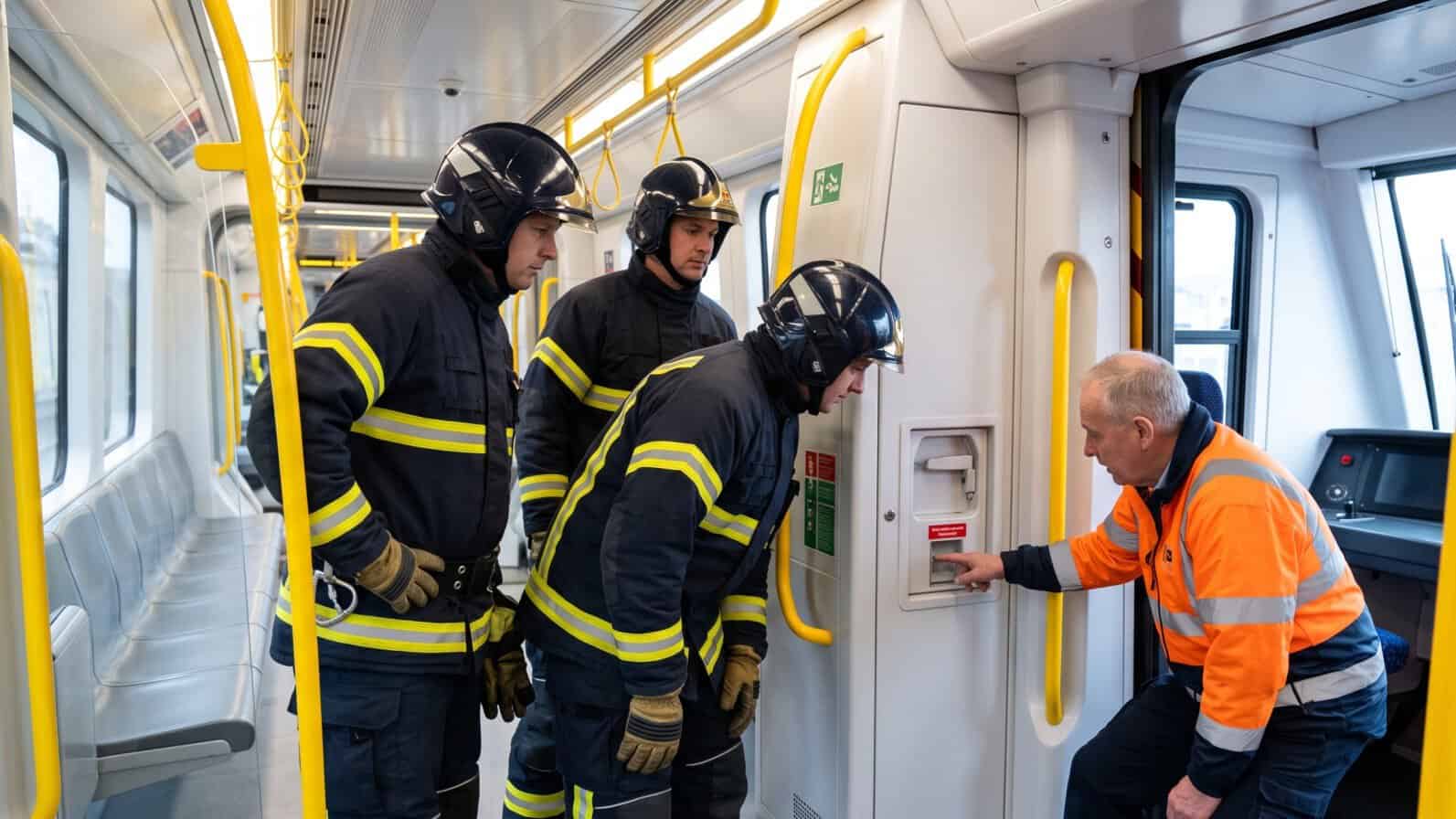
UK passengers using Newcastle Airport and the Tyne and Wear Metro are being supported by an enhanced programme of emergency preparedness following training for the airport’s firefighting teams. All four fire watches have been familiarised with the new metro trains, including their layouts, access points and safety systems.
The sessions were delivered by Metro operator Nexus as part of emergency service training. For travellers, the initiative places passenger safety at the centre of the network’s fleet transition. Newcastle Airport firefighters are now better acquainted with the trains operating daily services, helping emergency crews prepare for potential incidents at the airport terminal.
Advertisement
Advertisement
Newcastle Airport Fire Teams Strengthen Emergency Preparedness
The training was completed by all four airport fire watches, which maintain 24-hour emergency response cover at Newcastle Airport. Their work spans aircraft incidents, fires, medical emergencies and other emergencies. More than 40 experienced firefighters are stationed at the airport, where repeated exercises and equipment checks are used to keep teams ready. The airport’s fire teams also safeguard staff and operations.
Under the programme, the firefighters were introduced to the new Stadler trains that have replaced the original Metro fleet on daily passenger services. The sessions were described by Nexus as a continuation of its work with local emergency services. The focus was on building practical familiarity before an emergency could arise.
Advertisement
Advertisement
That preparation is important for air passengers arriving at or departing from the airport terminal. The rescue teams’ existing duties are being supplemented by knowledge of a train type now used on the Tyne and Wear Metro network.
Critical Train Safety Systems Covered During Specialist Training
Emergency response training was organised around the features firefighters might need to identify or operate during an incident. Carriage layouts were explained, along with fire detection equipment and the routes that provide emergency access to the driver’s cab and passenger saloon.
Advertisement
Advertisement
Attention was also given to braking distances, the power supply and the position of onboard batteries. Alarm and intercom arrangements were included so that the teams could understand how communication and alerts function within the trains. The locations of jacking points, fire extinguishers and defibrillators were also covered.
By examining these systems together, Newcastle Airport firefighters were given a clearer view of how the new metro trains are configured. Knowledge of equipment locations and access routes was identified as central to effective action if emergency assistance is ever required at the airport.
Nexus Expands Emergency Coordination Across Regional Services
Paul Taylor, Learning and Development Specialist at Nexus, said the programme had been designed because the Stadler trains differ from the former fleet. He explained that airport firefighters needed to recognise access points and emergency systems, allowing them to respond effectively should an incident occur at the terminal.
The same familiarisation course has already been delivered to Northumbria Police and Tyne and Wear Fire and Rescue Service. Nexus also plans to provide an update to the North East Ambulance Service. This reflects how the Metro operator works with different emergency responders.
At Newcastle Airport, the collaboration was welcomed by Tony Fatkin, Fire Service Manager within the Rescue and Fire Fighting Service. He said ongoing preparation was essential to the airport’s safety responsibilities and that working with Nexus had provided teams with detailed knowledge of the trains. Although the skills may never need to be used, he considered the sessions valuable in supporting an effective response and protecting passengers, employees and operations.
New Stadler Metro Fleet Modernises Airport-Connected Travel
The programme comes during a major fleet change for the Tyne and Wear Metro. Swiss manufacturer Stadler has built 46 trains for Nexus, and every vehicle has now been delivered. The first of the new trains began carrying passengers towards the end of 2024, with a phased introduction continuing thereafter.
Advertisement
Advertisement
Almost 40 new units are currently available for service, while the new fleet is responsible for all daily Metro train operations. Their open-plan layouts, modern interiors and improved accessibility have been presented by Nexus as key features of the upgrade, alongside greater passenger comfort.
For people using Metro services in connection with flights, the newer vehicles form part of the airport travel experience. Familiarisation with their systems means local emergency teams can approach an incident with knowledge of the equipment and layouts involved. This emergency response training complements the improvements passengers can see on board, bringing operational readiness into the same conversation as accessible, comfortable travel.
Newcastle Airport Training Reinforces Long-Term Passenger Protection
With the new metro trains now providing all daily Tyne and Wear Metro services, training for airport emergency personnel has been brought into line with the updated fleet. All four Newcastle Airport fire watches have completed the sessions, supported by Nexus and focused on essential onboard systems.
The involvement of Newcastle Airport firefighters reflects the importance placed on passenger safety beyond the aircraft itself. Knowledge of emergency access routes, alarms and safety equipment has been strengthened, while cooperation with regional responders is continuing. For travellers, the development underlines the important preparation that sits behind routine journeys through the airport terminal.
Advertisement
