
Sri Lanka’s MICE Tourism Boom Takes Off as Southern Expo Colombo Draws Global Buyers and Fuels South Asia’s Corporate Travel Surge

Updated
Published
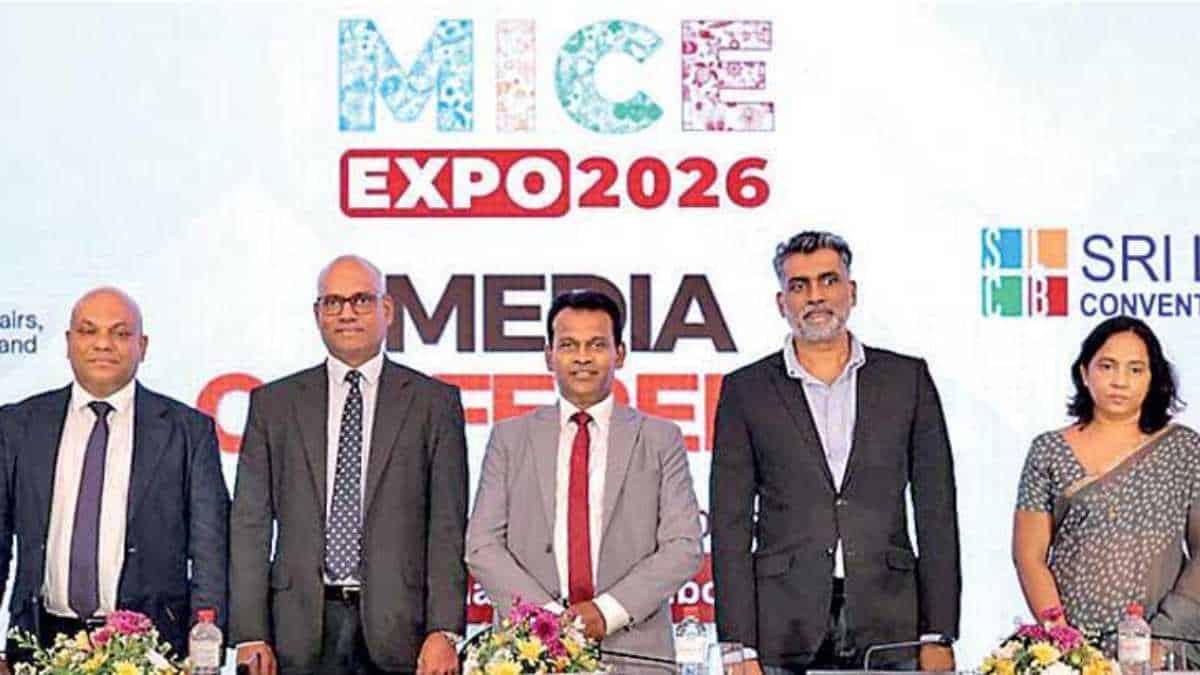
Sri Lanka launches the highly anticipated Southern MICE Expo Colombo today, bringing together top corporate planners and destination managers from all over 27 countries. Set to be held from 5th to 9th October 2026, this strategic conference represents an important turning point in the economic revival of the island nation. Business tourism contributes to a much larger expenditure than leisure tourism does, and therefore such profitable meetings are essential for ensuring macroeconomic stability. Through the direct linkage of international corporate executives with local tourism businesses, the large-scale conference aims to build a commercial presence in South Asia during this crucial financial period.
Strategic Genesis and Institutional Evolution of Sri Lanka’s MICE Framework
The commercial gathering known as the Southern MICE Expo Colombo represents the systematic culmination of long-term institutional restructuring designed to elevate Sri Lanka from a seasonal sun-and-sand holiday destination into an integrated regional commercial capital. While business assemblies in the island nation trace their historical origins back to prominent diplomatic milestones such as the 5th Non-Aligned Movement Summit hosted in Colombo in 1976, modern commercial coordination was formally established through the enactment of the Tourism Act No. 38 of 2005. This landmark statute restructured the national tourism apparatus by dissolving antecedent promotional boards and establishing four dedicated statutory authorities: the Sri Lanka Tourism Development Authority, the Sri Lanka Tourism Promotion Bureau, the Sri Lanka Institute of Tourism and Hotel Management, and the Sri Lanka Convention Bureau.
Under Section 42 of the Tourism Act No. 38 of 2005, the Sri Lanka Convention Bureau was established as the primary statutory entity tasked with the development, international marketing, and operational promotion of MICE tourism—encompassing meetings, incentives, conferences, and exhibitions. To protect the bureau from fiscal instability, Section 43 of the Act mandated that a designated four per cent share of the national Tourism Development Levy, together with statutorily defined portions of the embarkation tax, be credited directly to the convention bureau’s operating fund. This guaranteed revenue pipeline allowed the organisation to pursue strategic global bidding campaigns, conduct overseas destination lobbying, and provide institutional support to domestic travel management companies even during challenging fiscal environments.
The current iteration of the MICE Expo brand emerged directly out of pandemic-era crisis management. In 2021, the convention bureau launched the Virtual MICE Expo to preserve critical trade relationships while international aviation remained severely constrained. As global travel corridors reopened, state authorities pivoted toward physical, regionally targeted business events designed to showcase the geographic and infrastructural diversity of the island.
Advertisement
Advertisement
The inaugural physical Colombo MICE Expo in 2023 convened over one hundred international buyers to demonstrate urban business capability. This was succeeded by the Jaffna MICE Expo 2023, which pioneered commercial linkages into the Northern Province. In May 2024, the convention bureau launched the Southern MICE Expo in the southern coastal hub of Bentota, highlighting beachside conference properties and luxury boutique venues across the Southern Province. Following a nationwide gathering in late 2025, the 2026 assembly consolidates these regional initiatives into a unified national summit hosted in Colombo, drawing international decision-makers directly into the country’s commercial capital.
Operational Architecture and Execution of Southern MICE Expo Colombo
The execution of the Southern MICE Expo Colombo spans five intensive days from 5 to 9 October 2026, structured according to the strategic parameters outlined in the SLCB Marketing Plan 2026. The assembly combines high-level plenary discourse, structured commercial business-to-business appointments, and immersive experiential field tours, ensuring global buyers evaluate both technical venue infrastructure and destination appeal.
Advertisement
Advertisement
| Programme Phase | Operational Date | Primary Venue & Location | Core Commercial Activities | Target Stakeholders |
| Executive Inauguration & Business Forum | 5 October 2026 | Cinnamon Grand Colombo | Ministerial keynote addresses, high-level panel debates on South Asian MICE trends, official welcome gala dinner | Hosted international buyers, media delegations, state officials, corporate leaders |
| Direct Commercial Negotiations | 6 October 2026 | City of Dreams Colombo Precinct | Pre-scheduled one-on-one B2B appointments, commercial contract bidding, vendor showcasing | 120+ foreign corporate buyers, domestic hoteliers, DMCs, PCOs, event suppliers |
| Regional Destination Immersions (Phase I) | 7 October 2026 | Western & Southern Coastal Corridors | Site inspections of luxury beachfront conference resorts, marina facilities, and heritage properties | Curated hosted buyer cohorts, international travel trade media |
| Regional Destination Immersions (Phase II) | 8 October 2026 | Southern Heritage & Central Highlands | Evaluation of UNESCO World Heritage venues at Galle Fort, colonial tea estate lodges, and highland retreats | Incentive travel specialists, corporate board retreat organisers |
| Strategic Debriefing & Bilateral Closure | 9 October 2026 | Colombo Commercial Hub | Final procurement consultations, bilateral agreement signings, official press briefing, post-event reporting | Convention bureau leadership, trade associations, registered hosted buyers |
The event opened on 5 October 2026 at the Cinnamon Grand Colombo with an executive Business Forum and official Welcome Reception. This initial gathering convened ministerial figures, diplomatic representatives, and prominent industry figures to outline bilateral commercial opportunities and examine evolving corporate travel trends. On 6 October, proceedings transition into structured commercial sessions, where over one hundred and twenty accredited international hosted buyers and foreign media representatives from twenty-seven nations conduct pre-scheduled B2B negotiations with Sri Lankan tourism and event suppliers.
From 7 to 9 October, international delegates participate in extensive familiarisation study tours across the Western Province, Southern Province, and Central Highlands. These tours enable corporate meeting planners and incentive travel organizers to personally inspect luxury hotels, assess local road and expressway networks, evaluate banquet facilities, and review adventure and wellness activities, converting marketing pitches into confirmed corporate bookings.
Official Ministerial Declarations and Strategic Direction
The opening sessions featured strong policy commitments from key government figures. Addressing domestic and international delegates, the Deputy Minister of Tourism, Hon. (Prof.) Ruwan Ranasinghe, underscored that business tourism has been established as a primary pillar of national economic strategy. The Deputy Minister stated that the state formally recognises the MICE sector as a critical driver of tourism growth, welcoming the Southern MICE Expo Colombo as a vital national platform to showcase Sri Lanka’s capabilities to international buyers and media.
Mr Dheera Hettiarachchi, Chairman of the Sri Lanka Convention Bureau, affirmed that convening more than one hundred and twenty pre-qualified corporate planners from twenty-seven countries establishes unprecedented international commercial access for domestic suppliers. The Chairman explained that the bureau’s marketing plan is explicitly focused on attracting high-yield corporate gatherings to ensure that foreign currency expenditure directly supports regional small-and-medium enterprises, event management professionals, transport operators, and artisans across the island.
Macroeconomic Data: Foreign Exchange Earnings and Visitor Yield Dynamics
The strategic emphasis on expanding business events corresponds directly with macroeconomic tracking published by the Central Bank of Sri Lanka and the Sri Lanka Tourism Development Authority. Tourism earnings serve as an indispensable contributor to Sri Lanka’s external sector stability and external debt sustainability.
Official data from the CBSL External Sector Performance report for August 2026 indicates that cumulative tourism earnings for the first eight months of the year reached US$ 2.1 billion. While representing an important stream of foreign exchange liquidity, this performance reflects a 10.0 per cent year-on-year contraction compared to the US$ 2.33 billion generated over the same eight-month period in 2025. Recent monthly earnings compiled by the central bank illustrate notable seasonal variations:
Advertisement
Advertisement
- June 2026: US$ 151 million
- July 2026: US$ 286 million
- August 2026: US$ 264 million
| Performance Metric | Calendar Year 2024 | Calendar Year 2025 | Calendar Year 2026 (Reported) | Institutional Authority |
| Cumulative International Arrivals | 1,487,303 (Jan–Oct) | 2,053,492 (Annual Total) | 1,146,573 (First Half – Jan to Jun) | Sri Lanka Tourism Development Authority |
| Eight-Month Cumulative Earnings | US$ 1.88 Billion (Jan–Aug) | US$ 2.33 Billion (Jan–Aug) | US$ 2.10 Billion (Jan–Aug) | Central Bank of Sri Lanka |
| January Arrivals Performance | 208,253 | 252,761 | 277,327 (+9.7% YoY) | SLTDA Research Division |
| February Arrivals Performance | 218,350 | 240,314 | 279,328 (+16.2% YoY) | SLTDA Research Division |
| March Arrivals Performance | 209,181 | 229,114 | 183,979 (-19.7% YoY) | SLTDA Research Division |
| April Arrivals Performance | 148,867 | 174,582 | 135,643 (-22.3% YoY) | SLTDA Research Division |
| June Monthly Arrivals | 113,429 | 126,845 | 124,551 (-1.8% YoY) | SLTDA Research Division |
| Average MICE Daily Expenditure | US$ 150 – US$ 180 | US$ 180 – US$ 220 | US$ 250 – US$ 400+ (Projected) | SLCB / SLTDA Industry Surveys |
International visitor figures published by the SLTDA demonstrate how external geopolitical conditions affect inbound flows. The calendar year 2026 commenced with substantial momentum: January recorded 277,327 international arrivals (a 9.7 per cent growth over January 2025), while February reached 279,328 arrivals (a 16.2 per cent increase over 2025 and 18.5 per cent higher than the pre-crisis benchmark of 2018). However, this expansion was interrupted in March 2026, when visitor numbers fell to 183,979, representing a 19.7 per cent decline compared to March 2025.
The contraction intensified in April 2026, with arrivals falling by 22.3 per cent year-on-year to 135,643. SLTDA analytical reports attributed this downturn primarily to geopolitical conflict in the Middle East, which led to widespread commercial airspace closures, prolonged flight diversions, and increased long-haul aviation surcharges across primary European corridors. Arrivals stabilised somewhat in May (145,745 visitors) and June (124,551 visitors). Across the entire first half of 2026, arrivals totaled 1,146,573, reflecting a modest 1.8 per cent contraction against the 1,168,044 visitors registered during the first half of 2025.
Corporate Spend Versus Leisure Economics
The macroeconomic incentive to aggressively expand business tourism lies in the expenditure profile of corporate delegates compared to holiday travelers. Traditional leisure visitors are price-sensitive, highly reactive to airfare fluctuations, and concentrated during the peak winter months. Central Bank historical figures show that independent leisure visitors spend an average of US$ 100 to US$ 150 per day.
By contrast, corporate executives attending professional conventions, dealer meets, and incentive trips generate daily expenditures ranging from US$ 250 to more than US$ 400. Business delegations require five-star lodging, dedicated meeting spaces, advanced audiovisual setups, formal banquet catering, and private transport fleets.
Furthermore, corporate gatherings are planned, budgeted, and contracted months in advance by corporate enterprises and trade associations, providing domestic hotels and service suppliers with reliable forward revenue that cushions the impact of unexpected drops in leisure bookings. Increasing the proportion of MICE visitors from historical levels of 7.4 per cent toward double-digit targets is a core objective for strengthening national external earnings.
Feeder Market Demographics and Corporate Procurement Dynamics
The buyer targeting implemented at the Southern MICE Expo Colombo reflects the demographic realities revealed in SLTDA immigration entry records. While traditional Western European source markets dominate seasonal winter holiday tourism—representing 57.4 per cent of all arrivals in January 2026—corporate and incentive travel exhibits distinct geographic characteristics.
Advertisement
Advertisement
| Origin Country | First-Half 2026 Arrivals Volume | June 2026 Market Share | Documented MICE / Business Proportion | Key Corporate Procurement Segments |
| India | 293,683 | 34.9% (43,423 arrivals) | 8.8% to 12.0% | Dealer networks, IT corporate offsites, pharmaceutical conclaves |
| United Kingdom | 108,567 | 8.4% (10,474 arrivals) | 3.5% to 5.2% | Financial services retreats, international scientific congresses |
| Russian Federation | 77,349 | 1.0% (1,276 arrivals) | 19.2% | High-budget executive retreats, seasonal corporate incentives |
| China | 76,171 | 3.1% (8,224 arrivals) | 8.5% (Pure Commercial Business) | Infrastructure trade missions, enterprise expos, industrial delegations |
| Germany | 69,758 | 3.0% (3,735 arrivals) | 2.8% to 4.1% | ESG conferences, sustainability workshops, technical associations |
| Australia | 57,436 | 7.0% (8,710 arrivals) | 3.2% to 4.5% | Medical symposiums, diaspora-linked business forums |
| France | 52,997 | 3.0% (3,762 arrivals) | 7.9% to 10.8% | Luxury corporate incentives, environmental symposia |
| Poland | ~15,200 | 0.4% (555 arrivals) | 11.0% to 19.7% | Specialised corporate rewards, pharmaceutical conferences |
India continues to serve as the vital foundation of Sri Lanka’s inbound business travel. During the first half of 2026, Indian arrivals totaled 293,683, representing more than double the volume of the next largest source market. In June 2026, Indian visitors numbered 43,423, capturing 34.9 per cent of total inbound traffic.
To build on this geographic advantage, the Sri Lanka Convention Bureau has undertaken targeted promotional roadshows across Indian commercial centres, including Ahmedabad, Kolkata, and Chennai. The bureau also participated directly in India’s BLTM 2026 business travel exhibition, deploying twenty-five Sri Lankan travel agents and hoteliers to secure corporate offsite and destination wedding bookings.
The primary driver for Indian corporate planners is exceptional air access and short flight times. Direct flights from southern Indian hubs such as Chennai and Bengaluru reach Colombo in roughly an hour, while non-stop routes from Mumbai and New Delhi take under three and a half hours, offering logistical convenience that Southeast Asian competitors cannot replicate.
Concurrently, European source markets demonstrate significant corporate travel engagement. SLTDA border entry figures indicate that 19.7 per cent of Polish tourists and 10.8 per cent of French visitors entered the country specifically for conference and exhibition purposes. These delegates often demand sustainable, socially responsible travel experiences, enabling Sri Lanka to market carbon-conscious boutique lodges, organic tea plantation retreats, and heritage restoration properties alongside urban event facilities.
Convention Infrastructure Expansion: Integrated Resorts and Historic Venues
Accommodating large-scale international gatherings requires modern physical venues that offer extensive plenary halls, flexible exhibition space, and high-standard accommodation in close proximity. Over recent years, Colombo’s commercial real estate footprint has expanded significantly, modernising its conference hosting capabilities.
Integrated Mega-Resorts: Cinnamon Life at City of Dreams Sri Lanka
A central highlight for hosted buyers attending the Southern MICE Expo Colombo is the integration of modern multi-purpose property developments, led by Cinnamon Life within the City of Dreams Sri Lanka. As the country’s first fully integrated resort, the multi-faceted property features extensive international luxury hotel capacity, high-end retail malls, dynamic entertainment, and dedicated conference architecture.
Advertisement
Advertisement
The property incorporates modern exhibition facilities spanning over 150 metres in length alongside large pillarless ballrooms capable of hosting concurrent plenary sessions for thousands of international attendees. This integrated infrastructure helps address Colombo’s historical shortage of large, modern indoor exhibition spaces, positioning the city to compete directly with integrated resorts in Macau and Singapore for major multinational corporate gatherings.
| Convention Facility | Geographic Location | Key Structural Dimensions & Capacity | Primary Event Suitability |
| Cinnamon Life (City of Dreams Sri Lanka) | Urban Core, Colombo Waterfront | Grand exhibition hall (156m x 102m), modern forum halls, integrated luxury rooms | Multinational enterprise conventions, trade expos, major corporate product launches |
| Bandaranaike Memorial International Conference Hall (BMICH) | Colombo 07 Civic Precinct | Main assembly auditorium, committee salons, extensive landscaped grounds | Diplomatic assemblies, international academic symposia, governmental congresses |
| Sirimavo Bandaranaike Memorial Exhibition Centre (SBMEC) | Colombo 07 Civic Precinct | 4,330 square metres of column-free indoor exhibition space | Heavy commercial trade fairs, industrial exhibitions, consumer vendor expos |
| Southern Coastal Resort Cluster | Bentota to Galle Fort Strip | Coastal luxury resorts, executive boardrooms, open-air beachfront gala lawns | Corporate leadership retreats, enterprise rewards, luxury incentive travel |
| Central Highlands Estate Lodges | Nuwara Eliya & Ella Environs | Heritage colonial buildings, converted boutique tea estates, mountain view salons | Executive think-tanks, wellness retreats, sustainability-focused corporate meetings |
Established Public Venues and Exhibition Capacity
Complementing newer private developments is the iconic Bandaranaike Memorial International Conference Hall. Commissioned in the 1970s as a gift of bilateral cooperation, the complex remains a key location for official diplomatic gatherings, having hosted major assemblies including the Commonwealth Heads of Government Meeting.
The adjacent Sirimavo Bandaranaike Memorial International Exhibition Centre offers 4,330 square metres of clear, column-free exhibition floor space. This venue regularly accommodates major international trade gatherings, including the Jaffna International Trade Fair and regional food engineering expos, giving the capital the capacity to stage technical exhibitions alongside academic and corporate conventions.
Cross-Government Policy Architecture and Facilitation Frameworks
The systematic expansion of business tourism is supported by a coordinated, whole-of-government framework intended to eliminate administrative hurdles for international delegations. Aligned with the national Strategic Plan for Tourism, state authorities have focused on enhancing collaboration between the Ministry of Foreign Affairs, Foreign Employment and Tourism, the Sri Lanka Tourism Development Authority, the Department of Immigration and Emigration, and the Civil Aviation Authority of Sri Lanka.
Electronic visa facilitation represents a cornerstone of this collaborative policy. Streamlined online verification portals, complemented by dedicated group visa channels supervised by the Sri Lanka Convention Bureau, enable event managers to secure fast-track entry approvals for large corporate delegations, avoiding consular bottlenecks.
To further simplify delegate entry, Bandaranaike International Airport in Colombo provides dedicated welcome desks, expedited immigration lines, and coordinated baggage handling for accredited convention groups. The Sri Lanka Customs Department has also introduced bonded transit channels to facilitate the temporary importation of commercial exhibition materials, technology displays, and demonstration equipment without disruptive tariffs.
Advertisement
Advertisement
The national carrier, SriLankan Airlines, works closely with the convention bureau to provide tailored group reservation fares, flexible ticketing terms, and enhanced baggage allowances for registered attendees. Corporate delegates traveling on designated flights also receive full FlySmiLes frequent flyer mileage, reinforcing the airline’s competitive appeal against regional carriers.
These operational measures are supported by the SLCB MICE Traveler Assistance Scheme, which delivers direct subsidies, planning assistance, and sponsored cultural performances for qualifying international conferences and corporate incentive bids.
Industry Impact: Spatial Decentralisation and Supply Chain Dispersal
The deliberate structure of the Southern MICE Expo Colombo—which integrates metropolitan B2B commercial sessions with mandatory familiarisation tours across regional provinces—serves an explicit economic goal: dispersing corporate visitor expenditure across regional communities. Historically, visiting corporate executives stayed almost exclusively within luxury five-star hotels in central Colombo. Under the national strategic action plan, authorities are committed to raising the proportion of visitor room nights spent outside major metropolitan centres from six per cent to more than fifteen per cent.
When an international gathering completes its formal sessions in Colombo and conducts its incentive programme in Bentota or Galle, corporate expenditure filters through several distinct economic levels. First-tier spending flows directly to registered hotels, licensed commercial transport operators, and catering services. Second-tier disbursements benefit professional conference organisers, event staging firms, sound and lighting engineers, simultaneous interpreters, and software providers, generating high-value skilled employment. Third-tier spending reaches local communities directly, channeling foreign currency into independent spice farms, traditional artisan workshops, community-run cultural ensembles, and coastal boat operators.
This supply chain dispersal helps solve a longstanding challenge for regional hoteliers: seasonal occupancy volatility. Resorts along the southern and western coasts often experience depressed occupancy during the southwest monsoon between May and October. By actively marketing and scheduling corporate offsites, dealer conventions, and incentive travel during these off-peak periods, operators can maintain steady year-round occupancy, protect full-time hospitality jobs, and maintain stable commercial purchasing with local suppliers.
Structural Vulnerabilities and Regional Competitive Headwinds
While Sri Lanka’s MICE tourism expansion exhibits measurable progress, sustained development requires navigating important regional competitive pressures and external vulnerabilities.
Advertisement
Advertisement
The sudden drop in international visitor arrivals during March and April 2026 illustrated the country’s high exposure to geopolitical and aviation volatility. Heightened conflict across the Middle East triggered prolonged airspace restrictions, forcing airlines to reroute international flights, absorb higher jet fuel costs, and reduce flight frequencies along key European transit routes.
Because Sri Lanka relies heavily on Gulf hub carriers like Emirates, Qatar Airways, and Etihad to connect North American and Western European business travelers with Colombo, disruptions in Middle Eastern airspace create immediate obstacles for long-haul delegate travel.
| Competing Destination | Primary Strategic Strengths | Structural Constraints Relative to Sri Lanka | Primary Target Corporate Segments |
| Sri Lanka | Compact geography, exceptional biodiversity, competitive per-diem pricing | Secondary long-haul direct air access, evolving mega-venue footprint | Mid-scale corporate retreats, regional trade associations, incentive travel |
| Singapore | Advanced aviation connectivity, high ease of doing business, cutting-edge facilities | High per-delegate daily expenses, limited rural terrain, urban venue saturation | Major global summits, medical congresses, international financial forums |
| Thailand (Bangkok / Phuket) | Expansive convention centers, liberal visa policies, mature hospitality base | Heavy urban congestion, variable regional service and sustainability compliance | Large-scale international trade expos, mass incentive tours, corporate conventions |
| India (Delhi / Mumbai / Bengaluru) | Vast domestic corporate base, newly built mega-exhibition complexes | Inter-state regulatory complexity, infrastructure constraints in secondary cities | Domestic enterprise conventions, manufacturing summits, tech symposiums |
In addition to external aviation dependencies, domestic hospitality faces the challenge of retaining experienced industry talent. The macroeconomic strains of recent years led many experienced hoteliers, executive chefs, and event technicians to seek employment abroad, particularly in the Gulf states.
In response, the Sri Lanka Convention Bureau has partnered with the Sri Lanka Institute of Tourism and Hotel Management to deliver specialized certifications in convention logistics and professional event management. Ensuring that frontline service delivery, event technology, and safety standards consistently meet international expectations remains essential to building long-term credibility among corporate event planners.
Long-Term Strategic Outlook Toward 2030
The long-term development of Sri Lanka’s business travel sector relies on consistent policy execution, ongoing venue development, and targeted digital promotion. Under national tourism strategic guidelines, public authorities aim to increase the MICE sector’s contribution to total tourism receipts from its current base of roughly 7.4 per cent to fifteen per cent by 2030.
Achieving this target will involve several key strategic initiatives:
Advertisement
Advertisement
The convention bureau is actively expanding its regional expo model beyond Colombo and the Southern Province, planning future industry roadshows in the Cultural Triangle and along the eastern coast to establish the island as a year-round, multi-region destination. Simultaneously, Sri Lanka is strengthening its partnerships with international bodies like the International Congress and Convention Association and the Global Association of the Exhibition Industry, enabling domestic organizers to bid systematically for rotating medical, scientific, and engineering assemblies.
The convention bureau is also upgrading its national venue and vendor database to provide corporate planners worldwide with interactive floor plans, virtual venue tours, and direct access to certified suppliers. Finally, Sri Lanka is integrating sustainability into its corporate event offerings, combining renewable energy, carbon-neutral resorts, and community conservation projects to appeal to corporate buyers seeking verified ESG compliance.
Through close cooperation between public authorities and private hospitality leaders, Sri Lanka is establishing a diversified, high-yield commercial travel sector. The opening of the Southern MICE Expo Colombo reflects an assertive national strategy, demonstrating to corporate decision-makers worldwide that the country possesses the infrastructure, logistical expertise, and destination appeal to host successful international business events.
The Southern MICE Expo Colombo exemplifies Sri Lanka’s calculated transition toward lucrative, resilient corporate travel. By uniting over one hundred twenty global buyers across twenty seven key markets with elite local hospitality suppliers, the assembly demonstrates tangible institutional momentum. Supported by modernised convention infrastructure, progressive visa frameworks, and dedicated public investment, the island nation is effectively establishing itself as South Asia’s preeminent business hub. As delegate engagements conclude across Colombo and the southern coast, the strategic partnerships forged will drive foreign exchange generation, uplift regional small enterprises, and sustainably consolidate Sri Lanka’s standing within international commercial tourism for years ahead.
Conlcusion
The Southern MICE Expo Colombo is a decisive move in the process of turning Sri Lanka into a premium MICE tourism destination. Through this event, international buyers are brought together with local service providers to improve the chances of foreign exchange, regional development, and corporate travel partnerships. This helps Sri Lanka to grow in MICE tourism until 2030.
Advertisement
