
Italy Leads Screen Travellers Beyond Matera with a Wider Basilicata Film Route

Updated
Published
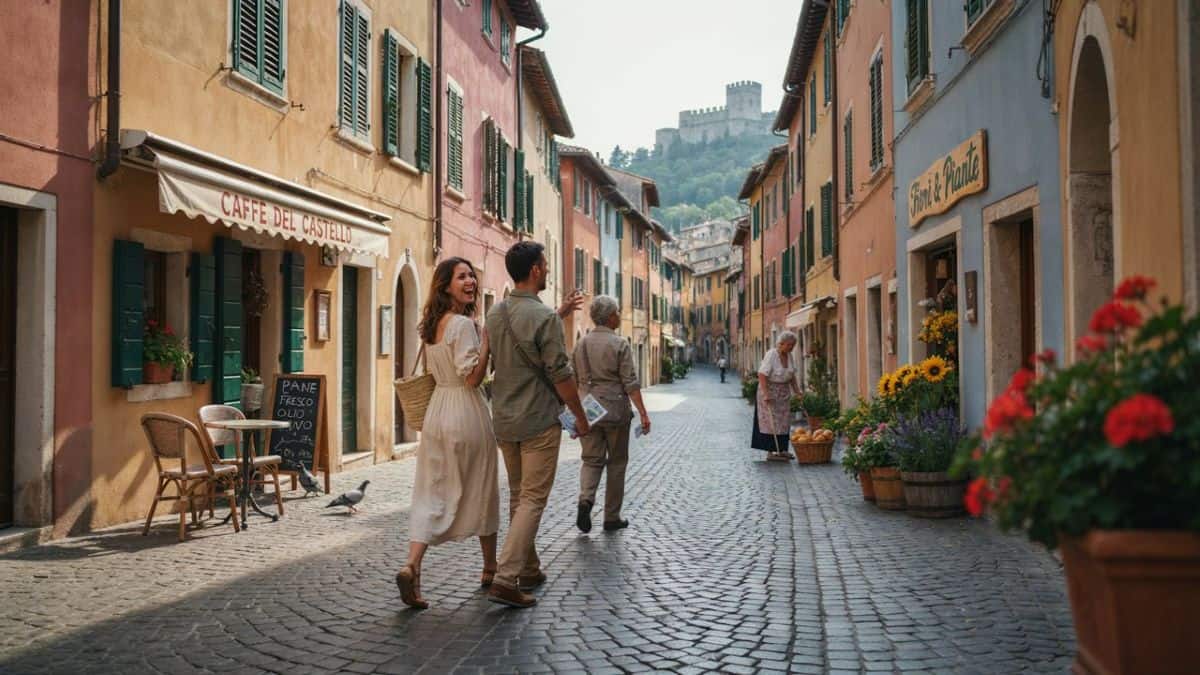
Italy is able to help screen tourists go further from Matera by developing a film tour in the region of Basilicata, which includes well-known sites for the benefit of tourists. With the development of such a route, travelers are able not only to see the famous scenes, but also visit various places of this region of southern Italy. Thus, travelers have an opportunity to go not to one famous site of filming, but also to explore the region. It allows tourists to travel slowly and discover the area, but its tourism effect needs to be measured.
What does the six-day North Wales route tell travellers?
North Wales has a six-to-seven-day film and television itinerary. It begins in Wrexham and the Dee Valley, then guides travellers through Eryri, the northern coast, Anglesey and the Llŷn Peninsula. The route draws on productions such as Welcome to Wrexham, The Secret Garden, Wonder Woman 1984 and The Last Kingdom.
The itinerary also combines screen locations with things visitors can do. Travellers might explore a castle, visit a garden, walk along a beach or try an outdoor activity. This gives the route a broader appeal than a stop-by-stop search for filming sites.
However, the published itinerary does not establish that Swedish or Dutch visitors are driving demand for North Wales. The research reviewed does not provide country-specific booking or arrival figures for this route.
Advertisement
Advertisement
There is a separate Dutch connection to Sweden. A June 2026 trade visit to Småland and Öland was promoted to travel professionals in several European markets, including the Netherlands. Its programme included filming locations and Filmbyn Småland. This shows trade interest in Sweden’s screen experiences. It does not prove that Dutch visitor numbers to Wales are rising.
This distinction matters. A European comparison can add context to the North Wales story, but it should not imply that a visitor market is growing without supporting data.
Advertisement
Advertisement
How is Spain building tourism experiences around film?
Spain’s 2026 development gives the article its strongest current news peg. On 22 January, Spain announced a consultancy service to help destinations develop screen tourism experiences. The service was presented at FITUR Screen and linked to the Spain Screen Grand Tour Experiences Programme. It received support from tourism ministry and NextGeneration funding.
The proposed work covers several stages. It can begin with an assessment of a destination and its filming connections. It can then identify suitable locations, shape visitor experiences, test those experiences and prepare marketing plans. This offers a useful story about how a screen connection might become a bookable or visit-ready offer.
Advertisement
Advertisement
Spain also has a national platform for filming locations and routes. It features places seen in major films and series, such as the Real Alcázar of Seville and the Bardenas Reales in Navarre.
The Basque Country offers a practical example. San Juan de Gaztelugatxe became associated with Game of Thrones, while its actual landscape and heritage have their own appeal. Visitors should check access conditions before travelling. A 2026 access calendar shows which dates require advance booking and which allow free access.
That detail matters to travellers. A famous screen location may sit within a protected landscape or have limits on access. Promotion should help visitors prepare, respect local rules and discover nearby places as well.
Spain’s 2026 consultancy announcement is a development programme, not proof of increased tourism. A strong article can explain what destinations are being helped to build, then identify the figures needed to test its impact: bookings, overnight stays, visits by month and spending at local businesses.
Advertisement
Advertisement
Can France turn streaming fame into regional discovery?
France is testing how films and series can guide people around places beyond a single famous city. France’s national tourism agency worked with Netflix on a digital guide called Voyage en France. The guide, covered in February 2025, offers more than ten themed travel guides inspired by places featured in Netflix productions.
The proposed journeys connect stories with real places. Guides include locations linked to Emily in Paris, with suggestions reaching beyond Paris into Provence, the Côte d’Azur and Champagne. Other examples connect the series Anthracite with the Alps and the film Loups-garous with locations in Lozère, Alsace and Périgord.
French research helps explain why this approach interests tourism planners. A study published in 2024 found that 80% of foreign tourists surveyed who had seen relevant French productions said those works made them want to visit France. That represented 68% of all tourists in the study. The research also found that French productions were especially appealing to Spanish respondents.
The regional findings show why interest must not be confused with travel. Among foreign tourists surveyed in French regions, only 37% recalled seeing a film or series made in the region they were visiting. Among those exposed to regional works, 73% said the productions made them want to visit the region. Yet only 4% said a particular work had led to their travel decision.
This gives France a strong analytical angle. Screen stories may improve a place’s image and create curiosity, while other factors still shape the final decision. Travellers also need transport, accommodation, food and activities that make a regional visit practical.
What makes Sweden’s screen tourism different?
Sweden’s Småland region offers a family-focused model built around the stories of author Astrid Lindgren. Visitors can explore her childhood home in Vimmerby, see filming locations, visit the interactive Filmbyn attraction and go to Astrid Lindgren’s World. Guided cycling routes of five to 25 kilometres include stops at places connected to the Emil films, including Katthult and Bullerbyn.
Advertisement
Advertisement
This offer connects several kinds of experience. Visitors can learn about an author’s life, recognise settings from films and enjoy the countryside by bike. Filmbyn adds interactive activities, including opportunities to create a film and see studio sets. That makes the region relevant to families and visitors with different levels of interest in cinema.
A June 2026 trade programme promoted Småland and Öland to travel professionals from Germany, Austria, Switzerland, the Netherlands and Belgium. The itinerary included Vimmerby, Filmbyn Småland and a guided cycling tour through the film landscape.
This is evidence of a planned trade initiative. It does not tell us how many Dutch travellers booked holidays in Sweden or whether the programme increased arrivals. The distinction should remain clear in any report.
Sweden’s strongest editorial value is its mix of screen tourism and cultural heritage. The region can be presented as a countryside holiday shaped by books and films, with cycling and family attractions adding activities between filming locations.
How does Italy encourage visitors to go beyond one famous city?
Italy’s national film location portal brings production information and visitor itineraries together. The project began in 2017 through cooperation between public bodies responsible for cinema and tourism. Visitors can search filming locations, explore screen-related routes and create customised itineraries.
The platform’s Basilicata itinerary shows how that model can extend a trip across a region. It connects Matera with Melfi and the Vulture area, Barile, Craco, Aliano and Maratea. The route brings together places associated with works including The Gospel According to Matthew, I’m Not Scared and Christ Stopped at Eboli.
Advertisement
Advertisement
Matera has appeared in several films, including The Passion of the Christ and No Time to Die. But the itinerary makes a wider point: the screen story can become an entry into other towns, landscapes and cultural experiences.
This is a promising editorial angle, but it should be framed as an opportunity rather than a proven economic result. An itinerary may encourage visitors to travel further. To show that it has done so, a report would need data on overnight stays, visits to smaller towns and spending across the route.
Can screen routes help tourism continue beyond summer?
Ireland provides a clear example of tourism bodies connecting film locations with local business and seasonality. The Connemara Film Trail launched in July 2025. It guides visitors through 17 filming locations featured in 11 productions, including The Quiet Man and The Banshees of Inisherin. The trail also recognises Galway’s UNESCO City of Film status and the contribution of Irish-language media.
The trail is suited to off-season and rainy-day exploration. It forms part of a wider plan that aims to encourage visitors to stay longer and spread benefits among local communities. The trail highlights local food producers, craftspeople, farmers and tourism businesses.
Northern Ireland’s SCENEic Route uses a wider map to connect 20 screen locations across the region. The map launched in September 2025, and a new round of promotion in August 2026 highlighted places linked with Derry Girls, Line of Duty, An Irish Goodbye and Game of Thrones. The route spans cities, countryside and coastal settings.
These examples support a useful question: can screen routes give people reasons to visit outside the busiest months? The initiatives are designed to encourage year-round exploration. Their stated aims should not be reported as measured outcomes unless visitor data confirms them.
Advertisement
Advertisement
What do the latest British figures say about screen tourism?
UK research published in July 2026 found that around half of recent UK visitors said films or television programmes featuring Britain had strongly influenced their decision to visit. It also found that 53% had taken part in at least one film- or television-related activity during their trip. Among potential visitors, 75% said they would be interested in such an activity on a UK leisure trip.
The findings suggest that screen tourism can encourage visits beyond London and may support earlier or off-peak travel. They help explain why destinations are investing in routes and screen-related experiences. They do not measure demand for the North Wales route specifically.
The survey figures also measure different things. Participation among recent visitors is not the same as interest among potential visitors. Neither figure is a count of future bookings. Keeping these definitions clear will make the article more trustworthy and help readers understand what the research does, and does not, show.
What should travellers check before following a screen trail?
Film locations can be working attractions, protected landscapes, private properties or public spaces. Access varies. Some places welcome visitors, while others may offer only an outdoor viewpoint or a marked route. A production’s presence at a location does not mean visitors can enter every building or walk across every part of the site.
Gaztelugatxe shows why planning matters. Its 2026 access calendar identifies dates that require a free reservation and dates when no ticket is needed. Visitors should check the official calendar before setting out.
Travellers should also confirm opening times, walking distances and transport options. A route may cover rural or coastal areas where services are limited. Checking nearby accommodation, food options and public transport can make the experience easier and help visitors spend time in surrounding communities.
What is Europe’s biggest opportunity in screen tourism?
Europe’s initiative on screen tourism illustrates how Spain, France, Sweden and Italy are reinventing their regional tourism through a new blend of places that have been used in films and TV shows. It involves combining well-known places where movies have been shot with heritage tours, bike trips, family visits, rural tourism, and local enterprises. As a result, the idea is to attract tourists to stay for more time and explore more besides large urban centers. Nonetheless, it is only through promotion that success cannot be verified. Tourism administrations still require accurate figures regarding overnight stays, seasonal interest, reservations, visitor profiles, and expenditures.
Advertisement
