
Brazil Expands Indigenous-Led Ecotourism Across the Amazon

Published
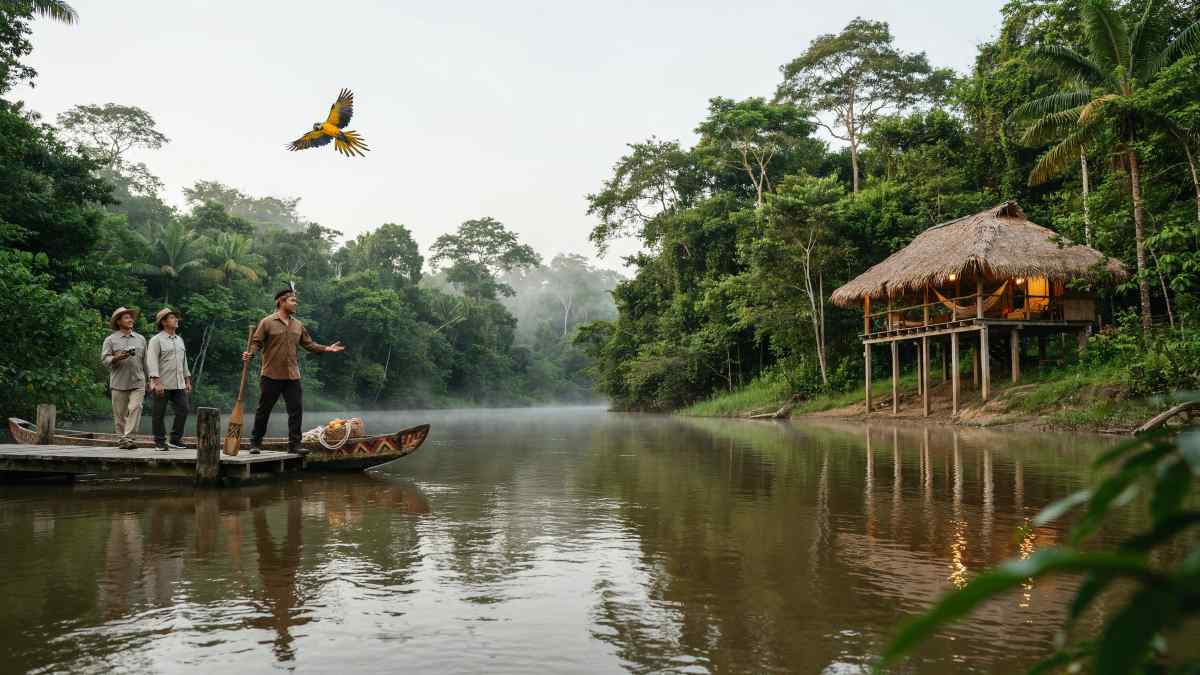
Image generated with Ai
There are increasing efforts by Brazil to encourage sustainable tourism in the Amazon region, with greater involvement of indigenous people and traditional communities in nature-based tourism. There are no authentic reports available which confirm the establishment of the Reserva Viva registry across the country or in two states in September 2026 with exclusive licensing and mandatory tourist conservation fees paid by foreign tourists. One thing that has been proved is an increase in the creation of frameworks for Indigenous and community-based tourism with the help of federal and state governments as well as conservation financing initiatives.
Indigenous Communities at the Centre of Tourism
Brazil’s National Foundation of Indigenous Peoples, Funai, recognises Indigenous tourism as a form of community-based and sustainable economic activity. Tourism visits to Indigenous lands can include ecotourism and ethnotourism, but they must respect community rules, privacy and cultural practices. Tourism proposals are submitted through formal visitation plans under Brazil’s regulatory framework.
Advertisement
Advertisement
The framework also gives Indigenous communities an important role in determining how tourism operates on their territories.
Funai introduced the Indigenous Community-Based Tourism Seal in 2025, along with specific seals for Indigenous ecotourism and ethnotourism. These certifications identify tourism initiatives that have followed the required procedures and whose visitation plans have received the necessary approvals.
Advertisement
Advertisement
This provides a formal pathway for Indigenous communities to participate in tourism while retaining control over activities taking place in their territories.
Advertisement
Advertisement
Amazonas Builds a Community Tourism Economy
Amazonas is already investing in tourism as part of a wider sustainable-development strategy.
The Amazon Fund-backed Prospera na Floresta project is supporting sustainable community-based tourism and entrepreneurship across protected areas in Amazonas. The programme covers 22 protected areas, including state conservation units, Indigenous lands and a quilombola territory, together spanning more than 20.7 million hectares.
More than 14,000 families are identified as direct beneficiaries of the project.
Its tourism component includes improving infrastructure, training people involved in the tourism supply chain, supporting community tourism businesses and monitoring the contribution of tourism to conservation.
That approach is particularly relevant to the Amazon because tourism can provide an additional source of income without requiring communities to depend entirely on activities that place pressure on forests and biodiversity.
Advertisement
Advertisement
Pará Expands Nature-Based Travel
Pará is developing a similarly broad approach.
The state is receiving support through the Pará Mais Sustentável project, financed by the Amazon Fund and implemented through Pará’s environmental and development institutions. The project supports environmental and land-tenure regularisation, sustainable production, sociobioeconomy initiatives and low-carbon economic development.
The programme covers 27 municipalities across Pará and includes support for traditional communities, Indigenous peoples, quilombola communities and other producers involved in the regional sociobioeconomy.
Tourism is part of this wider economic picture.
In September 2026, Brazil’s Ministry of Tourism highlighted the Amazônia Atlântica Trail in Pará, a roughly 468-kilometre route connecting Belém with Serra do Piriá in Viseu. The trail crosses 17 municipalities and links natural landscapes with traditional communities and conservation areas.
Advertisement
Advertisement
From Forest Trails to River Experiences
Amazon tourism is not limited to conventional rainforest excursions.
Brazil’s Ministry of Tourism describes a wide range of nature-based experiences across the Amazon biome, including wildlife observation, forest trails, boat journeys, waterfalls and cultural experiences with traditional communities.
The Amazon extends across nine Brazilian states, with Amazonas and Pará among the most important destinations for river, forest and community-based tourism.
For international travellers, Manaus remains a major gateway to Amazonas, while Belém serves as an important access point to Pará and the eastern Amazon.
Visitors can combine urban cultural experiences with river journeys, forest excursions and community-led activities, depending on the destination and the permissions governing each territory.
Advertisement
Advertisement
Conservation Funding Is Also Expanding
Tourism is being developed alongside wider conservation and monitoring investments.
In September 2026, Brazil announced the creation of four new Sustainable Development Reserves in Amazonas covering approximately 669,000 hectares. The reserves were established in the area influenced by the BR-319 and are intended to protect biodiversity while allowing sustainable use of natural resources by local populations.
The announcement also included new financial commitments for restoration, territorial management and sustainable economic activities.
In Pará, the Amazon Fund’s Pará Mais Sustentável programme includes a specific monitoring and control component aimed at strengthening environmental institutions and improving monitoring and accountability.
These initiatives show how conservation financing is increasingly being connected with local economic development rather than treated as a separate activity.
Advertisement
Advertisement
What International Visitors Need to Know
Travellers planning an Amazon expedition should not assume that every Indigenous or community territory is open for independent tourism.
Brazil’s rules require approved visitation plans for tourism on Indigenous lands, while specific protected areas can have additional regulations. Community consent, environmental protection and respect for local customs are central elements of the system.
This means travellers generally need to use authorised operators or organised programmes where required.
For visitors, that can also create a more structured experience, with local guides providing knowledge about the forest, rivers, wildlife and cultural traditions.
A Different Model for Amazon Tourism
The specific direction taken by Brazil is thus one that is larger than just a new tourism registry. Within Amazonas and Pará states, the governments, along with Indigenous groups, traditional communities, and conservation finance programs, are establishing a model wherein tourism can play an active role in improving their livelihoods but will still be subject to regulations of territories and environment. This particular idea is important for the Amazon as its tourism economy is dependent on the very ecosystems it aims to visit. The current developments include Indigenous tourism certification, community-based tourism financing, creation of protected areas, sustainable production initiatives and development of nature trails. All these developments have provided a greater role to the local communities when it comes to developing their tourism industry. However, it cannot be claimed that the proposed “Reserva Viva” registry, conservation tax from foreign tourists and the licensing system are currently established as federal policies of Brazil without any additional documentation.
Advertisement
