
Flights Cancelled Across European Airports as 2,211 Delays and 56 Cancellations Disrupt Travel at Major Cities Including Munich, Madrid, Zurich and More

Updated
Published
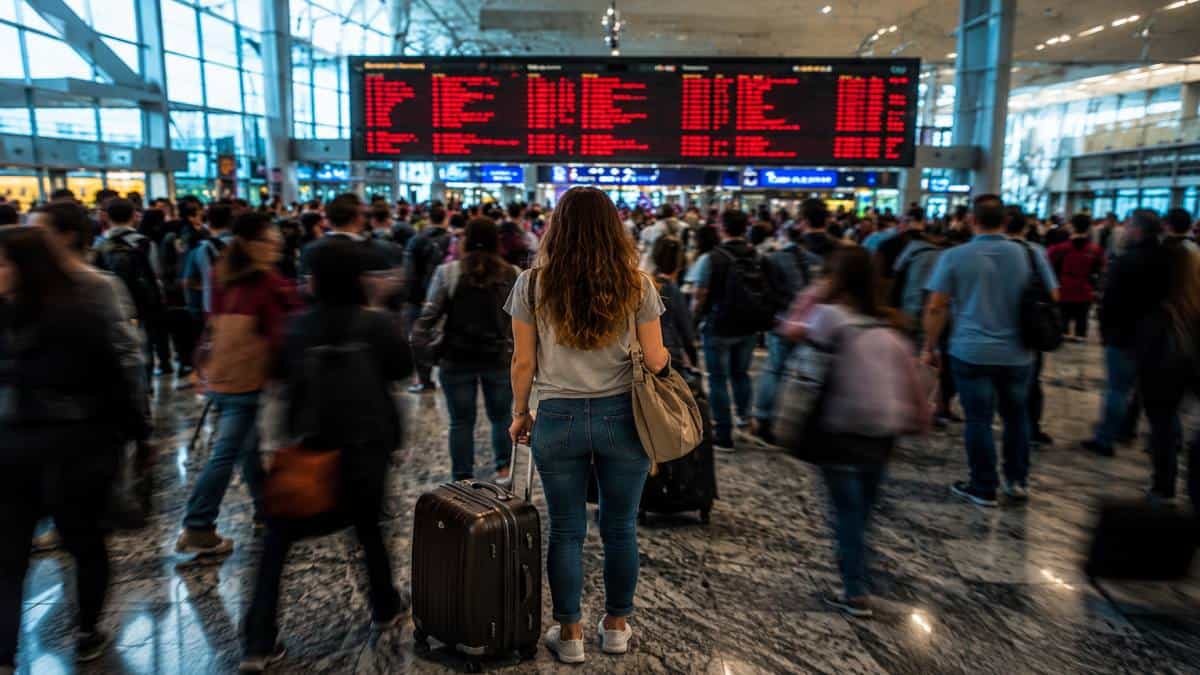
Image generated with Ai
Flight cancellations persisted across Europe today as another demanding day resulted in 2,211 delays and 56 cancellations rippling across France, Germany, the Netherlands, Spain, the UK, Switzerland, Austria, and more. Charles de Gaulle Airport recorded the highest number of delays, while Amsterdam Schiphol saw the most cancellations.
Among airlines, Lufthansa experienced the greatest operational pressure, while KLM accounted for the highest number of cancellations, around 23% of all cancellations recorded across major airports. Other heavily affected carriers included Air France, British Airways, Eurowings, easyJet, Condor, and Swiss, with disruptions extending across Paris, Amsterdam, Frankfurt, London, Madrid, Munich, and Zurich.
Today’s disruption pattern appears to be driven primarily by airport congestion, aircraft rotations, high traffic volumes, and broader operational constraints rather than widespread schedule cuts, meaning travelers are more likely to encounter late departures than outright cancellations. Because Europe’s busiest hubs are deeply interconnected, delays at one airport can quickly affect onward journeys, missed connections, and aircraft schedules across the continent.
- Charles de Gaulle Airport recorded the highest number of delays with 332 flights affected.
- Amsterdam Schiphol experienced the most cancellations, with 11 flights cancelled.
- Lufthansa registered the highest number of delays among all airlines, totaling 190.
- KLM recorded 13 cancellations.
- Delays outnumbered cancellations by nearly 40 to 1, indicating airlines largely maintained schedules despite congestion.
Worst-Hit European Hubs
Paris Charles de Gaulle Airport (Paris)
- 332 delays
- 6 cancellations
Europe’s busiest airport in today’s data experienced the highest delay total, with Air France, HOP!, and easyJet among the most affected airlines. As one of Europe’s largest intercontinental gateways, operational pressure here can quickly affect connections throughout Europe, Africa, North America, and Asia.
Advertisement
Advertisement
Amsterdam Schiphol Airport
- 305 delays
- 11 cancellations
KLM accounted for much of the disruption, alongside easyJet and Transavia Airlines. Schiphol serves as one of Europe’s principal transfer hubs, meaning even relatively small schedule disruptions can influence passengers continuing to destinations across the continent and beyond.
Frankfurt Airport
- 267 delays
- 6 cancellations
Lufthansa, Condor, and Discover experienced the greatest disruption. As Germany’s largest aviation hub, delays in Frankfurt frequently affect long-haul departures as well as regional European connections.
Advertisement
Advertisement
Adolfo Suárez Madrid-Barajas Airport
- 218 delays
- 3 cancellations
Operations were most affected for Iberia, Air Europa, Ryanair, and Air Nostrum. Madrid remains a critical gateway between Europe and Latin America, making schedule disruptions particularly important for connecting travelers.
Zurich Airport
- 191 delays
- 2 cancellations
Swiss, Air Baltic, and Edelweiss Air AG saw notable delays. Zurich plays a key role in connecting Central Europe with long-haul destinations, so delays can extend well beyond Switzerland.
Advertisement
Advertisement
Düsseldorf Airport
- 177 delays
- 2 cancellations
Eurowings accounted for the largest share of delays, followed by Condor and Eurowings Europe. As one of Germany’s busiest airports, operational disruptions here can affect domestic and leisure travel across Europe.
London Heathrow Airport
- 151 delays
- 8 cancellations
Most disruption involved British Airways, with additional impacts on Virgin Atlantic and United. Heathrow’s role as one of the world’s busiest international airports means delays often influence flights across multiple continents.
Which Airlines Faced the Greatest Operational Pressure
Lufthansa
With 190 delays and 4 cancellations, Lufthansa experienced the highest operational impact across Frankfurt, Munich, Zurich, Berlin, and Düsseldorf. Because its operations are heavily concentrated at Germany’s major hubs, delays at one airport can quickly affect aircraft scheduled to operate later flights elsewhere.
Air France
Air France accumulated 170 delays and 3 cancellations, with most disruptions centered on Charles de Gaulle Airport. Given the airline’s extensive international network, delays in Paris can influence both European and long-haul schedules.
KLM
While recording 150 delays, KLM also reported 13 cancellations, the highest among all airlines covered. Much of the disruption originated at Amsterdam Schiphol, where busy transfer operations amplify the impact of schedule changes.
British Airways
British Airways recorded 99 delays and 5 cancellations, primarily at London Heathrow. As Heathrow’s largest airline, operational disruptions there can affect connecting passengers traveling between Europe, North America, Asia, and the Middle East.
Advertisement
Advertisement
Eurowings
Eurowings accumulated 82 delays and 4 cancellations, with disruption concentrated at Düsseldorf, Berlin, and London Heathrow. The airline’s large presence on short-haul European routes means delays can cascade across multiple rotations during the day.
easyJet
easyJet experienced 81 delays, mainly across Berlin, Charles de Gaulle, Amsterdam, and Prague. Its extensive point-to-point network makes punctual aircraft rotations particularly important during busy travel periods.
What Today’s Flight Data Reveals
Today’s disruption pattern highlights a European network that remained operational despite considerable strain. With nearly forty delayed flights for every cancellation, airlines generally continued operating rather than removing flights from schedules altogether. That suggests congestion was absorbed throughout the day instead of escalating into widespread cancellations.
The heaviest pressure was concentrated at Europe’s largest international hubs rather than evenly distributed across the continent. Airports such as Charles de Gaulle, Amsterdam Schiphol, Frankfurt, Madrid, and Zurich handled substantial delays while continuing to process passengers. These airports collectively account for a significant share of international transfers, so even moderate delays can spread quickly across multiple airline networks.
Germany stood out as the most affected country, with four airports contributing more than 680 delays, underscoring how disruptions at interconnected hubs can influence travel across Central and Western Europe.
Why Flights Are Being Disrupted Across Europe
Today’s disruption pattern reflects the challenges of operating one of the world’s busiest aviation networks during periods of sustained demand. Large hub airports process hundreds of arrivals and departures each day, leaving limited flexibility when aircraft begin arriving behind schedule.
Advertisement
Advertisement
As delays accumulate, aircraft scheduled for later sectors can depart late, creating a chain reaction across multiple airports. Busy terminals, extended turnaround times, operational constraints, and closely connected airline schedules all contribute to longer waits for passengers without necessarily forcing airlines to cancel large numbers of flights.
The relatively low cancellation total compared with delays suggests airlines have largely continued operating planned schedules while absorbing congestion throughout the day.
Here’s a polished version:
Travel and Tour World reached out to all the airports mentioned in this report for verification regarding today’s flight disruptions and operational status, including Amsterdam Schiphol Airport (AMS), Charles de Gaulle Airport (CDG), Paris Orly Airport (ORY), Bordeaux–Mérignac Airport (BOD), London Heathrow Airport (LHR), London Gatwick Airport (LGW), Frankfurt Airport (FRA), Munich Airport (MUC), Berlin Brandenburg Airport (BER), Düsseldorf Airport (DUS), Adolfo Suárez Madrid–Barajas Airport (MAD), Václav Havel Airport Prague (PRG), Zurich Airport (ZRH), Stockholm Arlanda Airport (ARN), Venice Marco Polo Airport (VCE), Leonardo da Vinci–Fiumicino Airport (FCO), Copenhagen Airport (CPH), Thessaloniki Airport “Makedonia” (SKG), Larnaca International Airport (LCA), Porto Airport (OPO), and Vienna International Airport (VIE).
As of publication, none of the airports had provided an official response. The only replies received were automated acknowledgements confirming receipt of our inquiries. Travel and Tour World will update this report if and when official statements become available.
What Travelers Flying Across Europe Should Expect
- Allow additional connection time if travelling through Paris Charles de Gaulle, Amsterdam Schiphol, Frankfurt, Madrid, or London Heathrow.
- Check your airline’s latest notifications before leaving for the airport.
- Monitor departure gates regularly, as gate assignments may change during periods of operational disruption.
- Keep essential medication, chargers, travel documents, and valuables in your cabin baggage.
- If your flight is cancelled, begin exploring rebooking options as early as possible.
- Travelers with tight onward connections should prepare alternative plans where practical.
- Continue checking airline updates throughout the day, as departure times may continue changing.
Editor’s Analysis
The most notable aspect of today’s disruption is the overwhelming dominance of delays over cancellations. A delay-to-cancellation ratio approaching 40:1 suggests Europe’s aviation system remained resilient despite heavy operational pressure. Rather than significantly reducing schedules, airlines generally continued operating flights while managing congestion across their networks. The concentration of disruption at major hubs—including Charles de Gaulle, Amsterdam Schiphol, Frankfurt, and London Heathrow—also illustrates how Europe’s interconnected aviation system functions. Because these airports support large volumes of transfer passengers, even modest delays can spread rapidly to later departures across multiple countries. Travelers should therefore expect some schedules to remain fluid until aircraft and crews return to planned rotations.
Advertisement
Advertisement
Overview of European Flight Disruptions
Today’s operational picture reflects a busy but functioning European aviation network. Major cities including Paris, Amsterdam, Frankfurt, London, Madrid, Munich, Zurich, Vienna, and Düsseldorf all experienced varying levels of disruption, with Lufthansa, Air France, KLM, British Airways, Eurowings, and easyJet among the airlines facing the greatest pressure. Although delays were widespread, cancellations remained comparatively limited, indicating that airlines are continuing to move passengers while working through operational challenges. As schedules recover throughout the day, carriers and airports will continue adjusting aircraft, crews, and departure times to restore normal operations across Europe’s interconnected air travel network.
The data has been extensively curated by our editorial team using real-time aviation figures recorded on 30th July 2026 at 12:55 p.m. ET USA (30th July 4:55 p.m. GMT).
Primary Source: FlightAware.
Verification Protocol: All statistics have been independently reviewed and cross-checked by our human editorial desk. Timestamped records, data logs and feed snapshots are securely archived internally to support historical accuracy and editorial transparency.
Note: Real-time flight-tracking figures reflect active airspace and operational data. Minor variations may occur when compared with information displayed at individual airport terminals or airline departure gates.Travellers are advised to check directly with their respective airlines and airports for the latest flight status, schedule changes and operational updates.
Advertisement
