
Prague and More Enter the Spotlight as Central Europe Marketplace 2027 Unveils New Czechia Travel Ideas

Published
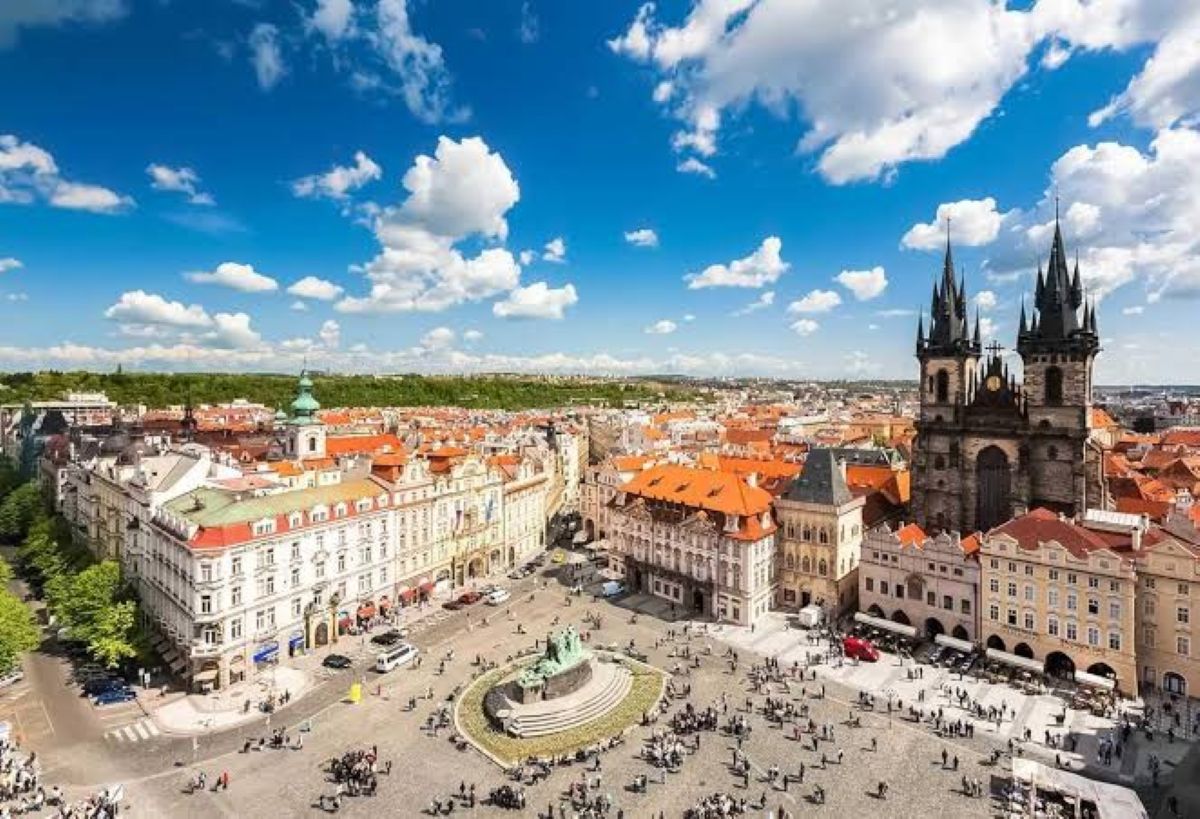
Prague and more Czechia destinations are entering the spotlight as the Central Europe Marketplace 2027 prepares to unveil new travel ideas. Prague will take centre stage, while more destinations across Czechia can inspire fresh journeys for global travellers. The Central Europe Marketplace 2027 also brings new attention to travel beyond the capital, creating more reasons to explore Czechia. Meanwhile, travellers can discover historic cities, wine regions, cultural treasures and lesser-known escapes. Travel And Tour World urges readers to explore the entire story, because these new Czechia travel ideas could reshape how visitors plan their next Central Europe adventure. The spotlight is only beginning to shine.
Six Underrated Czechia Destinations to Add Beyond Prague in a Central Europe Journey
The Central Europe Marketplace 2027 places Prague at the centre of a wider conversation about travel across Czechia, Hungary, Poland and Slovakia.
For travellers, however, Czechia offers far more than Prague.
The country recorded 23,540,356 guests and 59,101,998 overnight stays in collective accommodation establishments during 2025. Foreign visitors accounted for 10.9 million arrivals and 26.8 million nights.
Advertisement
Advertisement
That recovery has created an opportunity for travellers to explore destinations beyond the country’s best-known capital.
Several smaller Czech cities combine historic architecture, UNESCO heritage, wine culture, mountains, gastronomy and nature.
Advertisement
Advertisement
Six particularly interesting choices are Olomouc, Liberec, Znojmo, Mikulov, Telč and Litoměřice.
They offer different experiences while fitting naturally into a broader Central European itinerary.
Advertisement
Advertisement
Czechia Tourism in Numbers: Five-Year Recovery
The national tourism statistics show a dramatic recovery after the pandemic disruption.
| Year | Guests in collective accommodation | Overnight stays | Key development |
|---|---|---|---|
| 2021 | 10.84 million | — | Tourism remained heavily affected by pandemic restrictions |
| 2022 | 19.42 million | — | Strong reopening recovery |
| 2023 | 21.98 million | 56.0 million | Guest numbers returned to approximately 2019 levels |
| 2024 | 22.81 million | 57.3 million | Tourism moved above the 2019 benchmark |
| 2025 | 23.54 million | 59.10 million | New post-pandemic high |
CZSO reported that 2023 brought more than 22 million guests and 56 million nights.
In 2024, arrivals reached 22.8 million, while overnight stays climbed to 57.3 million.
In 2025, both measures moved higher again, reaching 23.54 million guests and 59.10 million nights.
Advertisement
Advertisement
The 2025 figure was also 1.6 million guests above 2019, while overnight stays were 2.1 million nights higher than in 2019.
Foreign tourism played an important role.
Non-resident arrivals reached 10.9 million in 2025, up 4.1% year on year.
Foreign overnight stays reached 26.8 million, representing a 5% annual increase.
Where the Underrated Destinations Fit Into Czechia’s Tourism Map
The six destinations belong to different tourism regions.
Their regional accommodation statistics provide a useful five-year comparison.
Advertisement
Advertisement
The figures below refer to all accommodation guests within the respective administrative region, not visitors to the individual city alone.
| Destination | Administrative region | 2021 guests | 2022 guests | 2023 guests | 2024 guests | 2025 guests |
|---|---|---|---|---|---|---|
| Olomouc | Olomoucký | 469,007 | 722,842 | 784,744 | 753,338 | 816,111 |
| Liberec | Liberecký | 722,461 | 1,113,981 | 1,154,930 | 1,173,053 | 1,235,090 |
| Znojmo | Jihomoravský | 1,331,887 | 1,990,371 | 2,165,969 | 2,179,291 | 2,251,656 |
| Mikulov | Jihomoravský | 1,331,887 | 1,990,371 | 2,165,969 | 2,179,291 | 2,251,656 |
| Telč | Vysočina | 450,699 | 642,986 | 670,124 | 688,447 | 703,455 |
| Litoměřice | Ústecký | 396,878 | 580,023 | 625,475 | 632,829 | 660,406 |
The CZSO regional series shows that each corresponding tourism region recorded a substantial recovery after 2021.
South Moravia, which contains Znojmo and Mikulov, recorded the largest accommodation volume among the regions represented in this selection.
Liberecký Region also passed 1.2 million accommodation arrivals in 2025.
Olomoucký Region exceeded 800,000 arrivals.
Vysočina moved above 700,000, while Ústecký Region reached more than 660,000.
Advertisement
Advertisement
These numbers demonstrate the growing importance of destinations outside Prague.
1. Olomouc: The Historic Moravian City With a Strong Food Identity
Olomouc is one of the strongest alternatives for travellers wanting historic architecture without Prague’s scale.
The city’s historic centre is dominated by the UNESCO-listed Holy Trinity Column.
Official Czech tourism information describes the monument as the largest group of Baroque statues within one structure in Central Europe.
The city also has a strong university identity, historic squares, churches and an astronomical clock.
For travellers, a two-night stay works particularly well.
Advertisement
Advertisement
On the first day, explore Horní náměstí, the Holy Trinity Column, Town Hall and astronomical clock.
Continue towards the city’s historic churches and smaller streets.
On the second day, explore museums and local cafés before taking a short excursion towards Loštice.
Loštice is closely connected with Olomoucké tvarůžky, the region’s distinctive mature cheese.
The official tourism authority notes that the cheese has been produced for centuries and can be sampled in different forms.
Food-focused travellers should also explore local restaurants serving modern Moravian cuisine.
Advertisement
Advertisement
Official Czech tourism information highlights restaurants including Entrée, Long Story Short Eatery & Bakery and Hanácká hospoda.
Olomouc’s own tourism organisation reported 193,434 guests and more than 360,000 overnight stays in 2022.
Domestic visitors increased 42%, while foreign visitors rose 173% that year.
By the first half of 2023, the city had recorded 108,163 overnight guests and 210,624 nights.
The average stay increased from 1.65 nights in 2019 to 1.95 nights in 2023.
Olomouc travel plan
| Day | Morning | Afternoon | Evening |
|---|---|---|---|
| Day 1 | Historic centre | Holy Trinity Column and Town Hall | Moravian dinner |
| Day 2 | Museums and churches | Loštice excursion | Local beer and tvarůžky |
| Day 3 | Cafés and shopping | Depart towards next Czech destination | — |
Where to stay: Choose accommodation around the historic centre for walking access.
Advertisement
Advertisement
What to eat: Olomoucké tvarůžky, Moravian dishes, Czech beer and modern regional cuisine.
Best for: Heritage, gastronomy, architecture, short cultural breaks and slow travel.
2. Liberec: Mountains, Architecture and Outdoor Adventures
Liberec is an excellent choice for travellers who want to combine city sightseeing with mountain scenery.
The northern Czech city provides access to the Jizera Mountains and nearby outdoor landscapes.
Its most recognisable landmark is Ještěd, while the city also offers museums, historic architecture, a botanical garden and one of Czechia’s best-known zoos.
The official Czech tourism authority describes Liberec Zoo as one of the country’s oldest zoological gardens.
Advertisement
Advertisement
It houses around 170 species and more than 1,000 individual animals.
The city is particularly attractive for families.
A two- or three-night itinerary can combine the urban centre with nature.
Start with the city centre and its historic buildings.
Continue to the botanical garden and zoo.
Dedicate another day to Ještěd and surrounding mountain landscapes.
Advertisement
Advertisement
The wider Liberec Region recorded 722,461 accommodation guests in 2021.
That number increased to 1,113,981 in 2022, followed by 1,154,930 in 2023 and 1,173,053 in 2024.
The region reached 1,235,090 guests in 2025, representing a strong recovery from the pandemic period.
Official Czech tourism information recommends traditional Czech dishes such as svíčková, game meat and pastries.
Travellers can also visit regional breweries, including Svijany Brewery.
Liberec travel plan
| Day | Morning | Afternoon | Evening |
|---|---|---|---|
| Day 1 | Liberec centre | Botanical garden | Czech dinner |
| Day 2 | Zoo | Ještěd | Mountain restaurant |
| Day 3 | Jizera Mountains | Hiking or cycling | Depart |
Where to stay: Stay in central Liberec for easy access to attractions and transport.
Advertisement
Advertisement
Where to eat: Look for traditional Czech restaurants and regional breweries.
What to do: Zoo, botanical garden, Ještěd, hiking and cycling.
Best for: Families, outdoor travellers, architecture lovers and active holidays.
3. Znojmo: A Wine City on the Edge of Podyjí National Park
Znojmo offers one of the most compelling combinations of wine, heritage and nature in Czechia.
The city sits in South Moravia near the Austrian border.
Its historic identity is closely linked with vineyards.
Advertisement
Advertisement
The Znojmo wine sub-region is particularly known for aromatic white varieties.
Grüner Veltliner, Riesling and Welschriesling are among the important varieties associated with the area.
Travellers can explore the city’s historic underground, Louka Monastery and wine cellars.
The underground extends across several levels and forms one of the largest labyrinth systems of its type in Central Europe.
The city’s greatest natural attraction is nearby Podyjí National Park.
Marked trails provide opportunities for walking and cycling.
Advertisement
Advertisement
The Šobes vineyard is another major attraction.
Official Czech tourism information places Šobes among Europe’s notable wine-growing sites.
Znojmo is particularly suitable for a two-night itinerary.
Spend the first day exploring the historic centre and underground.
Use the second day for Podyjí, vineyards and wine tasting.
The Jihomoravský Region recorded 1,331,887 guests in 2021.
Advertisement
Advertisement
Arrivals climbed to 1,990,371 in 2022, 2,165,969 in 2023 and 2,179,291 in 2024.
The regional total reached 2,251,656 guests in 2025.
Znojmo travel plan
| Day | Morning | Afternoon | Evening |
|---|---|---|---|
| Day 1 | Historic centre | Znojmo Underground | Moravian dinner |
| Day 2 | Podyjí National Park | Šobes vineyard | Wine tasting |
| Day 3 | Louka Monastery | Local wine route | Continue to Austria or Brno |
Where to stay: Choose a central hotel or guesthouse close to the historic core.
Where to eat: Try regional Moravian cuisine paired with Znojmo wines.
What to drink: Grüner Veltliner, Riesling and local Moravian varieties.
Best for: Wine tourism, hiking, cycling, history and gastronomy.
Advertisement
Advertisement
4. Mikulov: The Small Wine Town With Big Landscape Experiences
Mikulov is one of the most visually distinctive small towns in South Moravia.
It sits among vineyards at the edge of the Pálava landscape.
The town’s Baroque château dominates the skyline.
The Regional Museum inside the château includes extensive material connected with wine-growing and wine-making.
Svatý kopeček provides another defining experience.
Travellers can walk from the town towards the hill and continue into the Pálava landscape.
Advertisement
Advertisement
Marked trails connect Mikulov with natural landmarks, ruins, caves and vineyards.
The official Czech tourism authority specifically recommends routes passing Svatý kopeček, Kozí hrádek, Na Turoldu cave and Sirotčí hrádek.
Wine should be central to any Mikulov itinerary.
The town is the centre of the Mikulov wine sub-region.
Pálava is also associated with hiking, cycling, vineyards and the Nové Mlýny reservoirs.
A two-night stay allows visitors to combine the town with outdoor activities.
Advertisement
Advertisement
The regional tourism figures are particularly strong.
South Moravia moved from 1.33 million accommodation guests in 2021 to more than 2.25 million in 2025.
Mikulov itself is considerably smaller than Brno.
That smaller scale is precisely what makes it attractive for slow travel.
Mikulov travel plan
| Day | Morning | Afternoon | Evening |
|---|---|---|---|
| Day 1 | Mikulov centre | Château | Wine cellar |
| Day 2 | Svatý kopeček | Pálava hiking | Moravian dinner |
| Day 3 | Vineyard visit | Nové Mlýny area | Continue journey |
Where to stay: Choose a centrally located guesthouse, boutique hotel or wine-focused property.
Where to eat: Look for Moravian cuisine and restaurants pairing regional dishes with local wines.
Advertisement
Advertisement
What to do: Château, wine cellars, Svatý kopeček, Pálava trails and cycling.
Best for: Wine lovers, couples, photographers, hikers and slow travellers.
5. Telč: A UNESCO Fairytale Town in Vysočina
Telč is one of the strongest choices for travellers searching for a smaller Czech destination with exceptional architecture.
Its historic centre is protected as a UNESCO World Heritage Site.
The town is recognised for its Italian Renaissance character, colourful houses and arcaded square.
The centre can be explored comfortably on foot.
Advertisement
Advertisement
The château is the major attraction.
It developed from an earlier Gothic structure into an Italian Renaissance residence.
Its Golden Hall, historic interiors, gardens and underground areas provide several layers of sightseeing.
The surrounding fishponds add another reason to stay longer.
Travellers can combine Telč with nearby Slavonice and Jindřichův Hradec.
For food, traditional Czech dishes remain the easiest way to experience the local culinary culture.
Advertisement
Advertisement
The official Czech tourism platform highlights Švejk Restaurant Telč, where visitors can try Czech specialities and local beers.
The Vysočina Region recorded 450,699 accommodation guests in 2021.
That number climbed to 642,986 in 2022.
It reached 670,124 in 2023, 688,447 in 2024 and 703,455 in 2025.
The regional numbers show that the area has maintained a sustained post-pandemic recovery.
Telč travel plan
| Day | Morning | Afternoon | Evening |
|---|---|---|---|
| Day 1 | Historic square | Telč Château | Czech dinner |
| Day 2 | Château gardens | Fishponds and walking | Local beer |
| Day 3 | Slavonice excursion | Return to Telč | Continue journey |
Where to stay: Stay near Zachariáš of Hradec Square for maximum convenience.
Advertisement
Advertisement
Where to eat: Traditional Czech restaurants and cafés around the historic centre.
What to visit: UNESCO centre, château, château gardens, fishponds and nearby Slavonice.
Best for: Architecture, UNESCO heritage, photography, couples and slow travel.
6. Litoměřice: Northern Bohemia’s Wine and Heritage Surprise
Litoměřice gives travellers a very different view of Czechia.
The royal city stands at the meeting point of the Elbe and Ohře rivers.
Its historic centre contains Gothic, Renaissance and Baroque buildings.
Advertisement
Advertisement
The city’s underground is another unusual attraction.
The official Czech tourism platform says the visitor route through the underground extends for 366 metres.
Wine is another reason to visit.
The Litoměřice wine-growing area has an established history and its own wine trail.
The official tourism authority describes a route with nine stops covering almost 20 kilometres through Litoměřice, Žalhostice, Žernoseky and Lovosice.
Visitors can also use the city as a base for exploring nearby Terezín and the surrounding Elbe landscape.
Advertisement
Advertisement
Food should include Czech classics and regional wine.
The official Czech tourism platform lists Grandhotel Salva as an accommodation and dining option in the historic centre.
Its restaurant serves Czech specialities, game and local wines.
The Ústecký Region recorded 396,878 accommodation guests in 2021.
That increased to 580,023 in 2022, 625,475 in 2023 and 632,829 in 2024.
In 2025, the regional figure reached 660,406 guests.
Advertisement
Advertisement
For travellers arriving from Prague, Litoměřice can work particularly well as a short northern Bohemian extension.
Litoměřice travel plan
| Day | Morning | Afternoon | Evening |
|---|---|---|---|
| Day 1 | Historic square | Churches and underground | Local wine |
| Day 2 | Wine trail | Žernoseky | Czech dinner |
| Day 3 | Terezín excursion | Return to Litoměřice | Continue journey |
Where to stay: Grandhotel Salva provides a historic-centre option.
Where to eat: Try Czech specialities, game dishes and local wines.
What to visit: Historic centre, underground, wine trail, Terezín and nearby villages.
Best for: Heritage, wine, architecture, history and short regional escapes.
Five-Year Regional Tourism Comparison: What the Numbers Show
The six destinations reveal several different tourism patterns.
Advertisement
Advertisement
| Region | 2021 | 2022 | 2023 | 2024 | 2025 | 2021–25 change |
|---|---|---|---|---|---|---|
| Olomoucký | 469,007 | 722,842 | 784,744 | 753,338 | 816,111 | +74.0% |
| Liberecký | 722,461 | 1,113,981 | 1,154,930 | 1,173,053 | 1,235,090 | +71.0% |
| Jihomoravský | 1,331,887 | 1,990,371 | 2,165,969 | 2,179,291 | 2,251,656 | +69.0% |
| Vysočina | 450,699 | 642,986 | 670,124 | 688,447 | 703,455 | +56.1% |
| Ústecký | 396,878 | 580,023 | 625,475 | 632,829 | 660,406 | +66.4% |
Calculated from CZSO annual regional accommodation-arrival data.
The strongest absolute increase in this selection occurred in South Moravia.
The region added approximately 919,769 accommodation arrivals between 2021 and 2025.
Liberecký Region added more than 512,000.
Olomoucký Region added more than 347,000.
Vysočina added more than 252,000.
Advertisement
Advertisement
Ústecký Region added more than 263,000.
These figures should not be interpreted as individual city visitor totals.
They demonstrate the scale and direction of tourism recovery in the wider regions surrounding the six destinations.
How Global Travellers Can Combine These Cities
The destinations can be arranged into several practical routes.
Route One: Prague to Northern Bohemia
Prague → Litoměřice → Liberec
Allow approximately five to seven days.
Advertisement
Advertisement
Start with Prague before travelling north to Litoměřice.
Continue towards Liberec for mountain landscapes.
This route works particularly well for visitors combining culture with outdoor experiences.
Route Two: Prague to Moravia
Prague → Olomouc → Znojmo → Mikulov
Allow six to eight days.
Begin in Prague and travel towards Olomouc.
Advertisement
Advertisement
Continue south towards Znojmo.
Finish around Mikulov and Pálava.
This route provides the strongest combination of heritage, gastronomy, wine and nature.
Route Three: Renaissance and Countryside
Prague → Telč → Olomouc
Allow four to six days.
Telč provides the architectural highlight.
Advertisement
Advertisement
Olomouc then adds urban culture and gastronomy.
This route is suitable for travellers who prefer smaller cities over major capitals.
A Seven-Day Underrated Czechia Itinerary
| Day | Destination | Main experience | Recommended stay |
|---|---|---|---|
| 1 | Prague | Arrival and historic centre | Prague |
| 2 | Prague | Major landmarks | Prague |
| 3 | Olomouc | UNESCO Baroque heritage and food | Olomouc |
| 4 | Olomouc | Museums and Loštice | Olomouc |
| 5 | Znojmo | Wine and historic centre | Znojmo |
| 6 | Mikulov | Pálava and vineyards | Mikulov |
| 7 | Mikulov | Cycling, hiking and wine | Mikulov |
A longer ten-day journey could add Telč or Liberec.
Travellers interested in northern landscapes should substitute Liberec and Litoměřice for one of the Moravian stops.
Why These Destinations Matter for Central Europe Travel
The Central Europe Marketplace 2027 is scheduled to bring tourism businesses together in Prague.
For tourists, its most interesting consequence could be greater visibility for destinations beyond the capital.
Advertisement
Advertisement
Czechia already has a substantial tourism market.
In 2025, collective accommodation establishments recorded more than 23.5 million guests.
Foreign visitors alone accounted for 10.9 million arrivals.
Yet Prague remains overwhelmingly dominant.
In 2025, the capital recorded more than 8.27 million accommodation arrivals, compared with 1.24 million in the Liberecký Region and 816,111 in the Olomoucký Region.
That contrast highlights the opportunity.
Advertisement
Advertisement
For international tourists, spreading a trip across smaller destinations can create a more varied Czech experience.
It can also connect urban sightseeing with vineyards, mountains, UNESCO heritage, regional food and outdoor activities.
The New Central Europe Travel Opportunity
Travellers planning a Central European holiday in 2027 should therefore look beyond the most famous capitals.
Prague can remain the starting point.
But Olomouc can provide Moravian history and gastronomy.
Liberec can introduce mountains and outdoor adventures.
Advertisement
Advertisement
Znojmo can combine wine with national-park landscapes.
Mikulov can deliver vineyards and Pálava scenery.
Telč can offer a compact Renaissance experience.
Litoměřice can connect historic architecture with northern Bohemian wine culture.
Together, these destinations create a broader travel picture of Czechia.
They also fit naturally into multi-country journeys through Central Europe.
Advertisement
Advertisement
For global travellers, the biggest attraction may be the ability to turn a conventional Prague holiday into a deeper exploration of Czech culture, food, landscapes and smaller historic cities.
Conclusion
The Central Europe Marketplace 2027 puts Prague and more Czechia destinations in the spotlight, opening fresh possibilities for global travellers. From Prague’s historic charm to Olomouc’s culture, Znojmo and Mikulov’s wine experiences, Telč’s UNESCO heritage and Liberec’s mountain adventures, Czechia offers far more than a single city break. Moreover, these destinations can help travellers build richer and more diverse Central European journeys. As Prague prepares to host the marketplace, new travel ideas are gaining attention across Czechia. Travel And Tour World encourages travellers to look beyond familiar routes and discover the stories, flavours, landscapes and heritage waiting across this fascinating destination.
Advertisement
