
Rwanda Expands Big Community Conservation Around Volcanoes National Park

Published
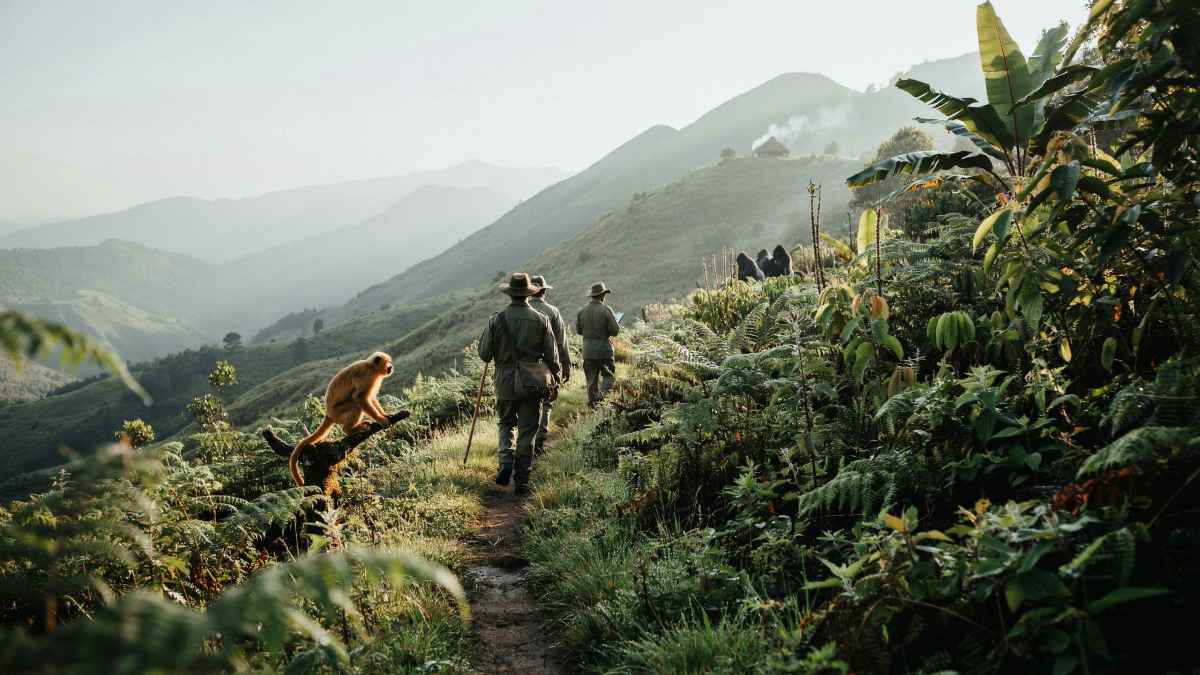
Image generated with Ai
Rwanda is enhancing the linkages between gorilla tourism, community development and conservation in relation to the Volcanoes National Park, with the continued use of tourism revenues to fund the development of the communities adjacent to one of Africa’s most critical mountain-gorilla habitats. This particular development is taking place as part of a wider community-based conservation strategy and not as a recently formulated revenue-sharing framework in mid-September 2026. There is an existing tourism revenue sharing scheme in Rwanda where 10% of the revenues generated by tourism in national parks goes towards community development.
Ten Per Cent Of Park Revenue Goes To Communities
Rwanda’s Tourism Revenue Sharing Programme has operated for two decades and has become a central part of the country’s conservation model.
Under the programme, 10% of tourism revenues generated by national parks are reinvested in communities surrounding protected areas. Since the programme began, more than RWF 23 billion has supported nearly 1,300 community projects, including education, healthcare, water infrastructure and livelihood initiatives.
The system is not limited to gorilla trekking fees.
Advertisement
Advertisement
Park tourism revenue is channelled through a broader mechanism supporting community development around Rwanda’s protected areas, allowing local priorities to determine how funds are used.
Advertisement
Advertisement
Volcanoes National Park Gets A Larger Conservation Plan
The most significant current development around Volcanoes National Park is the Volcanoes Community Resilience Project.
Rwanda’s long-term plan calls for expanding the park by approximately 3,740 hectares and establishing around 6,620 hectares of buffer zones. The programme is expected to improve livelihoods for more than 17,000 people, representing approximately 3,400 households.
The planned expansion is intended to increase wildlife habitat while addressing some of the pressure created by limited agricultural land around the park.
For conservation managers, the buffer zones are particularly important because they can create a managed transition between protected wildlife habitat and surrounding farms and settlements.
Smart Green Village Brings Agriculture And Tourism Together
A major component of the programme is the Smart Green Village in Rurembo, Kinigi Sector, where construction began in August 2026.
Advertisement
Advertisement
The project represents an investment of more than US$49 million and is designed to provide 547 households with housing, essential services and sustainable livelihood opportunities. Its development combines climate-smart agriculture, renewable energy and tourism-related economic activities.
The village plans include greenhouses, irrigation and agricultural processing facilities alongside eco-lodges and community tourism infrastructure.
Rainwater harvesting, wastewater treatment, waste management and energy-efficient buildings are also incorporated into the development.
This creates a wider model in which conservation is connected not only to tourism revenue but also to farming, infrastructure and household livelihoods.
Tourism Revenue Is Already Reaching Northern Districts
The most recent Tourism Revenue Sharing allocations demonstrate how the existing system operates around Volcanoes National Park.
Advertisement
Advertisement
In 2026, approximately RWF 1.98 billion was allocated across the four districts neighbouring the park: Burera received RWF 495 million, Musanze RWF 659.8 million, Nyabihu RWF 659.8 million and Rubavu RWF 164.95 million.
The money is directed towards community development priorities rather than being automatically assigned to a single conservation activity.
Over the past two decades, communities around Volcanoes National Park have benefited from hundreds of projects supported through the scheme. According to Rwanda Development Board figures, 838 projects worth approximately RWF 8.6 billion have been supported in the four neighbouring districts.
Gorilla Tourism Remains A Major Economic Driver
Volcanoes National Park is Rwanda’s flagship wildlife tourism destination and the country’s mountain gorilla population remains central to its international tourism profile.
Rwanda recorded US$685 million in tourism revenue in 2025, with 1.49 million visitor arrivals. National parks recorded 155,394 visits and generated US$40.8 million in park revenues, with Volcanoes National Park contributing US$35.8 million.
Advertisement
Advertisement
These figures demonstrate why the relationship between tourism and communities is so important around the park.
The financial value generated by gorilla tourism provides a mechanism through which conservation can support surrounding communities, while community benefits can strengthen the local economic case for protecting the park.
Buffer Zones Are Becoming Increasingly Important
The planned buffer zones are particularly relevant because Volcanoes National Park sits within a densely settled agricultural landscape.
Rwanda’s approach is therefore not simply about keeping people outside protected areas. It also involves creating livelihood opportunities and improving land-use practices around the park.
The Smart Green Village programme includes climate-smart agriculture and irrigation alongside tourism facilities, creating opportunities for households to increase productivity while participating in a wider green-economy model.
Advertisement
Advertisement
The approach is also intended to reduce human-wildlife conflict and ease pressure associated with limited agricultural land.
Community Tourism Adds Another Layer
Community tourism is becoming part of the economic landscape around Kinigi and Musanze.
The Smart Green Village is planned to include community tourism facilities and eco-lodges, potentially giving residents additional opportunities to participate directly in the visitor economy.
This differs from the claim that Rwanda has made community-owned eco-enterprises mandatory for all tourism around Volcanoes National Park. Current official information confirms investment in community tourism opportunities but does not establish such a blanket legal requirement.
Likewise, there is no verified announcement that individual gorilla permit fees are directly assigned to agroforestry buffers.
Advertisement
Advertisement
The established system instead uses the broader 10% tourism-revenue-sharing mechanism, alongside separate conservation and community-resilience investments.
A Long-Term Conservation And Tourism Model
Rwanda’s latest projects demonstrate how the country is seeking to link three priorities associated with Volcanoes National Park: the protection of mountain gorilla habitats, the improvement of the livelihood of local communities, and the maintenance of a high-value tourism sector. These include projects such as the 3,740-hectare extension of the park, the 6,620-hectare buffer zones project, the Smart Green Village project and tourism revenue sharing. For the tourists, the model involves the embedding of the gorilla tourism experience into the wider conservation area. The revenue from tourism helps in the development of the infrastructure of local communities, while agriculture, environmental and tourism projects are being implemented in the area. The claims regarding the new revenue-sharing framework for September 2026 involving mandatory community-based enterprises have not been proven yet. It is evident, however, that there is already a 10 per cent revenue-sharing scheme in place, along with the significant community resilience project.
Advertisement
