
Rome Colosseum Closure Stuns Tourists as 22-Year-Old Worker Dies During Overnight Work in Italy

Published
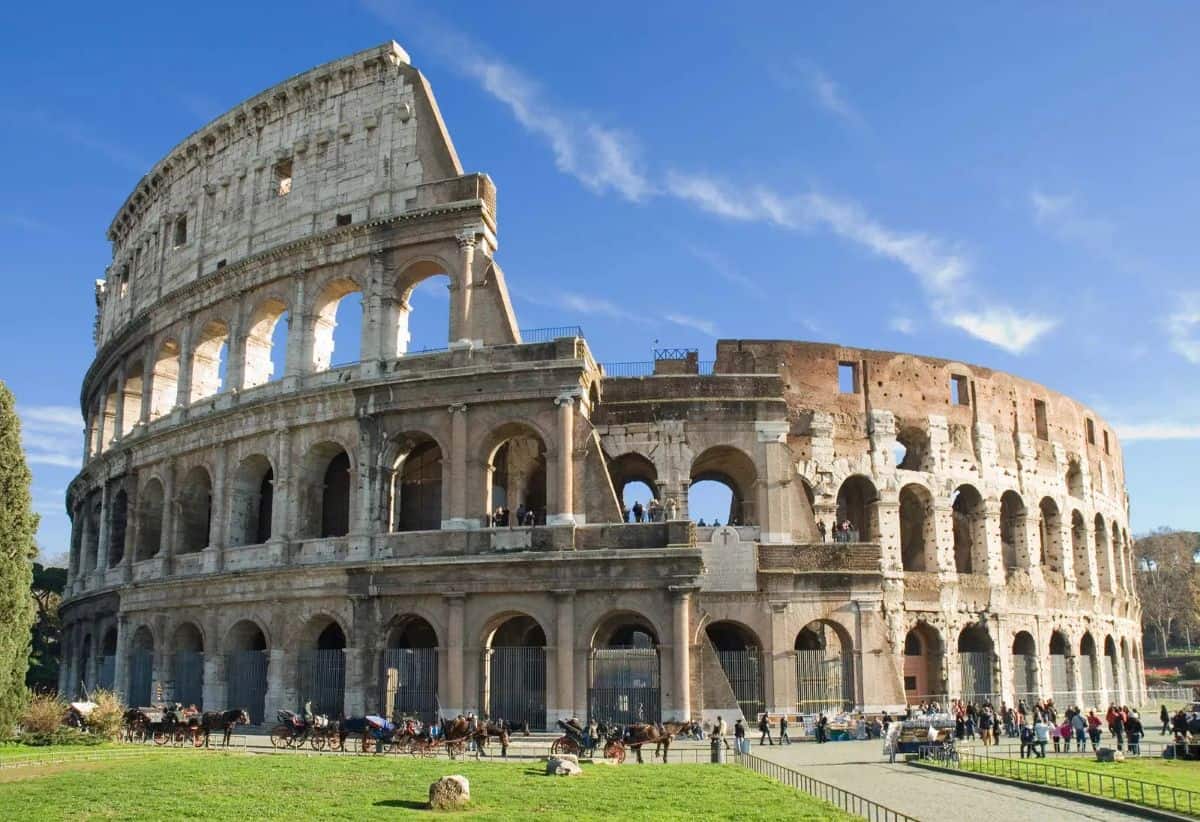
Rome’s Colosseum has closed to visitors after 22-year-old worker Andrea Moretti died in a workplace accident inside the ancient amphitheatre. Moretti, a specialist in high-altitude rope work, fell approximately 10 metres while installing a new lighting system overnight. The accident occurred shortly after midnight between Tuesday and Wednesday, according to Italian authorities. The initial closure covered the section where the incident occurred, but officials later extended it across the Colosseum Archaeological Park. The latest official notice now extends the closure through 25 September 2026, with refunds for affected bookings processed automatically. The incident has also prompted a wider focus on safety during conservation and infrastructure work at major heritage attractions.
Rome’s Landmark Falls Silent After Tragedy
The accident transformed one of Rome’s busiest tourist sites into a place of mourning on Wednesday. Visitors who arrived expecting the usual queues instead encountered closed entrances and an exceptional disruption to their itineraries.
Advertisement
Advertisement
Moretti was working on the installation of a new lighting system when he fell from height. Italy’s Ministry of Culture identified him as a specialised rope-access worker operating at the monument. Emergency responders attempted to revive him, but he died at the scene.
The circumstances surrounding the fall remain under investigation. Carabinieri, the medical examiner, the public prosecutor and workplace-safety officials attended the scene.
Advertisement
Advertisement
The Ministry initially ordered the closure of the second level where the accident happened. Officials later expanded the measure to the entire visitor operation.
Advertisement
Advertisement
The decision also reflected an immediate crowd-management concern. Thousands of visitors had already entered during the first admission period. Authorities said abruptly stopping admissions could have created a large concentration outside the monument.
The Ministry subsequently extended the closure as a mark of mourning and solidarity. The official park notice confirmed that all admissions scheduled for 24 September were affected.
However, the situation has since changed again. The Colosseum’s official website now states that the closure covers 24 and 25 September 2026. It also confirms that refunds will be processed automatically.
Advertisement
Advertisement
What Travellers Need to Know Now
For travellers, the most important issue is not simply whether the Colosseum is closed. It is whether a planned Rome itinerary needs immediate restructuring.
The latest official information should therefore take precedence over older travel schedules and third-party ticket information. Visitors with bookings affected by the closure do not need to submit individual refund requests, according to the archaeological park.
Advertisement
Advertisement
| Traveller Issue | Latest Information |
|---|---|
| Affected destination | Colosseum Archaeological Park |
| Initial closure | 23 September 2026 |
| Earlier extension | 24 September 2026 |
| Latest official extension | 25 September 2026 |
| Reason | Mourning after fatal workplace accident |
| Affected admissions | Scheduled admissions during closure |
| Refunds | Automatic processing |
| Individual refund request | Not required |
| Reopening | Subject to official instructions |
| Recommended action | Check the official park website before travelling |
The park’s official booking system normally requires visitors to reserve a specific entry time for the Colosseum. Tickets become available 30 days before the intended visit.
That system becomes particularly important during an unexpected closure. Travellers should therefore verify the operational status before heading towards Piazza del Colosseo.
Why The Closure Matters to Rome Tourism
The disruption carries significance beyond one attraction because the Colosseum functions as a major anchor for Rome’s visitor economy.
The archaeological park recorded around 14 million visitors in 2024, according to its own conservation information. Another official presentation described the figure as approaching 15 million.
That scale explains why even a short closure can affect wider visitor flows. Tour operators, guides, hotels, transport providers and restaurants around the historic centre can all experience secondary effects.
Advertisement
Advertisement
The closure also illustrates the operational complexity of managing a monument that combines tourism, conservation and infrastructure work.
The Colosseum is not simply a static archaeological structure. Specialists continuously maintain its surfaces, structures and facilities.
The park says its planned maintenance programme operates throughout the year. It involves restorers, skilled workers and cleaners, supported by architects, archaeologists, engineers and other specialists.
Consequently, maintenance work remains essential to keeping the monument accessible. The tragedy instead highlights the risks associated with undertaking that work within a highly complex historic structure.
Heritage Conservation Requires Constant Work
The Colosseum’s immense age can make conservation appear almost invisible to visitors. Yet its preservation depends on continuing technical intervention.
Advertisement
Advertisement
The official park describes the monument as a large and fragile structure within a complex urban environment. Its maintenance programme addresses both preservation and the operation of visitor facilities.
The lighting project involved work at height, adding another technical dimension to the conservation environment.
Historic monuments can contain uneven surfaces, restricted access points, fragile structures and difficult working positions. Modern infrastructure must therefore coexist with archaeological protection.
That creates a delicate balance for heritage managers. Visitors expect safe and seamless experiences, while specialists need access to structures that tourists rarely see.
The Moretti accident brings that hidden layer of tourism infrastructure into public view.
Advertisement
Advertisement
It also reinforces the distinction between visitor safety and worker safety. Both are fundamental to the sustainable operation of major cultural attractions.
Italy’s Workplace Safety Picture Adds Context
The tragedy also comes against a broader national workplace-safety backdrop.
Italy’s National Institute for Insurance against Accidents at Work, INAIL, reported 597,710 workplace accident claims in 2025. That represented a 1.4% increase from 589,571 in 2024.
INAIL also recorded 1,093 fatal accident claims received by the end of 2025. Of those, 1,085 involved workers and eight involved students.
The institute’s latest annual report provides a more nuanced European comparison. Using 2023 Eurostat data, Italy recorded 1.20 fatal workplace accidents per 100,000 workers. The EU-27 average stood at 1.23.
Advertisement
Advertisement
These national figures do not explain the circumstances of Moretti’s death. They do, however, provide important context for understanding why workplace safety remains a significant policy issue in Italy.
| Indicator | Italy | Reference |
|---|---|---|
| Workplace accident claims, 2025 | 597,710 | INAIL |
| Workplace accident claims, 2024 | 589,571 | INAIL |
| Change | +1.4% | INAIL |
| Fatal accident claims, 2025 | 1,093 | INAIL |
| Fatal claims involving workers | 1,085 | INAIL |
| Fatal workplace rate, 2023 | 1.20 per 100,000 workers | INAIL/Eurostat |
| EU-27 fatal workplace rate, 2023 | 1.23 per 100,000 workers | INAIL/Eurostat |
The figures should not be interpreted as directly measuring safety at archaeological sites. They instead establish the wider national context surrounding the incident.
Rome Visitors Should Recheck Their Itineraries
Travellers arriving in Rome during the closure period may need to reorganise several parts of their sightseeing plans.
The Colosseum commonly forms part of a broader archaeological itinerary involving the Roman Forum and Palatine Hill. Those sites fall within the same archaeological park, so visitors should verify whether their particular ticket or route remains available.
The park’s standard operating schedule also changes seasonally. From 1 October to 24 October 2026, the park is scheduled to close at 6.30pm, with last admission at 5.30pm. From 25 October, the closing time moves to 4.30pm.
Advertisement
Advertisement
Those ordinary seasonal hours should not be confused with the exceptional closure triggered by the fatal accident.
| Planned Visit | Traveller Response |
|---|---|
| 24 September | Check automatic refund information |
| 25 September | Verify the latest closure notice |
| Later September | Recheck before travelling |
| Colosseum ticket already booked | Monitor official booking information |
| Combined archaeological itinerary | Confirm which areas are operating |
| Flexible Rome itinerary | Consider alternative cultural attractions |
Travellers should also avoid relying solely on social-media posts or old booking confirmations. Official park notices provide the most reliable information during an evolving closure.
Rome Has Managed Other Temporary Disruptions
Unexpected restrictions are not unusual at major archaeological sites. What distinguishes this incident is the reason and the scale of the closure.
The Colosseum Archaeological Park has previously adjusted access for restoration, maintenance, events and transport-related circumstances. For example, the park temporarily restricted access to sections of the Roman Forum during restoration work in 2025.
In another case, visits using the Colosseum’s panoramic lift were temporarily suspended during maintenance work in 2024. Access later resumed once the work was completed.
Advertisement
Advertisement
These examples show that temporary access changes form part of normal heritage management.
The present closure is fundamentally different. It follows a fatal workplace accident and has been implemented as a measure of mourning.
The distinction matters for travellers because normal maintenance closures can often be anticipated. Exceptional closures may change with little notice.
What This Means for Future Heritage Visits
The incident offers a broader lesson for cultural tourism operators.
Visitors increasingly expect historic attractions to provide seamless experiences. Yet maintaining centuries-old structures requires continuing intervention, specialist expertise and sometimes disruptive work.
Advertisement
Advertisement
The Colosseum’s own maintenance programme demonstrates the scale of that responsibility. Its teams work across conservation, engineering, archaeology and visitor operations.
For tourism businesses, this creates a practical need for better contingency planning. Tour operators can reduce disruption by building flexible alternatives into Rome itineraries.
Hotels and destination managers can also provide timely information when major attractions close unexpectedly. Meanwhile, ticketing platforms need clear procedures for refunds and itinerary changes.
The current situation demonstrates why real-time destination information has become increasingly important for international travellers.
It also highlights the importance of separating confirmed information from early reports. Details surrounding the accident remain under investigation, while the closure status has changed during the week.
Advertisement
Advertisement
Official Updates Should Guide Travel Plans
For visitors heading to Rome, the immediate priority is straightforward. Check the Colosseum Archaeological Park’s official channels before travelling to the monument.
The park has confirmed that refunds for affected bookings will be processed automatically. It has also asked visitors not to submit repeated requests, which could slow administrative processing.
The park’s regular booking system also carries important practical information. Entry to the Colosseum normally requires a reserved time slot, making it particularly important to verify any booking after an unexpected closure.
The wider Roman archaeological district still offers substantial alternatives. Travellers can consider museums, historic churches, galleries and other archaeological attractions while waiting for official reopening information.
However, visitors should check each attraction separately rather than assuming that a single closure affects every Rome landmark.
Advertisement
Advertisement
Rome’s Iconic Landmark Faces A Sobering Pause
The Colosseum’s closed gates have created an unusual image in Rome, but the significance extends far beyond tourism disruption. A young specialist died while undertaking technical work inside one of the world’s most visited monuments.
For travellers, the immediate lesson is to verify official access information before visiting. For the tourism industry, the incident underlines the difficult relationship between heritage preservation, infrastructure and workplace safety. The Colosseum attracts millions of visitors precisely because it has survived centuries of change. Maintaining that legacy requires constant specialist intervention, often outside the visitor’s view. The latest closure therefore represents more than an interruption to sightseeing. It is a moment of mourning, investigation and reflection for one of Europe’s most important cultural attractions.
Advertisement
