
Singapore Gets New Kazakhstan Connection as SCAT Airlines Launches Shymkent Flights via Sanya

Updated
Published
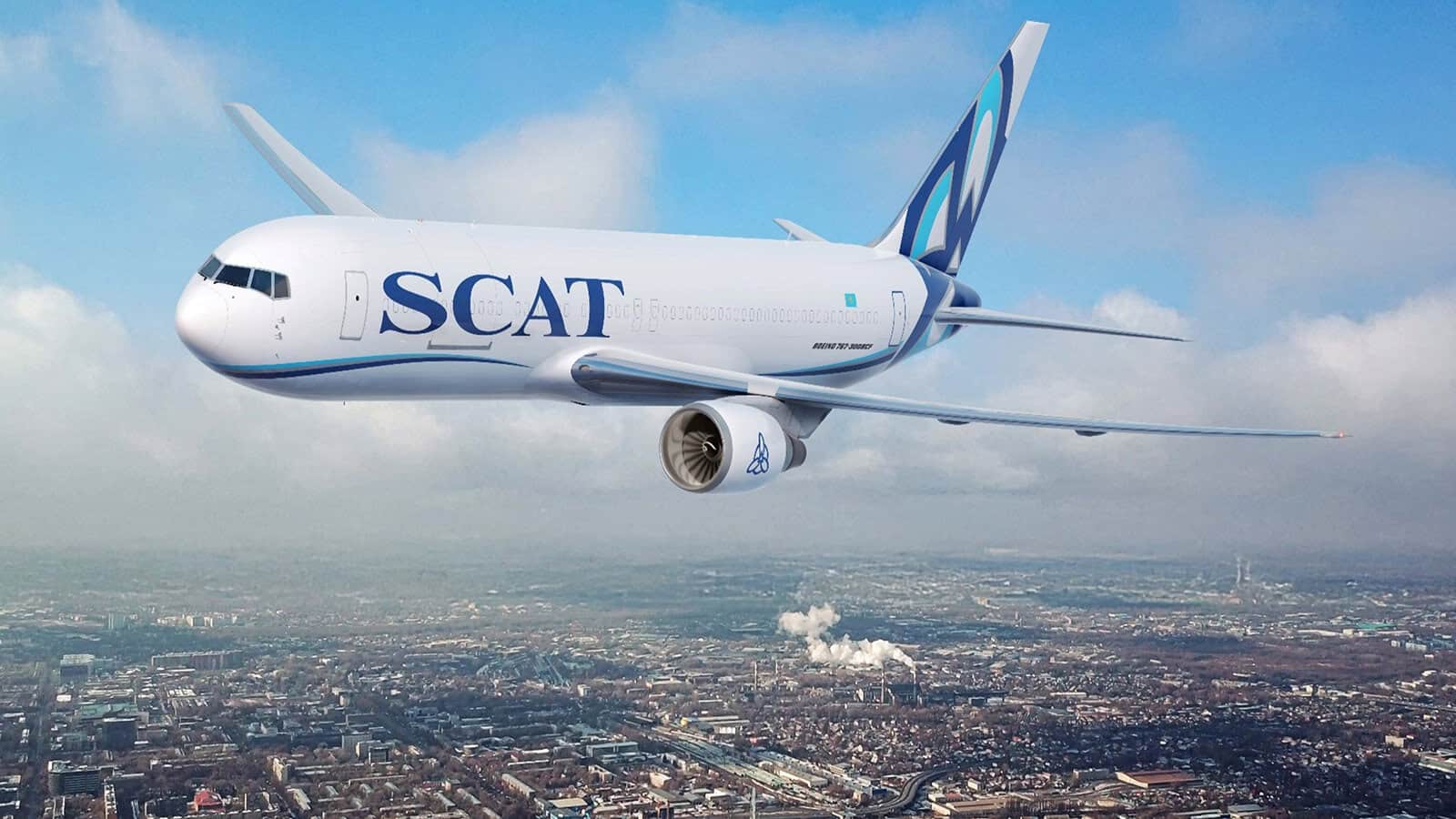
Image generated with Ai
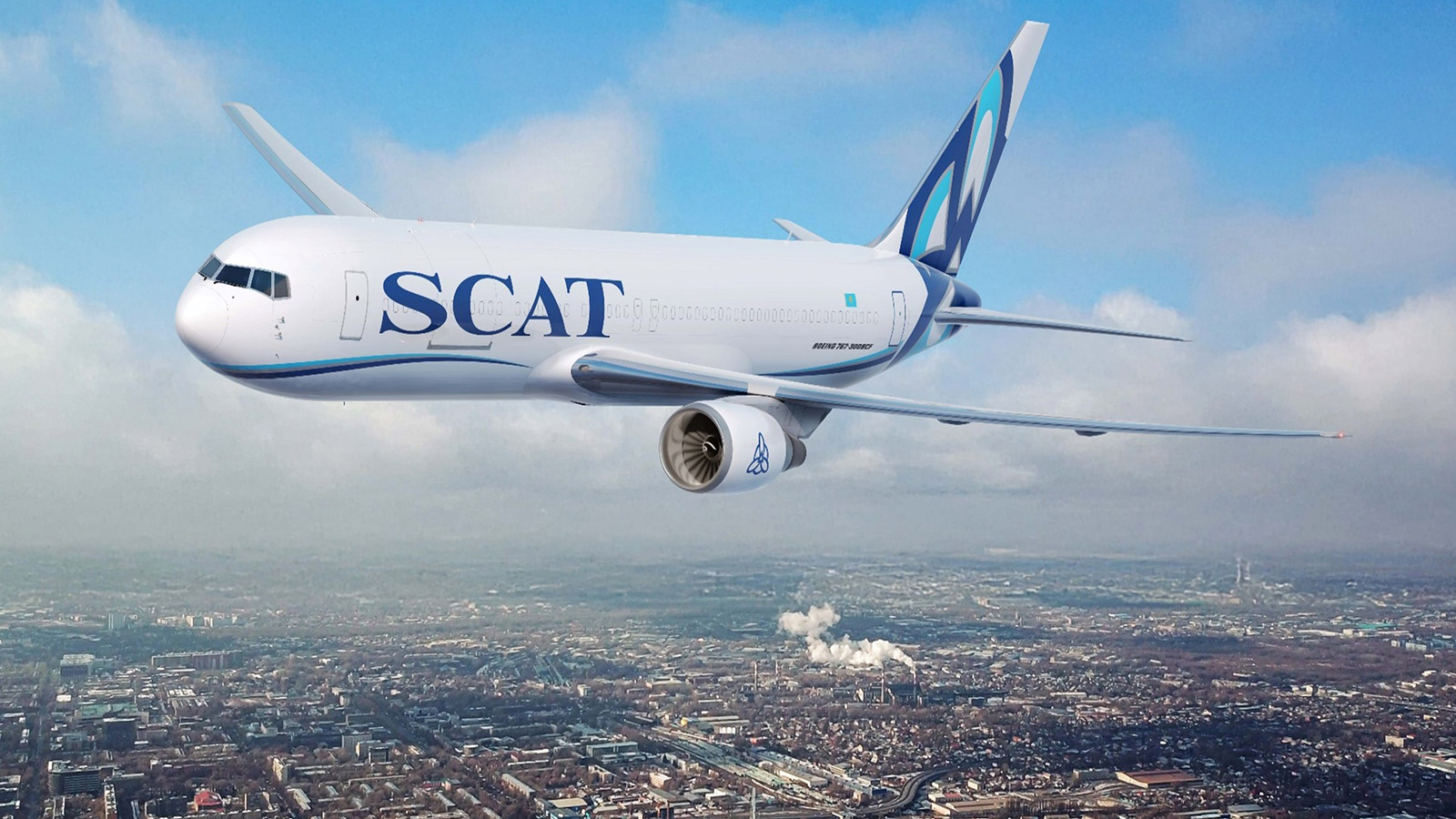
Singapore will soon have another Central Asian air connection with SCAT Airlines scheduled to start Shymkent to Singapore flights via Sanya on 20 October 2026. A new service will give passengers in southern Kazakhstan the option to travel to Singapore with a stopover in China. This will provide greater options for business, leisure, and connecting travel. The launch of the flights also follows the investment of Kazakhstan into the development of Shymkent into an international aviation hub and Singapore’s effort to drive visitor and tourism growth. The route also shows SCAT Airlines’ intention to grow its network and expand its fleet with recent Boeing 737 MAX purchases and scheduled airport improvements in Shymkent in the near future.
New Shymkent Singapore Flights Expand Kazakhstan’s Reach into Southeast Asia
Kazakhstan’s international aviation network is extending further into Southeast Asia as SCAT Airlines prepares to connect Shymkent with Singapore through Sanya in China. The first service is scheduled for 20 October 2026, bringing Singapore into an expanding network of Asian destinations being developed from southern Kazakhstan.
The new connection matters beyond the addition of another destination to an airline timetable. It comes as Kazakhstan is positioning Shymkent Airport as an increasingly important international hub and building the aircraft, terminal and runway capacity needed to support more services between Central Asia, Europe and Asia.
For Singapore, the connection creates another avenue into a region where international tourism and air connectivity are expanding. It also comes as the city-state pursues a long-term tourism strategy designed to grow visitor spending while strengthening its role as a major Asian destination and transport gateway.
Advertisement
Advertisement
The planned service includes an intermediate stop at Sanya, on China’s Hainan Island. Travellers should therefore pay particular attention to their ticket conditions, transit arrangements and entry documentation before departure, especially because immigration requirements depend on nationality and whether passengers formally enter China or remain in transit.
What Travellers Know About the New Route
The new route is scheduled to begin on 20 October 2026, linking Shymkent with Singapore through Sanya. SCAT has been expanding its Asian footprint while simultaneously strengthening Shymkent as its principal operating base.
Advertisement
Advertisement
The carrier already has experience operating longer international sectors with Boeing narrow-body aircraft. Kazakhstan’s Aviation Administration confirmed in April 2026 that SCAT had received another two new Boeing 737 MAX 8 aircraft, supplied directly from Boeing’s Seattle production facility. (Civil Aviation Authority)
Those aircraft were specifically linked by the aviation authority to expansion of SCAT’s network and the development of Shymkent as a hub. The authority said the additional jets would provide greater operational flexibility while supporting further growth in international destinations. (Civil Aviation Authority)
Boeing has also confirmed the airline’s longer-term fleet expansion. In April 2026, Boeing and SCAT announced another order for five 737-9 aircraft alongside the conversion of five previously ordered 737-8s to the larger variant, giving SCAT additional capacity for longer international services. (MediaRoom)
Shymkent Is Becoming a Much Bigger Aviation Hub
The Singapore connection is easier to understand when placed against the transformation taking place at Shymkent International Airport.
A new passenger terminal opened in December 2024, significantly increasing the airport’s capacity. Shymkent city authorities said the older terminal handled around 200 passengers per hour, while the new facility raised processing capacity to about 2,000 passengers per hour. (Government of Kazakhstan)
The same official update reported that Shymkent Airport handled approximately 2.5 million passengers in 2025, representing growth of 17% compared with the previous year. International destinations served from the airport had also increased as authorities worked to establish Shymkent as a stronger aviation centre. (Government of Kazakhstan)
Advertisement
Advertisement
Kazakhstan’s Ministry of Transport has described the development as part of a broader programme to turn major regional airports into competitive multimodal centres. Government plans include further aviation infrastructure, logistics facilities and improved links between airports and surrounding economic zones. (Government of Kazakhstan)
This gives the Singapore service a stronger foundation than a standalone route announcement. It forms part of an airport strategy aimed at giving southern Kazakhstan substantially greater international connectivity.
A New Runway Is Adding More Capacity
Infrastructure work at Shymkent has continued in 2026.
Kazakhstan’s Aviation Administration said in April that construction had begun on a new runway at the airport. The project also includes taxiways, ICAO Category III airfield lighting, engineering networks, emergency infrastructure and other operational facilities. (Civil Aviation Authority)
Once complete, Shymkent is expected to operate with two runways. The aviation authority says this should increase flight capacity, support more international routes and allow more reliable operations during difficult weather conditions. (Civil Aviation Authority)
The project is also designed to allow the airport to receive large cargo aircraft, reinforcing the government’s ambition to develop Shymkent not only for passenger travel but as a regional logistics centre.
Advertisement
Advertisement
For airlines, those improvements can offer greater scheduling flexibility and space for network expansion. For travellers, additional capacity may eventually translate into a wider choice of international destinations without always travelling through Almaty or Astana.
SCAT Is Building Its Network Around Shymkent
SCAT’s fleet expansion and Shymkent’s airport investment are closely connected.
Kazakhstan’s aviation authorities said the carrier added new Shymkent services during 2026 to destinations including Bishkek, Novosibirsk and Saint Petersburg, alongside domestic routes. The government explicitly identified Shymkent as one of the key growth points in Kazakhstan’s route network. (Civil Aviation Authority)
Earlier government plans for 2026 also outlined a continuing expansion of Kazakhstan’s international aviation network across Asia, Europe and the Middle East. SCAT was among the domestic airlines expected to play an important role in that strategy.
The Singapore link advances that programme further east and south.
It also creates an interesting geographic bridge. Shymkent sits close to some of the most important population and commercial corridors of southern Kazakhstan and neighbouring Central Asian markets, while Singapore operates as one of Asia’s principal aviation, business and tourism centres.
Advertisement
Advertisement
Kazakhstan Tourism Is Growing Alongside Aviation
The route expansion comes during a period of measurable tourism growth in Kazakhstan.
Official statistics released by Kazakhstan’s government show that 15.7 million foreign visitors entered the country in 2025 for eligible travel purposes, excluding people arriving for permanent residence or employment. Of these, the government classified 11.1 million as tourists. (Government of Kazakhstan)
Hotels and other registered accommodation establishments served about 1.4 million international guests, an increase of 132,300 over the previous year. Domestic tourists using accommodation establishments reached 10.1 million. (Government of Kazakhstan)
Revenue generated by accommodation establishments reached KZT350.6 billion in 2025, up by KZT50.8 billion year on year. Kazakhstan also had 4,482 accommodation establishments, providing more than 233,000 bed places. (Government of Kazakhstan)
Tourism investment rose particularly strongly. Official figures put investment in the sector at KZT1.2569 trillion in 2025, an increase of 32.6% from KZT947.6 billion in 2024. (Government of Kazakhstan)
These figures give aviation expansion a wider economic context. More international capacity can support visitor dispersal, business travel, tour programmes and hotel demand, although the impact of an individual new route cannot be quantified until passenger and visitor data become available.
Advertisement
Advertisement
Tourism Already Supports More Than 600,000 Jobs in Kazakhstan
Kazakhstan’s Tourism Industry Committee describes tourism as an increasingly important part of the national economy.
According to the committee, the sector supported more than 600,000 jobs in 2025 and contributed approximately KZT5 trillion to the economy. International visitors spent around US$2.9 billion during their trips, while tourism-related tax revenues exceeded KZT630 billion. (Government of Kazakhstan)
Those numbers help explain why improved international accessibility is receiving government attention.
New routes can benefit more than airports and airlines. Hotels, restaurants, transport companies, destination-management businesses, guides, attractions and retailers can all participate in visitor spending when international arrivals increase.
However, no official passenger forecast or economic-impact estimate has yet been published specifically for the Shymkent–Singapore connection. Any claim that the route itself will generate a particular number of tourists, jobs or tourism revenue would therefore be premature.
Kazakhstan Updates Tourism Strategy Through 2029
Kazakhstan is also updating the policy framework surrounding its tourism expansion.
Advertisement
Advertisement
The government revised its Tourism Industry Development Concept through 2029 in July 2026, widening its programme to cover infrastructure, digitalisation, visitor centres, investment, workforce development and improvements to tourism business conditions. (Government of Kazakhstan)
Official targets under the updated strategy include lifting tourism-sector gross value added to KZT6.3 trillion by 2029 and increasing tourism employment to 800,000 people.
The country also aims to exceed 11 million domestic tourists and reach four million inbound tourists under the accommodation-based measure identified in the strategy by 2029. Kazakhstan additionally wants to enter the world’s top 50 in the World Economic Forum’s Travel & Tourism Development Index. (Government of Kazakhstan)
Transport infrastructure is an important part of that programme. Better international flight access can make secondary cities more accessible and reduce dependence on a small number of gateways.
Singapore Brings a Powerful Tourism Market to the Other End of the Route
At the other end of the connection is one of Asia’s most valuable tourism economies.
The Singapore Tourism Board reported 16.9 million international visitor arrivals in 2025, up 2.3% from the previous year. Mainland China, Indonesia, Malaysia, Australia and India were the five largest visitor markets. (Singapore Tourism Board)
Advertisement
Advertisement
Singapore generated a record S$32.8 billion in tourism receipts during 2025, according to the Tourism Board’s May 2026 industry update. For 2026, STB projected 17 million to 18 million international visitors and tourism receipts of approximately S$31 billion to S$32.5 billion. (Singapore Tourism Board)
The Shymkent connection therefore enters a destination with substantial established demand, major hotel capacity, extensive business-event infrastructure and onward aviation connections.
Singapore’s attraction to Kazakh travellers may extend across leisure trips, shopping, events, business travel, education-related visits and onward Southeast Asian journeys. However, the route’s actual passenger mix will only become clear once operations begin.
Singapore Tourism 2040 Puts Quality Growth Ahead of Numbers Alone
Singapore is not simply targeting more arrivals.
Its Tourism 2040 roadmap focuses on higher-value and sustainable tourism while strengthening Singapore as a global hub for tourism enterprises. STB projects tourism receipts could reach S$47 billion to S$50 billion by 2040. (Singapore Tourism Board)
The strategy is built around developing future demand, improving destination appeal and creating a more productive tourism sector.
Advertisement
Advertisement
That makes emerging air links relevant even when individual source markets are comparatively small. Broader connectivity can diversify Singapore’s visitor base and make the destination accessible to travellers who previously faced less convenient itineraries.
For Kazakhstan, the traffic can move in both directions. A practical connection with Singapore also makes Shymkent and wider Kazakhstan more accessible to travellers beginning journeys in Southeast Asia, although demand should not be assumed before traffic statistics are published.
What Airlines and Airports Could Gain
For SCAT Airlines, Singapore adds another long international market to a rapidly expanding network.
The airline’s continuing investment in Boeing aircraft provides the capacity required for network development. Boeing said in April that SCAT had almost 40 Boeing aircraft in service, including nine 737-8s and five 737-9s at that point. (MediaRoom)
The manufacturer said the larger 737-9 has a range of up to 6,110 kilometres and can accommodate as many as 220 passengers depending on configuration. The 737 MAX fleet gives SCAT several aircraft options as it builds international services from Kazakhstan. (MediaRoom)
For Shymkent Airport, every additional international destination supports its effort to establish itself as a more important regional gateway.
Advertisement
Advertisement
The airport’s growing terminal capacity, new runway and expanding international schedule also make it more relevant to tour operators seeking alternatives to Kazakhstan’s traditional major gateways.
Hotels and Tour Operators Could Build Two-Way Demand
A new international route creates opportunities for travel sellers on both ends, but commercial demand must still be developed.
Kazakh tour operators can package Singapore around hotels, attractions, shopping, family travel and regional extensions. Singapore-based operators can develop Kazakhstan itineraries involving Shymkent and onward domestic connections, particularly as the country invests in destination infrastructure.
Hotels may also benefit if new capacity produces incremental overnight stays.
Kazakhstan’s accommodation revenue and international hotel-guest numbers are already rising, while Singapore is prioritising higher-value visitor spending. The commercial case for tourism businesses will therefore depend on converting aviation capacity into bookable itineraries rather than relying on the existence of the flight alone.
Shymkent’s Wider Aviation Investment Is Creating Business Opportunities
A further infrastructure project strengthens the aviation story.
Advertisement
Advertisement
In February 2026, Kazakhstan’s Aviation Administration announced construction of what it describes as the largest aircraft maintenance centre in Central Asia in Shymkent. SCAT is developing the MRO facility in partnership with Boeing. (Civil Aviation Authority)
The planned complex will cover around 10 hectares, with more than 45,000 square metres of engineering and technical infrastructure. It is designed to service Boeing 737, 757, 767 and eventually 777 aircraft families.
The government expects the project to create skilled employment while increasing Kazakhstan’s ability to service aircraft domestically and potentially attract maintenance work from foreign airlines.
Combined with passenger-terminal expansion and runway construction, the MRO project shows that Shymkent’s aviation strategy extends beyond adding destinations.
What Travellers Need to Know Before Flying to Singapore
Travellers should not assume that a new direct-ticket itinerary removes normal immigration requirements.
Singapore’s Immigration & Checkpoints Authority currently lists Kazakhstan among the countries whose travel-document holders require a visa to enter Singapore. Passengers should check the requirement against their exact passport and circumstances before booking. (ICA)
Advertisement
Advertisement
Foreign visitors entering Singapore must generally also submit the SG Arrival Card with Electronic Health Declaration before arrival. ICA stresses that the SG Arrival Card is free and is not a visa. (ICA)
Travellers should use Singapore’s official immigration channels rather than third-party websites charging unnecessary SG Arrival Card fees.
Passengers should also confirm with SCAT whether their Sanya stop is handled as an airside transit on their specific flight and ticket. Immigration and baggage procedures can vary depending on operational arrangements, so passengers should rely on their final airline documentation rather than assumptions based on another itinerary.
Key Facts at a Glance
| Topic | Verified position |
|---|---|
| New route | Shymkent–Singapore via Sanya |
| Planned start | 20 October 2026 |
| Airline | SCAT Airlines |
| Kazakhstan gateway | Shymkent International Airport |
| Intermediate point | Sanya, China |
| SCAT fleet expansion | Two additional Boeing 737 MAX 8s confirmed in April 2026 |
| Shymkent airport traffic | Around 2.5 million passengers in 2025 |
| Airport traffic growth | 17% in 2025 |
| Kazakhstan foreign visitors | 15.7 million in 2025 |
| Foreign tourists classified by Kazakhstan | 11.1 million in 2025 |
| Kazakhstan tourism investment | KZT1.2569 trillion in 2025 |
| Singapore visitors | 16.9 million in 2025 |
| Singapore 2025 tourism receipts | S$32.8 billion |
| Singapore 2026 visitor forecast | 17–18 million |
| Singapore visa for Kazakh passport holders | Required under current ICA listing |
| SG Arrival Card | Required for most foreign visitors entering Singapore |
Future Outlook Must Be Tied to Published Plans
Kazakhstan’s official direction is clear: international aviation connectivity, tourism infrastructure and regional airports are all being expanded.
The government’s 2029 tourism strategy sets measurable targets for investment, employment, domestic tourism and international visitor growth. Shymkent’s airport projects also provide physical capacity for additional services. (Government of Kazakhstan)
Singapore is taking a similarly long-term approach through Tourism 2040, which targets stronger tourism receipts and higher-value visitor demand rather than growth based solely on arrival numbers. (Singapore Tourism Board)
Advertisement
Advertisement
What cannot yet be established is how much traffic the new route will carry, whether additional frequencies will follow, or how much tourism spending it will generate. No official forecasts have been released for those indicators, so they should not be presented as established outcomes.
Frequently Asked Questions
Do Kazakh travellers need a visa to visit Singapore?
Yes, under Singapore ICA’s current country list, holders of Kazakhstan-issued travel documents require a valid visa to enter Singapore. Travellers should check the official ICA website shortly before departure because immigration rules can change. (ICA)
Do passengers travelling to Singapore need an SG Arrival Card?
Most foreign visitors who clear immigration into Singapore must submit an SG Arrival Card before arrival. It is free through Singapore ICA and should not be confused with an entry visa. Passengers who remain solely in transit without clearing immigration are treated differently. (ICA)
Will passengers need to enter China during the Sanya stop?
Travellers should check their final ticket and SCAT’s instructions before departure. The new itinerary is structured through Sanya, but immigration, baggage and airside-transit procedures should be confirmed directly with the operating airline because they can depend on the final operational arrangement and passenger documentation.
Conclusion
Scheduled Shymkent–Singapore service via Sanya will further develop Kazakhstan’s aviation infrastructure and provide Singapore with another possible route to access Central Asia. One route on its own has little significance, but the supporting infrastructure is key, including the upgrades to Shymkent’s airport, new Boeing aircraft, an upgraded runway, and an international focused tourism policy. The new air service has some practical considerations for travelers that include checking the operating schedule, learning the transit process for Sanya, and reviewing the requirements for entry to Singapore. If the service begins as planned, it will provide more options to connect the two markets that are focused on careful long-range development of their tourism industries.
Official Sources
- Aviation Administration of Kazakhstan — SCAT Airlines fleet and Shymkent hub development
Official Kazakhstan Aviation Administration source - Kazakhstan Ministry of Tourism and Sports — Tourism Industry Development Concept to 2029
Official Kazakhstan tourism strategy - Singapore Tourism Board — 2026 tourism outlook and 2025 performance
Official Singapore Tourism Board source
Advertisement
