
Ras Al Jinz Strengthens Oman Tourism With Turtle Conservation

Published
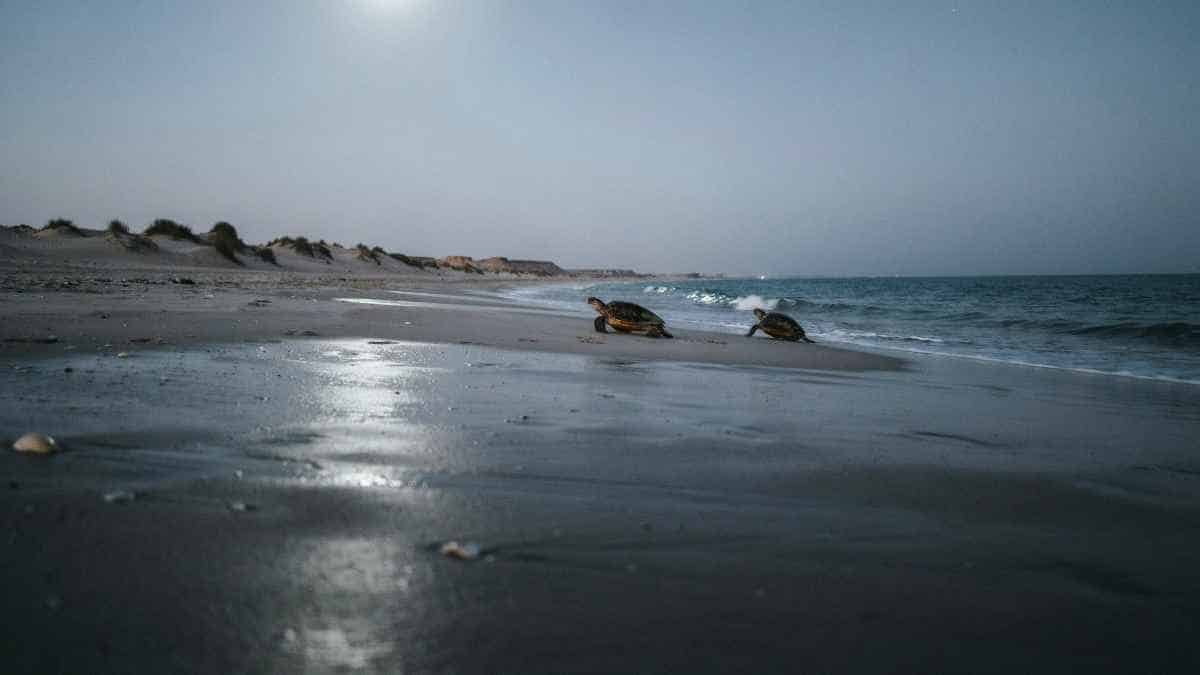
Ras Al Jinz, Oman, is one of the most important attractions in Oman for wildlife tourism, where people visit the eastern coast of Oman to see how green sea turtles nest and how hatchling turtles move closer to the Arabian Sea. Ras Al Jinz Turtle Reserve serves as a controlled environment for tourists, while at the same time it protects one of Oman’s important turtle-nesting beaches. The claim that the Oman Environment Authority has used AI autonomous underwater and aerial drones on October 7, 2026, to monitor boat anchoring, artificial lights, and unauthorised landing on the beach has not been confirmed by existing official sources. Hence, these details regarding the technologies are not presented as true events. But at the same time, there is an emphasis in Oman on conservation and tourism control at Ras Al Jinz.
Ras Al Jinz Is a Major Turtle-Nesting Site
Ras Al Jinz lies on Oman’s eastern coastline near Ras Al Hadd, in the Ash Sharqiyah Governorate.
The area is internationally recognised for green turtle nesting and forms part of a wider coastal ecosystem supporting marine wildlife.
Green turtles return to beaches to lay their eggs, with nesting activity occurring at different times of the year. The timing and number of nesting turtles can vary according to environmental conditions.
Advertisement
Advertisement
For visitors, the turtle reserve provides one of Oman’s most distinctive nature-tourism experiences. Guided viewing allows travellers to observe nesting turtles and, during appropriate periods, hatchlings moving towards the sea.
Tourism Is Managed Around Turtle Protection
The Ras Al Jinz Turtle Reserve operates visitor experiences under specific rules designed to reduce disturbance to turtles.
Advertisement
Advertisement
Night-time turtle viewing is conducted under controlled conditions. Visitors are guided by trained personnel and are expected to follow instructions concerning movement, noise and lighting.
Photography rules and restrictions on using flash are particularly important because artificial light can disturb nesting turtles and disorient hatchlings.
The controlled format allows visitors to observe wildlife while reducing direct interference with the animals.
For Oman tourism, the reserve provides an example of how a sensitive wildlife attraction can operate as a regulated visitor destination.
Artificial Light Can Affect Turtle Behaviour
Light management is particularly important at turtle-nesting beaches.
Sea turtles use environmental cues to navigate between nesting areas and the sea. Artificial lighting near beaches can interfere with these natural cues, particularly for hatchlings seeking the brighter horizon over the water.
Advertisement
Advertisement
This is why turtle conservation programmes commonly restrict unnecessary lighting around nesting beaches.
At Ras Al Jinz, visitors are expected to follow guide instructions and avoid shining lights towards turtles.
The protection of nesting beaches therefore extends beyond physical conservation of the sand itself. Managing visitor behaviour, lighting and movement is also part of the tourism experience.
Ras Al Hadd Adds Coastal Travel Opportunities
Ras Al Jinz is close to Ras Al Hadd, another important coastal destination in eastern Oman.
The region combines beaches, fishing communities, dramatic coastal scenery and access to the Arabian Sea.
Travellers can combine a turtle-watching experience with visits to nearby coastal areas and the historic town of Sur.
Advertisement
Advertisement
Sur is known for its maritime heritage and traditional dhow-building history, adding a cultural component to an itinerary centred on Ras Al Jinz.
The combination of wildlife, coastline and maritime heritage gives the region a broader tourism offer than turtle watching alone.
Sur Provides a Gateway to Eastern Oman
Sur is one of the main urban centres in Ash Sharqiyah and provides accommodation, restaurants and other visitor services for travellers exploring the surrounding coast.
The city is located roughly 40 kilometres from Ras Al Jinz, making it practical for visitors who want to explore both destinations.
Travellers can also include Wadi Shab, Bimmah Sinkhole and other attractions along Oman’s coastal route when planning a wider journey from Muscat.
The route between Muscat and Sur provides access to beaches, mountains, wadis and coastal villages, making eastern Oman suitable for road-trip itineraries.
Advertisement
Advertisement
Oman Expands Its Nature-Based Tourism
Oman has a diverse natural tourism offer extending from desert landscapes and mountain ranges to marine ecosystems and protected wildlife areas.
The country’s tourism strategy includes developing nature-based experiences while protecting environmentally sensitive destinations.
Ras Al Jinz fits into this approach because visitors travel specifically to experience wildlife in its natural habitat rather than visiting a conventional attraction.
The reserve’s conservation role is therefore directly connected with its tourism value. Maintaining suitable nesting conditions helps preserve the reason visitors travel to the area in the first place.
Responsible Visitors Support Turtle Conservation
Travellers visiting Ras Al Jinz need to follow the reserve’s rules closely.
Visitors should remain with authorised guides during turtle-watching sessions, avoid touching turtles or hatchlings and follow restrictions concerning photography and lighting.
Advertisement
Advertisement
Beach visitors should also avoid leaving waste behind or disturbing nesting areas.
Boat operators and other marine-tourism providers have separate responsibilities around coastal wildlife and protected areas.
The reported AI drone programme cannot currently be confirmed, but the principle of monitoring sensitive coastal habitats remains important as tourism activity develops around Oman’s eastern shoreline.
Ras Al Jinz Remains Central to Oman Wildlife Travel
Ras Al Jinz provides international tourists with a unique wildlife experience in Oman and links tourism with marine conservation. In addition to its conservation of green turtles and other natural elements, the reserve makes it an essential destination for travelers touring eastern Oman. For tourists, the visit becomes more meaningful if viewed from the perspective of a wildlife conservation encounter rather than a regular tourist attraction. With the development of nature-based tourism in Oman, the example of Ras Al Jinz proves that wildlife conservation and controlled tourism can be linked.
Advertisement
