
UK Joins Spain and More as Europe Witnesses More Flights and Better Punctuality Despite Surging Fuel Costs

Published
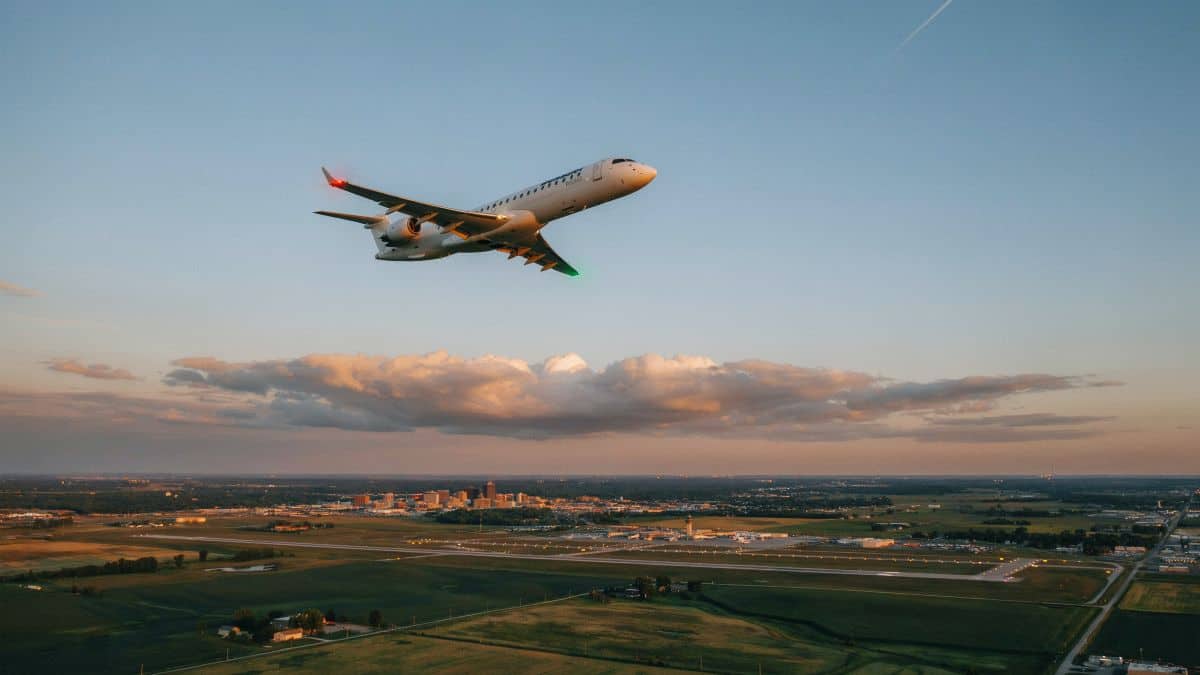
Image generated with Ai
UK joins Spain and more as Europe witnesses more flights and better punctuality despite surging fuel costs, signalling a resilient but increasingly complex aviation market for travellers. The results of official aviation monitoring indicate that traffic is still higher than last year and the operational results are better on key routes and airports. Meanwhile, rising fuel costs are putting strain on the airline’s costs, and may affect future fares, capacity and network planning. The trend is important for global tourism as Europe is still one of the most important aviation hubs, connecting international travelers to major cities, regional destinations and long-haul markets, while underpinning the enhanced cross-border travel demand across the globe today.
Europe Aviation Traffic Rises as Travellers Keep Flying Beyond the Summer Peak
Europe did not experience a sharp aviation slowdown as the peak summer season ended.
EUROCONTROL recorded an average 35,279 flights per day between 21 and 27 September 2026, up 2.9% from the comparable week of 2025. Arrival punctuality improved to 77%, while departure punctuality reached 71.7%.
Daily traffic slipped only 1.1% from the previous week, while remaining 2.9% above last year.
Advertisement
Advertisement
Eurostat’s separate EU commercial-flight figures reinforce the trend:
| Month in 2026 | EU commercial flights | Annual change |
|---|---|---|
| June | 662,480 | +2.1% |
| July | 709,931 | +2.8% |
| August | 708,980 | +2.3% |
More than two million commercial flights operated across the EU during June, July and August.
Advertisement
Advertisement
For passengers, sustained traffic has practical value. A dense aviation network can support:
- more departure-time choices;
- stronger direct connectivity;
- greater competition on major routes;
- easier short-break travel;
- better access to secondary European destinations.
The important traveller takeaway is that elevated operating costs have not yet produced a broad contraction in European flight activity.
UK and Spain Remain at the Heart of Europe’s Flight Network
The United Kingdom averaged 6,365 daily flights, retaining first place among EUROCONTROL’s busiest national aviation markets.
Spain followed with 6,195 flights per day and recorded stronger annual growth.
Europe’s busiest aviation markets
| Country | Daily flights | Change vs 2025 |
|---|---|---|
| UK | 6,365 | +2% |
| Spain | 6,195 | +5% |
| Germany | 5,647 | 0% |
| Italy | 4,923 | +8% |
| France | 4,687 | +1% |
| Türkiye | 3,990 | 0% |
| Greece | 2,316 | +2% |
| Netherlands | 1,726 | 0% |
| Poland | 1,680 | +7% |
| Norway | 1,468 | +1% |
Italy’s 8% increase was the strongest among these ten markets, while Poland grew 7%.
This creates an important tourism signal. Europe’s aviation growth is not being driven solely by its biggest established hubs. Southern Europe and parts of Central and Eastern Europe are gaining additional air activity, widening the geographic spread of tourism connectivity.
Advertisement
Advertisement
European Flight Punctuality Improves Despite Higher Traffic
The most traveller-positive figure in EUROCONTROL’s latest report is not traffic growth. It is reliability.
Arrival punctuality reached 77%, improving by 6.7 percentage points from the comparable week of 2025.
Departure punctuality climbed to 71.7%, an improvement of 7.3 percentage points.
At the same time:
- en-route ATFM delays fell 39% year on year;
- delays dropped 12% from the previous week;
- total ATFM delay averaged 2.1 minutes per flight;
- the en-route component averaged 1.4 minutes;
- airport-related ATFM delay averaged 0.7 minutes.
Author analysis: Europe’s “reliability paradox”
Normally, growing traffic raises concerns about congestion.
This particular week shows the reverse.
Advertisement
Advertisement
Europe handled more flights than a year earlier while producing substantially lower air-traffic-flow delays.
That makes operational efficiency one of the most significant, but easily overlooked, aviation trends of autumn 2026.
It does not guarantee that individual flights will arrive on time. It does show that the wider network was absorbing additional traffic more effectively than during the equivalent period last year.
Europe’s Biggest Flight Delay Risk Is ATC Capacity, Not Bad Weather
Travellers often associate flight disruption with storms, fog or extreme heat.
EUROCONTROL’s data reveal a different risk.
Air traffic control capacity and staffing produced 78% of en-route ATFM delays.
Advertisement
Advertisement
Weather accounted for just 5%.
Other causes included:
- 9% from ATC disruption;
- 8% from other operational causes;
- significant pressure from specific control centres and airspace sectors.
France generated 26% of Europe’s en-route ATFM delays during the reporting week. Spain accounted for 16%, Greece and the UK 14% each, and Germany 10%.
This gives travellers a useful planning insight: clear skies do not guarantee a disruption-free journey.
A flight can leave good weather at both ends and still encounter delay because the airspace it must cross is constrained by staffing, technical problems or traffic volume.
Ryanair, easyJet and Wizz Air Keep Expanding European Travel Choice
Low-cost aviation remains central to the way Europeans travel.
Advertisement
Advertisement
Ryanair Group operated 3,749 daily flights, 4% more than a year earlier.
easyJet averaged 1,868 flights, up 3%.
Wizz Air stood out with 1,205 daily flights, 22% above the comparable 2025 level.
| Airline group | Daily flights | Annual change |
|---|---|---|
| Ryanair | 3,749 | +4% |
| easyJet | 1,868 | +3% |
| Turkish Airlines | 1,716 | 0% |
| Wizz Air | 1,205 | +22% |
| Lufthansa Airlines | 1,187 | -5% |
| Air France Group | 1,126 | 0% |
| KLM | 949 | +3% |
| British Airways | 871 | -1% |
For travellers, low-cost airline growth matters beyond cheap tickets.
These carriers often connect regional airports, secondary cities and leisure destinations without requiring a hub transfer. That can make weekend trips, visiting-friends-and-relatives travel and multi-country itineraries simpler.
Wizz Air’s 22% expansion is particularly notable because it points towards continued growth across markets linking Central and Eastern Europe with the wider continent.
Advertisement
Advertisement
Madrid and Rome Gain Ground Among Europe’s Major Airports
Europe’s largest airports are not all expanding at the same speed.
Istanbul remained the busiest by aircraft movements, followed by Amsterdam, Paris Charles de Gaulle and Frankfurt.
But the fastest growth among several major gateways was concentrated farther south.
Madrid Barajas recorded 1,320 daily flights, up 9% year on year.
Rome Fiumicino averaged 1,026 flights, up 6%, while Barcelona reached 1,119, up 3%.
Meanwhile:
Advertisement
Advertisement
- Munich fell 4%;
- Frankfurt declined 2%;
- London Heathrow was down 1%.
Traveller insight
This shift strengthens Madrid and Rome not only as destinations but also as connecting gateways.
More movements can improve access to domestic regions, Mediterranean destinations and long-haul markets, potentially giving travellers additional routing options beyond northern European hubs.
Jet Fuel Costs Surge, but Airfares Tell a More Complicated Story
The biggest financial warning comes from fuel.
European jet fuel reached $4.92 per gallon on 18 September.
The September average stood at $4.63 per gallon, more than double EUROCONTROL’s $2.26 January-February reference level.
By 25 September, it remained elevated at $4.71.
Advertisement
Advertisement
The instinctive conclusion might be that ticket prices must therefore be surging.
Official consumer-price data say otherwise.
Eurostat reported that EU passenger air-transport prices in August were 0.4% lower than a year earlier.
Country-level differences were striking:
- Greece: +16.3%
- Ireland: +14.4%
- Spain: -15.8%
Author analysis: Why expensive fuel does not equal an immediate fare rise
Airline fares respond to far more than fuel.
Pricing also reflects:
Advertisement
Advertisement
- competition on individual routes;
- available seat capacity;
- booking demand;
- seasonality;
- airline fuel hedging;
- airport charges;
- how far in advance passengers book.
That creates one of the article’s most important traveller insights: high jet-fuel prices increase airline cost pressure, but they do not provide a reliable shortcut for predicting the fare a passenger will pay.
Sustainable Aviation Fuel Adds Europe’s Next Major Aviation Cost Challenge
Europe faces another fuel transition beyond short-term oil-market volatility.
EASA reported 1.1 million tonnes of sustainable aviation fuel supplied at EU airports in 2025, representing 2.79% of total aviation fuel supplied.
SAF availability expanded to 121 airports across all 27 EU member states, compared with only 33 airports one year earlier.
The cost gap remains significant.
| Aviation fuel type | 2025 reference price |
|---|---|
| Sustainable aviation fuel | €1,925 per tonne |
| Conventional aviation fuel | €640 per tonne |
The EU’s mandatory SAF share is scheduled to reach 6% by 2030.
Advertisement
Advertisement
For travellers, this is unlikely to translate into one simple surcharge. Instead, it becomes part of the broader cost base airlines must manage alongside aircraft investment, labour, airport fees and conventional fuel prices.
What Europe’s Aviation Shift Means for Travellers in 2026
The latest evidence presents Europe’s aviation market as a system operating under two opposing forces.
On the passenger-facing side:
- flight traffic is above 2025 levels;
- punctuality has improved materially;
- ATFM delays have fallen;
- low-cost networks are expanding;
- Madrid and Rome are gaining traffic;
- the UK and Spain remain highly connected aviation markets.
Behind the scenes:
- ATC staffing and capacity remain major disruption risks;
- jet fuel prices have risen sharply;
- sustainable aviation fuel costs considerably more than conventional fuel;
- airline economics are becoming more demanding.
The most useful conclusion for travellers is therefore not simply that Europe has more flights or better punctuality.
It is that Europe is currently managing to deliver both at the same time.
Advertisement
Advertisement
The unanswered question is how long airlines can absorb surging fuel costs without materially changing schedules, capacity strategies or fares.
For anyone planning European travel, that makes three indicators worth watching through winter 2026–27: flight capacity, punctuality and ticket prices. Together, they will show whether Europe can preserve today’s stronger passenger experience as the cost of keeping aircraft in the air continues to rise.
UK joins Spain and more as Europe witnesses more flights and better punctuality despite surging fuel costs, driven by demand and efficiency.
In conclusion, UK joins Spain and more as Europe witnesses more flights and better punctuality despite surging fuel costs, reflecting resilient traveller demand and stronger network performance. Airlines are still strong in Europe, though fuel is putting additional strain on the industry with higher volume and more efficient operations and expanding connectivity. Travelers should be encouraged to continue traveling; however, the situation may change due to higher fuel prices, which could result in higher fares, lower capacity, and/or changes in travel routes.
Advertisement
